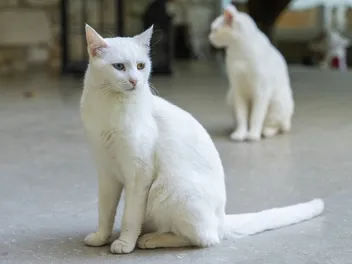
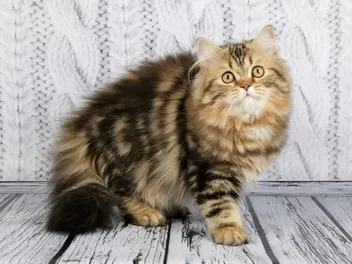
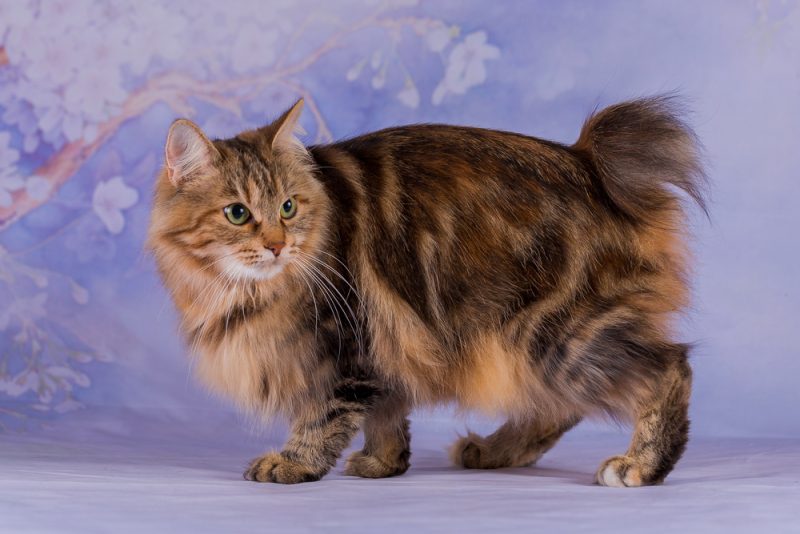
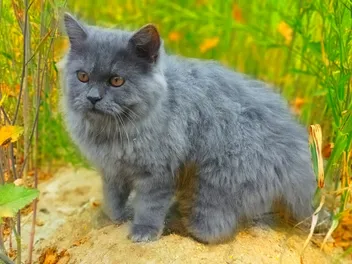
Maine Coon vs Bobcat: What’s the Difference? (With Pictures)


In this article
Both the Maine Coon and the bobcat are large cats that can easily double the size of an average house cat. Though they can be similar in size, pretty much everything else about them is different. In fact, the Maine Coon is a domesticated cat while the bobcat is a wild feline species.
When looking for a new cat, it’s important to do thorough research on cat breeds to ensure that you can live together harmoniously for many years. So, we’ve researched and laid out all the important information you need about these two felines. Let’s take a look.

Visual Differences

At a Glance

Maine Coon Overview

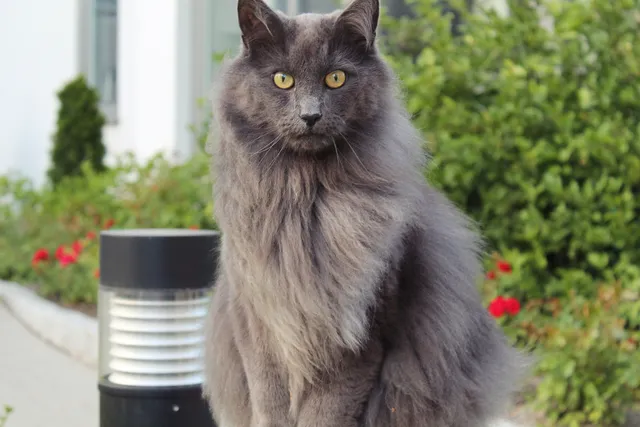
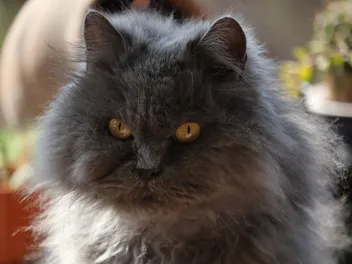
The Maine Coon is the largest domestic cat breed. Although it may have an intimidating size, this cat is a gentle giant. All purebred Maine Coons have medium to long hair that makes them look even bigger than they already are.
Many Maine Coon owners love their cats for their loyalty and affectionate personalities. These cats make devoted companions and have a lot of love to give.
Personality
The Maine Coon’s personality often defies the aloof and independent stereotype placed on cats. They love spending time with their family and typically aren’t shy around strangers. Although they may not want to be at the center of all the action, they still love to be included in their own way, such as observing from their favorite perch.
Maine Coons are also rather easygoing and often get along with other pets. Just note that early socialization is key. Introducing Maine Coons to other pets when they’re kittens will increase the chances that they can peacefully coexist with other animals in the home. However, since they can have a strong prey drive, they may not be able to be fully trusted around small pets, such as hamsters and birds.

Exercise 🐈
Maine Coons don’t need a particularly extensive amount of exercise. These cats often have spurts of energy and then prefer to lounge and nap. Despite their large size, these cats rarely prefer staying at ground level. They love to jump up to high vantage points and observe from their perch. So, they’ll benefit from having a cat tree that can support large and heavy cat breeds.
Training 🧶
Maine Coons are highly intelligent and love to play. So, they do best with owners who can provide a lot of attention and playtime. Some Maine Coons may even learn tricks and have even been known to play fetch. They’ll most likely enjoy engaging with enrichment toys that activate their prey drive, such as cat wands and puzzles.
Health & Care
Maine Coons have more grooming needs than other cats. Their long coats can get tangled and matted easily, so it’s important to brush several times a week. Although they don’t tend to shed excessively, their long hair can be very noticeable on furniture. Regular brushing can help with reducing cat hair all over the house.
Maine Coons are generally a healthy breed. However, due to their large size, they can develop joint pain, such as arthritis or hip dysplasia, later on in life. They are also susceptible to hypertrophic cardiomyopathy.
Responsible breeders will screen and provide health records for their Maine Coon kittens. It’s also important to communicate with a veterinarian and perform regular cardiac and orthopedic monitoring for hereditary health concerns.

Suitable for:
Maine Coons tend to be great cats for first-time cat owners. They’re easy to train and take to using a litter box rather quickly. They’re also great for families with young children when interactions are supervised, because they often have a lot of patience and affection for them.
Since Maine Coons love to be around their people, they’re not a cat breed for people who are often out of the house. They’ll thrive in homes where they’re not left alone for long hours.
Bobcat Overview

There’s no denying that bobcats are amazing and unique animals, but at the end of the day, they’re not domesticated cats. Bobcats are wild feline species, and while they are legally permitted to be privately owned in some jurisdictions, many states prohibit private ownership or require special permits, licensing, and strict housing standards.
Bobcat kittens may be adorable, but many end up in animal rescues as adults because it’s difficult for people to safely manage their natural behaviors and live with them as they mature.
Personality
Some bobcats can show limited affiliative behaviors, but they mostly prefer to keep to themselves. In the wild, bobcats are solitary animals and require a lot of space to themselves. They also tend to avoid and hide from humans.
So, it will take a lot of time and investment for bobcats to develop any level of tolerance toward humans, but even then, they typically won’t show affection like domesticated cats. Also, they most likely won’t approach or be comfortable around strangers.
You might’ve seen some cute online videos of bobcats getting along with other animals, but these are exceptional situations. In addition to being territorial, bobcats have a strong prey drive. So, even if you socialize them early with other animals, there’s still a significant risk that they’ll act on their instincts. In very rare cases, they might get along with dogs and other larger pets, but they should never be considered safe around small pets.

Exercise 🐈
Bobcats need a lot of space. In the wild, a male bobcat’s territory can be between 25-30 square miles, while a female’s territory can be around 5 square miles. Therefore, bobcats require extremely large, secure outdoor enclosures and are not suitable for indoor living environments.
Most bobcats are active during dawn, dusk, and nighttime and mostly spend their energy roaming around their territory and stalking and hunting prey. They can take on animals larger than their size and can leap up to 10 feet.
Training 🧶
Since bobcats are wild animals, they will never be completely domesticated. Training a bobcat will be fundamentally different from training a domestic cat and should not be expected to produce reliable or predictable behaviors.
Although bobcats may learn to use a litter box, there’s still the risk of urine marking, so bobcat owners have to be prepared to get furniture, carpets, and rugs stained.
Bobcats also have extremely sharp claws and can easily tear up furniture, so be prepared to sustain significant property damage. Also, declawing bobcats and other animals is extremely discouraged because it can lead to serious health consequences. Surgical mutilations such as declawing or dental alteration are considered unethical and are not performed by wildlife or exotic veterinarians. Even if a bobcat gets declawed, your furniture isn’t safe because it may resort to biting instead.
Health & Care
When owning a bobcat, it’s essential to work with an exotic pet veterinarian who has experience caring for wildcats.
In general, bobcats require a diet of appropriately formulated whole-prey or commercially prepared exotic carnivore diets, along with species-specific supplementation to support normal physiological function. An experienced veterinarian will be able to provide the correct nutritional needs for a bobcat.
Bobcats don’t require additional grooming from humans as they do this themselves. Some individuals also enjoy water and will benefit from having a large tub where they can bathe and play inside.
Bobcats are also susceptible to contracting and spreading most of the same diseases as domesticated cats. Such diseases include bobcat fever, rabies, bordetellosis, feline panleukopenia, and toxoplasmosis.

Suitable for:
It’s not impossible to care for a happy and healthy bobcat. However, these animals should be reserved for highly experienced exotic animal handlers, where legal, and with access to appropriate facilities and veterinary care. Living with a bobcat means making significant lifestyle changes, such as making modifications to homes and backyards to meet strict containment and welfare requirements. Your travel plans will also be more restricted because it’ll be difficult to find someone with experience to safely care for a bobcat.
If you are not able to make significant, long-term adjustments to properly accommodate a bobcat, it’s best to move on to other adorable, domesticated pets.
Can a Bobcat Mate with a Domesticated Cat?
Some people may be interested in raising wildcats but are hesitant about being capable of caring for them. So, they may wonder if it’s possible to find a mixed breed of a wildcat and domesticated cat.
When it comes to the case of the bobcat, there is no verified scientific evidence supporting the existence of offspring produced by a bobcat and a domesticated cat. Although many claims have risen over the years, many of them have been debunked with genetic testing.
Some people believe that the Pixie-Bob is a crossbreed of a bobcat and a barn cat. However, this belief is based on early breed lore rather than scientific evidence. The Pixie-Bob was actually developed from selectively bred domestic cats that naturally displayed bobcat-like traits, such as a shortened tail and spotted coat, and genetic testing has confirmed that the breed has no bobcat ancestry and is fully domestic.
Which Breed Is Right for You?
In most cases, the Maine Coon will be the better fit for you. Maine Coons are gentle and patient animals that tend to enjoy being around the company of humans. They also tend to peacefully coexist with other pets.
We don’t want to strictly label bobcats as bad pets because they’re such amazing animals. However, from an animal welfare, safety, and legal standpoint, we don’t recommend bobcats, as pets for most people. Too many bobcats end up in wildlife rescues because untrained and unprepared owners realize they cannot meet their complex physical, behavioral, and environmental needs.
If you’re interested in having a large or exotic-looking cat in your home, Maine Coons, Pixie-Bobs, and Bengal Cats are all domesticated cats that are more well-suited for living with humans.
Related Reads:
Featured Image Credit: Left -Seregraff, Shutterstock | Right - Ekaterina Bykova, Shutterstock
Expert cat care, straight to your inbox
News, insights, and useful advice, delivered to you.

No spam — unsubscribe anytime.
By signing up, you agree to our Terms & Conditions and Privacy & Cookies Policy.
How useful was this post?
Click a star to rate. You can leave written feedback afterwards. (We read all feedback.)
Jessica is a freelance writer who spends most of her day researching and writing while her fluffy Cavapoo, Nora, naps beside her. She loves and appreciates pets and animals because there’s so much to learn from them, and they do so much for people. As a dog owner, she understands the special connection that pet owners form with their pets. She loves sharing helpful information that people can use to better understand their pets. When she’s not writing, you can find her walking dogs, tending to her plant babies, or drinking her nth cup of coffee.