16 Herbs for Cats That Improve Health & Are Feline Friendly (Vet Answer)

In this article
Long before humans domesticated cats, they survived in the wild, where many different plants and herbs would grow. These days, we feed our cats at home, and it is far less common for domesticated kitties to have to fend for themselves. Often, owners want to know which herbs and plants can be fed to their cats and what the benefits of doing this are.
This article will discuss which herbs are safe and what they have to offer our feline friends. Whether you are a seasoned cat owner, looking to find new ways to improve your cat's health and support their well-being, or you have just stumbled across the subject and want a little more information, this article is for you.
Read on to discover the potential power of the safe use of herbs for cats.

Classification of Herbs for Cats
There are many different ways to classify herbs for cats.
A really useful way is to classify them by their purpose.
Herbs can also be classified specifically for the safety of their use in cats. Safe herbs are non-toxic and have various health benefits. Examples of safe herbs are catnip, silver vine, chamomile, oat straw, parsley, and lemon balm.
Toxic herbs or plants are poisonous to cats and can cause illness or even death, so they should be avoided at all costs. Examples of toxic herbs include chives, garlic, onions, and lilies.
Some may choose to classify herbs by their botanical classification.
For herbs suitable for cats this may include:
Another useful way of classifying herbs is by their active ingredients.
For example:
The 16 Herbs That Are Beneficial for Cats
1. Catnip

| Scientific name: | Nepeta cataria |
| Other common names: | Catnip, catswort, catwort, catmint |
| Origin: | Southern and Eastern Europe, the Middle East, Central Asia, parts of China |
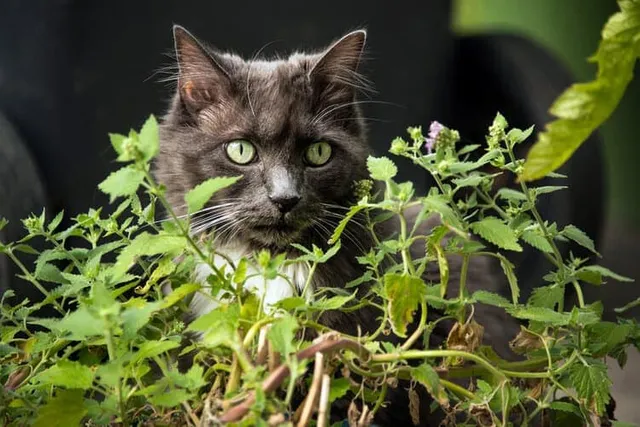
Most owners will be familiar with catnip. This is an herb that contains a compound called nepetalactone. The aroma of this chemical triggers a response in cats. It targets “happy” receptors in the cat's brain by mimicking the pleasurable pheromones. When cats smell the herb, the chemical binds to smell receptors and initiates a euphoric response in the majority of cats.
Affected cats will often rub themselves on things, roll around playfully, and become extremely affectionate. They may moan or purr and lick things. This usually lasts 10–15 minutes, then the cat typically falls asleep. Not all cats are sensitive to the effects of catnip, and the sensitivity is thought to be genetic. There is no evidence that catnip is harmful to pets in any way, and it is not possible for cats to overdose on catnip.
Some cats do have negative reactions and may become aggressive and bite their owners, so use with caution for the first few times to monitor this. It is not recommended for use in pregnant cats. This is mainly because they may injure themselves or the kittens if they start leaping around energetically.
2. Silver Vine

| Scientific name: | Actinidia polygama |
| Other common names: | Chinese Actinidia, Matai, Himalayan Kiwi, Silverberry, Kiss Vine, Maca |
| Origin: | Southeast Asia (China, Vietnam, Laos, Japan, Korea) |
This is very similar to catnip and is often used as an alternative. It contains an active ingredient called actinidine that causes similar effects to those of catnip in some cats. Many cats that do not react to catnip will react to silver vine in a positive way. Typical behavior displayed includes face rubbing, drooling, rolling around, and licking things.
3. Chamomile

| Scientific name: | Matricaria chamomilla L. |
| Other common names: | German chamomile, Wild chamomile, Common chamomile, Mayweed, Hungarian chamomile, Man's-man, Disc mayweed, Wild Matricaria |
| Origin: | Eurasia and North Africa. |
This herb is believed to have relaxing and stress-relieving properties. It can be given as a tincture or tea and can be added to food.
4. Oat Straw

| Scientific name: | Avena sativa L. |
| Other common names: | Wild oat, cultivated oat, White oat, Groat oat, Common oat, Tame oat, Red oat, Black oat, Horse oats, Feed oats |
| Origin: | Middle East, Central Asia, and the Mediterranean region |
This is another calming herb that comes from the unripe Avena sativa plant. It is believed to be able to aid in the relief of anxiety and stress in cats. It can be sprinkled onto food.
5. Valerian

| Scientific name: | Valeriana officinalis L. |
| Other common names: | Common valerian, European valerian, garden valerian |
| Origin: | Europe and Asia |
This herb has a sedative effect on cats that can help them relax and sleep. Owners must be aware that it can also have the opposite effect on some cats and end up stimulating them. Always start with small amounts and monitor your cat's reaction closely when first using valerian.
6. Parsley

| Scientific name: | Petroselinum crispum |
| Other common names: | Curly parsley, Flat-leaf parsley, Garden parsley, Petroselinum sativum |
| Origin: | Mediterranean region, including Greece, Turkey, and Iran |
This herb is thought to have some potential benefits for cats; these include supporting your cat's immune system, eyesight, urinary tract, and circulation. It is important to note that the benefits of parsley are mainly anecdotal when it comes to pets.
If it is consumed in large amounts, it can have toxic effects, so use it with caution. It also has the added bonus of freshening breath.
7. Cat Grass

| Scientific name: | Dactylis glomerata |
| Other common names: | Cock's-foot, Orchard grass |
| Origin: | Europe, Asia, and North Africa |
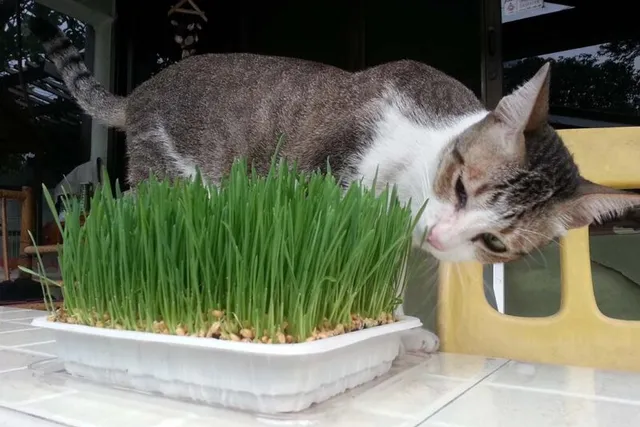
This is a type of wheatgrass that is safe for cats to consume. It can help your cat to rid themselves of hairballs and also provide them with some useful nutrients.
8. Echinacea

| Scientific name: | Echinacea purpurea |
| Other common names: | Purple coneflower, eastern echinacea, hedgehog, red hedgehog, black samson, snakeroot |
| Origin: | North America |
This herb is primarily used to support the immune system. It is believed to help fight off viral, bacterial, and fungal infections. It is thought to have anti-inflammatory and antimicrobial properties, but this requires more research when it comes to benefits in cats.
9. Licorice

| Scientific name: | Glycyrrhiza glabra |
| Other common names: | Sweetroot, Licorice root, Chinese licorice, Black licorice, Spanish licorice |
| Origin: | North Africa, the Middle East, and China |
This comes from the root of a perennial herb. It contains natural steroids and is thought to be helpful with cats suffering from allergies only when used under veterinary guidance. It is not advised to use it if your cat has electrolyte imbalances or high blood pressure.
10. Goldenseal

| Scientific name: | Hydrastis canadensis L. |
| Other common names: | Yellow puccoon, Orange root, Ground raspberry |
| Origin: | Eastern North America |
This herb comes from the Buttercup family. It is thought to be useful as a wound disinfectant.
11. Lemon Balm

| Scientific name: | Melissa officinalis L. |
| Other common names: | Bee balm, Balm mint, Melissa, Melisse, Sweet balm, Garden balm, Heart's delight, Honey plant |
| Origin: | Mediterranean region and parts of Asia |
This herb can act as a digestive aid. It is believed to be able to ease discomfort and pain from indigestion. As a bonus, it also freshens breath!
12. Milk Thistle

| Scientific name: | Silybum marianum |
| Other common names: | Mary Thistle, Blessed thistle, Lady's thistle, Holy thistle, Silibinin plant |
| Origin: | The Mediterranean region, from southern Europe to North Africa and the Middle East |
This herb, which contains silymarin, is often used as a supplement for liver support. It is believed to boost antioxidants and reduce inflammation.
13. Dandelion

| Scientific name: | Taraxacum officinale |
| Other common names: | Common Dandelion, Puffball, Clocks, Blowball, Cankerwort, White Man's Foot, Priest's Crown |
| Origin: | Eurasia |
This herb can act as a digestive aid as it can have a mild laxative effect. It is also thought to act as a cholagogue, which means it promotes the flow of bile from the gallbladder into the intestines during digestion. This helps to break down food more efficiently.
14. Calendula

| Scientific name: | Calendula officinalis L. |
| Other common names: | Pot marigold, Common marigold, Ruddles, English marigold, Scotch marigold, Golds, Mary's gold, Ringolds Sun marigold, Woundwort |
| Origin: | Southern Europe |
The flower of this plant is thought to contain a large amount of saponins. Saponins are believed to help heal gastric ulcers and can also contribute to the control of blood sugar, but there is a need for further research when it comes to these benefits in cats. It is thought to have some antiseptic properties too.
15. Marshmallow Root

| Scientific name: | Althaea officinalis |
| Other common names: | Sweet root, White mallow, Althaea plant, |
| Origin: | Areas around the Mediterranean Sea and Western Asia. |
This herb has been used for centuries to treat respiratory, digestive, and skin conditions in people, while its benefits in veterinary medicine may still remain anecdotal and require further research.
16. Basil
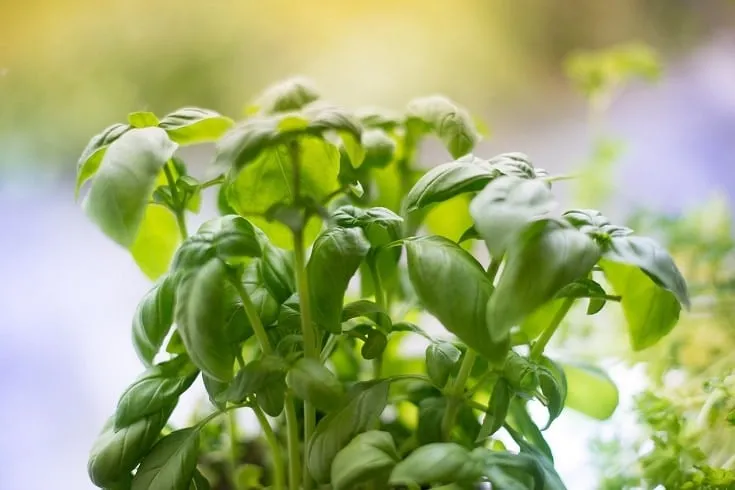
| Scientific name: | Ocimum basilicum L. |
| Other common names: | Sweet basil, Genovese basil, Italian basil, Large-leaved basil, Holy basil (Tulsi) (Ocimum tenuiflorum), Thai basil (Ocimum basilicum var. thyrsiflora), Lemon basil (Ocimum americanum), Cinnamon basil (Ocimum gratissimum), African basil (Ocimum gratissimum) |
| Origin: | India and Asia |
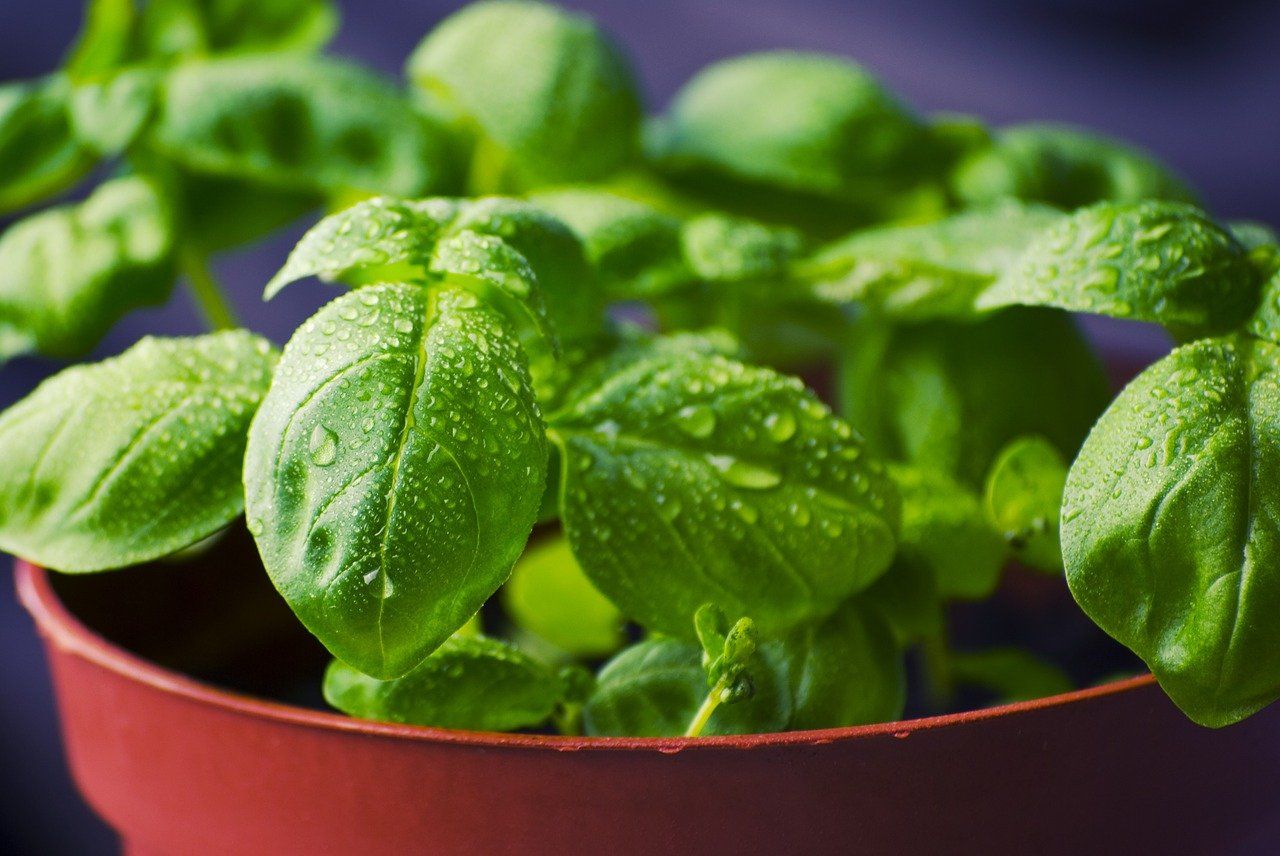
This herb is thought to be helpful in boosting immunity and reducing stress and anxiety in humans. There is more research required to say whether it has the same benefits in cats. It is not toxic for cats and is considered safe for them to eat.

Important Note
It is important to note that while herbs can have amazing health benefits for cats, not all herbs are suitable, and some can even be toxic, depending on the amount. Certain plants and herbs, including chives, garlic, onions, leeks, and lilies, are highly toxic to cats. Exposure to some of these can even lead to serious illness and death. Always check with a veterinarian before giving any new herbs to ensure they are safe.
When starting to use any new herbs for your cat, it is vital to only give a very small amount to begin with. Monitor your cat closely and see how your cat reacts before giving larger amounts. If there are any adverse effects seen, such as vomiting, diarrhea, skin lesions, or other clinical signs of illness, stop use immediately.
Conclusion
Always discuss using any new products, foods, or supplements with your vet before you introduce something new, including the herbs above. Your vet will know your cat's individual needs and can address any existing health conditions. They can advise you of any contraindications and discuss dosages.
If you are ever unsure, it is always better to seek help from a professional. Your vet will be happy to advise you.
Featured Image Credit: tookapic, Pixabay
Expert cat care, straight to your inbox
News, insights, and useful advice, delivered to you.

No spam — unsubscribe anytime.
By signing up, you agree to our Terms & Conditions and Privacy & Cookies Policy.
How useful was this post?
Click a star to rate. You can leave written feedback afterwards. (We read all feedback.)
Dr. Emma Chandley, BVM MRCVS (Veterinarian)
Dr. Emma is an experienced vet who is happy to share her expertise and knowledge about cats with readers. Her passion is surgery but she will happily talk about anything animal-related. Dr. Chandley graduated from The Royal Vet College and since then she has worked in general practice in Great Britain. Dr Chandley has completed a postgraduate certificate in Small Animal Surgery and has also gained Advanced Practitioner status in the same discipline. She enjoys developing her skills in animal behavior, nutrition, and clinical pathology as well.