Do Cats Like Cold Water? Our Vet Answers & Explains

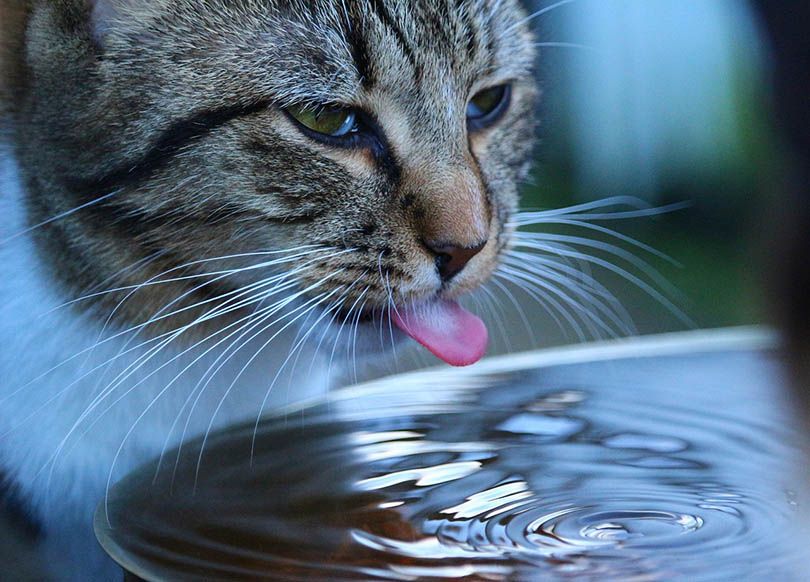
We all know that water is a vital part of life for all living organisms on Earth, and cats are certainly no different. Water keeps cats alive and healthy. We humans might love an ice-cold glass of water, but what about cats?
Some cats may prefer cold drinking water, but this entirely depends on the individual cat. The water’s freshness and safety are far more important than its temperature. Regardless, it shouldn’t be at near-freezing temperatures. Some cats might like room-temperature water, so it’s up to you to figure out your cat’s preference.
Here, we discuss everything about water and cats and why some cats prefer cold water while others don’t. We also look at the best ways to give your cat water so you can ensure that they’re getting enough.

Why Do Cats Need Water?
Water is the most important nutrient for all pets. Other than just keeping cats alive, it provides a variety of different purposes:
- Hydration: Water is the single most important nutrient for maintaining hydration.
- Transport: It’s used to transport substances and waste around your pet’s body.
- Biochemical process: Water is a part of numerous biochemical processes throughout your pet’s body.
- Thermoregulation: It aids in maintaining body temperature.
- Homeostasis: Water is involved in many processes that maintain a sense of internal balance within your cat’s body.
The list can go on! Water is the essence of life, so what can happen if a cat doesn’t get enough?

What Happens If Your Cat Becomes Dehydrated?
If your cat isn’t drinking enough water, the more immediate issue will be dehydration. This occurs when your cat loses more fluids than they take in.
Health problems that can occur with dehydration include:
If left untreated, dehydration can progress to the impairment of vital organs, which eventually leads to death. For this reason, cats should have an unlimited supply of drinking water at all times.
If you are concerned about your cat being dehydrated, seek veterinary advice for the best course of action.

How Much Water Should a Cat Drink?
The estimation of the water requirements of a healthy cat in maintenance can be determined using the formula:
Hydration Formula
Body weight is expressed in kilograms, and the answer is provided in milliliters. This can be cumbersome to calculate if you are used to imperial units, such as pounds and cups. So, to estimate your pet’s needs, you can use the following steps:
Estimating Your Pet’s Water Requirements: Example
Please note that the requirements for pregnant and lactating cats are different, as are the requirements for kittens or cats with a medical condition.
Since water is so crucial for cats and the calculations are cumbersome and unrealistic to do on a regular basis, it is best to offer your pet cat access to unlimited amounts of drinking water at all times.

What About the Temperature?
Anecdotally, some cats may have a preference for slightly cool temperatures for their water. Others may prefer water to be slightly tepid or at room temperature. There isn’t any right or wrong way to offer water to your pet, as long as it isn’t freezing cold or boiling hot.
Some people place ice cubes in their cat’s water bowl in the summer as a way to keep the water cooler. However, if your cat likes to fish them out and try to eat them, you’ll want to use ice chips instead, as a big ice cube can damage your cat’s teeth. Otherwise, ice cubes can prove to be new and interesting toys for your cat to bat around.

What If Your Cat Is Not Drinking Enough?
Determining whether your cat is drinking enough water can be tricky. Felines can obtain moisture from other sources, such as their food. Cats that are fed a high-quality fresh diet with high animal protein and fat content are likely to drink small amounts of water. Fats naturally contain water, and such a diet contains adequate amounts of moisture in general, reducing the amount of water that the cat would need to drink from their fountain or water bowl.
Conversely, a cat that’s on a kibble or dry diet will likely require more fresh water. This type of diet is high in carbohydrates, which offer less water per gram than fats, and it’s lacking in moisture content compared to fresh or canned foods.
The earliest sign of dehydration in cats is their mucous membranes becoming dry and tacky. This can most easily be noticed on their gums. In addition, their skin will likely lose some of its elasticity; if you gently pinch and raise their skin, it might not recoil normally.
IMPORTANT

If your cat is otherwise healthy, you can encourage more hydration using the following methods.
Water Temperature
While most cats are fine with cold water, other cats prefer lukewarm water. You can try experimenting with different temperatures and observing your cat. You might find that your cat likes room-temperature or slightly warm water.
Water Container
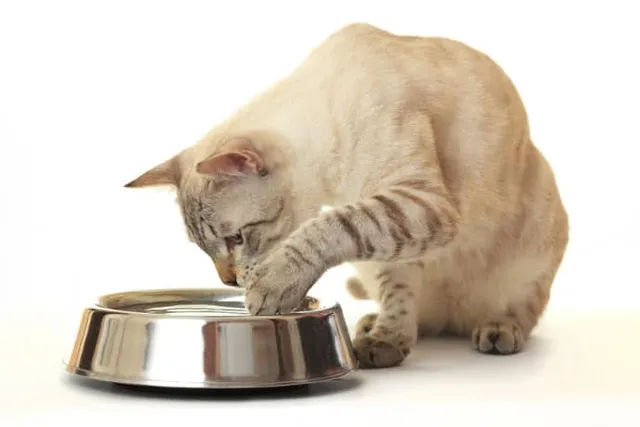
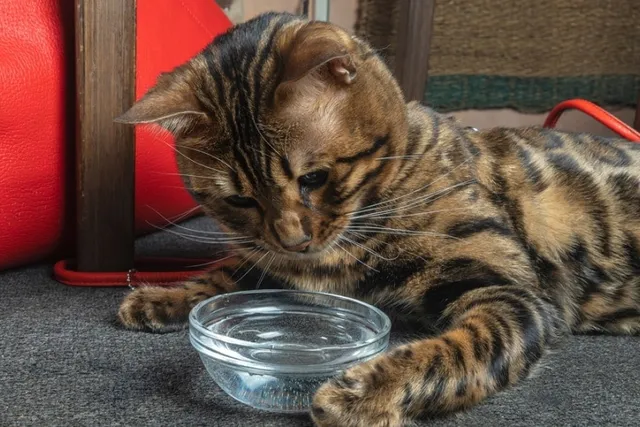
This all comes down to your cat’s preference, but ceramic, glass, or stainless-steel water bowls that are wide in diameter tend to work well for most (but not all) cats. Switching your cat’s bowl might encourage them to drink more.
Cat Fountain
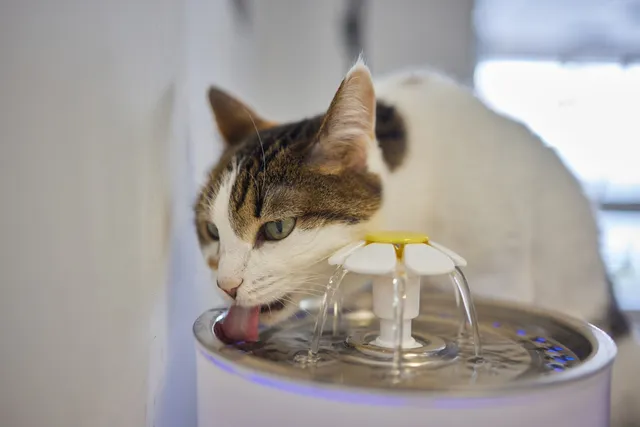
Alternatively, consider investing in a cat water fountain. Many cats enjoy drinking from running water, as its flowing nature tends to pique their curiosity.
Cat fountains come with filters, so as long as you clean them regularly, the running water action can also make them more sanitary than bowls.
Cleanliness
Keeping your cat’s water bowl or fountain clean is super important. Fountains should be cleaned once a week, and the filter should be changed about once a month (or according to manufacturer guidelines). Bowls must be cleaned and filled with fresh water at least twice every day. No one wants to drink dirty water.

Location
Make sure the water source is in a quiet and stress-free location. If you have multiple cats, you might want to offer multiple water sources in different locations.
Canned or Fresh Food
Canned food is approximately 80% water content. So, if you aren’t already giving your cat wet food, you might want to consider adding some to your cat’s diet. You can opt for food toppers that are made specifically for cats. Fresh food also offers your cat more hydration than dry food does.


Conclusion
Some cats may indeed prefer cold water, but this usually comes down to individual preference. As a general rule, cats can drink water that’s safe for humans to drink, and as long as the temperature isn’t at an extreme, your cat will be fine with their temperature of choice.
Hydration is of utmost importance for your cat, so if you think that your pet isn’t drinking enough water, a veterinarian should be your first point of contact.
Featured Image Credit: rihaij, Pixabay
Expert cat care, straight to your inbox
News, insights, and useful advice, delivered to you.

No spam — unsubscribe anytime.
By signing up, you agree to our Terms & Conditions and Privacy & Cookies Policy.
How useful was this post?
Click a star to rate. You can leave written feedback afterwards. (We read all feedback.)
Dr. Luqman Javed DVM (Veterinarian)
Dr. Luqman (also known as Dr. Lucky) grew up with an immense passion for animals of all kinds. By becoming a veterinarian, he turned his childhood dream into reality. Now, his goals are focused on providing help to cats all around the world by helping to cat owners understand their feline friends better to ensure the best quality of life for them. His passions are wildlife, exotic pets, pet owner education, and animal welfare. He graduated with his DVM from the Universiti Putra Malaysia in 2020. He has worked with a variety of animal species and has decades of personal experience with keeping many different types of exotic pets, such as turtles, hamsters, freshwater fish, chickens, songbirds, and parrots (and he has extensive skills in training parrots, too).