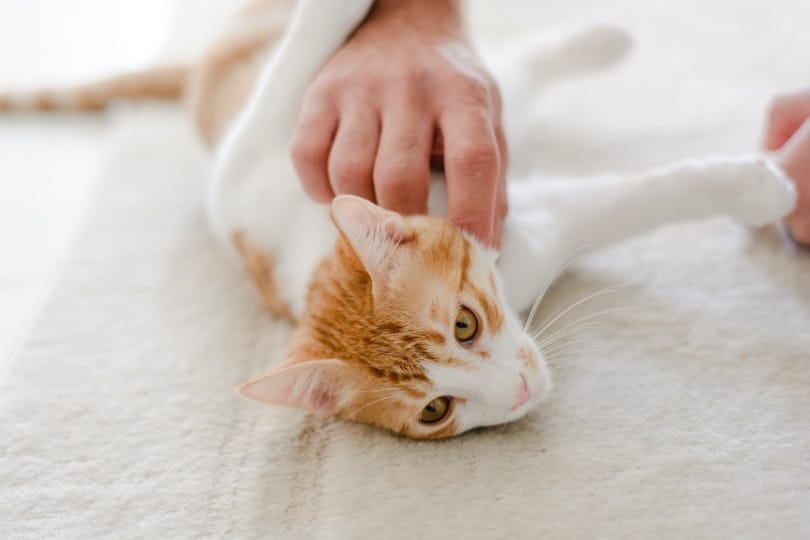
Cat Spleen: Our Vet Explains What it is & How it Works
In this article
The spleen often remains an elusive organ that many people have heard of, but not too many know the specifics of. And while they may be aware that their cat has one, if they were to be asked where the spleen is or what it does, a blank look is likely to come across their face.
Well, this article aims to shed some light on this mysterious organ and break down some cat spleen basics so you can be more knowledgeable about your feline friend and their overall health. Read on to learn more.

What Is the Spleen?
The spleen is an internal abdominal organ that is often referred to as looking similar to a tongue! In cats, it is a thin, elongated organ that is typically dark red to purple in color. Located under the rib cage on the left-hand side, it is attached at the top of the spleen to the stomach by the gastro-splenic ligament. The top part of the spleen is the narrowest and is called the “head.”
The organ becomes wider in the middle, called the “body,” and then widest at the end, termed the “tail.” The tail of the spleen is not fixed in location and can move, although, in cats, the movement is less than that of dogs. To get a good idea of the overall size of an animal’s spleen, a rule of thumb is that the spleen is about as long as that animal’s forearm.

If healthy, the outer surface of the spleen, referred to as the outer capsule, is relatively flat and smooth. The inner capsule, also referred to as the parenchyma, is made up of components which help in the overall functions of the blood and lymphatic systems.
The three components are:
How Does It Work?
The spleen works to accomplish many functions. We’ll discuss some of these below in more detail.
One function is hematopoiesis or blood cell production. In a healthy animal, the primary site of red blood cell production is in the bone marrow. However, there is also the option for the second most common site, the spleen, to perform this function, which is called extramedullary hematopoiesis. When needed, red blood cell production and maturation of these cells occurs in the spleen.
In addition, the spleen is also a reservoir to store red blood cells and platelets. If the need arises, the spleen can contract to release more blood suddenly, such as in the event of blood loss. Surprisingly, a cat’s spleen can store 10–20% of their total circulating blood cells as well as 30% of their platelets. It’s like a body’s backup version of a blood transfusion ready to go!
The spleen is the largest filter of blood in the body, and with this function, it removes items that do not belong such as old or damaged red blood cells, as well as bacteria and other particles. Phagocytosis also occurs, which is when some cells engulf and destroy undesirable cells or particles, such as the filtered old red blood cells, bacteria, etc.
Because the spleen is also part of the body’s immune system, it is the site of several immune activities and responses. Some activities include producing immune system cell components like lymphocytes and plasma cells, presenting parts to the immune system, as well as antibody production.
In addition, there are also several miscellaneous functions such as the metabolization of iron and the storage and activation of factor VIII, which aids in blood clotting.
Spleen Health Problems
The spleen can have a number of health issues which can be primary or secondary. Primary problems involve issues originating from the spleen itself, while secondary health problems affect the spleen due to the result of another disease that originates elsewhere in the body.
Some spleen health problems can include:
Splenomegaly
An enlargement of the spleen is referred to as splenomegaly. This is generally suggestive in cats when the spleen is either longer than 10 mm or if it is folded over on itself. Splenomegaly is less often due to a primary disease of the spleen and more often due to another underlying disease. The enlargement can be either focused in a small area (called focal or nodular) or diffusely (across the whole organ). Cats more commonly have splenomegaly when compared to dogs, while dogs tend to more commonly have splenic tumors than cats.
There can be many different causes of splenomegaly in a cat, which can be grouped into categories and include some of the following:
Signs, Diagnosis, and Treatment
Often, there are no outward signs (termed asymptomatic) or only vague and nonspecific signs if there is a medical problem with the spleen. Conversely, if a spleen ruptures or is involved in torsion, there are more emergent signs that may happen very quickly.
Signs to consider for either include:
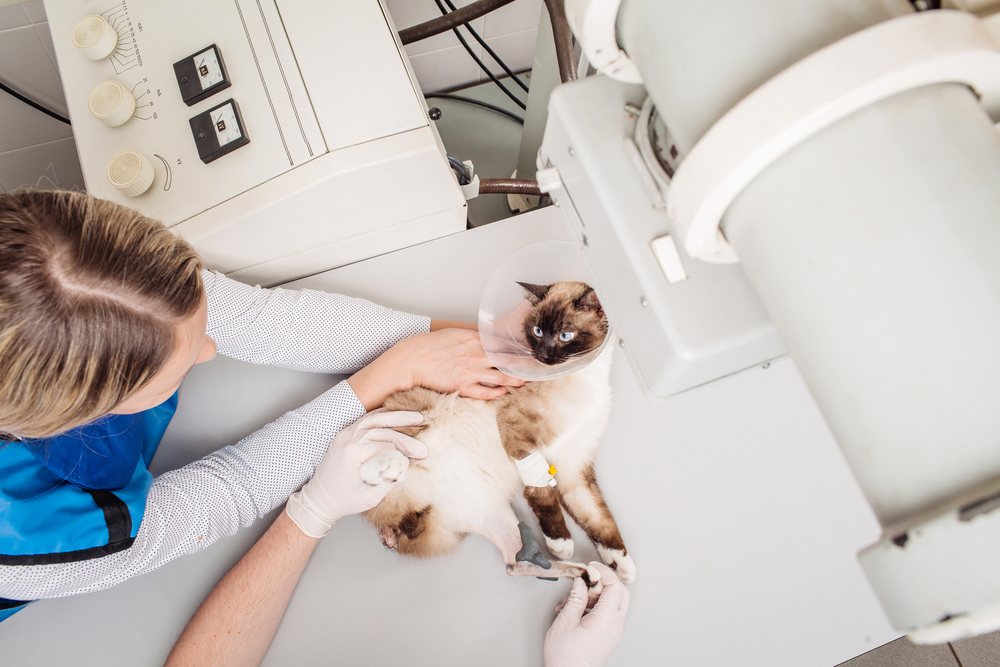
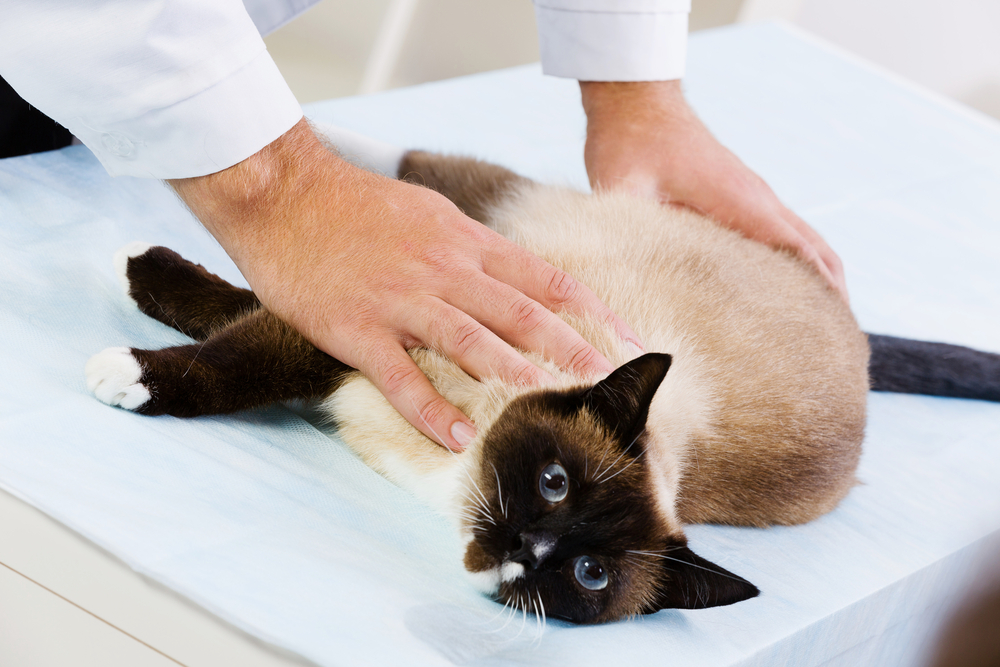
In some cases, a veterinarian may be able to feel an enlarged spleen on palpation (using their hands to examine) during a physical exam. Imaging via radiographs (X-ray) or ultrasound may also be helpful in determining whether there’s a problem. While X-ray can give helpful information, such as the overall size of the spleen, ultrasound has the advantage of giving a 3-D image and being able to differentiate what may be going on inside the organ.

A fine-needle aspirate or biopsy of the spleen can obtain cell samples to have examined under the microscope, which often aids in diagnosis. Because the presence of a spleen is not necessary to survival, and because sometimes the spleen can be involved in significant health problems, the spleen may need to be fully removed and sent off for evaluation. This act can give the diagnosis of and (at least part of) the treatment all at once. Further tests may be beneficial to help rule in or out a diagnosis such as bloodwork, FIV/FeLV tests, etc.
Treatment should be targeted to the underlying cause. Supportive care such as intravenous (IV) fluids may be needed, steroids to decrease inflammation, antibiotics for infection, and surgery/chemotherapy for cancer. Surgery may also be indicated for other problems such as rupture of the spleen or in some cases of splenic torsion.
Frequently Asked Questions (FAQ)
Why would you need to remove a cat’s spleen?
Serious health problems such as cancer, rupture, or torsion would warrant removal of the spleen. Surgical removal of the spleen is called a splenectomy, which can be considered partial if a part is removed, or full if the whole organ is removed.
Can a cat live without their spleen?
While it is better to have one, a spleen is not crucial for a cat’s life! While harsh but true, the spleen is not a vital organ and isn’t essential as its various functions can be carried out elsewhere in the body. This is good news in that if a spleen needs to be removed due to medical reasons, it can be! Furthermore, removal of a cat’s spleen does not typically cause other health consequences or long-term problems, which can be different from splenectomies that are done in people.
What are the most common cancers associated with a cat’s spleen?
The most common cancer of the spleen in cats includes mast cell tumors followed by lymphosarcoma (malignant lymphoma).
Conclusion
While many may consider a cat’s spleen to be a forgotten organ, when present, it does serve several important functions. In addition, there are many different medical concerns that can be associated with the spleen which may be primary or secondary.
Because signs of spleen trouble can range from almost no signs at all to a complete and obvious medical emergency, it is important to notice subtle differences with your cat and, if detected, have them evaluated by their medical professional as the next step. Considering the spleen may help save your cat’s life.
Featured Image Credit: Sergey Nivens, Shutterstock

Expert cat care, straight to your inbox
Vet-reviewed advice, behavior tips, and the best of Catster. Free, and you can unsubscribe anytime.
By signing up, you agree to our Terms & Conditions and Privacy & Cookies Policy.
Dr. Rachel Ellison DVM (Veterinarian)
Dr. Rachel Ellison lives on a mountain in Utah with her husband, daughter, and son, as well as their animal menagerie— a Bernese Mountain Dog, a Bengal/Siamese mix, and an orange tabby cat, as well as numerous chickens. During her free time, she enjoys being with those she loves, cooking and baking, reading, hiking, sharing her knowledge about cats, and exploring nature and the world around her.
Join the conversation
Ask a question, share your story, or send private feedback.