Cat Nose Bleeding? Our Vet Explains the Causes, What to Do & When to Worry

In this article
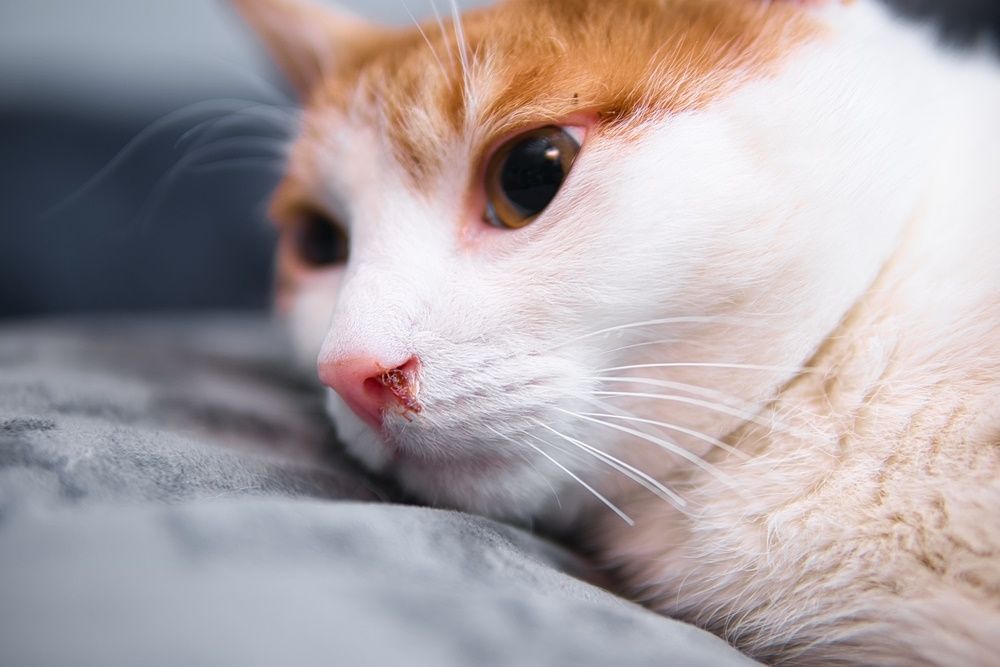
As a pet owner, you’re likely worried any time you see your cat bleeding. It can be a scary thing, and you aren’t always sure what to do. How do you stop it? What about the mess? What could have caused this? Nose bleeding is one of those events that may have you searching for answers. Nose bleeding in cats can be as simple as bumping into the door jab or as complex as ingesting a toxin. We’re here to help you determine what’s behind your cat’s bloody nose, what you can do at home, and when to seek veterinary care.

What Is Nose Bleeding in Cats?
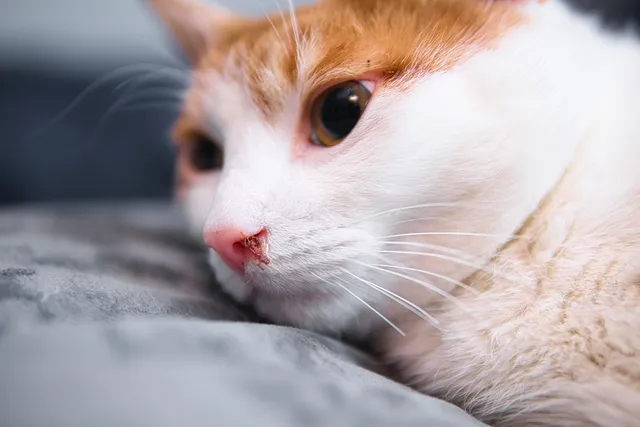
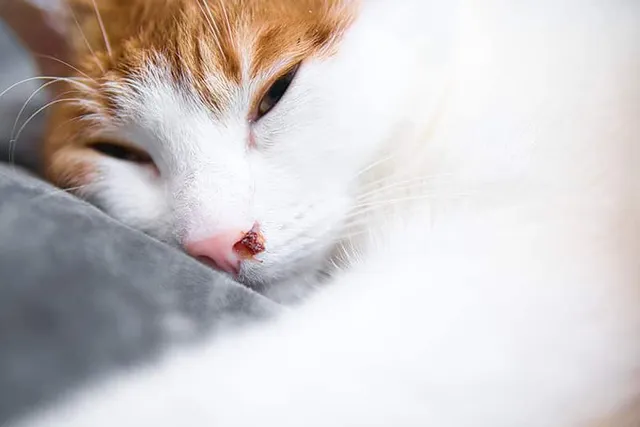
Epistaxis, or nose bleeding, is when blood comes out of one or both of a cat’s nostrils. The blood can originate from the nasal planum (the skin of the nose), the inner nostril, the nasal passageways, or the nasal cavity or as far back as the nasopharynx, which is the upper part of the throat behind the nasal cavity.
Nose bleeding is fairly uncommon in cats, but it’s usually not a big deal. Even though it may look bad and seem like a large amount of blood, most cases can be treated at home. However, that isn’t always the case. Excessive bleeding, bleeding that can’t be stopped at home, frequent nose bleeds, or nose bleeding accompanied by other signs should lead to a vet visit as soon as possible.
A vet will be able to advise you on the best course of action to ensure the well-being of your pet.
What Are the Signs of Nose Bleeding in Cats?
You’re likely to see blood coming out of at least one, sometimes both, of your cat’s nostrils. It may be a stream of bright-red blood, or it may be clots or streaks mixed in with mucus-y snot. Cats may also sneeze as a way to try to clear the blood faster.
Depending on the cause of the nosebleed, you may see other signs, such as:
More severe cases may also present with:
What Can Cause Nose Bleeding in Cats?
Nosebleeds in cats can be caused by anything affecting the nose or even the rest of the body.
1. Trauma
Cats are normally agile, but their curiosity can get them into trouble. Bleeding from the nose may be a result of running into something, getting hit by a car, or fighting with another animal. You may see other wounds or swelling if this is the case. Depending on the degree of other injuries, veterinary care may be needed.

2. Upper Respiratory Infections
Various microbes can cause upper respiratory tract infections in cats. While coughing, sneezing, and runny nose and eyes are the most common signs, inflammation of the nasal passages from an upper respiratory infection can also cause nosebleeds.
The roots of many of your cat’s teeth extend close to the sinuses in the head, making it possible for abscesses of the tooth roots to expand into these spaces. You may see swelling of the face or gums, difficulty eating, and blood or pus from the nose. Tooth root abscesses will need antibiotics and a dental procedure, so see a veterinarian if you think that this is the cause.
3. Foreign Bodies/Tumors
Kitties tend to put their noses into everything, making it possible for a foreign body to get lodged in the nasal passages. Things like grass seeds or other environmental irritants can make their way into the nasal cavities, causing irritation and bleeding. Depending on what the foreign body is, a veterinarian’s help may be required to get it out of there.
Along with things from the environment, tumors in the nose can lead to nosebleeds. Tumors can be benign or cancerous, so frequent nosebleeds should be checked out by a vet.

4. Rodenticide Poisoning
Rat and mouse baits commonly work by preventing blood from clotting in the animals that eat them. If a kitty were to ingest certain types of rat poisons, it could interfere with their clotting ability, leading to spontaneous bleeding from the nose and sometimes other places. If bleeding is severe, you may also see pale gums and lethargy. This is an emergency, and your cat needs to be seen by a vet immediately.
5. Liver Disease
The liver is an amazing organ with several functions that round out its job description. One is making the coagulation factors that are necessary for the clotting of blood. When the liver is assaulted, either from an infection, toxin, or other means, it can decrease the production of coagulation factors, so blood fails to clot as quickly, leading to potential nosebleeds.
Fortunately, the liver is good at regenerating, so seeking immediate care can help reverse the damage and put a stop to the nosebleeds and other issues.
6. Miscellaneous
Anything that directly affects the nose or the body’s blood-clotting abilities can lead to nosebleeds. Some are more severe than others, so see a veterinarian if your cat is having frequent and/or severe nose bleeding.

How Do I Care for a Cat With a Nosebleed?
If your kitty’s nosebleed isn’t a gusher, you can try to stop it at home. However, it may still be best to contact a veterinarian so they are in the loop if you need to bring in your feline friend later.
You may first try these steps at home:
If you can’t get the bleeding to stop, if the bleeding is especially severe, or if your kitty is showing other signs, such as struggling to breathe, lethargy, or other obvious wounds, see a vet immediately. If you know that your cat got into rat poison or another toxin, go straight to the vet. Knowing what they got into and how much will be useful, so gather that information if you can.
Hopefully, you can get the bleeding under control at home, but that doesn’t mean you’re done. It’s still a good idea to get your cat checked out to determine the cause of the nosebleed. Also, if your cat seems to get nosebleeds regularly, even if they’re mild, have a vet examine them.
Veterinary Care for Nosebleeds in Cats
A vet will first work to stop the bleeding, if it hasn’t already. From there, they will do a complete exam, potentially looking into the nose and using other imaging to examine the nasal cavity and sinuses. They will evaluate other signs and may run blood work. Samples may be taken if an infection is suspected.
Once a diagnosis is made, the vet may prescribe medications, such as antibiotics, antifungals, anti-inflammatories, or pain meds. Your kitty may require further treatment for tumors or masses or things like clotting disorders or liver disease.

Frequently Asked Questions (FAQ)
Should I Be Worried If My Cat’s Nose Is Bleeding?
Nosebleeds in cats can be the result of many different causes, some that are mild and others that are severe. If your cat has a small dribble of blood and no other signs, you may be able to mark it as a minor injury and get it under control at home. However, if nosebleeds are happening regularly or are severe and you can’t get them under control or if your kitty seems off in other ways, see a veterinarian.
Can Dry Air Cause Nosebleeds in Cats?
Dry winter air has many of us reaching for the hand lotion and nasal saline solution. It can suck moisture from your skin and mucous membranes, including the nasal passages. Cats are no different. So, if you notice a bit of bleeding from your cat’s nose during the winter months, try adding a humidifier to your pet’s environment—after getting your cat checked out by a vet.
Can Cat Allergies Cause Bloody Noses?
Similar to how dry and cold air can rob moisture from the mucous membranes of the nose, irritants like dust, pollen, or other allergens can do the same. The irritation can lead to nosebleeds. You may also see your cat sneezing, coughing, and having a runny nose and eyes. See a vet if you think that your kitty has allergies, so you can help get them under control.
Conclusion
Nose bleeding in cats is a fairly uncommon issue, so when it does happen, it can be quite scary. Hopefully, this article will help you attempt treatment at home for mild cases, know when to seek a veterinarian’s help, and get you started on finding a cause to better treat the issue.
See also: My Cat Is Sneezing Blood, What Do I Do?
Sources
Featured Image Credit: Kamil Zajaczkowski, Shutterstock
Expert cat care, straight to your inbox
News, insights, and useful advice, delivered to you.

No spam — unsubscribe anytime.
By signing up, you agree to our Terms & Conditions and Privacy & Cookies Policy.
How useful was this post?
Click a star to rate. You can leave written feedback afterwards. (We read all feedback.)
Dr. Chyrle Bonk DVM (Veterinarian)
On top of healing animals and writing for veterinary publications, Dr. Chyrle Bonk owns a small cattle herd! When she’s not busy with those things, she can be found somewhere in the Idaho outdoors with her husband and two kids.
Chyrle has practiced in a mixed animal clinic for over 10 years. She also writes for various veterinary websites and magazines, like Catster!
Dr. Chyrle Bonk received her Doctor of Veterinary Medicine (DVM) from Oregon State University in 2010.