Ask Dr. Paola - Socks, Pain & Jealousy (May 26, 2025)

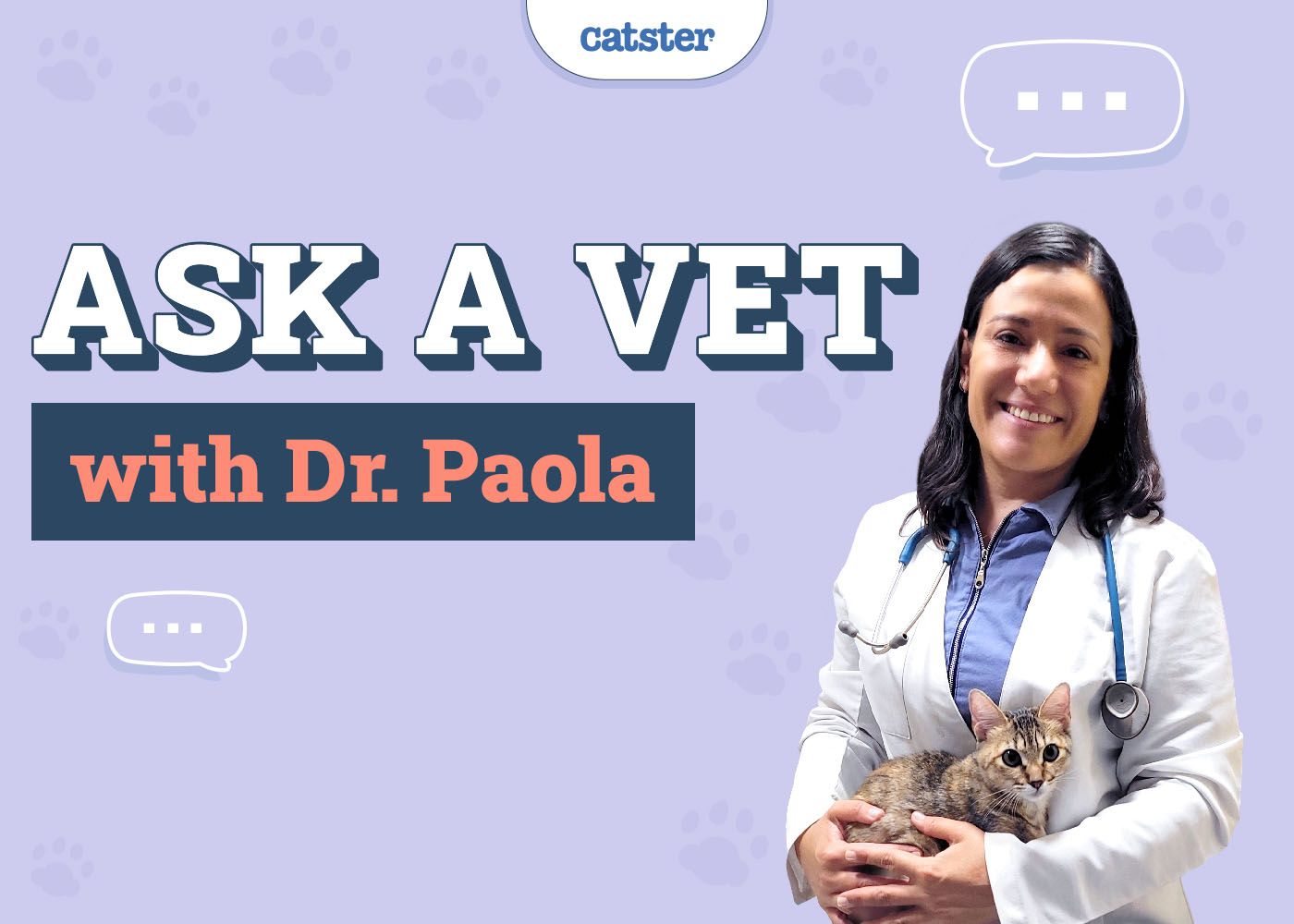
Welcome to our "Ask Dr. Paola" series, where every Monday we bring expert advice straight from Dr. Paola Cuevas (MVZ) to help our readers better understand their cat's health and well-being.
Whether you're a new pet parent or a seasoned cat lover, Dr. Paola is here to provide answers to your most pressing questions. From nutrition tips and preventive care to troubleshooting common behavioral issues, Dr. Paola is ready to offer insights that will keep your kitty happy, healthy, and feline fine. Stay tuned for expert guidance on a range of topics that matter most to you and your cat, so you can make informed decisions and provide the best possible care for your furry companion.
Have a question? Send it in here!

Help! My Cat is Obsessed With My Socks!
“Dear Dr. Paola,
My cat Tillie always takes my socks out of my laundry basket or hamper and hides them around the house. Is this something to worry about? How do I stop it? It used to be funny, but now it's driving me a bit crazy. Thanks! "- Levi
Hi Levi,
Thank you for your thoughtful question. Tillie's sock-stealing habit, while certainly mischievous, is actually a common and often harmless feline quirk. Many cats are drawn to items that carry their human’s scent, and socks make the perfect stand-in for “prey” during a solo hunting game. When a cat carries and hides objects, it taps into her natural instincts to stalk, catch, and sometimes even build a secret stash. It’s not usually a cause for concern, but more a sign that she’s playful, clever, and looking for stimulation.
Since you mentioned that it was once funny, it’s very likely that the behavior was unintentionally reinforced. Cats are incredibly observant and sensitive to our reactions. If Tillie noticed that her sock thefts led to laughter, attention, or even a playful chase, she may have learned that this behavior gets her a response, turning it into a self-rewarding habit. To shift it, try removing access by keeping hampers in a closet or using one with a secure lid, and redirect her toward more appropriate outlets like interactive toys or puzzle feeders. If she is a catnip enthusiast, you could even try a catnip-infused toy. If you are creative, you could even donate some of your socks to be her toys: check out these DIY ideas! Toss her a treat here and there whenever she is using her toys. Give her plenty of daily play that mimics hunting, especially toys she can chase and "catch." Adding in variability by constantly rotating the toys and making sure they are not always available will help ensure she remains interested in playing with them.
Also, try to avoid reacting when she takes a sock; just calmly retrieve it without a fuss. If her behavior ever feels excessive or obsessive, a consultation with a veterinarian or feline behaviorist would help rule out stress-related motivations. But from what you’ve described, it sounds like Tillie is simply being a creative little cat. Good luck!
- Dr. Paola

Help! I Am Worried My Cat is Hiding His Pain!
"Hey Dr. Paola,
What are the signs that my cat Billy might be in pain but hiding it? He recently took a big jump out of a tree in our yard (and landed on his feet). He is seemingly OK, but I know cats tend to hide their pain, so I want to be sure I'm doing the right things to care for him. " - Chris
Hi Chris, You're absolutely right to be cautious. As you mentioned, cats are incredibly discreet by nature and often mask discomfort, especially when it’s musculoskeletal. Even if Billy landed on his feet, a hard landing can still lead to sprains, strains, or subtle injuries that don’t show up right away. The fact that you're tuned into his behavior is already a great start; close observation will give you the clues.
Some of the more subtle signs of pain in cats include changes in posture, reluctance to jump or climb, some cats will avoid their regular height-up hangout spots, hesitation before movement, or becoming less playful. Other signs might be becoming unusually quiet or withdrawn. On the flip side, some cats become irritable or vocal when touched in a painful area. Watch closely for any changes in how Billy moves, rests, or interacts with you. If he starts limping, favoring one side, or holding himself stiffly, those are red flags that shouldn’t be ignored.
You might also notice him grooming less, or overgrooming, especially in areas that hurt. What makes it tricky is that not all cats react the same way. While some may overgroom, others might avoid grooming entirely if it’s painful to move a certain part of their body. So both overgrooming and undergrooming can be signs of discomfort, and the context really matters. If Billy has started focusing intensely on a specific limb or joint since his jump, that could point to a localized issue.
Since this could be a minor issue or something requiring more attention, a tele-triage service like PangoVet could help assess his risk based on what you're observing. However, if you notice ongoing changes in his mobility or comfort, I do recommend a physical exam with your vet. Injuries like hairline fractures or soft tissue damage can be hard to detect without a hands-on evaluation and diagnostic imaging. You're doing the right thing by staying observant and proactive. Billy's lucky to have you watching out for him. I hope this helps!
- Dr. Paola

Help! My Cats Are Miserable!
“Good afternoon, Dr. Paola,
I have three cats: Riley (female domestic medium fur) 14.5 years, Aslan (maine coon male) 7.5 years, and Aspen (maine coon male) 5.75 years. Riley, spayed, does pretty well with both boys and lets them know when they need to cool their jets and stay away from her. My 2 boys did great together, both are neutered, after just a few days of bringing Aspen home from the breeder. They played together, slept together, and ate together with no hissing, growling, slapping, or puffing from Aslan directed toward Aspen. All that changed immediately after I brought Aspen home from being neutered. I thought it was just the strange odors from the vet hospital that had Aslan upset. Alas, it was not the odors.
Aslan is so jealous of Aspen that they are both miserable. I try to give Aslan more attention, and that only makes him act more aggressive toward Aspen. I play with Aslan one-on-one, and everything is great until Aspen enters the area. I'm worn out trying to keep peace. Aspen is not at all aggressive in any way, shape, or form. He would love to be friends with Aslan, but that hasn't proven possible, no matter how much I try or Aspen tries to facilitate a friendship. So, he just avoids Aslan. Why would neutering Aspen have anything to do with the aggression from Aslan that started after Aspen's surgery? I'm puzzled. " – Nancy
Hi Nancy,
Thank you for sharing such a detailed message. I can truly sense how much you care for your cats and maintaining harmony among them. It’s not uncommon for changes in behavior to surface after a vet visit, especially around a neutering procedure. While the surgery itself typically does not alter an adult cat’s personality overnight, the timing of the change often leads to some understandable confusion. What may have happened here is a shift in social dynamics. Aslan and Aspen had formed a bond early on, and any alteration, even something as subtle as hormonal shifts or residual veterinary odors, can disrupt that balance. In multi-cat households, even short separations can lead to a kind of “reintroduction shock,” where one cat no longer recognizes the other as fully familiar.
Another factor to consider is that Aslan's behavior may not be rooted in rivalry alone, but in insecurity. Cats are highly sensitive, and if Aslan perceives Aspen as receiving more attention or sees him as a "changed" individual after the vet visit, this could easily trigger defensive or competitive behavior. Neutering Aspen may have altered his scent slightly, or even changed his posture and demeanor temporarily, which could have confused or threatened Aslan. Since Aspen is not showing any signs of aggression, the stress is likely one-sided, which means your focus might be best placed on helping Aslan rebuild confidence and feel safe again. Using multicat synthetic feline pheromones around shared areas, providing elevated spaces where each cat can retreat (obviously assuming Aspen is fully recovered), and keeping routines predictable can gently nudge them back toward coexistence. If things don’t begin to ease soon, working with a feline behavior consultant or using a tele-triage veterinary service can be incredibly helpful to guide the next steps without the need for a clinic visit. I wish you good luck in your challenge to bring peace back home!
Dr. Paola
This article is a part of our weekly Ask Dr. Paola series
Expert cat care, straight to your inbox
News, insights, and useful advice, delivered to you.

No spam — unsubscribe anytime.
By signing up, you agree to our Terms & Conditions and Privacy & Cookies Policy.
How useful was this post?
Click a star to rate. You can leave written feedback afterwards. (We read all feedback.)
Dr. Paola Cuevas MVZ (Veterinarian)
Dr. Paola Cuevas is the Senior In-House Veterinarian at Pangolia, the parent company of Catster. She has over 18 years of experience as a veterinarian and animal behaviorist. Paola's focus is on preventive medicine and animal welfare. Paola has a large range of skills in from diagnostic imaging to nutrition and clinical pathology. Paola enjoys sharing her extensive knowledge of animal training with our Catster readers and is always happy to answer reader questions as our in-house veterinarian.