Get

In Your Inbox

Catster is reader-supported. When you buy via links on our site, we may earn an affiliate commission at no cost to you. Learn more.

7 Shorthair Cat Colors for British, Exotic & Oriental Breeds (Vet-Reviewed Info & Pictures)

Share

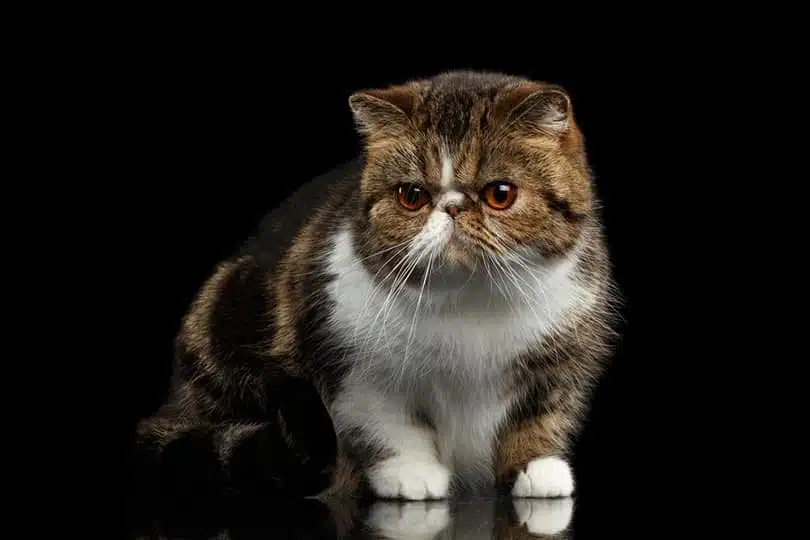
close up of Exotic Shorthair Tabby Cat in black brackground

One of the interesting things about shorthair cat breeds is the diverse range of colors and coat patterns. While the most common shorthair cat breed colors may include black, white, red, cream, brown, fawn, and blue, genetics and selective breeding have also produced gorgeous color patterns.

If you’re interested in learning more about the shorthair cat colors for British, Exotic, and Oriental breeds, we’ve got you covered. Here is a list of the seven most common shorthair cat breed colors and patterns, which isn’t exclusive, as there are numerous other colors and patterns, and it would be impossible to list them all.

divider 2 cats

The 7 Shorthair Cat Colors and Patterns

shorthair cat colors

1. Tabby

Tabby Shorthair Cat
Image Credit: Katzenfee50, Pixabay

Did you know that all cats can be considered tabbies? Well, they are! All domesticated cats carry the tabby gene, but it’s not always visible on their coat.

Tabby patterned cats come in four basic varieties, including:
  • Classic tabbies: Also known as blotched tabbies, these felines have a combination of swirls, blotches, and stripes made up of different colors.
  • Ticked tabbies: These kitties feature banding on either side of their hair shaft with lighter colored fur at the base. This creates an iridescent speckled look. One breed with this specific color pattern is the Abyssinian cat.
  • Mackerel tabbies: These tabbies have continuous vertical lines on both sides of their body, as well as a dark stripe that runs down their backs.
  • Spotted tabbies: As the name suggests, spotted tabbies have different-sized spots on their coats. Bengal cats are considered to be spotted tabbies.

2. Solid

Orange Shorthair Cat
Image Credit: Nynke van Holten, Shutterstock.jpg

Shorthair cats that are just one color are known as solid-colored felines. Sometimes, these kitties have one spot of color that differs from the rest of their coat.


3. Bi-Color

Bi-Color Shorthair Cat
Image Credit: Oleksandr Volchanskyi, Shutterstock

Bi-colored cats have white coats with patches of a different color, including tabby or black, on their bodies, with a varying amount of white. This is due to their white-spotting gene. Bi-colored cats can also be called harlequins (random spots and a colored tail), magpies (random patches), saddle (a colored saddle patch on their back), and capped, while these patterns are not necessarily recognized in all breeds.


4. Pointed

pointed shorthair
Image Credit: guvo59, Pixabay

Breeds such as the Siamese have a color-point pattern gene that gives them light-colored bodies with darker extremity colors, such as their paws, nose, tail, and ears. This type of gene is sensitive to temperatures, resulting in colors being restricted to cooler points of the body. Pointed cat breeds often have a light fawn-colored body with black, chocolate, or even lilac contrast points.


5. Tortoiseshell

Tortoiseshell Shorthair cat
Image Credit: andres felipe Aristizabal, Pixabay

These cats have a unique mixture of black and red coat colors. Torties are mainly female felines.


6. Shading

shorthair cat golden lilac
Image Credit: OksanaSusoeva, Shutterstock

Shaded cat coats are characterized by color at the fur’s tips with a snow-white undercoat. Shaded cats can have fur in smoke, shaded, and chinchilla patterns. These patterns are determined by the amount of shading on the cat’s individual hairs.


7. Tri-Colored

Calico Cat
Image Credit: loicp90, Pixabay

Tri-colored cats have black, white, and red or ginger color combinations. Also commonly referred to as calico, these cats can have diluted colors that present themselves as white, grey, or cream patches.divider 2 cats

What Colors Can Cats Be?

When it comes to cat coat colors, all cats are different colors and patterns because of gene and polygene modification. All cats are essentially black or orange unless they have modified genes and polygenes that change these two basic colors. Because of selective breeding, shorthair cats can virtually be any color known to mammals.

divider 2 cats

Final Thoughts

Whether you pick a solid, bi-colored, tri-colored, or pointed-colored cat, you can rest easy knowing that your kitty’s personality is as unique as their coat pattern. Be sure to brush your cat a couple of times per week to keep their fur sleek and shining.

See Also: 


Featured Image Credit: Seregraff, Shutterstock

Want content like this delivered to you?

Sign Up For Our Newsletter

News, insights, expert advice, and everything cat

* By submitting, you agree to our Terms & Conditions and Privacy & Cookies Policy.


How useful was this post?

Click on a star to rate (you can leave written feedback after clicking submit)

Help us improve Catster for pet parents!

Your feedback really matters.

What did you like about this post? Also how can we improve it?

Join the conversation

Leave a Reply

You’re very welcome to leave a comment or question. Please know that all comments must meet our community guidelines, and your email address will NOT be published. Let’s have a positive and constructive conversation.


Catster's Digital Magazine is Back!

Vet-approved health & behavior advice

Real cat stories & community features

Chatting About the Rainbow Bridge, Euthanasia, and Laughter During Grief | Chatty Cattys, Episode 24

If you’ve ever felt the loss of a beloved cat, or are dreading the day when your pet crosses the rainbow bridge, you’ll...

The Simple Reasons Cats Refuse to Let Anyone Use the Bathroom Alone

Cats have an extraordinary talent for making themselves present in the most inconvenient places, and the bathroom ranks near the top of the...

A Paw-sitive Milestone: Canada Officially Becomes a Declaw-Free Nation

Canada has officially become a declaw-free nation. On May 25, 2026, a new regulation was filed in Ontario under the Provincial Animal Welfare...

The Surprisingly Simple Ways to Help a Cat With Hairballs

Cats spend an astonishing amount of time grooming. It is part hygiene routine, part comfort ritual, and part instinct that traces back generations....

More related

6 Best Glucose Meters for Cats in 2026 – Reviews & Top Picks

It can be stressful learning that your cat has diabetes, and the thought of poking them with a needle to draw blood can...

FURminator deShedding Edge Cat Brush Review 2026: Pros, Cons & Features

Review Summary If you have a long-haired cat with a thick undercoat, you may have trouble deshedding their coat and preventing mats and...

My Cat Is Scared of Something I Can’t See: Common Causes & Vet-Approved Advice

It’s a tale as old as time—cats can see ghosts, right? While this is perhaps an ideology stemming from myth and fable, there...

Can Cats Eat Bread? Vet-Approved Facts & FAQ

Bread is a tasty treat that can be served in a variety of ways. During the pandemic, many people began experimenting with making...

Keep reading

Why Does My Cat Fart When I Pick Him Up? 5 Vet-Reviewed Reasons

As much as you love your cat, there are times when they can be a little gross. Times like when they repeatedly shove their butt in your face or the way they can fart when you pick them up. While...

male owner holding his devon rex cat

What Do the PrettyLitter Colors Mean? Explanation with Color Chart

Staying on top of your cat’s health can be difficult, even if you religiously take your pet to the veterinarian for regular checkups and dental care. Urinary tract infections (UTIs) and conditions like kidney tubular acidosis or the presence of...

pretty litter

How to Treat Mange in Feral Cats: Our Vet Gives 8 Tips & Tricks

If you’ve got a problem with some itchy feral felines, all of you—yes, yourself included—will be desperate to get it under control. Mange is one of several causes of really itchy skin, and it is particularly prevalent in populations of...

feral cat has a severe sarcoptic mange infection

Can Cats Eat Apple Pie? Vet Reviewed Advice

Apple pie is a popular dessert, and the smell alone will attract any hungry and curious pet. If you catch your cat sniffing around the pie dish, you may be tempted to share a slice, or if your cat has...

Can Cats Eat Apple Pie

Why Is My Cat Sniffing My Face? 6 Vet-Reviewed Reasons

Your cat loves you—that much is certain. But have you ever wondered why your cat insists on sniffing your face? It’s not just because they love the way you smell (although let’s be honest, you do smell pretty great). In...

cat smelling woman's chin

Cataracts in Cats: Vet Approved Causes, Signs & Treatment Options

Have you looked into your cat’s eyes recently, only to see a cloudy spot? If so, this may be a cataract. Cataracts aren’t as common in cats as in dogs, but they can occur (and some breeds, in particular, are...

Cat with cataract

Why Do Cats Sometimes Eat Their Placenta? Vet Approved Facts & FAQ

Cats evolved to eat their placenta. It is normal behavior that most females will exhibit while giving birth. But that does not mean that all cats will eat every placenta. Both behaviors are normal and nothing to be worried about....

mother cat giving birth to a child

Why Do Cats Like Beards? 7 Vet-Reviewed Reasons

You may have noticed that your cat is fond of your beard, often snuggling up to it while you sleep and maybe even licking or biting it. But what causes this behavior? The most likely reason cats like beards is...

bearded man cuddling a cat close up

Love Cats? So Do We! Join the Catster Community

Stay informed with expert pet care insights delivered straight to your inbox! Discover professional guidance on animal behavior, feeding tips, trusted product picks, and much more.


Sign up for the Catster Email Newsletter

Stay informed with expert pet care insights delivered straight to your inbox! Discover professional guidance on animal behavior, feeding tips, trusted product picks, and much more.