Is Xylitol Toxic To Cats? Safety & Nutrition Advice (Vet Answer)

In this article
You're getting a stick of sugar-free gum out of your pocket and accidentally drop it. Your savvy feline runs up and starts to lick it. You remember your vet mentioning that xylitol is in sugar-free gums and is highly toxic to dogs. Is the same true for cats? The answer is not so black-and-white because there is not as much research done on xylitol’s effect on cats.

What Is Xylitol?
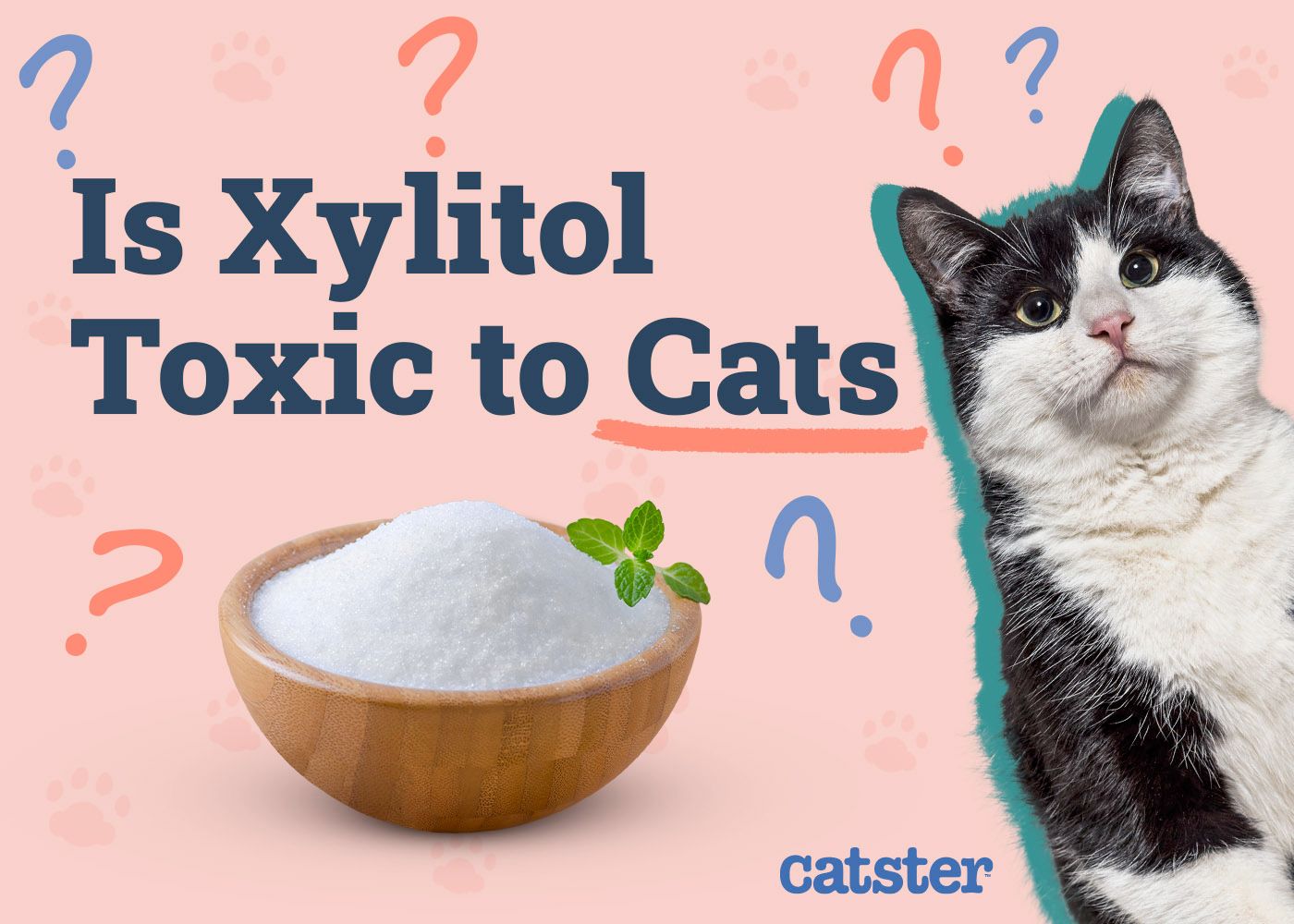
Xylitol is a sugar alcohol that doesn't have the same effects on people as regular sugar. It's often used as a sweetener in products such as:
- Sugar-free gum
- Candy
- Chocolates
- Syrup and other condiments
- Vitamins
- Lip balm
- Mouth wash

Is Xylitol Toxic to Cats?
Unfortunately, we don't know with complete certainty if xylitol is toxic to cats, although we know it has the potential to be deadly to dogs.
Minimal studies have been done on xylitol in cats. In these studies, it doesn't appear that xylitol causes hypoglycemia or liver damage in cats. The biggest reason we can't say with absolute certainty that xylitol isn't dangerous to cats is that the sample sizes were small and may not be entirely representative of all cats.1
For instance, the primary study citing that the xylitol did not cause toxic signs in cats only examined six cats that were classified as healthy. There were some biochemical changes in their blood work, but they were considered within the normal range. We don't know what would happen to a cat with liver damage.
What to Do if Your Cat Eats Xylitol
If your cat eats something with xylitol, contact your veterinarian immediately. They may suggest contacting a pet toxicology center, such as the ASPCA Animal Poison Control or Pet Poison Helpline. Use these resources because the product your cat ate could have other toxic ingredients.
Your veterinarian might induce your cat to vomit if they just ate the xylitol product. Do not attempt to make your cat vomit at home. The veterinary team might give activated charcoal to help minimize the absorption of toxic chemicals.
Your veterinary team may recommend blood work to monitor your cat's blood sugar level and liver enzymes, particularly if the item your cat ate had other potentially toxic ingredients, such as chocolate.
If, at any point, your cat becomes symptomatic, your vet is likely to offer supportive care, which could include:
- Fluids
- Liver protectants
- Anti-nausea medications

Preventing Your Cat From Ingesting Xylitol
To err on the side of caution, keep xylitol products away from your cat. Read the labels of anything you bring into your home so that you know if it contains something toxic like xylitol. Keep your purse, suitcase, or other containers that might have your pack of gum in it secured in an area where your pets can't get into them.
Frequently Asked Questions (FAQ)
Is Xylitol More Toxic Than Chocolate in Cats?
In dogs, xylitol is considered much more toxic than chocolate, although either can be deadly if left untreated. In cats, chocolate may be more toxic. It has demonstrable toxic effects on cats, such as tachycardia or elevated heart rate.
Are Cats Likely to Eat Xylitol?
The good news is that many cats won't go out of their way to eat indiscriminately, so their chances of ingesting xylitol are much less likely. In addition, cats don't perceive that something is sweet when they taste it, so they're usually less attracted to sugary-tasting sweet treats.

Conclusion
It doesn't appear that xylitol is toxic to cats, but that is based on limited data. If your cat eats something with xylitol, check with your vet to see if any intervention is needed. And never intentionally feed your cat things that contain xylitol. There are other cat-friendly treats you can give them instead!
See Also:
Sources
Featured Image Credit: sulit.photos, Shutterstock
Expert cat care, straight to your inbox
News, insights, and useful advice, delivered to you.

No spam — unsubscribe anytime.
By signing up, you agree to our Terms & Conditions and Privacy & Cookies Policy.
How useful was this post?
Click a star to rate. You can leave written feedback afterwards. (We read all feedback.)
Dr. Samantha Devine DVM (Veterinarian)
Samantha Devine is a practicing veterinarian who loves to share her experience with animal species and their health. Whether it's a guinea pig question or a pressing matter about something your cat ingested, she strives to provide clear answers. She is passionate about preventative care and firmly believes in the old adage, "An ounce of prevention is worth a pound of cure."
Dr. Devine has been practicing veterinary medicine for over 12 years and has spent a great deal of that time writing online to educate pet owners. In addition to general practice small animal medicine, she has worked with horses. zoo animals and aquatic species. She enjoys all aspects of preventative medicine, from nutrition to vaccines.
Dr. Devine received her degree from the Virginia Maryland Regional College of Veterinary Medicine.