Get

In Your Inbox

Catster is reader-supported. When you buy via links on our site, we may earn an affiliate commission at no cost to you. Learn more.

Cat Litter Box Tips: 9 Vet-Approved Ideas For Placement, Cleaning & More

Share

Ginger cat sitting in a litter box

Cats are notorious for being particular about their litter boxes. Most have specific ideas about where their facilities should be located, what type of litter they want to use, and how clean the boxes should be. Eliminating outside the litter box can sometimes be related to medical conditions, and a veterinarian should examine cats that exhibit sudden changes in restroom habits.

Providing cats with a clean litter box can help keep them happy, healthy, and comfortable in their surroundings. Keep reading for nine litter box tips to set your cat up for success.

divider single cat paw oct 2024

The 9 Cat Litter Box Tips to Set Your Cat Up for Success

1. Pay Attention to Placement

If given the choice, most cats prefer to have their litter boxes placed far away from where they eat. They also like to use the bathroom in relatively calm locations away from loud appliances.

Cats sometimes avoid using their litter boxes in areas like laundry rooms where there are loud noises. Having litter boxes on every floor of multi-story homes ensures cats have easy access to appropriate places to relieve themselves.

cat sitting in a litter box and looking sideways
Image Credit by: Lightspruch, Shutterstock

2. Consider the Size

Cats prefer large litter boxes since they provide enough room to turn around and dig. Models with relatively high sides are good investments for cats that are inclined to pee a bit high, but kittens need litter boxes with lower sides so they can climb in on their own.


3. Keep Design Qualities in Mind

Litter boxes with tops are popular with owners since they hide the mess, but because they trap smells, they can quickly become too pungent for cats to feel comfortable.

Many don’t like the feeling of being enclosed and become stressed when unable to keep an eye on what’s happening around them while using the bathroom, which can cause them to urinate or defecate elsewhere. Self-cleaning litter boxes are convenient but can be noisy and scare some cats off.

cat looking at the litter box
Image Credit: Oleg Opryshko, Shutterstock

4. Think About the Type of Litter

Many cats dislike the smell of scented litter and find it too strong to tolerate, which can cause them to avoid the litter box. However, cat safe litter additives can reduce the smell and absorb odors. Cats prefer to have a few inches of litter to dig around in, and you can add fresh litter when you remove the waste to top it off.

You may have to experiment with different types of litter if your cat doesn’t like the current one, and you have several options, including clay, paper, crystal, and corn litter.


5. Scoop the Box Frequently

Litter boxes must be scooped daily to keep smells to a minimum and bacteria and germs under control. Clumping and crystal litters both require daily scooping to keep cats happy.

Litter boxes in homes with more than one cat require far more scooping to stay fresh, and you may need to remove the waste several times a day. Some cats won’t use the bathroom in a litter box holding another pet’s waste, and it’s best to scoop the litter boxes in multi-cat homes as quickly as possible after they’re used.

Owner cleaning cat litter box at home
Image Credit: Pixel-Shot, Shutterstock

6. Get Serious About Cleaning

Plan to dump all the litter at least every few weeks and clean the box with soap and water. Many cats don’t like the scents associated with strong cleaning products; hot water and soap are usually all that’s needed.

You can also add vinegar to the water to get the litter box squeaky clean, but plastic litter boxes should be regularly replaced since they easily retain odors.

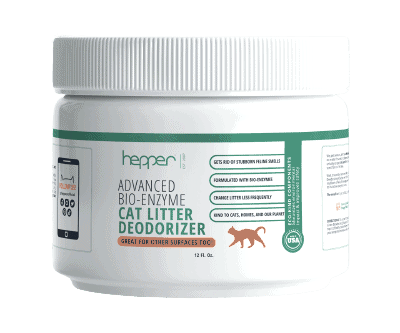
Combating tough cat litter smells is an ongoing battle for pet parents but luckily, there are products out there designed to help! Two products that significantly reduce odors are the Hepper Litter Additive and the Hepper Enzyme Spray.

Image Product Details
Best Enzyme Cleaner Hepper Advanced Bio-Enzyme Pet Stain & Odor Eliminator Spray Hepper Advanced Bio-Enzyme Pet Stain & Odor Eliminator Spray
  • Works on multiple surfaces
  • Gentle yet effective
  • Lifts stains & set-in odors
  • Best Litter Additive Advanced Bio-Enzyme Cat Litter Deodorizer Advanced Bio-Enzyme Cat Litter Deodorizer
  • Neutralizes odor within cat litter
  • Cat-safe
  • Unscented
  • At Catster, we’ve admired Hepper for many years and decided to take a controlling ownership interest so that we could benefit from the outstanding designs of this cool cat company!


    7. Take Cats’ Special Needs Into Consideration

    Older cats and those with mobility issues find it difficult to get into top-entry litter boxes and products with particularly high sides. Senior cats benefit from choices with at least one low side that provides easy entry. Ramps can also make litter boxes more accessible.

    Young man in gloves cleaning cat litter tray at home
    Image Credit: New Africa, Shutterstock

    8. Be Liberal With Quantities

    Cats aren’t fans of sharing litter boxes, and having enough in multi-cat homes is essential to ensuring kitties feel content, comfortable, and satisfied with their bathrooms. Multi-cat homes should have at least one litter box per pet and an extra to limit resource competition.


    9. Minimize Changes

    Environmental changes annoy cats, particularly when their litter boxes are involved. Try to pick a litter and stick with it unless there’s a good reason to switch things up, as cats can become upset by the changes.

    Transitioning from one product to the next slowly gives cats time to become comfortable with new options. They don’t enjoy having their litter boxes moved from one place to another, and it’s best to keep them where they are if possible.

    divider single cat paw oct 2024

    Conclusion

    Cleaning up urine and feces from carpets isn’t anyone’s idea of fun, but thankfully, there are several ways to encourage cats to go to the bathroom where they should, such as placing their litter boxes in feline-friendly locations and selecting products with features they prefer.

    Daily scooping is essential for keeping the litter boxes hygienic and clean. Having enough boxes in multi-pet homes and minimizing changes can also encourage good litter box behavior.


    Featured Image Credit: Lightspruch, Shutterstock

    Want content like this delivered to you?

    Sign Up For Our Newsletter

    News, insights, expert advice, and everything cat

    * By submitting, you agree to our Terms & Conditions and Privacy & Cookies Policy.


    How useful was this post?

    Click on a star to rate (you can leave written feedback after clicking submit)

    Help us improve Catster for pet parents!

    Your feedback really matters.

    What did you like about this post? Also how can we improve it?

    Join the conversation

    Leave a Reply

    You’re very welcome to leave a comment or question. Please know that all comments must meet our community guidelines, and your email address will NOT be published. Let’s have a positive and constructive conversation.


    Talk With A Vet Online

    Peace of mind,
    anywhere, anytime

    Affordable vet advice

    Ask Dr. Paola – Help! My Momma Cat Is Very Thin! (May 18, 2026)

    Welcome to our “Ask Dr. Paola” series, where every Monday we bring expert advice straight from Dr. Paola Cuevas (MVZ) to help our...

    The Cat Biting Mistakes Most Owners Make (And What Works Instead)

    Cat bites sent more than 400,000 people to emergency rooms in the US each year.1 Not scratches. Bites. And the reason they’re so...

    Do Cats Cause Schizophrenia? Scientists Find a Link – Here’s What It Means

    Being a fierce advocate (and occasional recipient of) mental health support and awareness, the term ‘crazy’ is not one I like to fling...

    One in 100 Cats Gets Diabetes – Here’s How to Catch It Early

    One in every 100 cats develops diabetes.1 That’s not a rare, unlucky condition reserved for cats with obvious health problems. It’s common enough...

    More related

    Golf Course Cats: Keeping Up With Milly (Part One)

    Welcome to the Wednesday Cats of Catster! Every week, we share a story from one of our cat-loving Catsters. This week is about...

    16 Vet-Verified Reasons Why Cats Make Good Pets (Backed by Science)

    Cats make fantastic pets, but you may not realize how great they can be if you’ve never owned one. Of course, you’ve likely...

    Can Cat Dander Travel Through Vents or Air Ducts? Facts & FAQ

    Having cats can be rewarding but also a struggle for some people due to allergies. If you have cats and family members allergic...

    How to Tell If a Cat Has Anxiety (12 Signs to Look Out For)

    Anxiety isn’t something experienced by humans only; cats can also get it. It can be caused by various factors, like past trauma or...

    Keep reading

    Why Does My Cat Lick My Hair? 7 Vet-Verified Reasons for This Behavior

    You’re sitting in front of the television, unwinding after a busy day, when all of a sudden, your cat starts licking your hair. What is going on here? Does your hair taste good, or do they think you need a...

    a tabby cat licking it's owner's head

    Smalls vs Cat Person: Pros, Cons & Our Verdict

    Fresh dog foods have long been all the rage in the canine world, but it hasn’t been until recently that the same could be said for cat foods. A fresh food diet is ideal for cats as they’re high in...

    Smalls VS Cat Person

    Why Do Cats Shed So Much? 8 Possible Causes & When to Be Concerned

    Shedding is a shared experience among cat owners. All cats with fur shed, even if they’re regarded as low-shedding or hypoallergenic breeds. So, it’s perfectly normal to find cat hair around your house. However, shedding does become concerning if you...

    shedding cat lying on the gray sofa

    Why One Squinting Eye in Cats Is Never Worth Ignoring

    A cat squinting both eyes is usually a sign of contentment. A cat squinting just one eye is a different story. That asymmetry matters more than most cat owners realise, and understanding what’s behind it can make a real difference...

    cat with squinted eye

    Fleas & Ticks on Cats: A Guide for Each Region in the US (Vet Approved)

    Fleas and ticks are a common problem for cats, especially outdoor cats. However, indoor cats can still be affected by them. Therefore, all cat owners will benefit from having a basic understanding of these pesky pests and being knowledgeable about...

    cat scratching itself

    Why Does My Cat Follow Me Everywhere? 6 Vet-Reviewed Reasons for This Behavior

    Is your cat too clingy? Do they constantly follow you from room to room to room and never leave you alone? Or maybe your cat has started doing it all of a sudden. While this type of behavior can be...

    cat walking with a girl

    Is There a 911 for Pets? Vet-Approved Emergency Facts

    When we are in trouble, emergency services are only a phone call away. But things happen to people’s pets daily that require veterinary attention. So, if your cat is choking on an object or has fallen extremely ill, can you...

    vet holding sick cat

    Is Waterless Shampoo Safe for Cats? Vet-Approved Benefits & Tips

    Not many owners manage to give their cat a bath and walk about without any damage! Most cats loathe water, avoiding it at all costs. If you are one of the few with a mythical cat that tolerates—or even enjoys—a...

    Catster_Is Waterless Shampoo Safe for Cats

    Love Cats? So Do We! Join the Catster Community

    Stay informed with expert pet care insights delivered straight to your inbox! Discover professional guidance on animal behavior, feeding tips, trusted product picks, and much more.


    Sign up for the Catster Email Newsletter

    Stay informed with expert pet care insights delivered straight to your inbox! Discover professional guidance on animal behavior, feeding tips, trusted product picks, and much more.