Get

In Your Inbox

Catster is reader-supported. When you buy via links on our site, we may earn an affiliate commission at no cost to you. Learn more.

Arthritis in Cats – Vet Approved Causes, Signs & Treatments

Share

cat lying on wooden floor

If your cat seems a little less sprightly and active than usual, it can be a cause for concern. Some health issues could cause mobility issues in cats, but one condition fairly common in mature cats is arthritis. Arthritis can slow your cat down and make them reluctant to engage in once-loved playtime activities.

In this post, we explore arthritis in cats—causes, how it’s treated, and how you can make your cat’s life more comfortable.

divider 3 paws

What Is Cat Arthritis?

Technically known as “osteoarthritis”, cat arthritis is a condition that causes your cat’s joints to degenerate and become inflamed. It can affect one or more joints, most commonly in the legs but any joints in the body can be affected. If your cat seems to be in pain or discomfort when up and about and has started to struggle to get up on their cat tree or use the stairs, they may be suffering from arthritis.

American shorthair cat lying on the couch
Image Credit: Clement Morin, Shutterstock

The 4 Common Causes of Arthritis in Cats

Arthritis can develop in cats because of lifestyle factors, age, and genetics. These are the most common causes:

1. Injuries

If your cat has had an accident at some point in their life, they may have sustained joint, muscle, or cartilage injuries that have led to arthritis.


2. Obesity

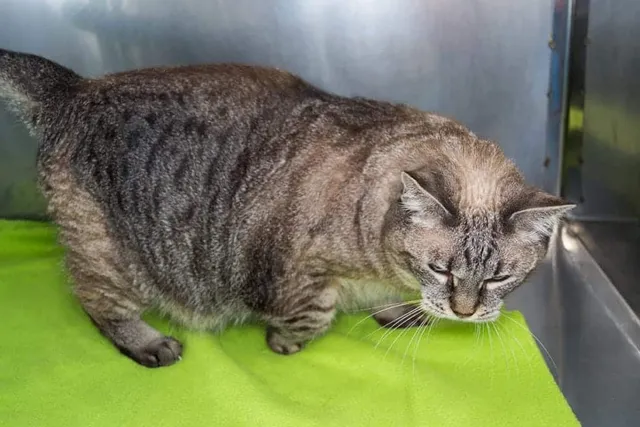
According to research, the white fat that builds up when a cat is overweight gives off inflammatory hormones, thereby worsening the inflammation and pain of arthritis. Being overweight can contribute to abnormal joint loading which can hasten the disease’s progress.

fat cat siiting on the grass
Image Credit: Dennis van de Water, Shutterstock

3. Genetics

Though arthritis can affect any breed, some cat breeds are genetically more susceptible to developing the condition, like Persians, Himalayans, and Siamese cats. The condition can also come about if the joints develop abnormally during the growth stage.


4. Age

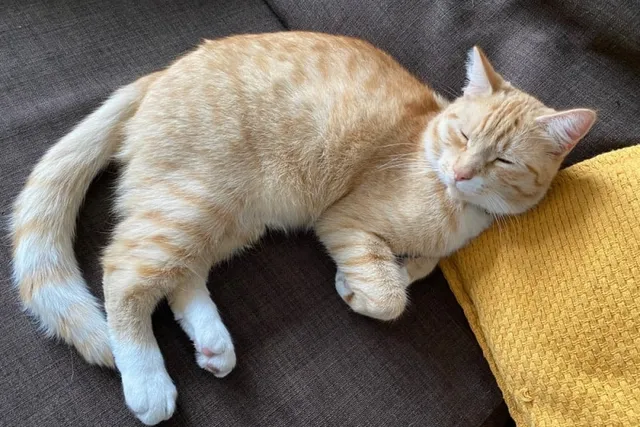
Cats of any age can have arthritis, but it is more common in older cats. This is because the joints and cartilage may wear down with age.

cat lying on sofa
Image Credit: Pixabay

Symptoms of Arthritis in Cats

There are quite a few telltale signs of arthritis in cats, but every cat experiences them differently. The symptoms may also fluctuate and vary over time. It’s important to remember that cats are pretty accomplished at hiding pain, so even if they’re not crying out in pain, it doesn’t mean that they’re not hurting. The symptoms may also be subtle. Symptoms include:

  • Struggling or reluctance to go up or down the stairs
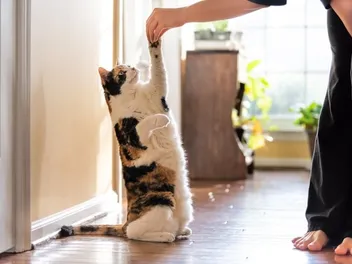
  • Struggling or reluctance to jump up or down from something
  • Struggling to use the litter box properly
  • Limping or lameness
  • Stiffness in the legs
  • Being less active than usual
  • Reluctance to be touched on certain areas of the body
  • Becoming unusually aggressive or grumpy
  • Sleeping a lot and/or withdrawing
  • Swollen and painful joints

If you spot any of the above symptoms in your cat, get in touch with your vet to arrange a checkup as soon as possible.

divider 3 paws

How Is Arthritis in Cats Diagnosed?

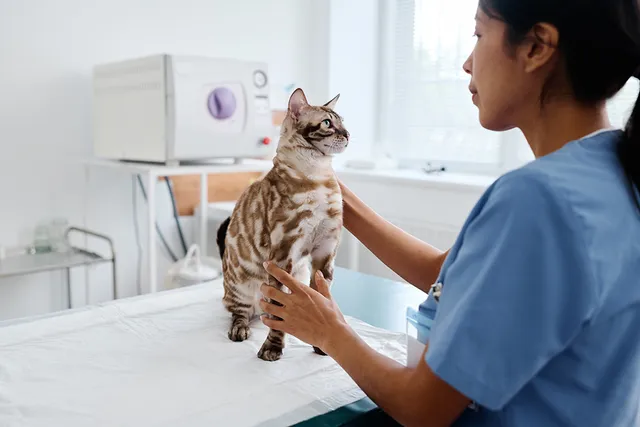
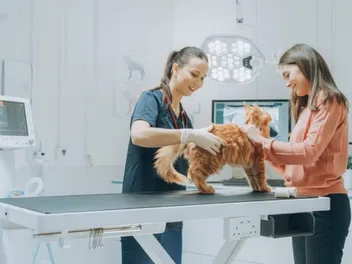
A vet diagnoses arthritis by performing a physical examination. They will check for joint deformity, fluid in the joints, instability or restriction of the joints, and difficulty with motion, among other things. The diagnosis is confirmed by conducting an X-ray.

How Is Arthritis in Cats Treated?

Treatment options are varied and will depend on the severity of your cat’s arthritis. In some cases, surgery is required, but not always. Your vet may recommend:

  • Non-steroidal anti-inflammatory drugs
  • Pain-relief medication
  • Joint protectants
  • Joint supplements (omega 3, glucosamine)
  • Physical therapy
  • Acupuncture
  • Surgery
  • A special diet
cat examined by Vets
Image Credit: Kzenon, Shutterstock

How Can I Help My Cat With Arthritis at Home?

Seeking veterinary attention should always be your first step, but there are things you can do between vet visits to help your cat feel more comfortable at home. Here are some tips:

  • Provide raised food and water bowls so they don’t have to bend to eat and drink.
  • Provide a soft, comfortable bed that’s easy for your cat to get in and out of. You may want to consider an orthopedic memory foam bed.
  • Get a litter box that’s easy for them to use, like one with a lowered side.
  • Keep your cat nice and warm to keep the cold out of their joints. You might want to provide a heating pad in winter.
  • Avoid overfeeding to prevent obesity that can worsen your cat’s arthritis.
  • Set up ramps to help your cat get up and down those hard-to-reach spots that they love (your bed, sofa, etc.).
  • Consult a vet to talk about the best kind of food to keep your cat’s weight down and their joints in as good shape as possible.

The practical things aside, don’t forget to pamper your kitty! Spend time with them, brush them with a soft brush, and spoil them with petting sessions (avoiding areas that might be painful, of course). Your cat is sure to appreciate the extra attention as a distraction from the discomfort.

divider 3 paws

Final Thoughts

The best way to prevent arthritis from developing in your cat is to feed them a healthy, nutritious diet and make sure they’re well-exercised to keep their weight down. If your cat is showing signs of arthritis, take them to your vet for diagnosis and to find out how best to treat the condition. The good news is that many cats live long, happy lives when their arthritis is appropriately managed.

Related Reads:


Featured Image Credit: Stock-Asso, Shutterstock

Want content like this delivered to you?

Sign Up For Our Newsletter

News, insights, expert advice, and everything cat

* By submitting, you agree to our Terms & Conditions and Privacy & Cookies Policy.


How useful was this post?

Click on a star to rate (you can leave written feedback after clicking submit)

Help us improve Catster for pet parents!

Your feedback really matters.

What did you like about this post? Also how can we improve it?

Join the conversation

Leave a Reply

You’re very welcome to leave a comment or question. Please know that all comments must meet our community guidelines, and your email address will NOT be published. Let’s have a positive and constructive conversation.


Catster's Digital Magazine is Back!

Vet-approved health & behavior advice

Real cat stories & community features

Chatting About the Importance of Spaying/Neutering, Cat Retail Shopping Ban & Red-Level Storms | Chatty Cattys, Episode 30

In this episode of Catster’s Chatty Cattys podcast, Nicole and Dr. Karyn are celebrating a major legal win for pets before diving into...

Is Your Cat Happy? Here’s How You Can Tell

Cats have a reputation for being indifferent, even inscrutable. But despite their seemingly ambivalent appearance, cats experience many emotions, including happiness, and they...

Human Brains Age Like Cats – New Study Debunks the 7-Year Rule

If you’ve ever caught your senior cat staring blankly at a wall, wandering the halls at 3 am, calling out for no clear...

Chatting with Devin About Here! Have a Kitten, Fostering, & Why Two Are Better Than One | Chatty Cattys, Episode 29

In this episode of Catster’s Chatty Cattys podcast, Nicole & Dr. Karyn sit down with Devin, the founder and one-woman show behind “Here...

More related

Can Cats Eat Oatmeal? Vet-Reviewed Facts & Considerations

There are few staple breakfast foods that keep you satisfied and full of energy like oatmeal does. But just because it’s good for...

Can Dogs Smell Cats? Canine Senses Explained (Vet-Verified)

Dogs have a very keen sense of smell. Therefore, it makes sense that dogs would be able to detect the scent of cats...

Foodies vs Picky Eaters: The Wednesday Cats of Catsters’ Food Habits

Welcome to the Wednesday Cats of Catster! Every month, we ask our cat-loving Catsters to weigh in on a new topic. This week,...

Single Kitten Syndrome: What Is It? Vet-Reviewed Facts & Myths

Single kitten syndrome refers to behaviors sometimes displayed by kittens adopted alone into a single-cat household or who, for whatever reason, go through...

Keep reading

Is My Cat Drinking Enough Water? Vet-Approved Facts & Tips

Ensuring your cat is hydrated is incredibly important for its overall well-being. Cats need to intake around 1–2 milliliters of water per kilogram of weight every hour, which for a 10-pound cat means an average of one cup of water...

cat drinking from cat water fountain

Can Cats Eat Aloe? Vet-Approved Safety Guidelines

If you have a garden full of aloe and a cat, you know it’s only a matter of time before you have a garden full of aloe plants with cat bite marks. At that point, you’ll ask yourself, “Can cats...

Can Cats Eat Aloe

Why Do Cats Gag? 10 Vet-Verified Reasons & When to Worry

Our cats are always nosing about, getting into all sorts of things. They see something peculiar, and what better thing to do than give it a good sniff? If your cat gags a lot, you might wonder what gives. Some...

cat gagging

Norwegian Forest Cat Health Problems: 3 Vet-Reviewed Issues

Norwegian Forest Cats are generally pretty healthy. However, just like any purebred animal, they are prone to some health problems. Many of these are hereditary, which means that cats will inherit them from their parents. However, inherited diseases are not...

Catster_Health Problems of Norwegian Forest Cats

Do Cats Run Away to Die? Vet-Reviewed Feline Behavior

There’s no shortage of exciting ideas about what extra senses cats have. Some people have even heard that cats can sense when they are going to pass away and will often run away to die. But how much truth is...

Calico maine coon cat sitting outside

3 DIY Tuna Pumpkin Cat Treat Recipes: Vet Approved Treats

We all love treats, and you can find several commercial cat treats for your kitty. But have you ever considered making your own? Making cat treats isn’t as difficult as you might think, and most recipes involve few ingredients and...

cat eating from feeding bowl

12 Vet-Approved Ways to Calm a Cat Down at Night

We all love our cats, but if they’re suddenly full of energy as soon as the sun goes down and you’re trying to get to sleep, it can be a little frustrating. Cats are naturally more active at night time,...

cat sleeping in the dark

Can Cats Eat Pecans? Vet-Approved Facts & FAQ

Cat owners around the world know that they must be careful about where they leave food lying around. Felines can jump up onto benches and shelves to reach food items that have been left out and, in some cases, even...

Can Cats Eat Pecans

Love Cats? So Do We! Join the Catster Community

Stay informed with expert pet care insights delivered straight to your inbox! Discover professional guidance on animal behavior, feeding tips, trusted product picks, and much more.


Sign up for the Catster Email Newsletter

Stay informed with expert pet care insights delivered straight to your inbox! Discover professional guidance on animal behavior, feeding tips, trusted product picks, and much more.