Are You a Cat Magnet? Tips on How to Get Cats to Love You

In this article
If you’re a cat lover, you may be wondering how to make cats love you just as much as you love them! Sadly, there is no certain way to go about this. Cats are not dogs, so showing them affection isn’t a guaranteed (or even good) way to make them like you back.
That said, there are some ways you can encourage cats to like you. Cats prefer you to interact with them in certain ways. Learning these preferences can help you encourage your relationship with all cats.

The 7 Tips on How to Get Cats to Like You
If you want a cat to like you, you do not need to lavish them with attention. Often, cats find this threatening. If you try to pet a cat that hasn’t warmed up to you, you’ll probably just scare them! Here are some behaviors that cats do typically like:
1. Respect their boundaries
Do not approach a cat you do not know. The best way to make a cat like you is to ignore them completely. Yes, this may seem counterintuitive. It isn’t how humans make friends; however, it is how cats make friends. This fact is why cats often approach people who aren’t fans of cats. People who don’t like cats often ignore them, and cats interpret this as friendly behavior.

2. Playtime is safest
Cats may not want to cuddle up next to you right away. However, many cats will play before they will cuddle. This can be a sneaky way to bond with a cat before they’re reading for petting. Younger cats particularly like play, but even older cats often enjoy some interactive playtime.
3. Learn their body language
Cats have a language all of their own. If you want to make friends with them, it’s important that you learn and abide by this language. For instance, slow blinks are often an indication that a cat wants to be petted. If you didn’t know this, you may lose out on some cuddle sessions. Similarly, if your cat has dilated pupils, they probably don’t want affection.

4. Don’t force it
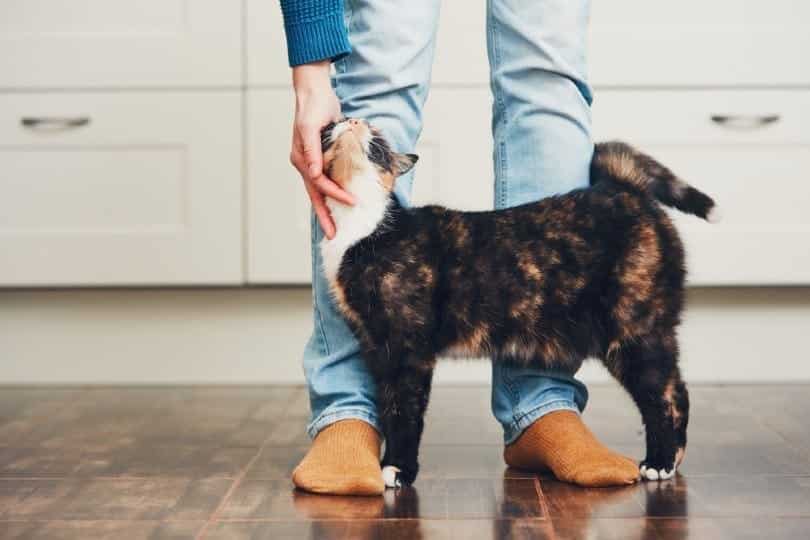
If you force your cat to cuddle with you, there is a good chance they won’t like it. Cats have very firm boundaries and do not like people who cross these. When you’re trying to interact with a cat, the best way to see if they want affection is to gently pet their head. Don’t jump straight to picking them up.
5. Ensure their needs are met
A cat that doesn’t have their needs met won’t be a very laid back In fact, a lack of water, food, or movement can make a cat very anxious. Cats need daily exercise and a nutritionally complete diet. Otherwise, they will be thinking about survival—not making friends.

6. Try treats
If you’ve tried to make a cat your friend and it hasn’t worked, try using treats. While this may seem like cheating, it can work in situations where the cat isn’t confident enough to approach you otherwise. Cats that weren’t properly socialized often fit into this category. Of course, be careful not to overfeed the cat, as this can lead to obesity.
7. Be patient
Cats need more time to warm up to people than dogs do. Therefore, you may have to ignore them for a few days before they feel comfortable enough to interact with you. If you try to push the relationship too fast, your feline may only become fearful.


The 5 Tips on How to Befriend a Shy Cat
Most cats will readily bond with people when approached correctly. However, there is a subset of cats that are very cautious and may need a bit of encouragement. Generally, if a cat is very scared, here’s what you should consider:
1. Provide hiding spots
It may seem counterintuitive, but if a cat wants to hide, you should ensure they have plenty of places to hide in. Cats hide to regain their confidence. Not being able to hide will only stress them out.

2. Minimize loud noises
Most shy cats are scared of loud noises and fast movements. These can be scary, so keep the environment as calm as possible.
3. Don’t pressure them
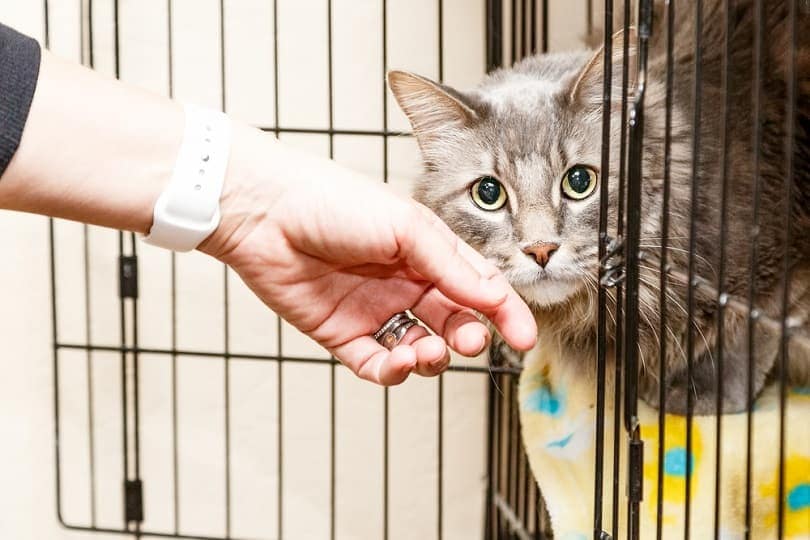
Don’t reach your hand into their hiding spot to pet them. Don’t force them to stop hiding. Spend your interaction time in the room, doing some sort of quiet activity. Just existing quietly will let the cat get used to you.
4. Use positive reinforcement
Reward any interaction with treats and quiet praise. You want to build a positive association with people in the cat’s mind. Food is a great way to accomplish this.

5. Maintain a routine
You often never know what sort of life a cat had before you adopt them. You can ease some of their anxiety by keeping things predictable. If you offer food at the same time each day, the cat will slowly learn that they don’t have to worry about food. A less anxious cat is much more likely to relax and interact with humans.

Exceptions and Advice on Specific Cats
The tips we provided above will work for the vast majority of cats out there. However, some cats may be exceptions or need a bit of extra help.
Age
Kittens tend to be very playful and friendly. The best way to bond with them is to bring out the cat wand and not force them to sit still for cuddling. Even kittens from more laid back breeds often don’t want to cuddle much until they reach maturity. Most kittens are easier to bond with than older cats, as they aren’t as fearful.
Adult cats may or may not like to play. Some cats stay very playful into adulthood, but others may completely ignore attempts to play. It may take longer to bond with adult cats, though some remain very friendly into adulthood. Some may seek out cuddles, while others may not show much interest in affection.
Senior cats often prefer calmer areas and may be more stressed by loud noises. Some are very laid back and won’t complain if you cuddle them, while others may hide at the sight of any new person. Senior cats are often very easy to befriend or very hard to befriend.
Breed
Breed quirks should also be considered. For instance, Siamese cats are very vocal and social. They’re often easier to befriend, especially when they’re younger. These cats need a lot of attention, and they’re often happy to receive it. Maine coons are often fairly friendly, but they can also be aloof without tons of socialization. Ragdolls are exceptionally friendly, but they prefer quieter interaction.

Rescues
Rescue cats can be more cautious and fearful of other cats—or they may be very friendly and trusting. It depends on their previous experiences, and it is often impossible to know what these experiences were. Therefore, you have to plan on being very patient with a rescue cat, but don’t be surprised if you bond with one faster than you might expect.
It’s important to note that feral cats do not usually befriend humans. If kittens are not socialized with humans when they are young, they will typically remain wild their whole life. Feral cats often don’t show other common behaviors we associate with cats, such as meowing.
Final Thoughts
Befriending cats can be hard, as they tend to like behaviors that we don’t see as friendly. Most cats prefer people who mostly ignore them. Someone who always rushes to pick them up and pet them can quickly become a source of fear and anxiety. Instead, much of your time interacting with a new cat should be doing another quiet activity while they’re hanging around.
Slowly, they will become used to your presence and eventually decide to interact with you. For some cats, this may only take a few minutes. For more highly-strung cats, it may take several days. Patience is key, as forcing interaction often leads to fear.
Sources
https://www.treehouseanimals.org/wp-content/uploads/2020/02/Feral-Cats-Fact-Sheet.pdf
https://www.humanerescuealliance.org/blog/posts/tips-for-a-successful-meet-and-greet-with-a-cat
https://www.reddit.com/r/japanlife/comments/16s8qjy/how_do_i_befriend_the_cats/
https://www.cats.org.uk/cats-blog/how-to-make-friends-with-nervous-cat
Featured Image Credit: Africa Studio, Shutterstock

Expert cat care, straight to your inbox
Vet-reviewed advice, behavior tips, and the best of Catster. Free, and you can unsubscribe anytime.
By signing up, you agree to our Terms & Conditions and Privacy & Cookies Policy.

Kristin is passionate about helping pet parents create a fulfilling life with their pets by informing them on the latest scientific research and helping them choose the best products for their pets. She currently resides in Tennessee with four dogs, three cats, two fish, and a lizard, though she has dreams of owning chickens one-day!
Join the conversation
Ask a question, share your story, or send private feedback.