A litter box can seem trivial when preparing for your new cat to come home. However, your cat will use the box multiple times a day, every day, for their entire lives! Add in the fact that cats can be picky with where they do their business, and you suddenly have a much more complex choice to make!
Luckily, by thoroughly researching your options, you can choose the perfect litter box in a size that suits your cat’s needs. In this article, we’ll explain everything you need to consider when choosing a litter box and why the right size is important.

Before You Start: Deciding on the Type of Litter Box
It’s a good idea to know what kind of litter box your cat prefers (or will use) before you begin looking for different sizes. Cats can be very particular about their litter box; some prefer open litter boxes, and others prefer closed ones.
There’s no way of knowing what your cat will like until they try it out, but there are ways of making an informed decision. If you’re getting a new kitten, they should be fully litter trained before coming to you; ask the breeder what kind of litter box they used.
If you’re adopting an older cat, ask their previous owners or the shelter you’re getting them from what kinds of litter boxes they like to use. Moving home is a big disruption for any cat, so giving them a box they like is critical to helping them settle in.

Preparation: What You’ll Need
You’ll need to gather your materials to accurately measure your cat for a litter box. Having everything to hand before you begin can reduce the stress of the ordeal, and you’ll be able to decide on the size you’ll need. Make sure you have the following before you begin:
- Soft measuring tape
- Pen and paper/phone notepad to record measurements
- A treat to reward your cat!
How to Choose the Right Size Litterbox for Your Cat
1. Determine How Big Your Cat Is (Or Will Be)
The most important factor to consider when choosing which litter box your cat needs is how big your cat is, or how big they’ll grow to be. A litter box needs to feel secure and private for your cat to use it comfortably, and they shouldn’t have to squeeze in to use it.
Your cat should be able to fit in the litter box fully and easily turn around in it, and the total length of the box should be one and a half times the length of your cat from their nose to the base of their tail. Litter boxes come in standard sizes (small, medium, large, etc.), so make sure to look on the product websites for specific measurements or ask a staff member in a store for help.
You then need to measure your cat using a soft measuring tape beginning at the end of their nose and going down their back to the base of their tail. This shouldn’t take too long and is important for getting a correctly sized tray. You may need someone to help you by holding your cat still, but if they get stressed, let them go and try again another time.
If you have a new kitten and wonder how big they’ll eventually be, you can research their breed (if they have one!).

2. Decide Where You’re Going to Put the Litter Box
After measuring your cat, you can decide where to put their litter box. Cats are picky and usually struggle to use the box if it’s not in a place where they feel secure, but you also don’t want it in the middle of the living room!
It’s best to place your cat’s litter box in a space out of the way and partially hidden, and it should not be close to their food and water.
3. Choose a Type
There are now several types and shapes of litter boxes on the market, and here are the five types of litter boxes to consider:
- Open
- Corner-shaped
- Enclosed
- Self-cleaning
- Top-opening
Some cats do perfectly fine with enclosed litter boxes and owners may like them due to reduced mess and smell, but others prefer to see out of the sides of their box to look for danger. Cats are at their most vulnerable when they’re distracted or stuck doing a task (such as using the bathroom!), so keeping an eye out for danger can help them feel more secure.
An open litter box may be more appropriate for tall cats since they don’t have to worry about head clearance! Self-cleaning litter boxes are a newer invention that uses automatic scooping and refilling technology to eliminate the hassle of cleaning your cat’s litter box.
However, they produce noise and vibrations that can disturb cats and can cause them to avoid using the box altogether. Top-opening litter boxes are similar to enclosed litter boxes or high-sided ones, and the opening is on the top rather than the front. Whichever type you choose, it should be easy to clean, cat-safe, and secure.
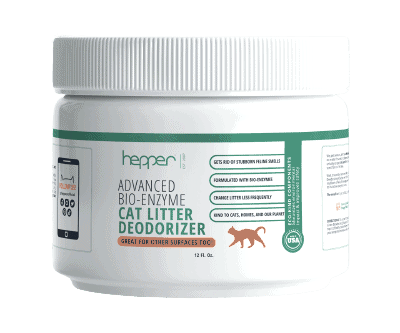
Cleaning up after our pets is not the most enjoyable part of owning them. Despite keeping a clean litterbox, cat odors and stains may still exist around the house. Sometimes, even the best litter box setup needs extra help. If you're tired of dealing with bad smells from litter boxes, Hepper Advanced Bio-Enzyme Pet Stain & Odor Eliminator Spray can help with the worst pet stains and smells. Additionally, the Advanced Bio-Enzyme Cat Litter Deodorizer neutralizes odors upon contact.
Our Favorite Products
| Image | Product | Details | |
|---|---|---|---|
Best Enzyme Cleaner

|
Hepper Advanced Bio-Enzyme Pet Stain & Odor Eliminator Spray |
|
CHECK PRICE |
Best Litter Additive
|
Advanced Bio-Enzyme Cat Litter Deodorizer |
|
CHECK PRICE |
At Catster, we’ve admired Hepper for many years and decided to take a controlling ownership interest so that we could benefit from the outstanding designs of this cool cat company!
4. Look at the Sides and Depth
High-sided litter boxes are best for cats without mobility issues. Cats instinctively bury their waste because they don’t want predators or other cats to discover it, and some sling the litter everywhere, but a high-sided box can help.
However, kittens and elderly cats or ones with mobility issues need to get in and out of the box safely and comfortably. Cats with arthritis would have a hard time getting into a litter box with high sides. Low-sided litter boxes are designed specifically for those cats, so consider your cat’s age and health when choosing.
Your cat’s litter box must also be deep enough to provide space for the right amount of litter. Your cat should have enough litter in the bottom of the tray for them to dig in; some cats like a lot of litter, some prefer less.

5. Remember the Litter!
Lastly, don’t forget the litter! There are so many types of litter available that you’ll likely have to try a few kinds to find out your cat’s favorite. Many cats like litter that clumps, which makes the clean-up easier, and a fine clay substrate can simulate the soil they’d dig in in the wild.
Final Thoughts
Picking out the perfect-sized litter box for your cat may seem daunting when faced with all the options, but the key to it all is measuring your cat! Once you’ve measured them and decided on the height, look for models that are easy to clean and suit your cat’s needs.
Remember that kittens will need to size up their litter boxes as they grow, so measuring them at different stages of growth will ensure your cat has the most comfortable box that meets all their toileting needs.
Featured Image Credit: Andrey_Kuzmin, Shutterstock
 Before You Start: Deciding on the Type of Litter Box