9 Interesting Facts About Cat Whiskers You Need to Know


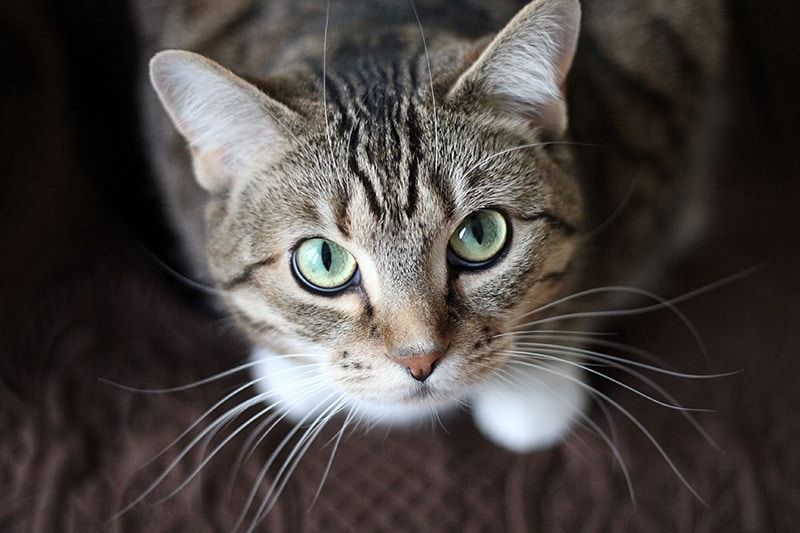
Have you ever wondered what purpose cat whiskers serve? Surely, they are not there for looks, right? Of course not. Cat whiskers, indeed, serve quite a few important functions. In this post, we’ll discuss nine interesting facts about cat whiskers so that you know the scoop on these funny-looking and cute parts of a cat’s anatomy and what they do.

Why Do Cats Have Whiskers?
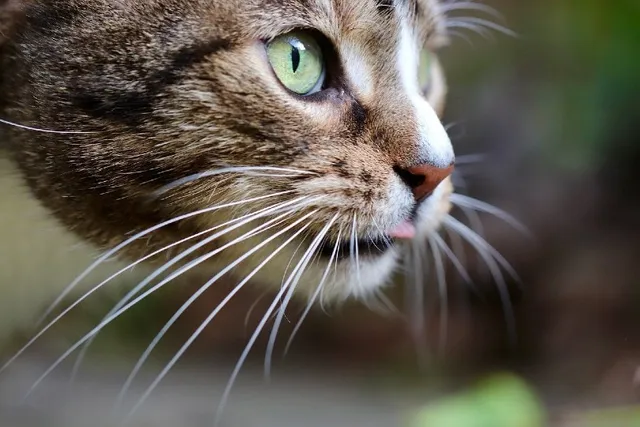
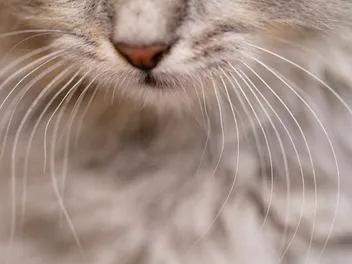
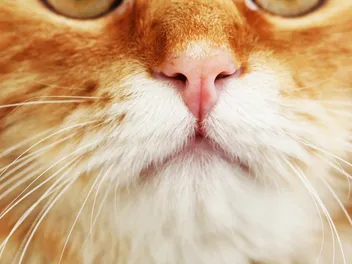
Before we dive into interesting facts about cat whiskers, let’s briefly summarize why they have them in the first place. For starters, cat whiskers help them navigate their surroundings. They serve as a sensory tool and are not there for looks. The scientific name for whiskers in mammals is vibrissae, derived from the Latin word “vibrio,” meaning “to vibrate.”
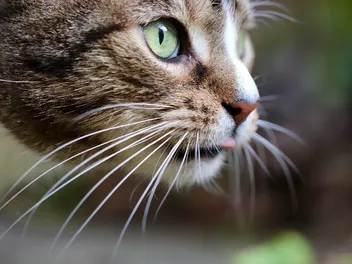
Cat whiskers are longer, stiffer hairs that sit deep in hair follicles full of blood vessels and nerves. When air bounces off whiskers or they brush against an object, they vibrate, stimulating the nerves in the follicle and sending sensory messages to a cat’s brain. This gives a cat important information about their surroundings.


The 9 Interesting Facts About Cat Whiskers
1. Cat Whiskers Are Not Limited to the Face
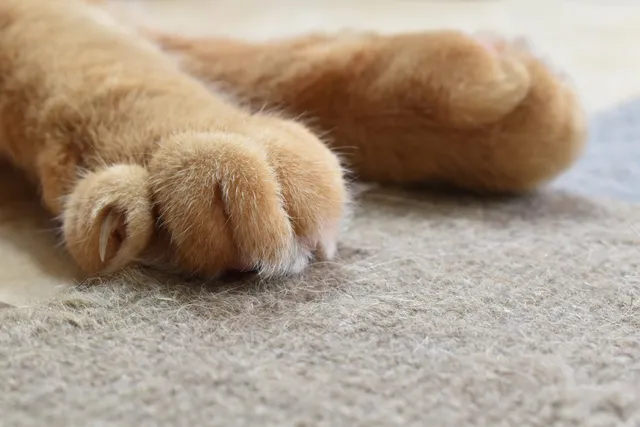
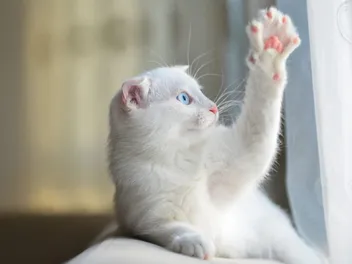
Our first interesting fact may surprise you. A cat has whiskers not only on the face but also on the legs. But why? The whiskers on the legs help a cat feel around while hunting prey. Also called carpal whiskers, they provide information to help a cat get a sense of the movement and orientation of their prey in relation to their paws. They also allow them to feel around in the dark and small spaces.
These whiskers are found on the front legs. They also help a cat understand the ground they are walking on and aid during climbing by allowing them to perceive the surface they are clinging to. In short, the carpal whiskers are designed to help cats hunt effectively.
2. They Shed Their Whiskers
Cats shed not only their fur but also their whiskers, both on the face and the legs. Not to worry, though; as long as the whiskers shed naturally and the hair follicles are not damaged, the whiskers will grow back. Typically, no more than one or two whiskers shed naturally at a time, and it can take anywhere from 6 weeks to 3 months for the whisker to grow back and be functional. They may take even longer to be fully grown.

3. They Are Highly Sensitive
We’ve touched on how sensitive the whiskers are, but it stands to reason why. They serve many functions for cats, such as providing them with a sense of touch to help hunt prey at night, getting a feel for their surroundings, avoiding threats to the eyes from branches, limbs, and other hazards, and a sense of orientation.
4. Whisker Length Is Determined by the Size of the Cat
You may have noticed that some cat whiskers are longer than others. Typically, the bigger the cat, the longer the whiskers. In other words, whisker lengths are roughly proportionate to the width of a cat’s body, including the fur. This purpose helps a cat determine if they can fit through a narrow or tight space. Think of it as a measuring tape—if the whiskers fit, so will the cat.
Remember that when whiskers are brushed up against something they vibrate, sending signals to the brain. This allows a cat to understand the size, shape, and speed of objects and prey, as well as tight spaces!

5. You Should Never Cut Them
Relevant to number four on our list, a cat’s whiskers are proportionate to the width of the body, and cutting or trimming them is something you should never do. Even though the nerves are associated with the follicle of the whisker rather than the hair itself and cutting them is not painful to the cat, it will throw off a cat's senses, making it confusing, stressful, and more challenging to navigate their surroundings.
6. They Indicate How a Cat is Feeling
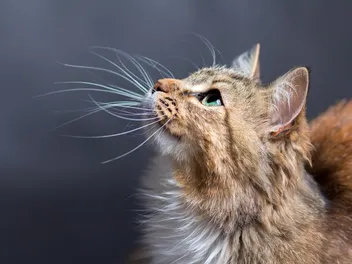
Whiskers can also give you a clue as to a cat’s emotions. The position of the whiskers can help determine if the cat is angry, relaxed, curious, or feels threatened.
For example, a happy cat’s whiskers will appear relaxed, if the whiskers are pushed forward and fanned out, this typically means the cat is curious about something or on high alert. A cat that feels threatened and fearful, or is shy, may pull their whiskers flat against the face.

7. They Can Change Color
Like humans' hair turning grey with age, cats' whiskers can also change color. In addition to age, genetics can also play a factor in a change in whisker color. A few cats are born with black whiskers, but others may change to black with age. Take the Bombay cat, for example. This cat breed is born with black whiskers that blend with their sleek black coat. In other cases, black whiskers may turn white or grey later in life.
8. They Are Symmetrical
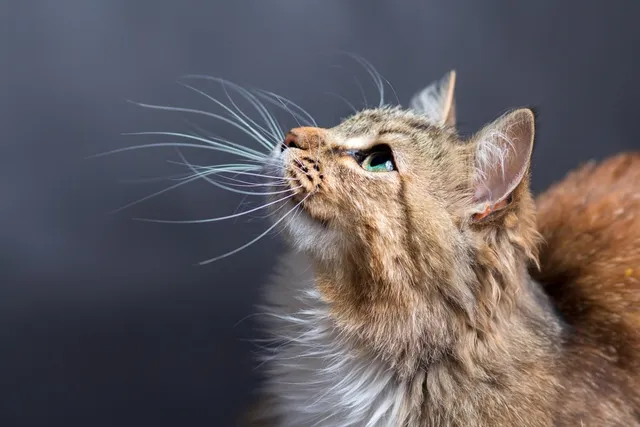
A cat’s whiskers accurately help them gauge and measure their environment, and that’s in part due to the symmetrical distribution. Most cats have approximately 24 whiskers on their cheeks, with 12 on either side, usually in four horizontal rows on each cheek. While some cats may have more, the number will almost always be an even number. They also have whiskers above their eyes, on their chin and on their forelegs as we discussed.

9. They Are as Sensitive as Human Fingertips
The follicles that whiskers originate from are packed with nerves and blood vessels, making them extremely sensitive. Just like a human’s sense of touch lies within the fingertips, in a similar way, a cat’s whiskers allows them to feel the world around them.

Conclusion
As you can see, a cat's set of whiskers is vital to their anatomy, allowing them to navigate the world around them safely. Whiskers serve many important functions for our feline friends including helping them hunt, gauge spaces, and communicate their feelings. Whiskers may occasionally fall out but will normally be replaced by new ones, however, remember whiskers should never be cut or trimmed.
See also:
Sources
https://www.purina.co.uk/articles/cats/behaviour/common-questions/why-do-cats-have-whiskers
https://www.petmd.com/cat/behavior/evr_ct_why_do_cats_have_whiskers
https://vcahospitals.com/know-your-pet/why-do-cats-have-whiskers
https://kessenvetclinic.com/news/do-cats-really-use-their-whiskers-to-measure-space
https://vethelpdirect.com/vetblog/2021/03/11/why-do-cats-have-whiskers-and-how-do-they-use-them/
https://www.petassure.com/maxscorner/facts-about-cat-whiskers/
Featured Image Credit: JumpStory
Expert cat care, straight to your inbox
News, insights, and useful advice, delivered to you.

No spam — unsubscribe anytime.
By signing up, you agree to our Terms & Conditions and Privacy & Cookies Policy.
How useful was this post?
Click a star to rate. You can leave written feedback afterwards. (We read all feedback.)
Rachel Giordano is a Pensacola, Florida-based musician and writer. She lives with her partner and their two dogs, Sophie, a Boston Terrier, and Aero, a Border Collie/Sheltie mix. Rachel holds a Bachelor of Arts degree in communication and loves writing about all types of cat breeds. When she’s not writing about cats, she loves to write suspense/thriller novels. A musician by night and writer by day, she enjoys sharing her knowledge of the needs and requirements of our furry friends.