Is It Okay to Trim My Cat's Curly Whiskers? Vet-Reviewed Facts & FAQ


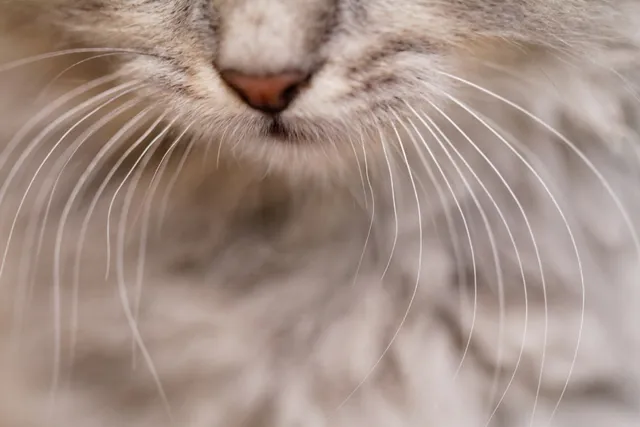
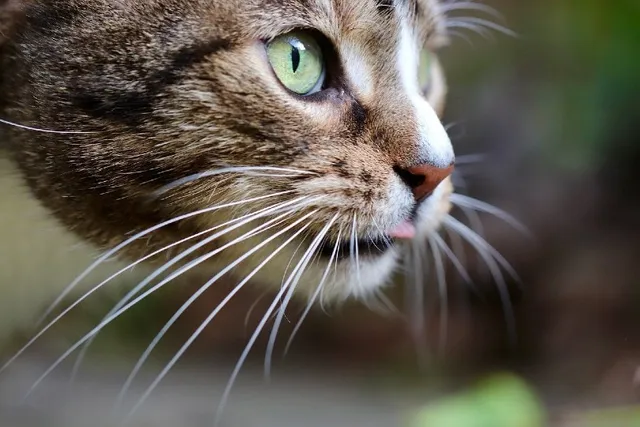
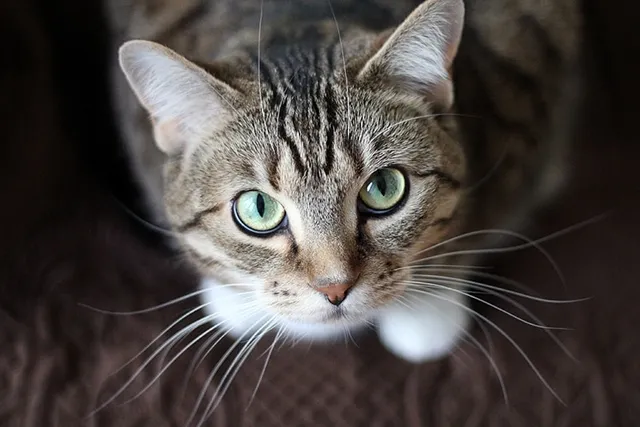
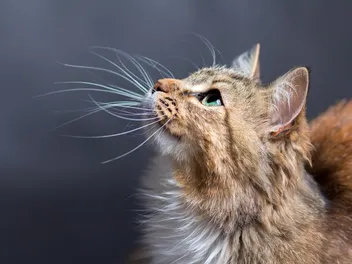
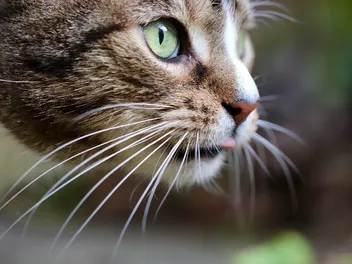
Whiskers play a prominent role in how cats navigate the world. Cats use their whiskers to do various things, including communicate with other animals and move around in low-light conditions. Cats typically have whiskers on their chins, cheeks, and right above their eyes.
These sensitive hairs also grow on the inside of their front legs (close to their paws) and by their ears; most have 12 on each cheek. They are made of keratin, like human hair, so the structures themselves don't have nerves or feel pain when trimmed or cut, but the follicles are extremely sensitive.
Because cats' whiskers are so important to how they perceive spaces around them, get from place to place, and communicate, you should never trim a cat’s whiskers unless you absolutely have to.

How Do Whiskers Work?
Whiskers are incredibly important to cats. When a cat moves through space, air flows over their whiskers, causing the hairs to vibrate. The vibrations are picked up by the nerves and are sent directly to the brain for interpretation.

What Sorts of Information Do Whiskers Provide?
Cats use the information provided by their whiskers to determine how fast objects move and their distance from them. Cats have excellent long-distance vision, but their close-up sight is not terrific. Their whiskers detect air currents and allow cats to “see” objects up close that they would otherwise have difficulty focusing on.
They also help cats navigate in low-light conditions and express emotions. Their whiskers send signals to the brain regarding their body’s position that they use to stay balanced and coordinated. Stressed cats sometimes shift their whiskers slightly forward, while frightened ones draw theirs tensely back.
You’ve probably seen your cat squeeze into tight spaces. Their whiskers help them determine if the spaces are too small for them to squeeze through.
Why Are My Cat's Whiskers Curling?
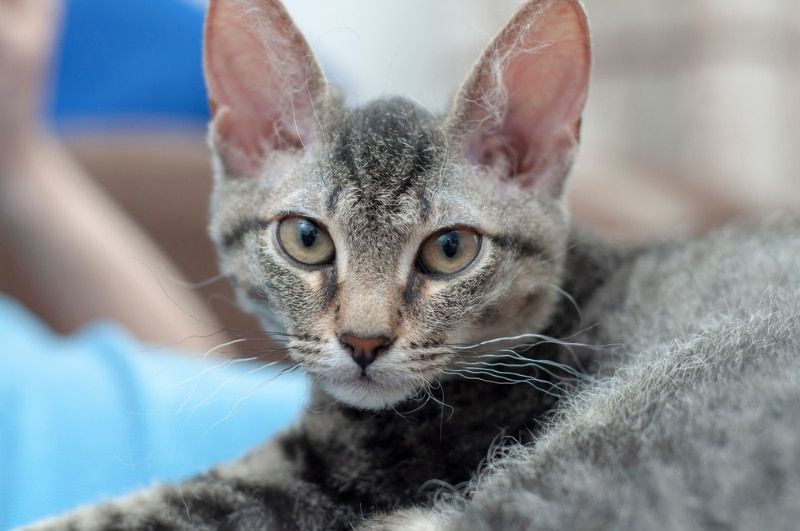
Cats' whiskers curl for several reasons, including when they're singed or damaged during grooming or play. Cats with curly fur sometimes have whiskers to match. Selkirk Rex, Devon Rex, Cornish Rex, and LaPerm cats sport curly coats and whiskers, and the curly whiskers are a normal trait. It's also possible to find non-pedigree cats with curly whiskers.

Are There Ways to Support Cats' Whisker Health?
Yes. Because whiskers are so sensitive, many cats benefit from having wide food and water bowls that provide enough space for them to eat or drink without their whiskers coming into contact with the sides of the bowl.
Wide, shallow bowls can reduce the stimulation cats' whiskers receive while eating and drinking, which can go a long way toward keeping them happy and comfortable. Cats prefer for their whiskers to be left alone when being petted, and too much contact can become overwhelming.
Are There Diseases That Can Impact Cats' Whiskers?
Almost any disease or condition that causes problems with a cat's fur or skin can also wreak havoc on their whiskers. Mange, allergic dermatitis, and various infections can cause a cat's whiskers to fall out or keep them from regrowing.
Whisker loss can also be a side effect of some types of medication. Speak with your veterinarian if you have concerns about your cat's whiskers or coat, particularly if you notice changes in the condition of their appetite or fur .

Do Whiskers Regrow?
Whiskers regrow on their own most of the time if the follicle is healthy. Cats shed whiskers, and it’s normal for one or two to fall out from time to time. Whiskers need about 6 weeks to 3 months to grow back.
What If My Cat’s Curly Whiskers Get Dirty or Knotty?
Most of the time, your cat will take care of their own whiskers during their fastidious grooming routine. If you notice that your cat seems to be struggling with something sticky in their whiskers that they can’t seem to get rid of, you can try helping them out by gently wiping them with a damp washcloth or grooming wipe. If there is something stuck or the whiskers are knotted, and you cannot wipe or comb it out, this is the one time that trimming may be appropriate. Always get someone to help you, and only ever use blunt-nosed grooming scissors - one false move could lead to serious eye damage.

Conclusion
Whiskers play several important roles in how cats see and interact with the world; leaving them alone is the best policy. They’re incredibly sensitive and provide information about the world that goes directly to cats' brains to be interpreted.
Trimming the whiskers is like taking away one of their senses, and if you’re concerned about the health of your cat’s coat or whiskers, make an appointment with your veterinarian.
Sources
Featured Image Credit: Shkarendin, Shutterstock
Expert cat care, straight to your inbox
News, insights, and useful advice, delivered to you.

No spam — unsubscribe anytime.
By signing up, you agree to our Terms & Conditions and Privacy & Cookies Policy.
How useful was this post?
Click a star to rate. You can leave written feedback afterwards. (We read all feedback.)
Lorre Luther is a writer who is firmly convinced that cats are smarter than humans. She left her law career in the United States and moved to the Netherlands to follow her dream of becoming a writer. Lorre currently lives in Rotterdam, she enjoys traveling and greatly appreciates the beauty of nature. Lorre has a spot for animals and admires the intelligence of cats.