
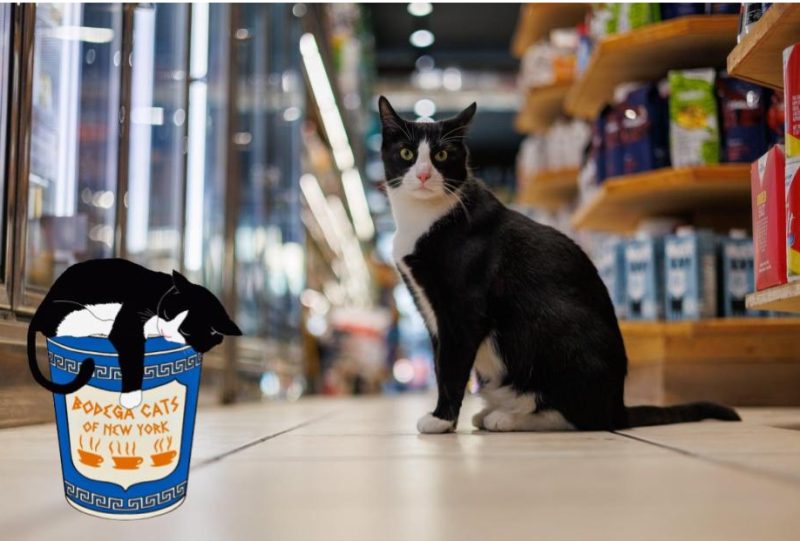
The Bodega: cultural cornerstone of every New York neighborhood. Alongside the milk, deli meats, bread, and mysterious miscellaneous items in the dusty back corner, is one essential item: The Bodega Cat. A resident feline (or felines) is something that has become synonymous with these local corner stores, and many of these customer-friendly cats have been in residence longer than the current employees. The Bodega Cat is such a New York icon that one man has made it his mission to make sure these furry store greeters receive the attention and protection they deserve.
Back in 2020, as bodegas stayed open while most of the world was shut down due to the COVID pandemic, author Dan Rimada started to photograph and document the various cats he encountered in his neighborhood. After a while, strangers started to send him photos and stories about their local bodega cats, and Rimada realized that this was a story that needed to be told.

Along with photographer Gulce Kilkis, Rimada spent four years collecting tales and images of this unique aspect of everyday life across all five boroughs. The culmination of that work, the book
The Bodega Cats of New York, will be available in October 2026.
As his collection of bodega cats grew, he became aware of a problem that could mean the end of this New York institution.

Bodega Cats, the Law, and Rat Math
Under current regulations, a cat in a food establishment is a health code violation, one that attracts a fine of $200. For years, bodega owners have continued to encourage their feline visitors as they help keep a larger (and more expensive) problem at bay: rats. If rats (or evidence of rats) are detected during a health inspection, the fine is $1000, not to mention the cost to the bodega’s reputation. The threat of an occasional $200 fee has been largely accepted as a ‘rat tax’ by bodega owners, and many health inspectors have been known to look the other way when it comes to the resident feline, aware that they are providing an essential service.
However, ‘rat math’ and goodwill are shaky foundations to stand on, which is why Rimada decided it was time to give these cats the security of being rightly designated as service animals.

Changing the Law
Like many movements, this one started small. What began as a simple documentation project has become a coalition for change. Thousands of petition signatures, millions of followers, and now two state bills headed to the Senate.
Council Member Keith Powers reached out to Rimada on Instagram and has introduced Int. 1471: Cats In Retail Food Stores, which would override the provisions of the New York City Health Code that prohibit owners of retail food stores from keeping a cat within their store. At the same time, unbeknownst to Rimada, State Assembly Member Linda Rosenthal presented A08341, which requires the establishment of health and safety guidelines for cats living in retail food stores to ensure the humane treatment of such cats while adhering to relevant health code provisions. If passed, these laws would not only protect the status of the Bodega Cat but also ensure that the State Department of Agriculture and Markets create official health and safety guidelines for cats in retail food stores, including regular vet check-ups, mandatory spaying or neutering, proper nutrition, and designated “cat zones” separate from food prep and storage.

Of course, the battle is far from over, and there are some serious hurdles to overcome before these bills are passed as laws. According to Rimada, Bodega Cats of New York needs a partner in the Senate, and asks his fellow New Yorkers to lend their support.
“If you live in New York, now is the time to call your State Senator. Tell them there’s a bill in the Assembly that would create care standards for working cats in retail food stores, and it needs a champion in the Senate.”
As long as there are bodegas, there should be Bodega Cats.
Feature Image Credit: Bodega Cats of New York
Did You Know?
 Bodega Cats, the Law, and Rat Math










One Response
Great idea!