How to Get Rid of Cat Urine Smell in a Basement: 4 Simple Steps

Cat pee has an odor like no other. So, if your basement smells like cat pee, you’ll want to address it as soon as possible. Although we love our cats, dealing with their urine can be a frustrating experience. If you don’t clean it up immediately, the odor can linger and permeate all the surrounding surfaces.
Many cat owners end up with a basement that smells like cat pee when the litter box is kept down there. Whether you have a concrete floor or a finished basement with carpeting, tile, or other flooring, the odor can quickly become overwhelming. Here are the steps for how to get rid of cat urine smell in a basement and keep it from becoming a problem in the future.

Supplies You’ll Need
- Ultraviolet light
- Mop and bucket with cleaning solution (hard floors)
- Shampooer (carpeting)
- Enzymatic cleaner
- White vinegar
- Baking soda
- Dish detergent
- Hydrogen peroxide
Our Favorite Enzyme Cleaner
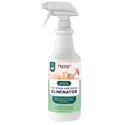
The Hepper Advanced Bio-Enzyme Pet Stain & Odor Eliminator Spray is our favorite all-purpose enzyme cleaner. It kills harmful bacteria and permanently removes even the worst kitty stains and smells, leaving your home fresh and clean! Click here to learn more about this amazing product and get yourself a bottle.
| Rating | Image | Product | Details | |
|---|---|---|---|---|
Best Enzyme Spray
 |
|
Hepper Advanced Bio-Enzyme Pet Stain & Odor Eliminator Spray |
|
Check Price |
At Catster, we’ve admired Hepper for many years and decided to take a controlling ownership interest so that we could benefit from the outstanding products of this cool cat company!

The 4 Steps to Get Rid of Cat Pee Smell in a Basement
1. Find the Urine Spots
If you don’t catch a cat urine stain immediately, it can be more difficult to find the spots and effectively remove the smell. Invest in an ultraviolet (UV) light that can highlight urine stains and show you where to clean. You can find UV lights cheap in hardware stores, department stores, and online.
Turn out the lights, and run the UV light close to the floor. Any cat urine stains will light up in a bright white or purple, giving you a good idea of the stain’s location and shape. Use chalk or tape to mark the area around the stain so you can see it when the lights are on.

2. Clean the Floor
Before you can tackle the stains themselves, you’ll need to clean the whole floor. For concrete, tile, or hardwood flooring, use a mop and soap and water to clean any residue off the floor. For carpeting, you may want to rent a carpet shampooer to get the carpet thoroughly cleaned first, but keep in mind that you may need to wait a day or two for it to dry.
3. Address Fresh Urine Stains
If you witnessed your cat peeing on the floor or know that the urine is fresh, you can clean it with a paper towel or cloth. Don’t rub, which can push urine deeper into the floor. Once the excess is mopped up, you can use an ion-based or enzymatic cleaner designed for pet stains. These cleaners are specially formulated to treat pet stains—not just for the odor that humans can smell, but for the odors that cats and dogs can smell that attract them to the same spot repeatedly.

4. Treat Old Urine Stains
Older urine stains are more difficult to treat and can contribute to why your basement smells like cat pee. With a hard, porous surface like concrete, the stain can settle into the material and last for years but become strong when it gets wet. On carpeting, the urine can settle into the fibers and beneath, making it more difficult to clean and remove effectively. For old stains, you may need to use a combination of products to remove the smell completely. White vinegar, hydrogen peroxide, and an enzymatic cleaner can be effective.
Here are the mixtures:
You can use either of these mixtures to treat the urine stain and let them dry. Once that’s complete, spray the stain with the enzymatic cleaner to break down the uric acid. Allow the treatment to sit for 24 hours. If any smell remains after the spot is dry, treat it again with the enzymatic cleaner.

Why Is My Cat Peeing Outside of the Litter Box?
Cats usually take to litter box training quickly. Accidents happen, but if your cat is peeing outside of the litter box constantly, it could indicate a problem. Most litter box issues can be treated to prevent urine stains in the future.

Here Are Possible Reasons for Accidents
- Medical problems: Some medical conditions can cause inappropriate urination, such as a urinary tract infection, kidney disease, or diabetes. Discuss your concerns with your vet and rule out these common medical causes.
- Dirty litter box: Like people, cats prefer a clean area for their bathroom habits. If you’re not being as diligent as you should be with litter box cleaning, your cat may choose to go elsewhere. Keep up with your litter box cleaning at least once a day (multiple times a day for multi-cat households), and change out the litter completely every week or two. Clean your litter box with an enzyme cleaner to keep odors from sticking to the sides.
- Litter box location: If the litter box isn’t easy for your cat to access or is located in an unfavorable area, your cat may be inclined to find other areas to pee. Litter boxes should be out of high-traffic areas, but not so secluded that your cat feels vulnerable or threatened while trying to use them. Keep in mind that areas with a lot of strange sounds, such as near the washer and dryer, or in tight spots like a hallway or confined room, may be scary to your cat. Consider moving the litter box to a different spot to see if it fixes the problem.
- Litter type: Cats can be particular about the type of litter they’ll use. They feel the litter on their feet and are sensitive to the sensation, so your litter box issue may be caused by the type of litter you’re using. Try a few different types of litter to find the one your cat prefers. If possible, set up multiple identical litter boxes with different litter.
- Multi-cat households: Peeing outside the litter box could be the result of conflict in multi-cat households. Some cats can be bullies and may force another cat out of the litter box, causing inappropriate urination. If you have a timid cat or a cat that’s bullied by others, look for a different spot to keep their litter box. You should also avoid covered litter boxes in multi-cat households since they can “trap” a cat in a fearful situation with a bully cat.
- Stress and anxiety: Cats are sensitive to environmental changes. Something as simple as moving the litter box to another spot in the house can trigger stress. When this happens, your cat may pee outside the litter box to relieve their anxiety with a familiar smell. If you suspect this is the cause, try to determine the change that triggered the stress, and do what you can to minimize it.
If you are concerned about the health and well-being of your cat, seek veterinary advice for the best course of action.
Get Rid of Urine Smells for Good
These steps to remove cat urine stains from your basement are effective for both new and old stains. Preventing inappropriate urination by treating its underlying causes is much easier than addressing old, set-in stains, so keep an eye on changes in your cat's behavior, and take them for a checkup to rule out medical causes.

- ADVANCED ENZYMATIC CLEANER - Penetrates the most stubborn smells and stains at the deepest molecular levels to dissolve any pet mess you encounter and lift it away at the source.
- FOR ANY MESS, ON ANY SURFACE - This pet odor eliminator cleans your carpets, floors, furniture, fabrics, and more. Whether it's urine, feces, vomit, or drool, you can erase all foul spots and smells!
- FRESH, NATURAL ODOR - Our unique formulation doesn't rely on dangerous or unpleasant chemical fragrances to get the job done. We eradicate smells and stains, not just cover them up.
At Catster, we’ve admired Hepper for many years and decided to take a controlling ownership interest so that we could benefit from the outstanding products of this cool cat company!
Featured Image Credit: Anatoli Igolkin, Shutterstock
Expert cat care, straight to your inbox
News, insights, and useful advice, delivered to you.

No spam — unsubscribe anytime.
By signing up, you agree to our Terms & Conditions and Privacy & Cookies Policy.
How useful was this post?
Click a star to rate. You can leave written feedback afterwards. (We read all feedback.)

Christian started writing for a local newspaper as a teenager, and he's been involved in the publishing industry for most of his adult life. Combining his love of writing with a passion for animals, he is currently the Director of Editorial at Pangolia and the Editor-in-Chief at Catster.
Christian lives in the Philippines with his wife, son, and four rescue cats: Trixie, Chloe, Sparky, and Chopper.