How to Choose the Right Cat Carrier in 2026: 7 Vet-Approved Steps


In this article
Cat carriers are a convenient way to transport your cat both short and long distances. Cat owners might feel overwhelmed when looking for the right carrier for their feline. After all, there are so many types of cat carriers on the market with different designs and functionality.
To make the cat carrier choosing process less daunting, this article will help you choose the best one according to your and your cat's needs.

Is a Cat Carrier Necessary?
Cat carriers are not necessarily a luxury item, but rather an essential supply that has numerous benefits. Most cat owners will need a carrier for their feline at some point, whether it is to take their feline to the vet, groomer, or when moving homes.
They offer numerous benefits for cats aside from simply keeping your cat safely contained. The benefits of using a cat carrier to transport or contain your cat usually outweigh cat leads. Cat carriers are great to have in case of emergencies that require you and your cat to immediately evacuate. This could be from floods, fires, and even home invasions.
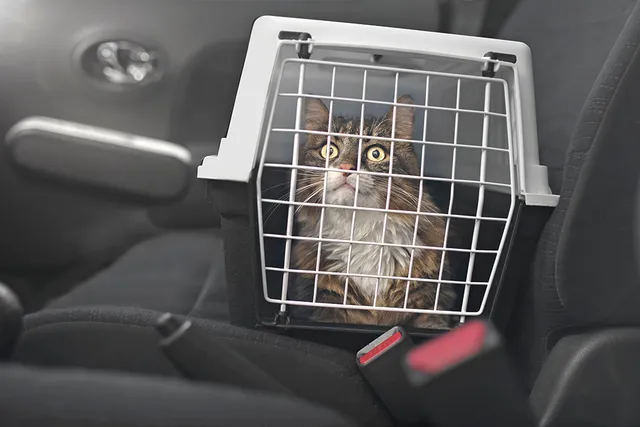
Cat carriers can easily fit into most vehicles and airplanes so that your cat can travel safely. They are usually sturdy enough to prevent a cat from escaping or interacting with things in their environment which could be harmful.

Preparing to Choose a Cat Carrier
Here’s what you should know before choosing a carrier for your cat.
The Different Types
If you were to research cat carriers, you would easily be able to see the endless types of carriers available. Not all cat carriers are created equal, but there is a suitable carrier for each cat depending on several factors.
Cat carriers can range in size, color, material, and durability. The carrier you choose for your cat not only depends on your personal preference but also on your cat’s needs. Certain carriers are better suited for your cat than others, so be sure to carefully consider all aspects of the carrier ranging from its safeness, accessibility, and durability.
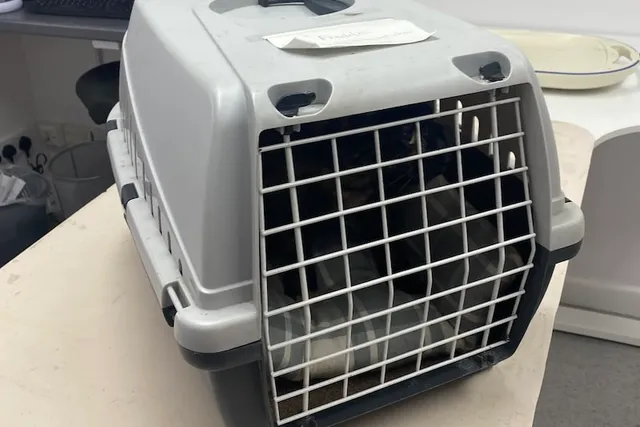
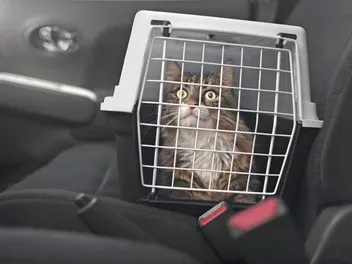
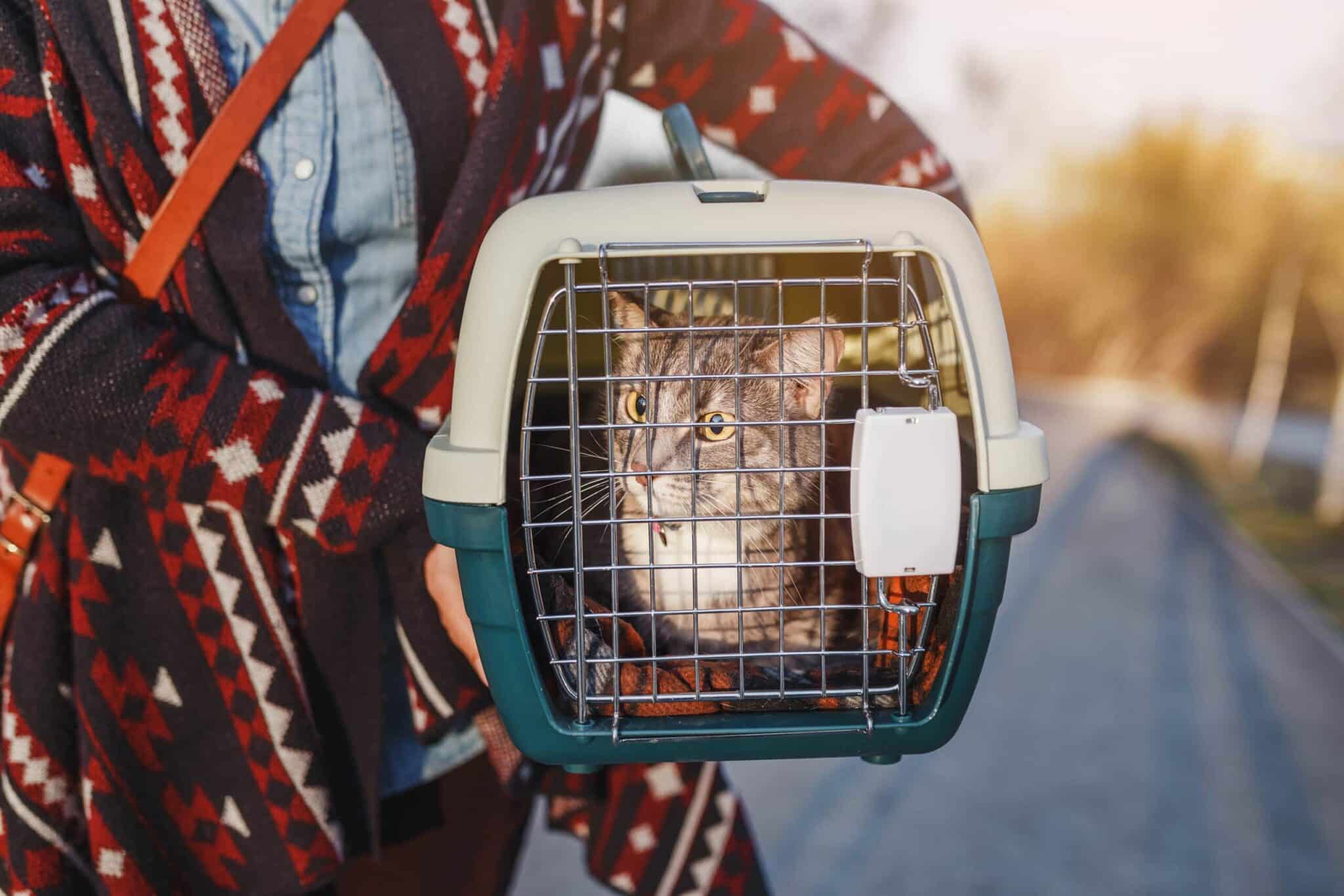
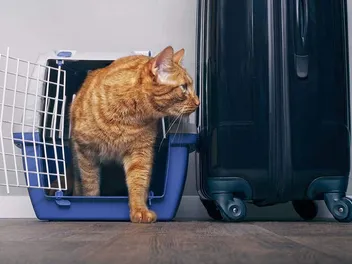
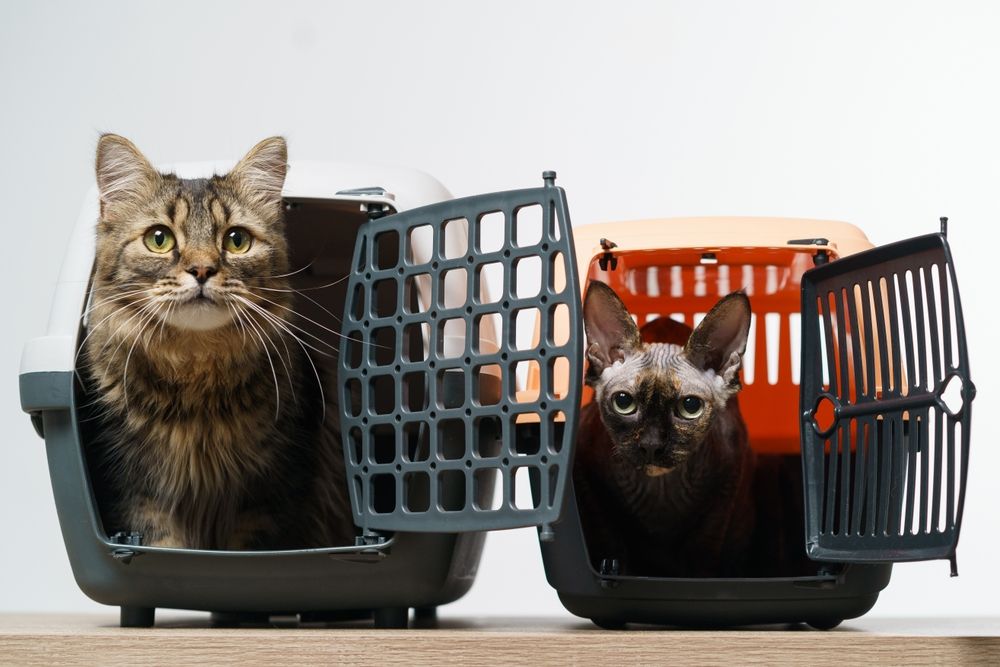
- Hard-sided carriers: These types of cat carriers are by far the most popular choice. They generally consist of hard plastic with a wired metal door in the front or sides. However, they could also be entirely plastic.
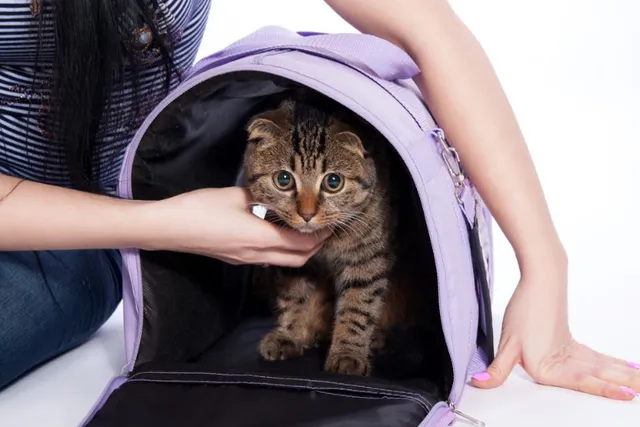
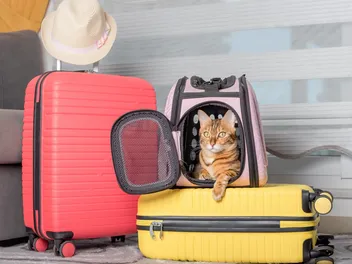
- Soft-sided carriers: These carriers are made of a soft, lightweight material such as nylon, polyester, and cotton. They are not the best choice for long distances but work well for short trips if your cat is calm enough to not break through the soft material.
- Double-sided carriers: This type of carrier allows you to transport two cats at a time. This is perfect for cat owners who want to save on storage space and money on having to buy two separate carriers.
- Foldable carriers: If you do not have much storage space available, opting for a foldable cat carrier is a good choice.
- Wheelie carriers: If you do not feel like lugging a cat carrier around by the handle, you could look into one that has a wheel. This makes traveling long distances on foot much easier, although some cats might be fearful of the wheel’s movement.
- Backpack carriers: Another alternative to carrying the carrier by a handle is getting a backpack with a built-in care carrier. The only downside to this type of carrier is that they are usually small and poorly ventilated.

Step-By-Step Guide to Choosing a Cat Carrier
1. Measure Your Cat’s Size and Weight
The first step to choosing a cat carrier is to measure your cat’s size and weight. This allows you to focus on carriers that are suitable for your cat’s size and to rule out ones that aren’t. Your cat’s carrier should be comfortable and strong enough to support their weight.
A general rule of thumb is to choose a carrier that is about 1.5 to two times larger than your cat’s length. The carrier should also be tall enough to allow your cat to stand or sit comfortably, as well as turn around.
Most cat carriers have a maximum weight limit, so make sure to double-check that your cat’s weight is significantly below it.

2. Look At Cat Carriers Within Your Budget
Cat carriers can be relatively inexpensive to expensive depending on their design and functionality. It's easy to get discouraged from purchasing a cat carrier if you only look at ones out of your budget.
It’s a good idea to only focus on carriers that meet or fall below your budget. If you purchase the carrier online, you could try filtering the products to your preferred price range. This is possible through online retailers such as Amazon and Chewy. Alternatively, you can ask store employees to only show you the carriers within a certain price range.
3. Consider What the Carrier Will Be Used For
Cat carriers are mainly used to transport a cat, although the type and duration of the transport can vary. Not all cat carriers can function well for every use. Certain cat carriers are better for vehicle transportation but won’t be airline-approved.
Other carriers might be too bulky to take with you to a veterinarian but suitable enough for your cat to recover after surgery. If you intend for the carrier to be used on airplanes, ensure you choose one that is airline-approved.
If you plan to use it for emergencies such as a fire or emergency vet visit, choose one that is secure and easy to access. You don’t want to use a bulky carrier that will take up valuable time setting up in the case of an emergency.

4. Check for the Different Variations of the Carrier
If you are specific about the type of cat carrier you want, it’s a great idea to compare different designs or variations. This allows you to consider your options and choose one that has a color and design that you like. You might come across a carrier that ticks all your boxes, only to be disappointed that it is not the right color.
Some websites list the color of their products separately, or a different website or store may stock the color of the carrier you prefer.
5. Consider the Carrier's Functionality and Safety
There are several important factors to consider when choosing a cat carrier.
They include:
- Durability
- Accessibility
- Comfortability
- Safety
- Ventilation
- Cleanability
Cat carriers should be durable enough to last a long time and not break easily while transporting your cat. If your cat is particularly feisty about being in a cat carrier, you want to choose one that will withstand their biting and scratching. Furthermore, the carrier should be safe for your cat and pose no risk of escaping or sharp areas that may harm them.
Accessibility is an important factor to consider when buying a cat carrier and it is often overlooked. Some cat carriers only have one accessible door, while others have two or three. If you want to be able to reach your cat from easily accessible directions, try choosing a carrier with a door at the front and top. Make sure that the doors are large enough for you to access your cat without much of a struggle.
Certain cat carriers offer more ventilation than others. Proper airflow in the carrier is crucial for your cat, especially if they will be transported in warm weather. The carrier should have cross ventilation rather than only one ventilated side.
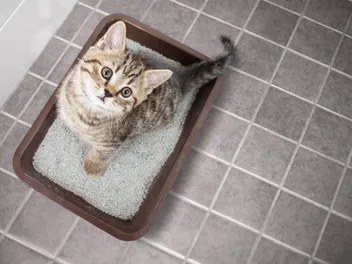
Lastly, the carrier should be easy to clean when necessary. Some carriers have a built-in litterbox that needs to be emptied during its use, especially during long travels.

6. Read Reviews
Whether you purchase a cat carrier online or in-store, you will probably be able to find some reviews. This allows you to understand the carrier better from first-hand experiences. Although the carrier might look good at first glance, verified buyers might have found the carrier to be flimsy or different than pictured. Keep in mind that most cat carriers will have a mixture of good and bad reviews.
However, do be cautious about ones that have too many bad reviews rather than good ones.
7. Compare Your Top 3 Favorite Cat Carriers
If you are having trouble choosing between different cat carriers that tick all of the right boxes, limiting the choices to three of your favorites is a good idea. You could even compile a list of all the pros and cons of your favorite carriers until you eventually decide on the right one.

Final Thoughts
Choosing a carrier for your cat can be challenging with so many different options to choose from. The carrier you end up choosing should be able to serve its intended purpose to your cat while keeping them safe.
You might end up choosing a hard-sided carrier for its durability and easy cleanability. Otherwise, you might prefer a soft-sided carrier for short trips to the vet or a foldable carrier if you have limited space.
Sources
Featured Image Credit: 5ociq, Shutterstock
Expert cat care, straight to your inbox
News, insights, and useful advice, delivered to you.

No spam — unsubscribe anytime.
By signing up, you agree to our Terms & Conditions and Privacy & Cookies Policy.
How useful was this post?
Click a star to rate. You can leave written feedback afterwards. (We read all feedback.)
Sarah Psaradelis is an avid young writer with dual passions for literature and animals. She enjoys sharing knowledge of animal care and helping others. Sarah has over 8 years of writing experience and is currently studying veterinary science. She resides in South Africa where she takes care of fish, aquarium snails, dogs, and rodents. Sarah is a passionate vegan activist and animal rescuer pursuing her path to make the world a better place for humans and animals alike.