Do Cats Like Change? Vet-Verified Behavior & Evolution Facts


In this article
One of the things that draws people to cats as pets is their independence. They require no walks, less training, and are generally happy in smaller spaces compared to dogs, which some people really appreciate, especially since you can travel for a day trip without worrying about your pet. These are all points in their favor. One glaring point on the downside is the feline’s disdain for change.
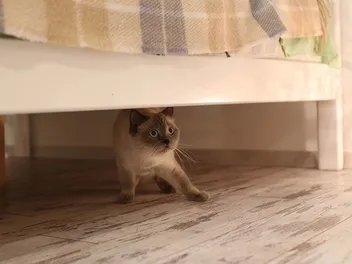
Cats like their world and routine to remain predictable. Changes, especially drastic ones, can drive a frightened kitty under the bed for hours. Dogs may get confused if you mix things up, but they mostly seem to adapt without any major problems. The answer regarding this uncomfortable reaction to change involves evolution, genetics, and our dynamic relationship with our pets. But, in short, cats do not tend to like change. So, why do cats hate change? It’s because change is viewed as a threat to their survival. The more predictable a day is, the higher the chance of survival for your cat.

How History Plays a Role
Cats haven’t been our animal companions for as long as dogs. Their domestication goes back 12,000 years versus the estimated 20,000–40,000 years with canines. Our relationship with our pets took different paths. Some research suggests that cats and people had a mutually beneficial relationship for thousands of years before domestication. However, the road hasn’t always been easy.
Archaeological evidence suggests that the ancient Egyptians worshipped cats. They still hunted rodents and protected food stores, which sparked our bond. However, these people may have realized the health benefits of eliminating a potent source of disease and parasites that cats afforded them. In turn, the ancient Egyptians pampered their feline companions and even made them gods and goddesses.
Researchers theorize that ship travel brought cats to more places worldwide. More people learned about and enjoyed their companionship. Somewhere down the road, the situation took a drastic turn. From deities, they became aligned with Satan with the 1233 Vox in Rama issued by Pope Gregory IX.1 Felines were now killed when they were once worshipped. Is it any wonder cats are wary of change today?
The pendulum continued to swing to and fro throughout the years. Sadly, there are good reasons why animal protection organizations emerged, starting in the mid-1800s. Luckily, these sentiments got legs, with felony anti-cruelty laws, no-kill shelters, and other pet-friendly measures. While cats fare better today than ever, there are still people who dislike these animals regardless. So, their wariness and unwillingness to change are sometimes a matter of survival.

Early Socialization
Cats are highly intelligent animals. They come by this trait instinctively. Nevertheless, their early development and socialization profoundly impact the personality of adults. The period between 2–7 weeks old is critical for kittens. Positive and negative experiences during this time can have lifelong implications. An adult cat that shuns change may have gone through an adverse ordeal as a kitten, thus scarring them into adulthood.
These events can shape an animal’s personality because they may affect how the cat interprets other situations in their life. These felines may not be adaptable. Instead, change is a source of stress. Experience has taught them that something bad happens as a result. Again, these reactions are fueled by a strong sense of survival. However, another factor contributes to these responses.
Genetics and Environmental Factors
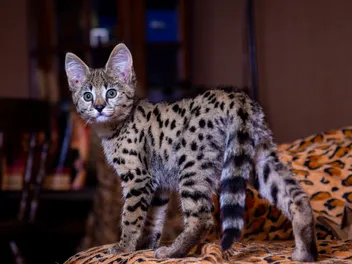
The environment influences an animal’s genetics. Some scientists consider cats an example of perfect evolution. Felines have become known as apex predators. The various species look similar and have common features that define this group, including specialized teeth for cutting through the flesh and muscle of their prey.
Cats rely on stealth for hunting, and any change in their environment might affect their success. Therefore, it makes evolutionary sense to be aware of different things in their environment so that they can respond appropriately. Domestic cats succeed less than one-third of the time while hunting. Changes can cost time and energy, which can put their survival on the line.
You may think domestication has steered your kitty far from their wild counterparts. However, research has shown that only 13 of the 19,493 protein-coding genes and 1,855 noncoding RNAs have changed. Brain regions associated with reactivity, aggression, and fear have changed the most. Nevertheless, your kitty shares 95.6% of their DNA with tigers.
Basically, the wariness of change is still hardwired in your pet. That may seem illogical to you, but it makes sense to cats. After all, even humans have retained traits that would have supported our survival thousands of years ago but don’t seem necessary today.

Selective Breeding
The other thing to consider is selective breeding. Interestingly, it has resulted in 378 dog breeds compared to the 55 in felines, according to the American Cat Fanciers Association (ACFA). It’s worth noting that people selectively bred cats into various breeds for only 75 years versus the thousands of years with canines. Our pets have wild traits, such as wariness of change, because of the limited time we’ve influenced them.
The other factor is the respective animals’ jobs. Dogs do many things for humans, whether it’s herding livestock, guarding the land, or retrieving game. Cats do two things well: They catch rodents and other pests, and they also look cute and keep us company. Some of our pets still fulfill the first job, which encourages instinctive traits like vigilance to change.
Selective breeding has yielded different personalities in cat breeds. One study looked at seven feline behavioral and personality traits, including fearfulness, which may affect the animal’s response to change. The researchers found the Russian Blue was the most fearful. Unsurprisingly, this feline is somewhat aloof with strangers. They are known to be friendly, but only once you’ve gained their trust.
Our Relationship With Cats
Pet owners are part of a cat’s environment. Thus, we play a role in the traits kept and lost through time. We mentioned the animal’s unfortunate history. Mass slaughter of felines undoubtedly fueled wariness. The other effect is more nuanced. The massive loss of cats shrunk the gene pool and its diversity. It would also affect their adaptations over time.
We discussed the socialization period in felines. A kitten that is not socialized with humans and other pets before 8 weeks of age may be more fearful. An animal experiencing traumatic events like early separation from their mother or littermates is more likely to be wary of novel situations and encounters. Changes in their environment can also contribute to this behavior
On the flip side, cats’ relationship with humans has had other effects that can open the door to less leeriness in our pets. For example, your kitty undoubtedly meows at you when they want something. That’s usually a vocalization only between a mother and her kittens. Domestication has opened new avenues for communication that may profoundly affect our bonds with our cats.
Final Thoughts
Our cats are well-equipped genetically and behaviorally to navigate their world. Survival remains the driving force behind evolution, and changes come with costs. Your pet may show their dislike for change outright. However, it’s also just instinct taking the wheel. The environmental pressures directing evolution in our animal companions haven’t pivoted as significantly as they have in the last centuries.
Scientific evidence hasn’t seen many changes in the last thousand years. It’s a fair assumption that felines will stay in touch with their wild side for many years to come. Being vigilant for change isn’t about being a scaredy cat; it’s about survival and passing your DNA onto the next generation.
Sources
https://www.nationalgeographic.com/science/article/domesticated-cats-dna-genetics-pets-science
https://vcahospitals.com/know-your-pet/socialization-and-fear-prevention-in-kittens
https://www.scientificamerican.com/article/cats-are-perfect-an-evolutionary-biologist-explains-why1/
https://www.discoverwildlife.com/animal-facts/mammals/hunting-success-rates-how-predators-compare
https://www.scientificamerican.com/article/the-inner-life-of-cats/
Featured Image Credit: Elena Rozhenok, Shutterstock
Expert cat care, straight to your inbox
News, insights, and useful advice, delivered to you.

No spam — unsubscribe anytime.
By signing up, you agree to our Terms & Conditions and Privacy & Cookies Policy.
How useful was this post?
Click a star to rate. You can leave written feedback afterwards. (We read all feedback.)
Chris has been a science-focused pet writer since 2009, specializing in health and the environment. She lives with her husband Norm and three amazing cats in the land of 10,000 lakes. When she's not writing about cats, Chris also enjoys boating and sampling wine. She has her WSET 1 and 2 certifications and is currently pursuing her Certified Wine Specialist Award (CSW).