Can Cats Get Sleep Disorders? Our Vet Answers

In this article
The word “sleep” is almost synonymous with “cat”, and when you consider that our domesticated feline companions spend half of their time sleeping, it’s easy to see why. Given that their lives are dominated by sleep, you might wonder if cats can suffer from sleep disorders. They can, but there is usually another explanation.
Insomnia, narcolepsy, sleep apnea, night terrors, somnambulism (sleepwalking), and restless leg syndrome are examples of sleep disorders that can plague humans, but, from what we are able to study and understand, they are not common features of feline sleep.
Cats can exhibit some pretty strange, sometimes disruptive nocturnal behaviors, but these midnight rampages usually fall within the bounds of normal feline behavior, or they may be symptomatic of other health concerns. For example, sleep apnea and narcolepsy have been observed in cats, and there are reported cases of insomnia, but generally speaking, cats rarely suffer from sleep disorders.
Let’s take a closer look at normal feline sleep behavior and the things that might disrupt it.

Sleep Disorders in Cats
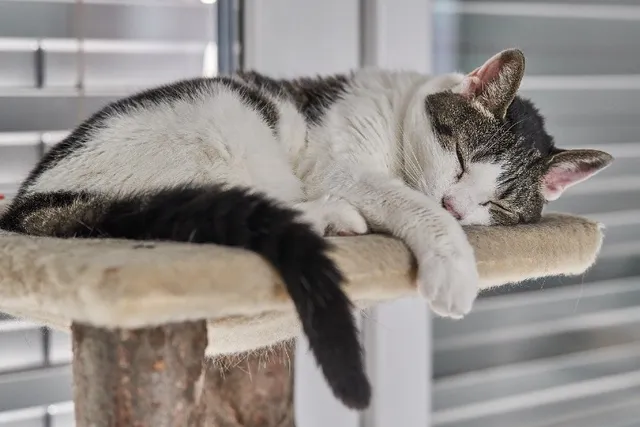
If there is one thing for which cats are known, it is their ability to find comfort in the most unlikely of places. And after sleeping most of the day away, they usually take time out for a nap!
Cats are classified as polyphasic sleepers, which means that their 16–20 hours of sleep per day is spaced over multiple shorter periods of dozing and rest, punctuated by longer episodes of rapid-eye-movement (REM) sleep (deep sleep) 1. The reason for this is that in the wild, felines need to be ever alert; ready to pounce on prey or run from a predator. This means that a large portion of their “sleep” lacks the refreshing properties of REM sleep.
The ability to sleep is rarely a problem for cats, but there are some conditions that may impact their normal sleep patterns and behaviors. Although there are some instances where cats have been known to experience true sleep disorders, in most cases where sleep disorders have been suspected, the explanation is found to be other health conditions or just normal feline behavior.
Some examples of genuine sleep disorders observed in cats include:

Sleep Apnea
Most commonly observed in brachycephalic (short-faced) breeds, such as Persians, sleep apnea occurs when the upper airways become obstructed. The reason why brachycephalic cats are more likely to be affected is that the sinuses and surrounding soft tissues are compressed within their shortened face, making breathing more difficult.
Their trachea (windpipe) is usually disproportionately narrowed, which also has a negative impact on airflow. This is also why these breeds usually snore and can even have noisy breathing when they are awake.
This can become a life-threatening condition, particularly in cats with concurrent respiratory tract infections or obesity.
Narcolepsy
Although rare in cats, narcolepsy is a congenital condition that is usually observed in young cats. Affected cats will, without warning, fall asleep in the middle of normal activities, such as playing, grooming, and eating, with sleep periods lasting a few seconds or several minutes.
It can often be confused with the neurological condition, cataplexy, which results in spontaneous paralysis of muscles and reflexes.
Other conditions that can result in similar signs include absence seizures, where the cat will appear to zone out, and syncope (fainting), which is usually the result of heart disease.
Neither narcolepsy or cataplexy are dangerous, but if you suspect your cat may be affected by either of these conditions, they should be examined by a vet to rule out any other health conditions.

When Is a Sleep Disorder Not a Sleep Disorder?
Many of the sleep-related behaviors observed in cats are not actually sleep disorders and can sometimes be indicative of a more serious problem, particularly if they are a new, sudden change in your feline’s normal routine. Here are some normal, and not-so-normal, changes in the bedtime behavior of cats and what to look out for.
Excessive Sleep
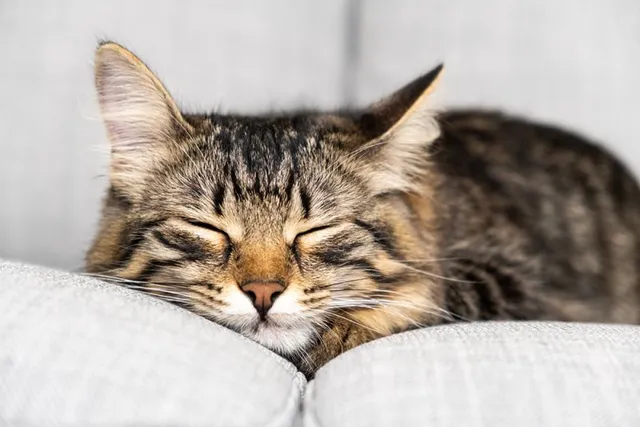
If a human were to sleep as much and as soundly as a cat, they would be categorized as hypersomnolent, and a barrage of tests would be ordered, but sleeping for up to 20 hours a day is considered normal for a cat. Growing kittens and elderly cats tend to need more sleep than adults, and some individuals will sleep more than others.
- When to be concerned: If your cat is suddenly sleeping more than usual, seems sleepy or lethargic when they are awake, or is difficult to wake up.
- Possible causes: Heart disease, kidney disease, diabetes, pain, and anemia.
Movement Disorders
We’ve all found ourselves spellbound by the grasping feet and twitching whiskers of our sleeping kitties, wondering what dreams are stirring their movements. Sometimes those movements may seem excessive, and you might worry that your cat could be dealing with a movement disorder like restless-leg syndrome or periodic limb movement disorder.
There is little evidence to support the existence of true sleep movement disorders in cats, with some suspected cases being later attributed to thyroid disease and central nervous system lesions.
- When to be concerned: If your cat’s sleep movements are so significant that they cause whole-body movement or are not stopped by a loud noise or gentle touch.
- Possible causes: Seizures, CNS lesions/inflammation, and pain.
Final Thoughts
They can, but in the majority of cases, there is another explanation for your cat’s sleep-time quirks. In many cases, the nocturnal antics of our cats are a completely normal expression of their natural behaviors, but they can sometimes be an indicator of something more worrying.
If your cat has started behaving strangely, try to get a video to show your vet, as this can be extremely helpful when getting to the bottom of a problem. If your cat likes to save their most energetic activities for when you’d prefer to be sleeping, try engaging in some play with them before you go to bed. This will help to improve the bond between you and your feline and hopefully give them enough exercise and stimulation to result in a peaceful night’s sleep for you both.
As always, if you are worried about your cat’s behavior or if something has suddenly changed, making an appointment with a vet is the best way to put your mind at ease.
Sources
https://www.sleepfoundation.org/animals-and-sleep/how-much-do-cats-sleep#:~:text=Cats%20have%20a%20polyphasic%20sleep,from%2050%20to%20113%20minutes
https://vcahospitals.com/know-your-pet/brachycephalic-airway-syndrome-in-cats#:~:text=A%20cat%20with%20an%20elongated,the%20back%20of%20the%20throat.
https://vcahospitals.com/know-your-pet/narcolepsy-in-dogs#:~:text=Narcolepsy%20is%20a%20disorder%20of,proceeds%20as%20if%20nothing%20happened.
https://www.vetlexicon.com/felis/internal-medicine/articles/epilepsy-idiopathic/
https://www.animalhumanesociety.org/resource/cat-keeping-you-awake-how-manage-night-activity#:~:text=Cats%20are%20crepuscular%2C%20which%20means,myth%20about%20our%20feline%20friends)
Featured Image Credit: Alex AAm, Shutterstock
Expert cat care, straight to your inbox
News, insights, and useful advice, delivered to you.

No spam — unsubscribe anytime.
By signing up, you agree to our Terms & Conditions and Privacy & Cookies Policy.
How useful was this post?
Click a star to rate. You can leave written feedback afterwards. (We read all feedback.)
Dr. Karyn Kanowski BVSc MRCVS (Veterinarian)
Dr. Karyn comes from Queensland, Australia, and has lived in the UK for the past 10 years. In 2010, she graduated from The University of Queensland School of Veterinary Science and also has a Bachelor’s degree in Zoology. She is passionate about using evidence, experience, and owner collaboration to provide the best solutions for pets, and believes in making reliable information about animal health accessible to all. Dr. Karyn shares her home with five cats, four dogs, and one husband. When she is not in the scrubs, she spends her time writing, gardening, and cleaning up pet hair!