Can Cats Eat Tamales? Vet-Approved Facts & Alternatives


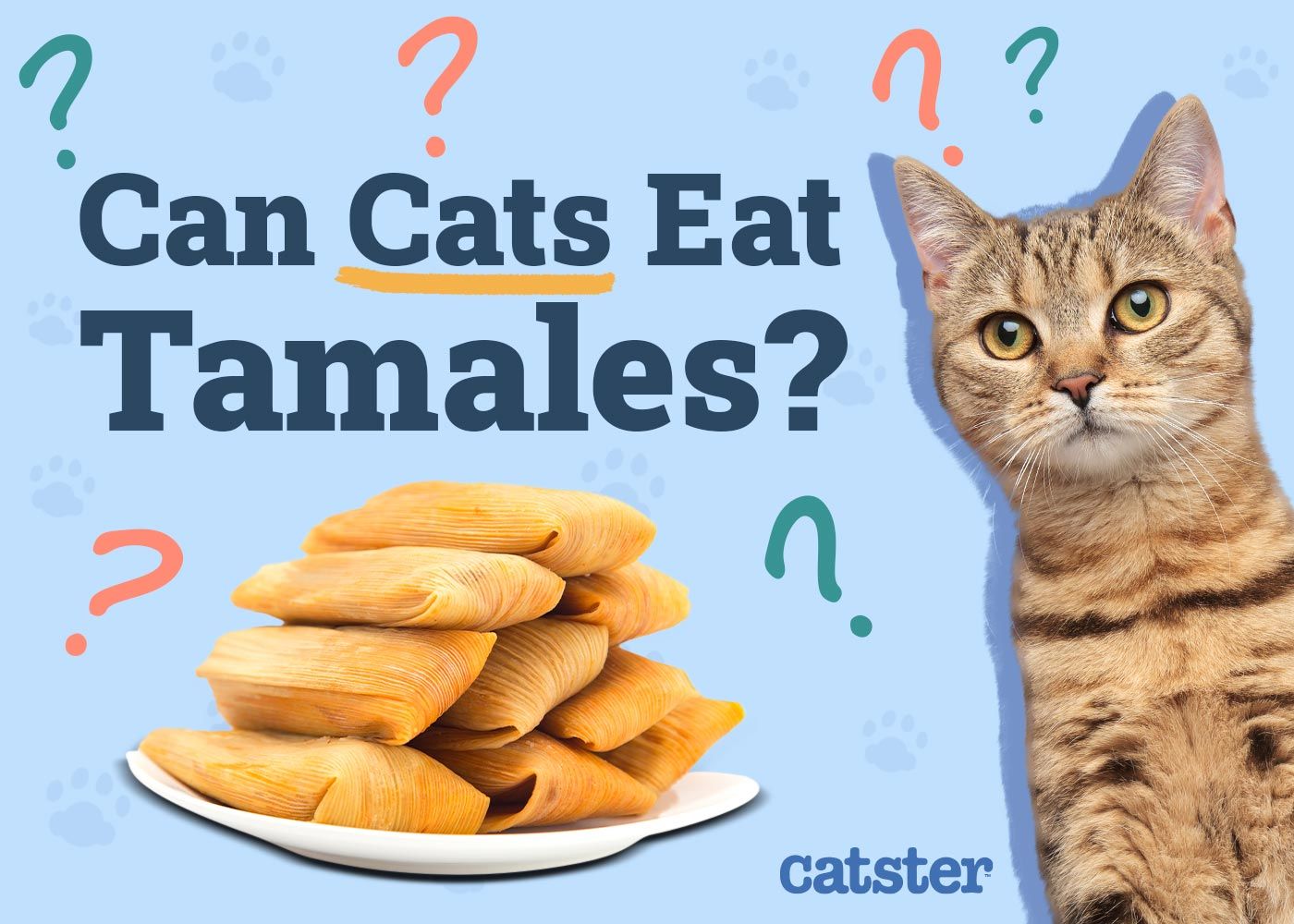
While cats are obligate carnivores that require a primarily meat-based diet, not all forms of meat are healthy for cats. Tamales, for example, can be stuffed with protein-packed ingredients like beans, meats, and cheeses, but can you share them with your kitty? Unfortunately, no. Even though they often contain meat, tamales are often filled with ingredients that are toxic to cats such as onions, garlic and sometimes even raisins. Read on to learn more.

What Are Tamales?
Tamales are a traditional dish in several countries around Central and Southern America. They are often prepared with a corn-based dough and stuffed with various savory ingredients such as meats, beans and cheese. However, some varieties are sweeter, containing cinnamon, sugar, and raisins. The exact ingredients will vary from recipe to recipe, but they all typically contain the following components all wrapped up in corn husks:
- Corn or sweet corn dough
- Lard
- Broth
- Savory fillings such as chicken, beef, or pork
- Sweet fillings such as fresh fruit, cinnamon, or raisins
Are Tamales Safe for Cats?
It is not recommended that you feed tamales to your kitty. Let's look at several reasons why tamales should stay on your plate.

They Don't Contain a Good Macronutrient Ratio
As you know, cats are obligate carnivores that need to eat animal derived protein to survive, so their carbohydrate and fat requirements are much lower than that of protein. The macronutrient content of tamales will vary greatly depending on the recipes, but none are really suitable for cats to begin with.
According to the USDA, a beef-filled tamale has 7 grams of protein, but it isn't nutritionally balanced for cats with 22 grams of carbohydrates and 9 grams of fat. Cats can digest carbohydrates very efficiently, but they are not needed in their diet, and this is a carbohydrate heavy dish.

They Can Contain Toxic Ingredients
Many tamale ingredients are unhealthy for cats, and some can even be toxic.
Many cats are lactose intolerant because they lack the enzyme lactase which is needed to break down dairy products. Therefore, although some cats can tolerate some milk and cheese in moderation, it can cause gastrointestinal upset (vomiting, diarrhea, and abdominal pain) in others.
Onions and garlic are two of the most common ingredients used to add flavor to tamales. They are part of the Allium genus of plants that also include chives, scallions, leeks and shallots. All members of this family are highly toxic to cats. Cooked, dried, dehydrated, powdered and raw onions and garlic are definitely off the menu for our feline friends. The toxic compound within Alliums (n-propyl disulfide) disrupts the inner workings of red blood cells (those cells that carry oxygen around the body), making them more susceptible to damage, which can lead to life-threatening anemia. Signs of Allium toxicity may show up 2-3 days after ingestion and include lethargy, breathing difficulties and pale gums. If your cat has eaten any amount of an Allium, you must seek veterinary attention as soon as possible.
Raisins are often included in the sweet-filled tamales. Anecdotal evidence of raisin toxicity in cats exists but it is not well documented. Gastrointestinal signs are said to be seen, as well as anorexia, lethargy and kidney failure.
Finally, most tamal varieties are wrapped in corn husks. While they aren't toxic, they can cause digestive issues and possibly risk of intestinal obstruction, although cats are usually smarter than to swallow a husk whole.
They Are High in Calories

The caloric content of a tamal will vary from recipe to recipe, but most of them are high in calories. You would be hard-pressed to find a tamal that rings in under 200 calories. A traditional cheese tamale is around 270 calories, while beef and chicken are 250 and 210 calories, respectively. Your cat's daily caloric requirement will depend on his weight and activity level. Cats need between 20 and 33 calories per pound to maintain their weight, depending on their lifestyle. Indoor cats need the lower end of this range and purely outdoor cats need the higher end. Indoor-outdoor cats need somewhere in the middle of the range. So, a 10-pound indoor kitty would need about 200 calories daily, while an outside cat with a much more active lifestyle may need closer to 330 calories a day. At over 200 calories per tamal, you can see how a single tamal would be far too calorically dense for cats. Cats that eat too much are at risk of becoming overweight and obese. Obesity may well shorten your cat's life and make them more prone to developing diseases like cancer, heart disease, diabetes mellitus and mobility problems.

What Human Foods Can Cats Eat?
Now that you know tamales must stay on your plate, are there any human foods you can offer your kitty? Yes, of course. However, remember that the bulk of your cat's diet should come from a good quality, complete, commercially prepared cat food as it contains the proper balance of macronutrients, vitamins and minerals your pet needs to thrive. The best human foods you can offer occasionally as a special treat include:
- Cooked plain chicken or turkey
- Cooked plain beef
- Cooked eggs
- Cooked salmon
- Plain, cooked pumpkin
Final Thoughts
While tamales often contain meat, which cats need to survive, the remaining ingredients in this delicious dish are not healthy for kitties. Not to mention its high fat and caloric content and that some elements (namely onions and garlic) can be life-threatening when eaten by a cat. If you want to give your pet a taste of something off your plate, it's better to offer them a small amount of lean cooked meat to ensure they’re getting a nutritious treat that'll benefit them in the long run.
Sources
https://fdc.nal.usda.gov/fdc-app.html#/food-details/795253/nutrients
https://vetster.com/en/conditions/cat/onion-poisoning-allium-toxicosis-in-cats#:~:text=All%20plants%20belonging%20to%20the,cause%20red%20blood%20cell%20damage
https://www.vpisglobal.com/2020/01/02/allium-poisoning-not-just-cats-and-dogs-are-at-risk/#:~:text=Allium%20species%20include%20onions%2C%20garlic%20and%20leeks.&text=The%20main%20toxic%20compound%20n,more%20susceptible%20to%20oxidative%20damage.
https://www.vetlexicon.com/felis/toxicology/articles/raisin-poisoning/
https://www.pdsa.org.uk/what-we-do/blog/vet-qa-can-cats-drink-milk
Featured Image Credit: Vicafree, Shutterstock
Expert cat care, straight to your inbox
News, insights, and useful advice, delivered to you.

No spam — unsubscribe anytime.
By signing up, you agree to our Terms & Conditions and Privacy & Cookies Policy.
How useful was this post?
Click a star to rate. You can leave written feedback afterwards. (We read all feedback.)
For Chantelle, writing and animals are the two driving forces in her life. Growing up on the Canadian prairies surrounded by pets, she now shares her home with five cats, two guinea pigs, and a bearded dragon. Chantelle, her husband, and their child pride themselves on being dedicated pet parent, even spending a fortune on wall-mounted cat shelves to provide their cats with an indoor jungle gym. When she's not snuggling with her cats or photographing their humorous moments, Chantelle is exploring the Rocky Mountains, rewatching her favorite Netflix series, and reading up on various random subjects.