Will an Air Purifier Help With the Smell of Litter? Vet-Approved Facts, Guide & Info


In this article
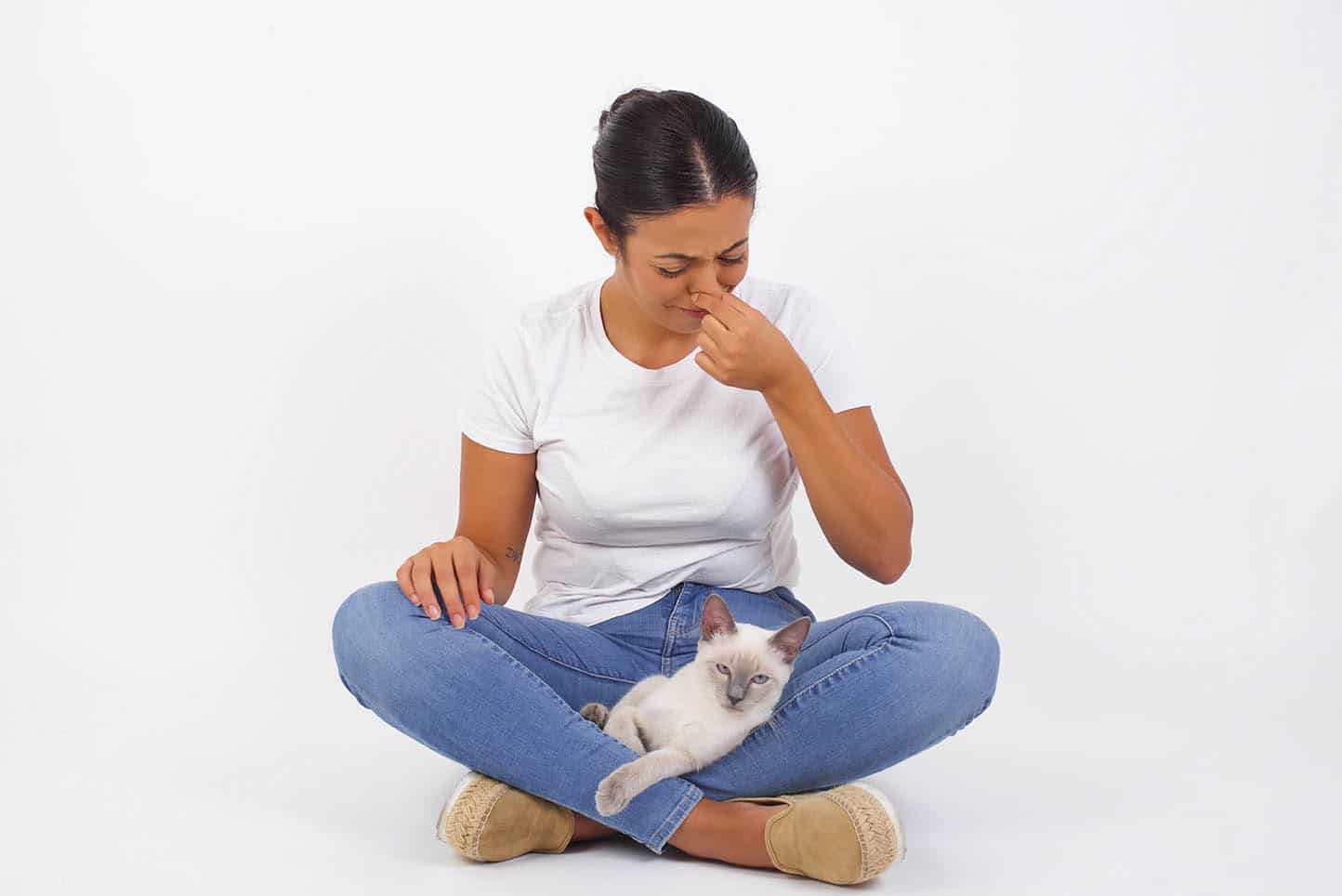
Many people use air purifiers to help lessen allergy symptoms, filter out harmful chemicals or mold spores, and make the air in their homes cleaner. If air purifiers are capable of that, would they be effective in helping remove the smell of cat litter in your home?
The answer is yes, most air purifiers can help reduce the smell of cat litter and other odors. So, let’s take a deeper look into these devices that can truly come in handy for cat lovers and some other things you can do to help alleviate the dreaded litter smell.

What Is an Air Purifier?
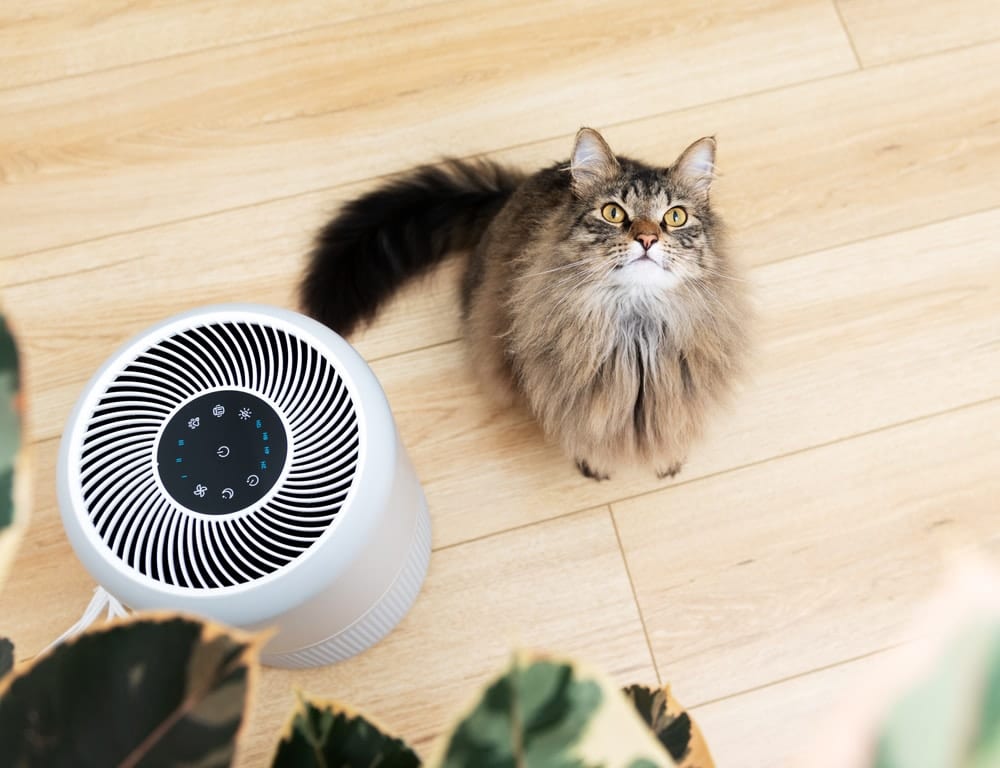
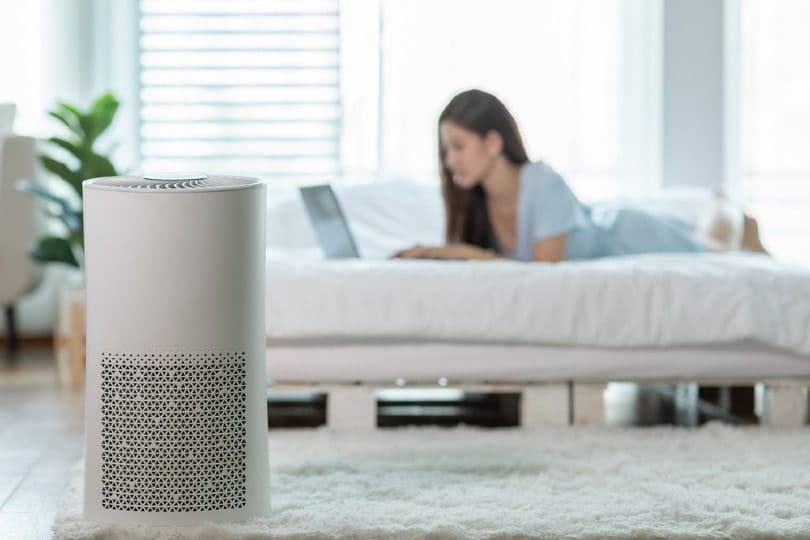
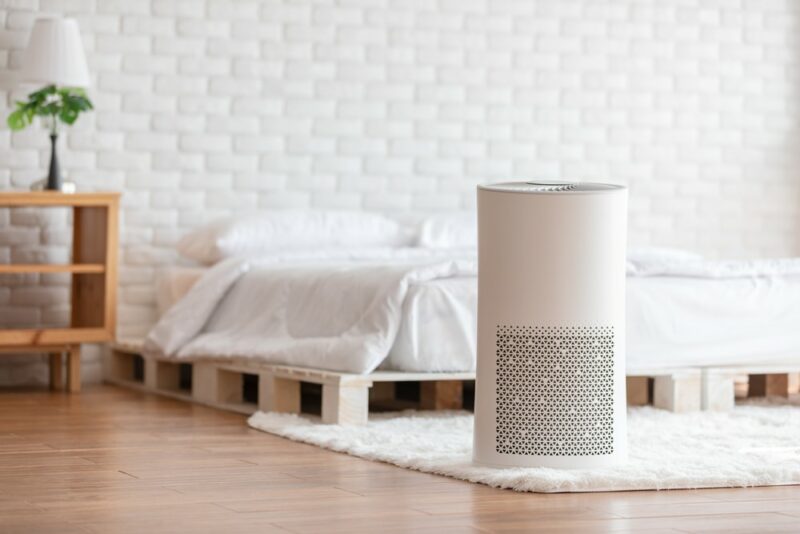
An air purifier is a device that is designed to improve air quality by removing contaminants from the air. Air purifiers are commercially available as either a stand-alone unit that can be placed in a particular room or a larger unit that attaches to an HVAC or AHU unit.
Air purifiers are often marketed toward allergy sufferers and asthmatics but can benefit anyone because of their capabilities. Air purifiers are created to eliminate dust, pollen, pet dander, smoke particles, mold spores, dust mite waste, bacteria, and other airborne pollutants and irritants.
They work by using a fan that draws air into the unit; a filter then captures pollutants and other particles and pulls them from the air, and then the freshly cleaned air is released back into the room.
Most Common Types of Air Filters
HEPA Technology
HEPA stands for high-efficiency particulate air, and these filters must meet a standard of trapping at least 99.97% of all particles larger than 0.3 microns to be certified. HEPA filters are made of a very fine fiber-like material that is folded in the shape of an accordion.
HEPA filters can last anywhere from 2 to 4 years, depending on how quickly they fill up. Once they become full, air will no longer be able to pass through, and a new HEPA filter will be needed. Most companies recommend replacing them sooner and having routine maintenance to ensure that they’re working properly.
Activated Carbon Technology
Activated carbon filters contain molecular-sized pores that are highly absorbent and use chemical bonding. They are very effective at capturing pollutants like volatile organic compounds, gases, tobacco smoke, and odor.
Once these pollutants are captured by the filter, they are not released back into the air, thus eliminating any chance of recontamination. Activated carbon was sold during the early 1900s to purify water and remove the color from sugar. It was even used during WWI in soldiers’ gas masks and to purify their water.
UV Technology
UV air purifiers use a UV lamp that will cause cellular damage and ultimately destroy microorganisms by radiating them as they pass through. This UV technology is typically used in conjunction with HEPA systems rather than stand-alone since it cannot eliminate airborne particles. UV is great at eliminating germs, bacteria, and viruses.
Negative Ion
Negative ions are one of the least effective air-purifying technologies. With this technology, negative ions are released into the air, and the contaminants are not eliminated but dropped out of the air and transferred to the walls or solid items within the room. This causes an increased risk of re-circulation if the contaminants were to come loose and be released back into the air.

What Type of Air Purifier Works for Cat Litter Box Smells?
The most highly recommended type of air purifier to help eliminate cat litter box smells would be the HEPA air purifier with an activated carbon filter. Activated carbon is the most effective way to eliminate odors in the home.
While HEPA is fantastic about trapping particles like pet hair and dander and purifying the air overall, you won’t have as good of luck with odor elimination if you use a HEPA alone. The activated carbon filter in the HEPA air purifier will be able to handle the small particles, like the gasses emitted from the ammonia from cat waste.


How to Choose the Right Air Purifier
Choosing the right air purifier can be a challenge, especially if you’ve never purchased one before. This can be a pricey investment, and you want to ensure you get one that works best for you while giving you good value for your money. Here are considerations to keep in mind when choosing an air purifier:
Location
First and foremost, you need to have an idea of where you want to put your air purifier. Since you are looking to eliminate cat litter smells, it’s best to go with the room that houses the litter box. If you’re in the US, check to see if the purifier has an AHAM (Association of Home Appliance Manufacturers) seal; you can then trust that the particular unit can handle the room size listed on the seal.
If there is no seal, you may not want to immediately take the manufacturer’s word for it. Check for reviews and consumer reports to get the most unbiased information on how large of an area a particular air filter can handle. Outside the US, check for a relevant seal or guarantee from a regulatory agency.
Home & Health Needs
You need an air purifier that will fit the specific needs of your home and health. As we discussed previously, for odor elimination, the best air purifier you can buy is a HEPA air purifier with an activated carbon filter. That way, it’s not just odors being eliminated but also dander, allergens, dust, and more being filtered from the air.
Noise Level
Your air purifier will always be running, so you will want to ensure it is a quiet device. Check for the decibel levels on the packaging, and be sure to read reviews about how loud of a noise a certain product makes while running. You can even try shopping in-store to see if there are floor models to test out in person.
Price
Of course, you will want to consider the upfront cost of the air purifier to ensure it fits into your budget. You won’t want to skimp on the quality of the machine to get a good price because you want it to get the job done. Make sure to research different brands and models and look into their consumer reviews before making a final decision.
CADR Rating
The CADR (Clean Air Delivery Rate) rating is the volume of clean air that an air purifier produces at its highest speed setting calculated in cubic feet per minute. The higher the CADR rating, the faster and more effective the air purifier. HEPA filters often achieve the highest CADR ratings of all types of air purifiers.
Additional Costs
Another thing to consider is the additional costs associated with an air purifier. Not only will you have to replace the filter when it gets full, but you will also need to factor in any maintenance and energy costs. If you are concerned about energy costs, be on the lookout for an Energy Star rating on the products you are considering.
Additional Ways to Minimize the Smell of Cat Litter
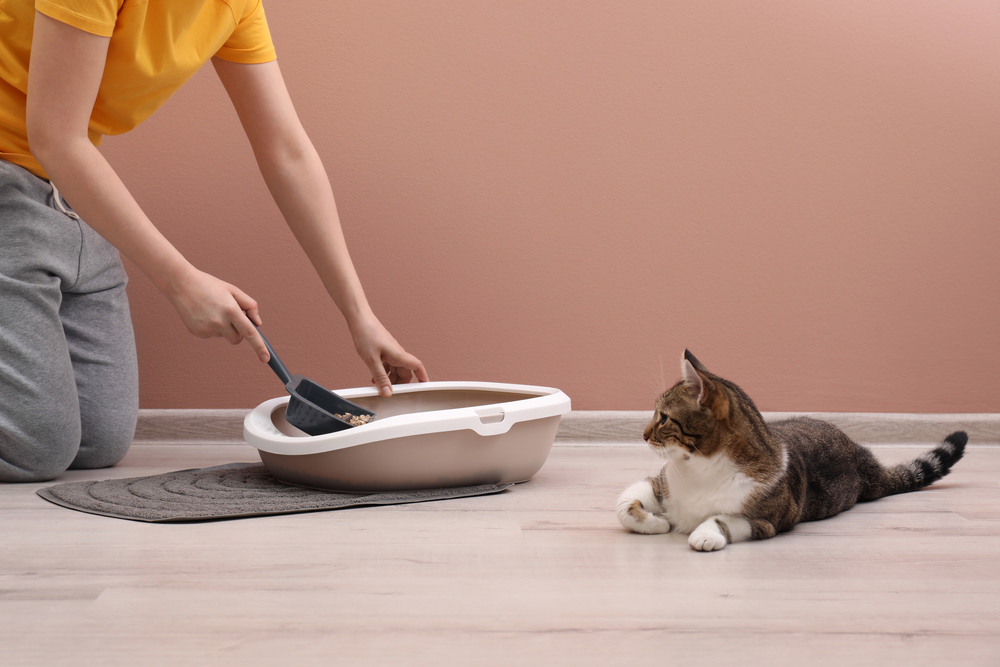
In addition to an air purifier, there are many other things you can do to help minimize cat litter odor within your home. Keeping up with all these tips and tricks will be the most effective way of solving your problem. Here’s what you can do.
Use a Litter Deodorizer or Baking Soda
Litter deodorizers are an easy way to get control of litter odor. You simply sprinkle some in the litter box and let it work its magic. Most of these deodorizers use baking soda as the primary ingredient since it is so effective at neutralizing odors, so if you don’t have any litter deodorizer, you can simply sprinkle in some regular baking soda at the bottom of your litter box (before adding in the litter).
Use Litter Boxes With Filters
Some covered litter boxes come with a filter, which can help trap odors and reduce the smell.
Choose Quality Litter
Having a good quality litter is important. You will want to ensure you pick the right type that works for you and your cat since there are a variety of types and textures on the market. This may result in some trial and error, but there are some great litters available that will help reduce the smell.
Clean the Litter Box Daily
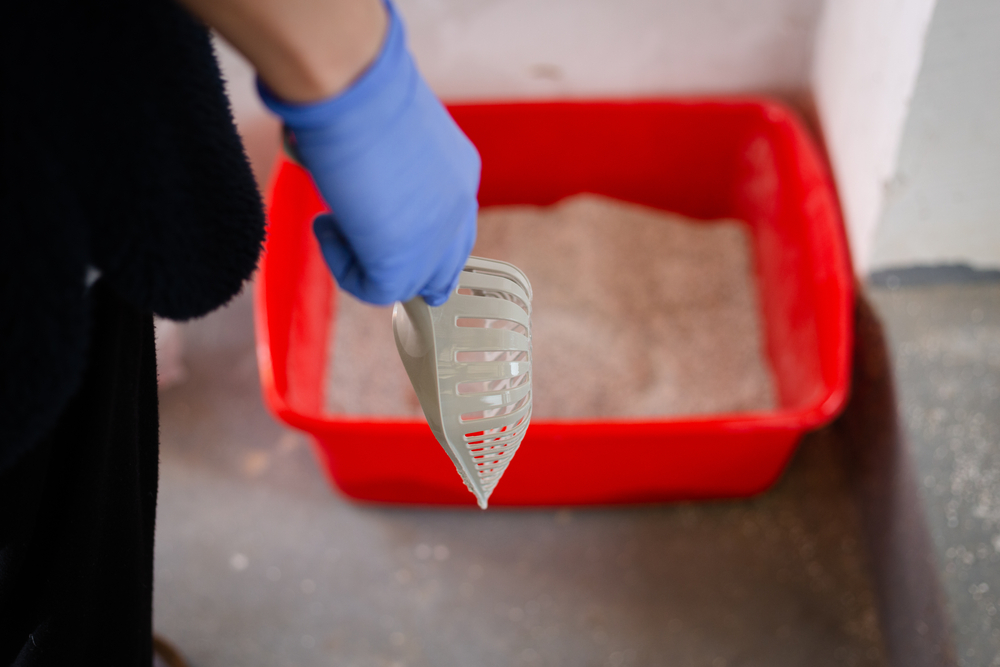
One of the most effective ways to reduce litter smell is to keep up with daily cleaning of the litter boxes in the home. Some people even choose to clean multiple times a day to get ahead of the smells.
Place the Litter Box in a Well-Ventilated Area
Place your litter box in a well-ventilated area in the home rather than trapping it in a small room with little ventilation. This can cause the odors to build up heavily. The more air movement, the better. Take note that some cats might not appreciate just about any location you choose for a litter box.
Replace Litter Boxes as Needed
Your litter box will eventually need to be replaced. Don’t try and hold onto an old box that has odors set in. If you have tried washing it throughout and it still holds a smell while empty, it’s time for a new one.
Wash the Litter Box Regularly
Not only should you keep up with daily cleaning, but every few weeks, you should also do a deep clean of the entire litter box by dumping out the contents and thoroughly washing it with soap and water.
Our Favorite Enzyme Cleaner
The Hepper Advanced Bio-Enzyme Pet Stain & Odor Eliminator Spray is our favorite enzyme cleaner out there. It permanently removes even the very worst kitty stains and smells, leaving your home fresh and clean! Click here to learn more about this amazing product and get yourself a bottle.

- ADVANCED ENZYMATIC CLEANER - Penetrates the most stubborn smells and stains at the deepest molecular levels to dissolve any pet mess you encounter and lift it away at the source.
- FOR ANY MESS, ON ANY SURFACE - This pet odor eliminator cleans your carpets, floors, furniture, fabrics, and more. Whether it's urine, feces, vomit, or drool, you can erase all foul spots and smells!
- FRESH, NATURAL ODOR - Our unique formulation doesn't rely on dangerous or unpleasant chemical fragrances to get the job done. We eradicate smells and stains, not just cover them up.
At Catster, we’ve admired Hepper for many years, and decided to take a controlling ownership interest so that we could benefit from the outstanding products of this cool cat company!
Final Thoughts
Having an air purifier can be very helpful in eliminating the cat litter smell from the home. You will want to choose a HEPA air purifier that has an activated carbon filter for the best results for both overall air purification and odor control. Many other useful tips can help you get control of the litter smell in your home and using them in conjunction with an air purifier is your best bet.
See also:
Featured Image Credit: Yuttana Jaowattana, Shutterstock

Expert cat care, straight to your inbox
Vet-reviewed advice, behavior tips, and the best of Catster. Free, and you can unsubscribe anytime.
By signing up, you agree to our Terms & Conditions and Privacy & Cookies Policy.
Lorre Luther is a writer who is firmly convinced that cats are smarter than humans. She left her law career in the United States and moved to the Netherlands to follow her dream of becoming a writer. Lorre currently lives in Rotterdam, she enjoys traveling and greatly appreciates the beauty of nature. Lorre has a spot for animals and admires the intelligence of cats.
Join the conversation
Ask a question, share your story, or send private feedback.