Get

In Your Inbox

Catster is reader-supported. When you buy via links on our site, we may earn an affiliate commission at no cost to you. Learn more.

Is Ajax Dish Soap Safe for Cats? Recommendations & Alternatives

Catster_Is Ajax Dish Soap Safe for Cats

Dish soap as a grooming tool is not new to the world of at-home pet grooming. It’s often touted as a quick at-home fix for fleas and a gentle option for regularly bathing your pet. Most of us are familiar with Dawn dish soap being used to remove oil from wildlife involved in oil spills, but most people aren’t familiar with whether other brands and types of dish soap are safe and appropriate for animals.

Ajax is another very popular dish soap brand that is in many homes, so it’s only fair that you might wonder if it’s safe for use on your cat. While the answer is yes, there are still some other important details you need to be aware of.

divider cat paws oct 2024

Is Ajax Dish Soap Safe for Cats?

Regular Ajax dish soap is safe for use on your cat’s body, although you should avoid use around the eyes and face as the soap can cause irritation. It has a neutral pH of around 7.0, which means it’s appropriate for most cats’ skin pH between 6.2–7.2. It’s important to know, though, that dish soap, including Ajax, strips the skin and coat of all the natural oils. This means that it can be extremely drying and irritating to the skin, especially if used regularly. While it can be used in a pinch or to remove oil-based products from your cat’s skin or coat, Ajax dish soap should not replace regular cat-safe shampoo for routine baths.

When using Ajax dish soap on your cat, you should also ensure that you are using regular Ajax. Avoid using Ajax with added scents that may irritate your cat’s skin. You also need to be careful to check the label to make sure your Ajax soap doesn’t have bleach, bleach alternatives, or other harsh chemical additives. These products can damage the skin’s natural barrier and lead to an increased risk of injury and discomfort if it gets into the eyes, mouth, ears, and nose. Breaks in the skin barrier increase the risk of bacterial and fungal infections developing, as well as increasing the potential for injury and irritation.

Cat sitting in bathtub after playing with water, front view
Image Credit By: sophiecat, Shutterstock

Are There Better Cleaning Options?

While there are better cleaning options for routine cleaning, most products don’t beat dish soap when it comes to removing oil-based products. For cats reacting to a topical flea and tick medication, for example, dish soap can quickly remove the oily substance from their skin and reduce the skin’s absorption of the product.

Dish soap can also be used to remove the oily substance left behind by a skunk’s spray, making it highly effective against the atrocious smell. It is a common ingredient seen in DIY skunk odor removers.

Cats have thinner and less oily skin than humans do, which is why pet shampoos are formulated specifically for pets. It’s not recommended to use human shampoo on your pets for many of the same reasons as dish soap, as well as not being tested for safety on animals by many companies. When it comes to normal bath time for your cat, it’s best to stick to a cat-safe shampoo that is formulated with cats’ skin and coat needs in mind, as well as the safety of their eyes and mucus membranes.

The best pet shampoos are carefully formulated to clean your pet without causing irritation. Hepper's Colloidal Oatmeal Pet Shampoo does a great job of this by combining soothing ingredients like aloe vera and colloidal oatmeal. It is also pH-balanced and free of irritants like dyes, soaps, sulfates, and phthalates. You and your pet will both enjoy the fresh, clean scent, too! 
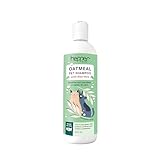
Hepper Oatmeal Shampoo
  • Only Natural Pet Shampoo - Our vegan, plant-based formulation is made with safe and natural...
  • No Soap - A cat and dog wash free from soaps, glutens, dyes, DEA, sulfates and phthalates means it's...
  • Colloidal Oatmeal - Formula soothes and nourishes dry, irritated skin, providing itchy skin relief...

At Catster, we’ve admired Hepper for many years and decided to take a controlling ownership interest so that we could benefit from the outstanding designs of this cool cat company!

divider cat paw scratch oct 2024

In Conclusion

Ajax dish soap is safe for use on your cat but should be limited to use when removing oily products or on rare occasions. This isn’t because the product is unsafe for your cat, per se, but it can strip the skin and coat of their natural oils, increasing the chances of your cat developing irritations and infections. Cat-safe shampoo is the top pick for bathing your cat, especially for routine baths.

If your cat has specific skin care needs, make sure to talk to your vet before starting a bathing regimen. Most cats don’t require baths regularly, and overbathing can cause more issues than simply having a stinky cat. Talking through your concerns and available options with your vet will help you provide the best care for your cat.

Read Also:

Want content like this delivered to you?

Sign Up For Our Newsletter

News, insights, expert advice, and everything cat

* By submitting, you agree to our Terms & Conditions and Privacy & Cookies Policy.

How useful was this post?

Click on a star to rate (you can leave written feedback after clicking submit)

Help us improve Catster for pet parents!

Your feedback really matters.

What did you like about this post? Also how can we improve it?

Join the conversation

Leave a Reply

You’re very welcome to leave a comment or question. Please know that all comments must meet our community guidelines, and your email address will NOT be published. Let’s have a positive and constructive conversation.

Talk With A Vet Online

Peace of mind,
anywhere, anytime

Affordable vet advice

Do Savannah Cats Like Water? Facts, Safety Tips & Info (Vet-Verified)

You might have heard that cats dislike water in the context of a bath, and for many cats, that’s true. But not all...

130 Fall-Inspired Cat Names: Ideas for Your Autumn Kitty

Deciding what to name your new cat or kitten can be overwhelming. One way to narrow it down is to consider names inspired...

Can Cats Have Pepto Bismol? Vet-Approved Safety Tips & FAQ Explained

Pepto Bismol is a medication used to treat an array of digestive symptoms in humans—as the jingle goes, “when you’ve got nausea, heartburn,...

My Cat Is Smacking Their Lips, What’s Wrong? Vet-Verified Reasons & Advice

Like any other devoted pet owner, you’ve probably spent hours staring at your cat and studying their every move. Cats are unique and...

More related

How Do I Calm a Cat Down for a Bath? 6 Vet-Approved Tips to Try

Oh, the dreaded cat bath time. Thankfully, this process will only be necessary on exceptionally rare occasions, perhaps even never throughout your cat’s...

Why Is My Cat Scratching the Mirror? Possible Causes & Vet-Reviewed Solutions

There are several possible reasons a cat scratches a mirror. Figuring out the answer largely depends on the context of the behavior. Some...

Balinese Cat Health Problems: 16 Vet-Reviewed Health Issues

The Balinese is a beautiful cat breed closely related to the Siamese, but these cats can be prone to certain health problems, some...

White Persian Cat: Info, Pictures, Facts & Origins

Persian Cats come in a variety of colors, and each coat type has unique charm and appeal. White Persian Cats are some of...

Keep reading

How Often Should I Feed My Cat? Vet-Reviewed Considerations & Tips

Next to feeding your cat just the right amount, you should also concern yourself with how often to feed your feline. There isn’t actually a one-size-fits-all answer for this. In many cases, it will depend on your schedule and your...

tabby cat eating cat food out of bowl inside

Are Tortoiseshell Cats Hypoallergenic? Vet-Approved Facts & FAQ

Between 10% and 20% of people globally are allergic to cats. If you suffer from cat allergy but can’t resist the charm of Tortoiseshell cats, you might wonder whether they are hypoallergenic. Unfortunately, no. Tortoiseshell cats are not hypoallergenic and...

a tortoiseshell cat sitting on a wood

Cat Lice vs Fleas: Vet-Reviewed Key Differences

Sooner or later, every pet owner will find tiny bugs crawling on their pet’s skin. But are they fleas or cat lice? It can be hard to tell the difference between the two small pests. Therefore, this article will teach...

Lice VS Fleas

Is Cedar Poisonous to Cats? Vet Approved Facts & FAQ

Any loving cat parent wants a heads-up as to which substances or plants can be poisonous to felines. If you’re wondering whether cedar trees are toxic to cats, unfortunately, yes, cedar can be poisonous to cats—some cedar trees are, in...

Catster_Is Cedar Poisonous to Cats

Why Does My Cat Lick My Hair? 7 Vet-Verified Reasons for This Behavior

You’re sitting in front of the television, unwinding after a busy day, when all of a sudden, your cat starts licking your hair. What is going on here? Does your hair taste good, or do they think you need a...

a tabby cat licking it's owner's head

Can Cats Eat Roast Beef? Vet Reviewed Benefits & Concerns

It is difficult to ignore the urge to spoil our pets. After all, we do it all the time for ourselves, so we want to give our lovely cat a tasty treat from our plate. But before you give human...

Can Cats Eat Roast Beef

Do Cats Have Bones in Their Tails? Feline Anatomy Explained (Vet Verified)

A cat’s tail is a fascinating and finely tuned structure adapted for survival in the wild, and yes, it has bones. These are called caudal vertebrae. Long-tailed cats can have anywhere from 19 to 23 bones in their tails. Short-tailed...

tail of a cat on vintage background

Can Cats Drink Orange Juice? Vet-Reviewed Nutrition Facts & FAQ

Some people like to share certain safe foods with their cats, and most consider orange juice healthy and nutritious, so it’s only natural to wonder if it’s OK to allow your cat to have a little orange juice now and...

Can Cats Drink Orange Juice



