How to Train Your Cat to Use a Cat Door: 6 Vet-Approved Tips


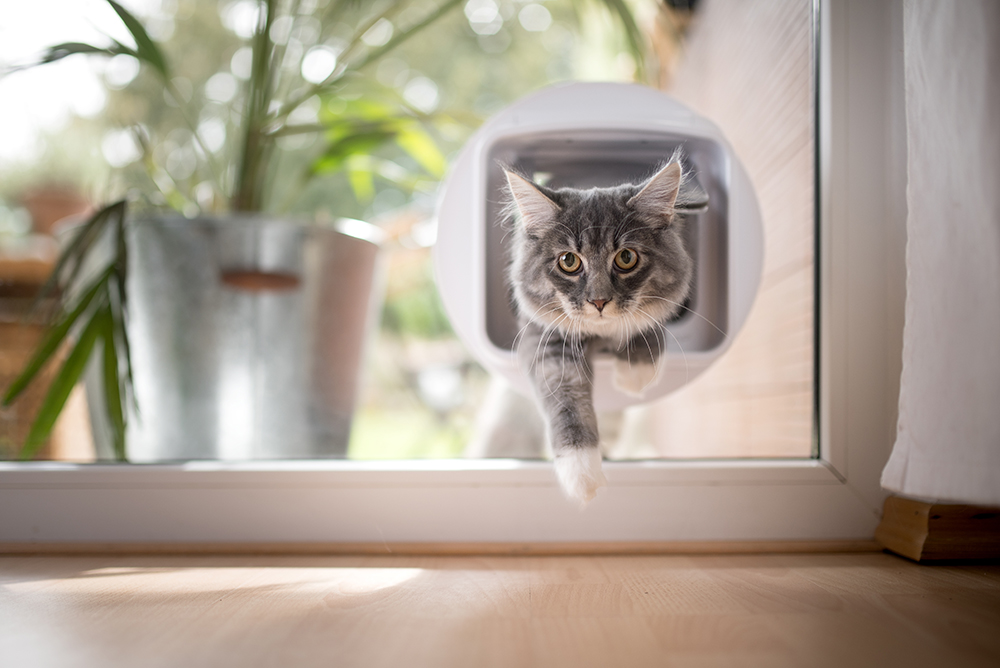
Whether you’re installing a cat door in your home for the first time or have just moved somewhere that already has one, it can be a little concerning as you watch your cat actively avoid it. But while some cats need a little help getting there, with a bit of time, patience, and training, you can get just about any cat to use a cat door.
To help you accomplish this, we highlighted six outstanding tips you should follow. Before too long, your cat will be going in and out of the door whenever they want!

Before You Install a Cat Door
Depending on where you live, a cat door might not be a good idea. If you live in a place where predators such as coyotes, hawks, foxes, wolves, and bobcats live, you should not let your cat freely come in and out of the house.
Another thing to keep in mind is the weather. Some areas get incredibly hot, putting your cat at risk of heat exhaustion. Tornados and hurricanes are also situations that can put your cat at risk. Lastly, you want to be aware of pet theft. While dogs are more commonly the target of theft, some people might steal cats.
These are all things to consider before installing a cat door or letting your cat experience the outdoors. If your cat is vaccinated, up to date on their flea and tick medication, and living in a safe area, they might enjoy the outdoors. However, the safest place to keep your cat is indoors.

The 6 Tips to Train Your Cat to Use a Cat Door
1. Stay Patient
This might be the most challenging and most important tip to follow when you’re trying to teach a cat how to use a cat door. Most cats won’t have any issues learning how to use a cat door, but that doesn’t mean it won’t take them a little while to get comfortable with it. Once they know how it works, give them some time to warm up to it.
2. Show Them How It Works
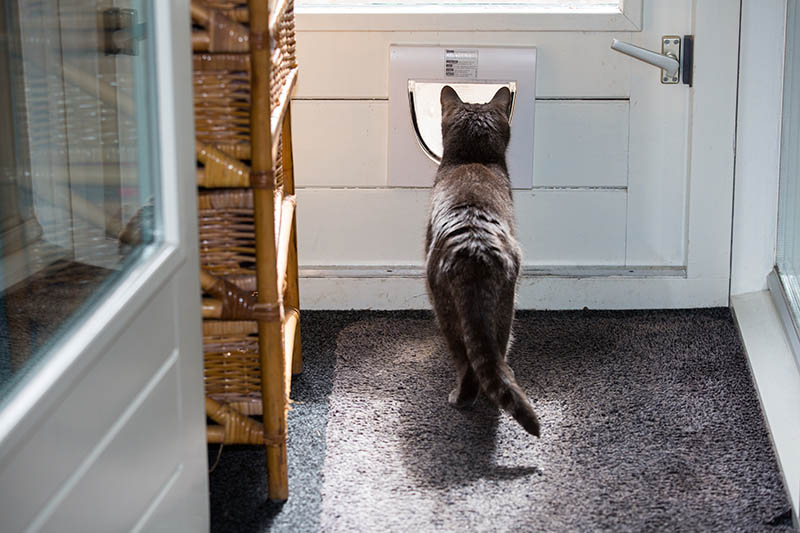
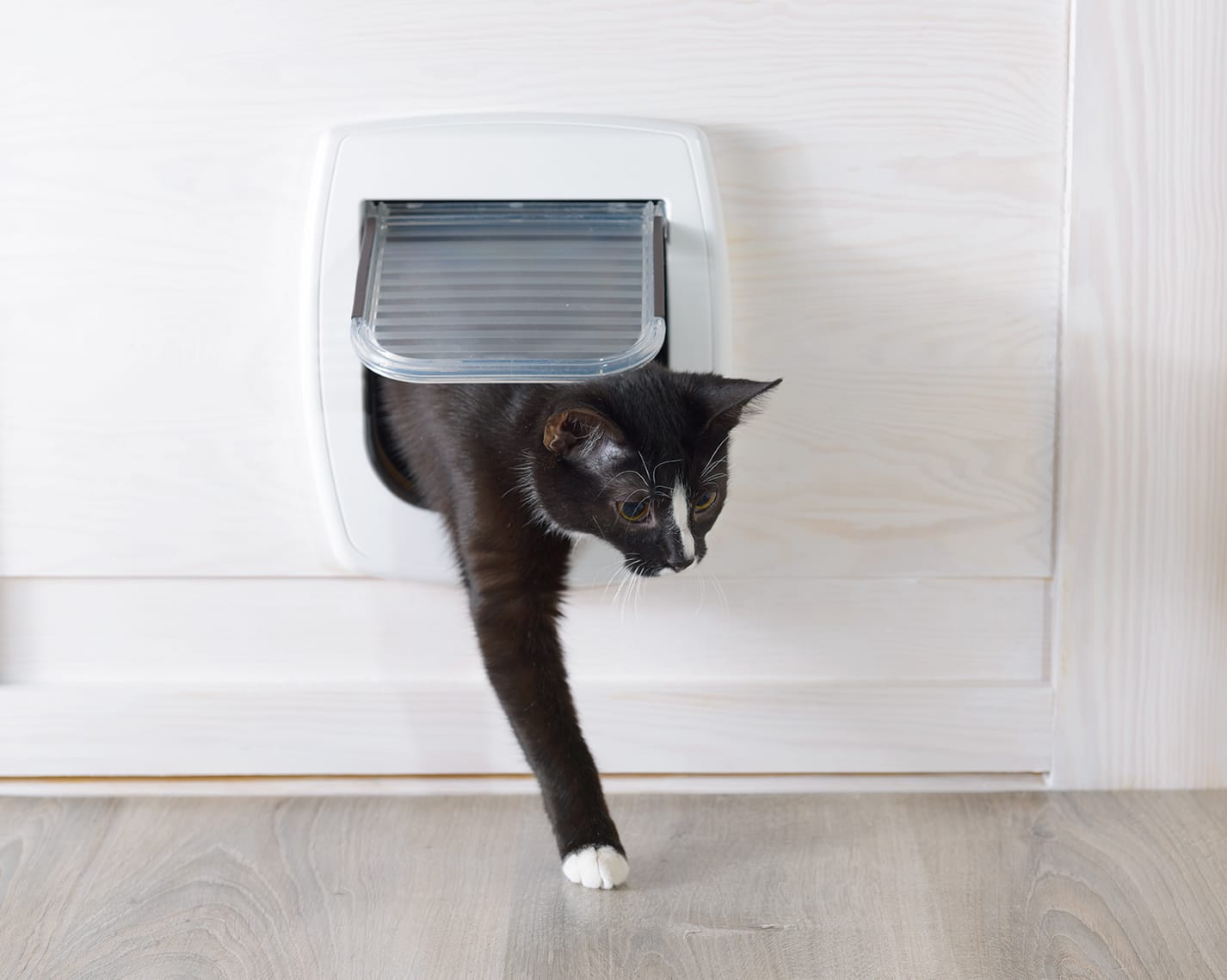
If your cat never sees anything go through the cat door, they might not piece together how it works. You don’t need to push your cat through the door, but opening it up and closing it in front of them at least teaches them how it works.
You can even push an object or two through it to make it clearer to your cat. After you’ve shown them a few times how it works, give them some space and time to figure it out on their own.

3. Add an Incentive
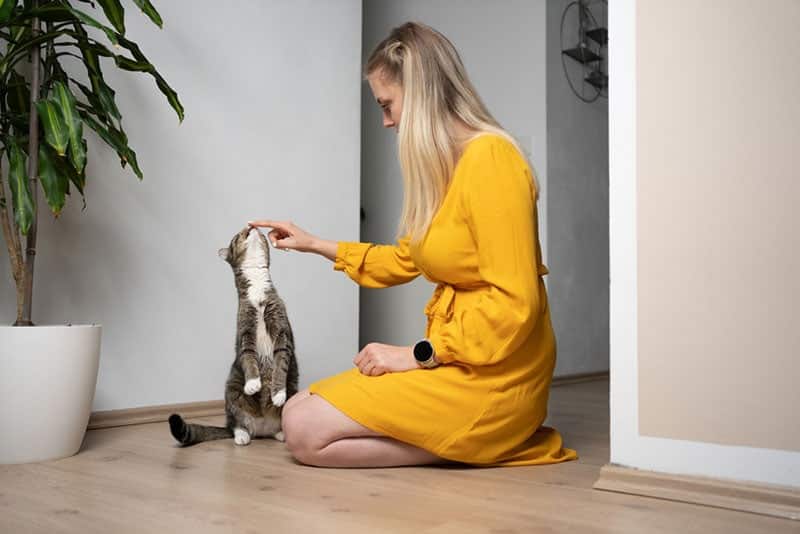
If your cat doesn’t want to go through the cat door, you might want to incentivize them to try to get to the other side. It could be a favorite toy of theirs, some catnip, or something else they really like. Treats usually do the trick. If they want to get to the reward on the other side, they have to go through the door.
4. Temporarily Leave the Flap Open
If you’re simply trying to get your cat comfortable with the fact that they can enter and leave the room through the door, try removing the flap. This will get the cat used to entering and exiting the room from that area, and once you put the flap back on, they’ll still want to do it.
Once the incentive is there, they’ll likely push themselves past any uncomfortable feeling they might have about it.

5. Push It Open for Them
If your cat doesn’t seem to understand how the cat door works, try pushing it open for them a couple of times as they try to figure it out. Once they see how it works and see that they can go through it without anything happening to them, they’ll be more likely to do it again in the future.
6. Muffle Loud Noises
If your cat door makes a loud noise as it opens and closes, there’s a good chance that’s why your cat isn’t using it. You might need to find a way to muffle the noise coming from the cat door. The exact way to do it will vary depending on what’s causing the noise, but WD-40 or an insulation strip often does the trick.


Reasons Why a Cat Won’t Use a Cat Door
Most of the time, a cat won’t use a cat door simply because it scares them. It could be because they can’t see what’s on the other side, or they might not like the feeling of the door pushing up against them.
If the cat door makes noise or has a weird texture, these are two common reasons a cat will avoid the door. The good news is that with enough time, patience, and training, you can train almost any cat to use a cat door. Ask a veterinarian about the best training methods.
Safety Factors to Consider
When you’re considering installing a cat door on your home, there are a few safety factors you need to consider. First, if you’re allowing your cat to enter the great outdoors, it’s best to install the cat door somewhere that’s not near a busy street or driveway. Even though there are speed limit signs, people often do not see the cat on the road until it is too late. This is a heartbreaking situation.
Next, keep in mind that while your cat can get out the cat door, any small critters can work their way in through the cat door, too. Common critters that will use a cat door to enter your home include raccoons, skunks, rats, and mice.
Some advanced cat doors will only open or close when your cat gets close to the door, but those aren’t foolproof either unless they work with a tag or microchip.
Finally, if you have any other small animals in your home, they might be able to get out through the cat door, too. Just because you let your cat out doesn’t mean you want those animals to have as much time outside as they want.

How Long Does It Take for a Cat to Start Using a Cat Door?
It depends on the cat. Some cats will start using the cat door as soon as you put it in, while others will take a little longer to warm up to it. But most of the time, a cat will learn to use a cat door in less than a week, even if they are on the more skittish side of things.

Conclusion
While it might take a few days for your cat to get comfortable with the cat door, it will not take them long. Show them how it works, and stay patient. Cats are curious creatures, and they’ll warm up to the cat door in their own time.
It might be a little frustrating at first, but before long, you’ll see them zipping in and out of the door whenever they want to get to the other side.
Featured Image Credit: Monika Wisniewska, Shutterstock

Expert cat care, straight to your inbox
Vet-reviewed advice, behavior tips, and the best of Catster. Free, and you can unsubscribe anytime.
By signing up, you agree to our Terms & Conditions and Privacy & Cookies Policy.
Christian started writing for a local newspaper as a teenager, and he's been involved in the publishing industry for most of his adult life. Combining his love of writing with a passion for animals, he is currently the Director of Editorial at Pangolia and the Editor-in-Chief at Catster.
Christian lives in the Philippines with his wife, son, and four rescue cats: Trixie, Chloe, Sparky, and Chopper.
Join the conversation
Ask a question, share your story, or send private feedback.