Get

In Your Inbox

Catster is reader-supported. When you buy via links on our site, we may earn an affiliate commission at no cost to you. Learn more.

How to Train a Savannah Cat: 5 Vet-Reviewed Tips & Tricks


Share

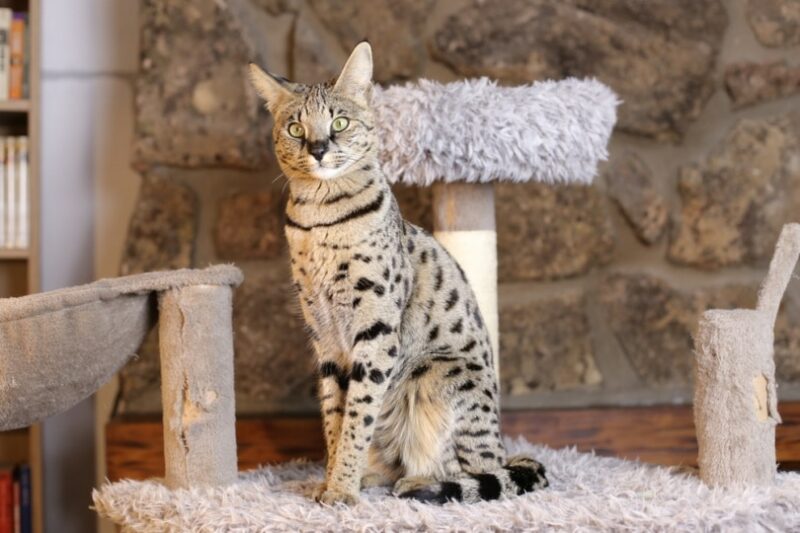
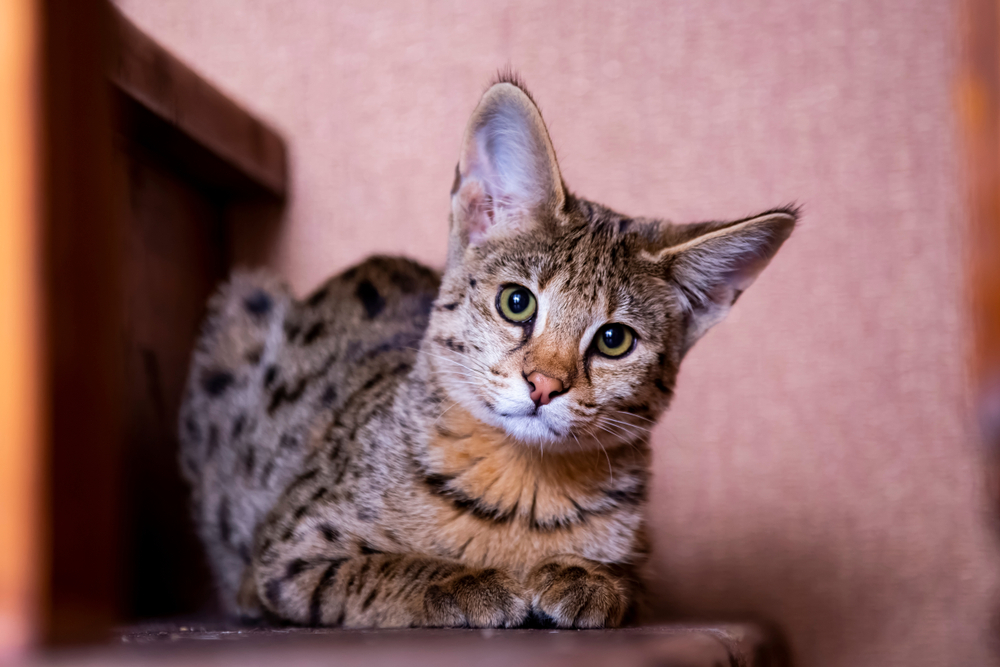
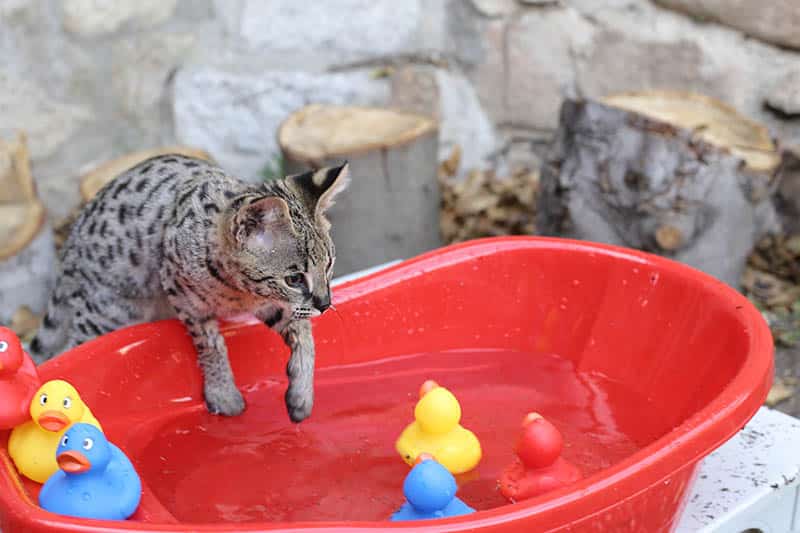
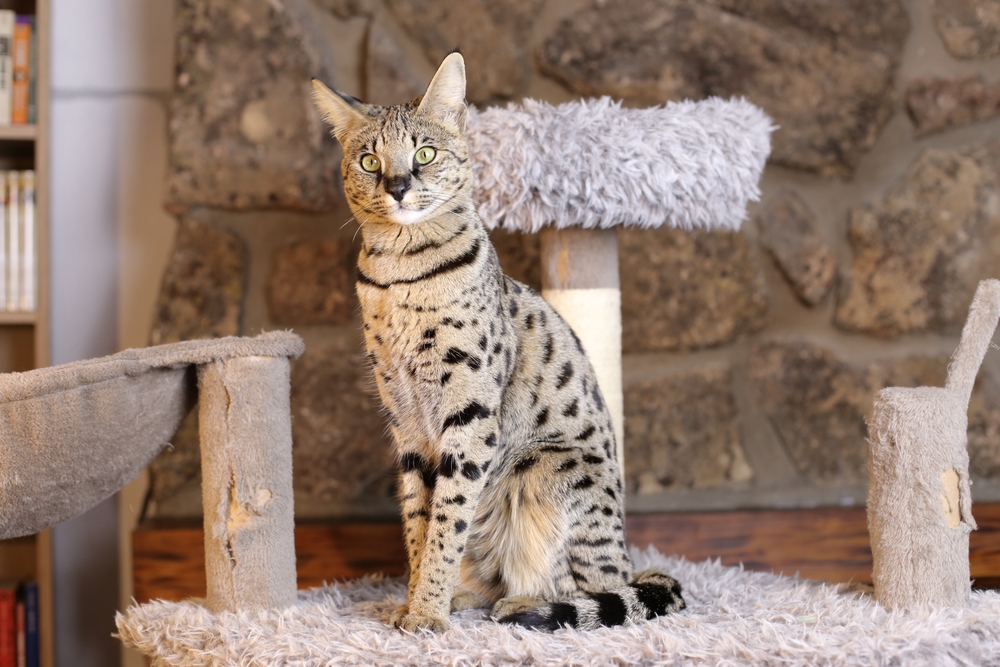
savannah cat sitting on cat tree

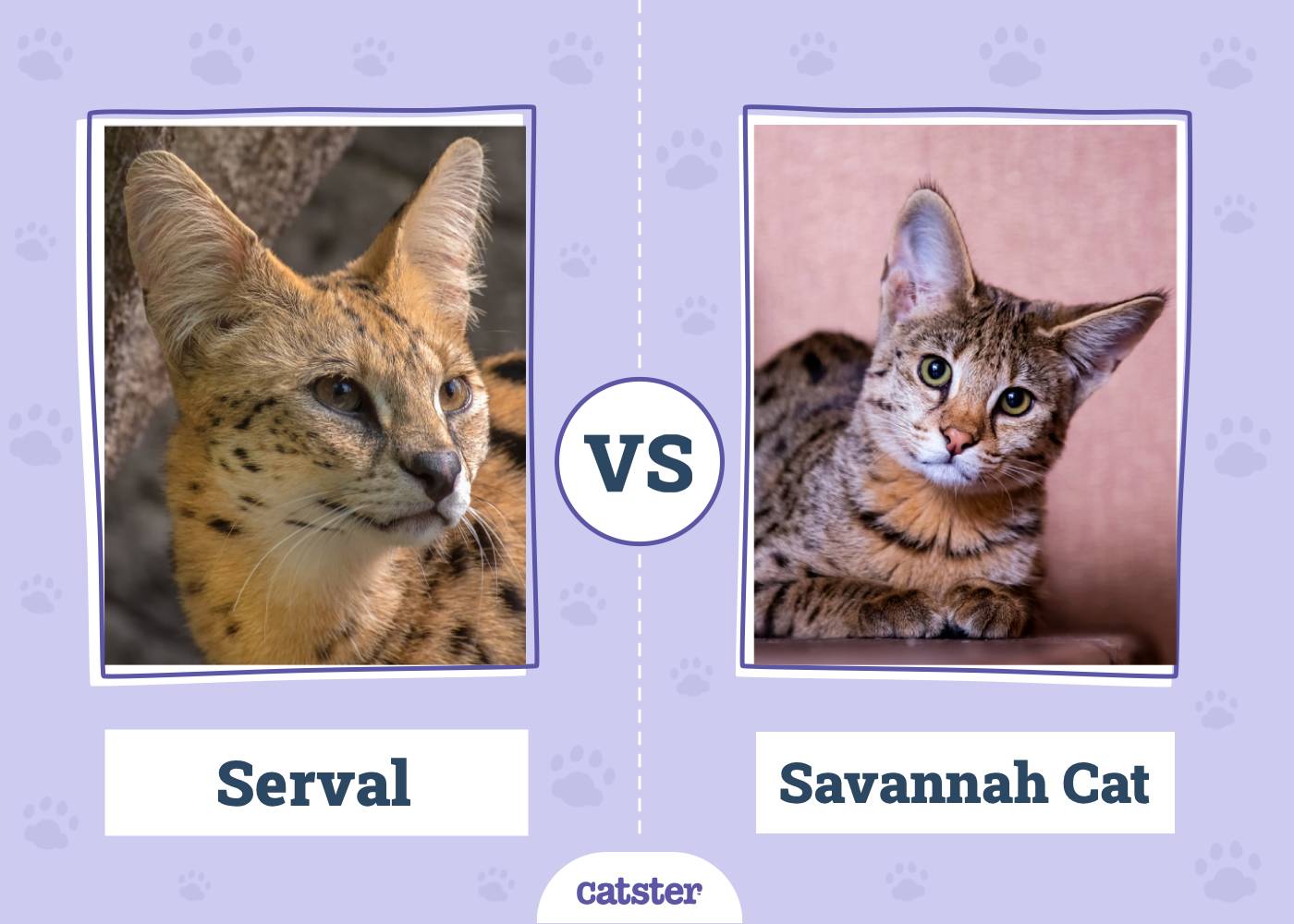
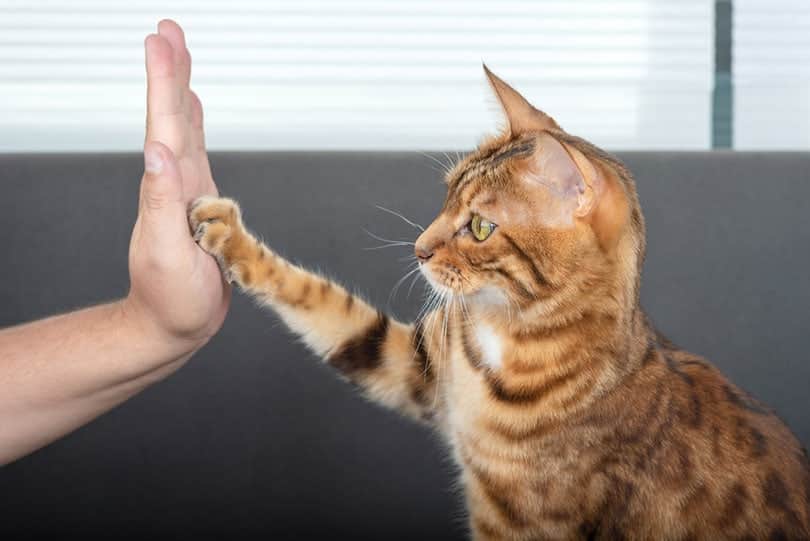
As majestic as a wild cat and as friendly as a house cat, the Savannah Cat is unique and intelligent and has been described as having a dog-like personality because of their loyalty and playful energy. They have a wild side, given their serval ancestors, and are more active than other domesticated pets. Owning one of these beauties may lead you to question whether they can be trained and, if so, how toproceedt.

Savannah Cats are trainable, but that doesn’t necessarily mean they are easy to train. Motivation and intelligence are key factors when training cats, and savannah cats carry those qualities, along with being focused and energetic. These traits make it easier to train than other cats and will require patience and perseverance.

Let’s look at how this intelligent breed can be trained and the best methods for training them.

divider 2 cats

Before You Start

It is wise to note that training a kitten is a lot easier than training an adult cat. Adult cats can still be trained, so if you are rehoming or rescuing an adult Savannah, they are still trainable, but if you have a choice, kittens are always easier to train.

Savannah Cats are smart, but like most cats, they are also fickle. You may feel like training them issometimes impossibles, but perseverance is essential. Although they can be trained to play fetch like a dog, they were not taught to obey humans, so remember that you are training a cat, and a lot of patience will go a long way.

Before starting, you can test your Savannah’s intelligence by hiding their favorite toy behind your back and observing their reaction. An intelligent Savannah will look for the toy behind your back, whereas other cats can become confused. This is a great exercise to distinguish how easily you will be able to train your Savannah.

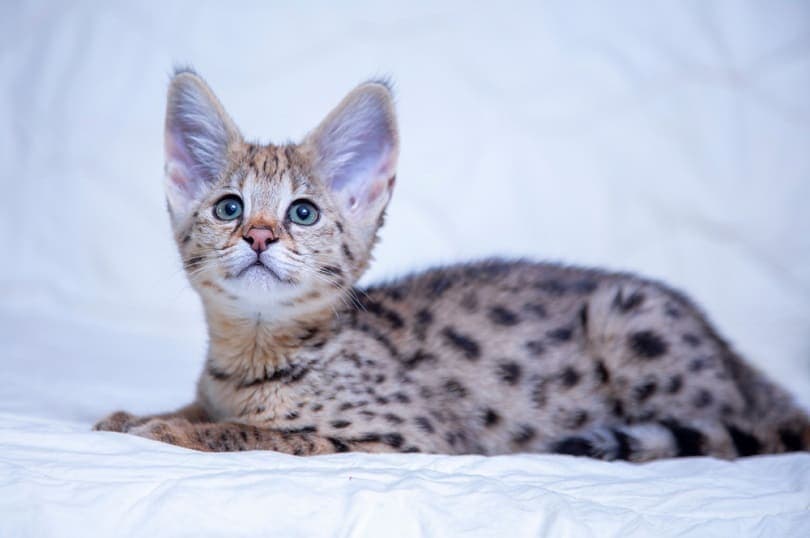
savannah kittens playing
Image Credit: Kolomenskaya Kseniya, Shutterstock

Preparing to Train Your Savannah Cat

  • It is important to be patient and start the training process slowly. You don’t want to irritate or overwhelm your cat.
  • Keep a training schedule. Felines are creatures of habit and hate change
  • Train your cat in 15- to 20-minute sessions and, at the same time every day, teach only one trick at a time.
  • Use reward-based techniques and positive reinforcement, not punishment.
  • Provide a variety of interactive toys for physical and mental stimulation.
  • Never leave your Savannah outdoors alone. They are curious and athletic and can jump up to 8 feet high.

How to Train a Savannah Cat

Savannah Cats need lots of play and exercise because of their active and energetic personalities. They also need enough mental stimulation to prevent them from getting bored. When Savannahs become bored, they can become destructive.

1. Clicker Training

clicker
Image Credit: bmf-foto.de, Shutterstock

Clicker training is a great technique because of the mental stimulation it provides for your intelligent Savannah. They respond well to clickers and can stay motivated. Before you begin clicker training, get your Savannah to learn the sound and how to respond by associating treats with the sound.

  • When you start training, make sure the environment has no distractions; savannahs are curious felines, so they are easily distracted, and you want the best results.
  • Once your cat has your attention, establish a connection by prompting the clicker sound and giving them a treat.
  • When the connection is made, hold a target stick close to their face and wait for your cat to sniff it. When they begin sniffing, sound the clicker and reward them with a treat. Repeat this, moving the stick further away until your cat follows.
  • Now that your feline knows how to follow, it is time to introduce verbal cues. Add the word ‘follow’ along with the treat and repeat the previous step until your voice can replace the clicker sound.

Once your pet is familiar with the clicker sound, you can use it for other tricks.


2. Leash & Harness Training

savannah cat on rope in green grass
Image Credit: Jarry, Shutterstock

It may be hard to get your Savannah used to a leash and harness, but this is normal as they naturally don’t like to be restrained.

  • Introduce a leash and harness by allowing your cat to sniff at it and reward them with a treat. Reward them every time they interact positively with the harness, and this will make it easier to get them into it later.
  • Let your cat wear the harness for a short amount of time every day, gradually increasing the time each day while rewarding them with a treat each time they wear it.
  • It helps to play and interact with your cat while wearing the harness, and they will eventually forget they are wearing it and move around like normal.
  • Associate the harness with going outside, and your cat will eventually grow accustomed to wearing it.
  • Allow your Savannah to get used to the tension of the leash by walking them inside in different directions until they are accustomed to being

The more you walk your Savannah, the faster they will learn and understand what they can and cannot do.

Taking your cat for a walk may sound challenging, but the right harness and leash can make all the difference! We recommend Hepper's Cat Harness & Leash Set because it combines important safety features with stylish and comfortable design elements.

Hepper Cat Harness and Leash Escape Proof Set
  • Escape Proof - Cat leashes and harnesses for walking aren't all equally secure. Our double aluminium...
  • Superior Comfort - Our cat harnesses are lightweight, made with premium velvet fabric, breathable...
  • Free Extra Strength Leash - You don't need to worry about your cat escaping this harness. This cat...

From the highly adjustable, machine-washable velvet harness to the sturdy nylon climbing rope leash, this set has everything you'll need to start adventuring.

>At Catster, we’ve admired Hepper for many years and decided to take a controlling ownership interest so that we could benefit from the outstanding designs of this cool cat company!

3. Toilet Training

a-toilet-bowl-in-the-restroom
Image credit: islandworks, Pixabay

Toilet training depends entirely on the personality of your cat. Some like to stick to a litter box, while some can be easily trained to use the toilet. It is best to start training your Savannah when it’s around 6 months old, as you don’t want to risk your kitten drowning in the toilet.

  • Start by slowly moving your cat’s litter box to the bathroom, close to the toilet, but avoid changing rooms right
  • Open the lid of the toilet, leaving the seat down so that they can climb up if they want to.
  • Slowly move the litter box on top of the toilet.
  • Your Savannah will slowly start getting used to using the toilet instead of the litter box.

This process requires plenty of patience and can take some time, but it can be done! Cat toilet training kits are also available to help make this process easier.


4. Jumping Through a Hoop

savannah cat sitting on couch
Image Credit: Kolomenskaya Kseniya, Shutterstock

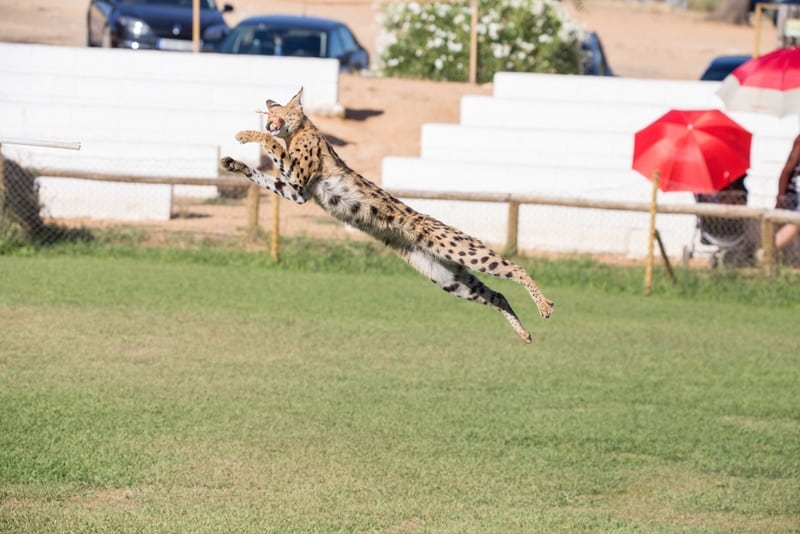
A Savannah Cat naturally loves to jump because of their athletic and wild genes. Their hind legs are longer than their front legs, which makes them amazing jumpers, so training them to jump is one of the easier tricks to accomplish.

  • Place a hula hoop on the ground with a treat in the center. This will get your feline used to the hoop.
  • You will then hold the hoop and treat in your hand and entice them through the hoop with the treat.
  • Gradually lift the hoop until they jump through it.
  • Just before they jump through the hoop, say the word “jump”, so they slowly learn verbal cues.
  • Reward your cat each time it jumps through the hoop.

5. Behavior Training

Savannah Cat
Image Credit: skeeze, Pixabay

As much as we admire our cats, they can become frustrating when they do things that we may disapprove of. Your cat may be guilty of one or more of these actions:

  • Jumping on tables: Using positive reinforcement, you can direct your cat to another area or provide them with their own jungle gym or perch.
  • Tearing furniture: Naturally, your cat will want to sharpen their claws, so help them do it in a way that is less detrimental to your furniture by providing scratching posts of various textures. Clipping your cats’ nails can also reduce the amount of damage caused by scratching your furniture.
  • Destroying your belongings: Providing your cat with various toys will keep them entertained and stimulated. Playing with your Savannah will also help them expel energy through exercise.
  • Eating houseplants: Cats are always curious about houseplants, but some can be toxic, and it’s important to keep them away from your pets. Keep your plants in areas or pots that your cat can’t reach.

divider 2 cats

Final Thoughts

Savannahs are intelligent feline companions that are easy to train as long as you have the patience and time. Training can be a positive experience for both of you, and it can strengthen your bond with the animal. In time, you can enjoy an outdoor stroll with your furry friend.

See Also: How High Can a Savannah Cat Jump? The Incredible Answer


Featured Image: AJR_photo, Shutterstock

Want content like this delivered to you?

Sign Up For Our Newsletter

News, insights, expert advice, and everything cat

* By submitting, you agree to our Terms & Conditions and Privacy & Cookies Policy.


How useful was this post?

Click on a star to rate (you can leave written feedback after clicking submit)

Help us improve Catster for pet parents!

Your feedback really matters.

What did you like about this post? Also how can we improve it?

Join the conversation

Leave a Reply

You’re very welcome to leave a comment or question. Please know that all comments must meet our community guidelines, and your email address will NOT be published. Let’s have a positive and constructive conversation.


Catster's Digital Magazine is Back!

Vet-approved health & behavior advice

Real cat stories & community features

Chatting With Dr. Matt McGlasson About Special Needs Kitties, Social Media Fame, and Rating Cat Toe Beans | Chatty Cattys, Episode 32

In this episode of Catster’s Chatty Cattys podcast, Dr. Karyn and Nicole sit down with a very special guest: veterinarian and social media...

Does Your Cat Need A Friend? How to Tell If Your Cat Is Lonely

Cats have a reputation for being perfectly happy on their own – independent, self-sufficient, and solitary. But, like many stereotypes, this one does...

Proof That Moving Cats Indoors Is Easier Than You Think

We know that indoor cats live longer and have significantly lower rates of illness and injury than those that spend part or all...

Why Cats Love To Get High

If you’re trying to find a cat in any home, the search almost always ends by looking up. They’ll be on top of...

More related

Why Do Cats Pee When Scared? 2 Reasons for This Behavior

If you’re a cat owner, chances are that you don’t see your cat pee anywhere but the litter box. Sometimes, though, you may...

10 Flea and Tick Diseases in Cats: Vet-Verified Facts & FAQ

Living with cats means you will, at some point, have to deal with fleas and potentially ticks. Although we often talk about them...

Cat Toe Tufts: A Comprehensive Guide 

Cats have many physical characteristics that make them so adorable. Whether it’s their expressive eyes, the wisps of fur on their ear tips,...

Catster Photo Contest: Cats of the Week Winners (November 20, 2025)

Every week our team gets the privilege of sorting through our readers photos to choose what cats will win this weeks contest! See...

Keep reading

Mouth Cancer in Cats: Vet-Reviewed Signs & When to Euthanize

One of the most difficult parts of pet ownership is making end-of-life decisions. Knowing when to euthanize a beloved animal companion is never easy, and there’s no right answer for every situation. Personally, I’ve had to make that choice three...

cat mouth check by vet

Can Feral Cats Be Friendly? Vet-Reviewed Facts & Advice

Feral cats aren’t socialized by humans, by definition. They haven’t been raised around humans and have spent much of their time with other cats instead. Therefore, feral cats typically act like wild animals and aren’t usually friendly—unlike the domestic cats...

feral cat on the stairs

11 Best Cat Foods for Nursing Mother Cats in 2026 – Reviews & Top Picks

Motherhood is a tough job for humans and animals. One of the hardest parts of the job is pregnancy and nursing. Not only is the mother responsible for feeding her babies, but she must feed herself enough to make milk...

Gray mother cat feeding kittens while taking a nap

7 Natural Sources of Taurine for Your Cat: Vet-Reviewed List

When it comes to feline diets, the importance of taurine cannot be overstated. An essential amino acid for cats, this nutrient is found almost exclusively in animal meats. Prolonged deficiency of this key ingredient can lead to a plethora of...

Taurine - powder and capsule

Yeast Infection in Cats (Malassezia Dermatitis): Our Vet Discusses Signs, Causes & Treatment

Your cat is losing hair and, quite honestly, smells like corn chips. You know it’s not normal, so you call your veterinary hospital to schedule an appointment. Your head is spinning after your veterinarian suggests a skin impression and diagnoses...

vet examining red sore ear of a cat

Can Cats Eat Liver? Vet-Approved Nutrition Facts

Liver is packed full of vitamins A and B and contains other essential minerals. In small quantities, it is not only safe for cats to eat liver, but it is considered good for them. However, the vitamin content in liver...

Can Cats Eat Liver

How to Calm Your Hyper Cat: 9 Vet-Approved Tips

Cats have different energy levels, depending on their health, breed, and age. Kittens, for example, are more energetic than most older cats. Some breeds have more energy and agility, bouncing around the house and shredding all your curtains. If your...

blue tabby maine coon cat running outdoors

Why Do Cats Attack Pregnant Women? 9 Safety Tips

If you’ve recently become pregnant, you might’ve noticed that your cat’s behavior toward you has changed. It’s a common issue, but that doesn’t mean you need to deal with an aggressive cat for the next 9 months! There are plenty...

Pregnant young woman with pet cat

Love Cats? So Do We! Join the Catster Community

Stay informed with expert pet care insights delivered straight to your inbox! Discover professional guidance on animal behavior, feeding tips, trusted product picks, and much more.


Sign up for the Catster Email Newsletter

Stay informed with expert pet care insights delivered straight to your inbox! Discover professional guidance on animal behavior, feeding tips, trusted product picks, and much more.