How to Tell Your Cat's Age in Human Years (With Chart, Vet-Reviewed)


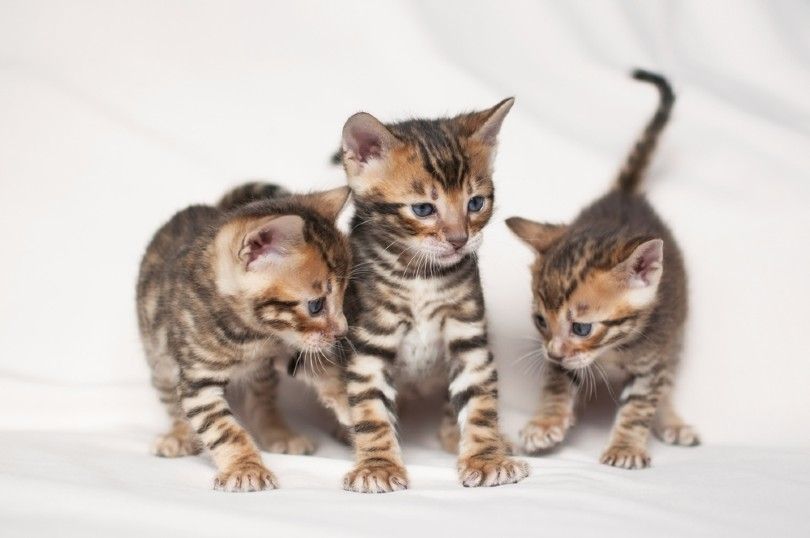
Nearly 50 million American households have at least one cat.1 It’s easy to see why they are so popular. Felines are more independent than dogs, making them less work, especially for working families. However, that doesn’t mean they don’t require attention, dedication and ongoing care.
Age is a critical factor in many of the health decisions you’ll make. Comparing your pet’s age to human years may help put it into a better perspective. However, it’s not a simple formula. Instead, it’s a dynamic quality that changes throughout your cat’s lifetime.

Cat Age Chart in Human Years

Age becomes relevant even before you bring your pet home. One of the first decisions you’ll make is when that happens. It can mean the difference between a cat that handles the transition well to one that is nervous with behavioral issues. The next milestone is the time that you spay or neuter your pet. That can differ with the varying development of cat breeds.
Another critical decision involves your pet’s diet. Kittens and adult cats don’t have the same nutritional needs. For example, a younger pet must get more protein, calcium, and other nutrients to support their development. Likewise, a senior pet has differing requirements, too. All animals—including people—slow down as they age. That means dietary changes.
Not a One-Size-Fits-All Formula
Often pet owners believe the adage that one year of their cat or dog’s life equals seven in them. Unfortunately, that’s too simplistic. A cat becomes sexually mature around 6 months, depending on the breed. By that formula, a kitten is 3.5 years, which shoots holes into that 7-year theory. Instead, you’ll find it’s quite variable.
For one thing, it’s essential to consider your cat’s age in months when they’re under 1 year old. Then, figures also vary, depending on the animal’s life stage. Diet and health can play a role, too. Bear in mind that a feline’s lifespan isn’t necessarily the same as humans, either.
Do Indoor and Outdoor Cats Age at the Same Rate?
Indoor and outdoor cats may age the same physically, but that only scratches the surface. The first factor is lifespan. You can expect a pet kept indoors to live up to 15 years or more. A cat that lives outside can live up to 5 years—if it can dodge the dangers of cars, predators, and disease.
Diet also becomes a part of the aging issues, especially for cats that fend for themselves by hunting. That adds a host of potential risks, including poisoning, internal or external parasites, and conflicts with the conservation of vulnerable species. The fact remains that cats adapt well to indoor life without any problem.

Signs of Aging in Senior Cats
A cat enters the senior life stage at about 11 years old. A pet may develop chronic health conditions at this time, such as arthritis and dental disease. These two issues, in particular, can cause other complications that can affect a cat’s lifespan.
A feline typically starts to slow down as they age. They may lose muscle mass that can make getting around more difficult. They may develop arthritis. Some seniors may need fewer calories if they become less active, while others may lose weight and require more calories or a higher-protein diet. Diet adjustments should be based on body condition, not age alone. A senior cat diet is more tailored to their needs at this age and helps to prevent obesity. That can directly impact their quality of life and longevity.
Dental disease can bring on another set of equally disconcerting problems. If it hurts your cat to eat, they may go off of their food. That can, in turn, cause weight loss and nutritional deficiencies. An inadequate diet and malnutrition weakens the immune system, which may make cats more susceptible to infections.
Other signs of aging include:
The risk of many of these conditions increases with age. Therefore, regular veterinary care is imperative for your cat’s health.

Which Cat Breeds Live Longest?
Interestingly, research shows that mixed- or crossbred cats often live longer than many purebred cats. Many of the oldest cats recorded in sources like the Guinness Book of World Records are mixed-breed, which supports this trend, though it’s worth noting that these examples are anecdotal rather than scientific proof.
A likely explanation is genetics. Inbreeding increases the risk that offspring will inherit unwanted traits or genetic disorders, such as deafness. If both related parents carry a gene for a disease, their kittens have a higher chance of receiving two copies of the problematic gene. By contrast, mixed-breed cats, which generally have greater genetic diversity, are less likely to inherit such conditions and often have healthier offspring.
A cat that reaches 15 years of age has already lived a long life. With proper care, diet, and regular veterinary attention, some cats can live into their 20s—and in extremely rare cases, even into their 30s.

Conclusion: How Old Is My Cat
Understanding how your cat ages can go a long way to ensuring a good quality of life. It’ll help you choose an appropriate diet and provide the best care, no matter what their life stage. The essential thing to remember is that your pet isn’t a little human. They have their unique physiology that determines their lifespan. Knowing what to expect as your pet ages is vital for their health.
Featured Image Credit: Kutikova Ekaterina, Shuterstock
Expert cat care, straight to your inbox
News, insights, and useful advice, delivered to you.

No spam — unsubscribe anytime.
By signing up, you agree to our Terms & Conditions and Privacy & Cookies Policy.
How useful was this post?
Click a star to rate. You can leave written feedback afterwards. (We read all feedback.)
Christian started writing for a local newspaper as a teenager, and he's been involved in the publishing industry for most of his adult life. Combining his love of writing with a passion for animals, he is currently the Director of Editorial at Pangolia and the Editor-in-Chief at Catster.
Christian lives in the Philippines with his wife, son, and four rescue cats: Trixie, Chloe, Sparky, and Chopper.