How to Introduce a Third Cat to Your Home (11 Vet-Reviewed Tips)


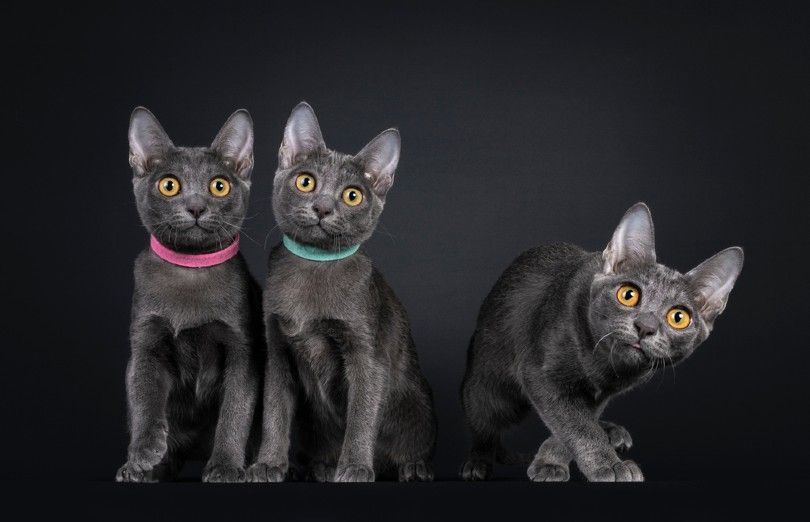
If there’s one thing to know about cat lovers, it’s that they cannot get enough of their cat. You can find many cat owners who started off with one or two cats, and eventually grew their cat family into a house of three or more!
While owning a cat is a big responsibility, there are some advantages to owning multiple cats. Although they can thrive on their own, cats can still get lonely, especially if their humans are not always home. Young cats and kittens in particular are full of energy and can easily get bored if their environment is not stimulating enough. Multiple cats, if introduced gradually and successfully, especially if they’re of a similar age, may keep each other company and engage in playing.
But if you already own two cats, how do you introduce a third cat into the family? Here are 11 helpful tips!

Introducing a Third Cat Into the Family
Before introducing a third cat into your home, understand that cats are territorial creatures with their own unique personalities. While many cats enjoy the company of other cats, their behavior toward outsiders can be unpredictable.
It is important to introduce your cats slowly and smoothly while keeping the environment controlled to reduce stress, anxiety, and the risk of confrontation. While some cats can welcome the newcomer quickly and easily, others may take more time to adjust. Patience is necessary when introducing a new cat into the family.
1. Get a Kitten!
If you’re still at the point of considering adopting a new cat into the family, a kitten would be a good consideration. Kittens are still in the process of learning, allowing them to adapt to their new home and companions more easily.
Adult cats are also more likely to respond favorably toward kittens than other grown cats. They may hiss and show displeasure at the new arrival, but they ultimately wouldn’t see the kitten as a threat to their resources.
2. Ensure Your Cats Are Spayed or Neutered
Ensuring your cats are spayed or neutered is important for many reasons. Neutering cats can reduce hormone levels and lessen the risk of heat related aggressive behaviors. This is also helpful to avoid any unwanted pregnancies, especially if your cat family is mixed with both males and females.

3. Keep the Third Cat in a Separate Room
As mentioned, cats are territorial creatures—meaning they take personal space very seriously. An outsider can trigger territorial instincts, which can easily start unwanted conflict. When first arriving in the house, keep the new cat in their own room with their own space for the first few days. This also gives them an opportunity to familiarize themselves with the new environment.
While the newcomer is settling in and feeling at home, the resident cats can also familiarize themselves with the new scent in the house to prepare for when they finally meet the new feline of the family.
You should also do a scent exchange, by placing one of the kitten’s belongings with the other two cats, and the other way around, so they can familiarize themselves with each other’s scent. This will make the new kitten smell less frightening or threatening for the two cats, as well as the cats' scent to the kitten, before the actual introduction takes place, making things go more smoothly.
4. Let Them Switch and Explore Each Other’s Space
To get your cats more comfortable with the idea of a newcomer, let them roam each other’s rooms and spaces while the other cat is away. This allows them to familiarize themselves with the new scent around the house while also spreading their own scent.
Sharing of beddings and toys from one room to the other can also help with their adjustment to improve scent exchange.
5. Let the Other Cats See the Third Cat Without Direct Contact
After a few days, once the newcomer has settled in and the scent exchange went well, the three cats can finally meet each other in a controlled environment, but only two at the time, the new and each of the resident cats separately. This can be done by keeping the new cat in a secure and spacious crate allowing the new cat to see the resident cats while in a safe space. Use pheromone diffusers which can make the cats feel more reassured and relaxed.
A crate should be used only if the kitten or the new cat is used to being in one and if it’s spacious enough to allow for hiding places from the other cat. Otherwise the cats can see each other through a glass door or one slightly opened, a mesh barrier, or a children’s gate, which will not allow them to come in direct physical contact. Cat carriers are too small for this purpose and may cause the cat to feel trapped.
Let your two resident cats see the new cat, one by one. It is important that the resident cats can see and recognize the new cat, as well as smell their scent, to help them adjust to the newcomer becoming a normal part of their home and their social group. The new cat should feel safe in the crate, having access to a bed that they can withdraw to if they feel frightened, if a crate is used.
Use plenty of cat treats to reinforce calm, relaxed, and curious behavior, and to distract the cats from any hissing or staring with toys, but be sure not to reward this behavior with food. If the encounter goes well, repeat it multiple times and extend the time until all three cats are comfortable being in the same room, having treats and not being fussed about each other.

6. Begin Supervised Interactions
Finally letting your new cat and resident cats interact face to face can be unpredictable. They should mingle and interact in short play sessions, always with supervision at first. Allow the cats to mingle, roam freely, and interact with one another while observing their behaviors. Talking to your cats and staying involved in their interaction is beneficial, using distraction with toys on a rod if there is any hissing involved. Slowly this will allow the cats to familiarize and gauge one another.
Your cats can feed off energy from their owner, so staying relaxed and composed can help them ease up to the new situation. As time goes by, increase the time they spend together until you are comfortable with the three cats being together. If you observe your cats showing any signs of fear or even aggression, separate them again and try to build them up with the previous steps.

7. Associate Pleasure with Interaction to the Third Cat
Another tip to facilitate and promote their interaction with one another is associating pleasurable activities with their togetherness. This can involve feeding, playing, and petting when around each other.
When feeding, ensure that they are feeding from separate dishes in the same room. This may take a little more adjustment, as one can recognize the other cat as a threat to their resources. Feeding them during their interactions helps to give the resident cats the idea that being in the company of the newcomer means feeding time making it a pleasurable experience!
8. Ensure They Get Along Before Unsupervised Interactions
Before you can leave your cats to interact with each other alone and without supervision, ensure that they get along based on their behaviors during their supervised playtime.
Eventually, they won’t have to be kept separate anymore and they can then share the house together. This may take time, so it is important to stay patient and gauge the behaviors and personalities of both your resident cats and the new cat.

9. Show Affection to All of Them
Cats are also known to get competitive regarding resources and sometimes even attention. As cat parents, it is important to make sure that each cat feels loved. Introducing a new cat into the family can be overwhelming for your two resident cats, so be sure to spend time with each of them individually. This can greatly reduce the negative emotions your resident cats may experience, and can be a sign of assurance that they are not left out.
All cats are different, with each cat expressing their affection in their own unique way. It is important to show each of your cats the love and affection they deserve so they don’t feel neglected—especially when introducing a new kitty into the home.
10. Know Your Cat’s Limitations
In many cases, cats can easily get along with other cats, if given plenty of time during a gradual introduction. However, some cats just may not get along together. If you find your cats exhibiting continuous aggressive behaviors toward one another, co-existence in the same house may be difficult.
In such cases of cats not getting along with each other, it may be best not to adopt the third cat, to prevent any further conflict. Another option is to seek professional help for training the cats to get along with each other.

11. Ensure Sufficient Resources For All Cats
Another important thing that shouldn’t be forgotten is to ensure all cats have their own resources in order to avoid any undesirable behavior and competition. This means food and water bowls, litter boxes, plus an extra one, toys, scratch posts, and more. They may decide to share the bowls and scratch posts when they get accustomed to each other, but providing each cat with their own set will make them feel more confident. Cats are territorial and thus, they need to feel that their place in the home is secured and not threatened by the presence of a new cat, while the newcomer must feel welcome and able to find a place for themselves.
Conclusion
Cats may live happily on their own, but they can also learn to accept and enjoy the company of other fellow cats. Introducing a third cat to the family can be overwhelming, but the two resident cats can learn to welcome the newcomer with time and patience.
All cats are different, with their own unique personalities. Regardless of how many new cats are introduced into the family, we as cat parents must ensure that they are all kept safe and feel loved!
Featured Image Credit: Nynke van Holten, Shutterstock
Expert cat care, straight to your inbox
News, insights, and useful advice, delivered to you.

No spam — unsubscribe anytime.
By signing up, you agree to our Terms & Conditions and Privacy & Cookies Policy.
How useful was this post?
Click a star to rate. You can leave written feedback afterwards. (We read all feedback.)
Christian started writing for a local newspaper as a teenager, and he's been involved in the publishing industry for most of his adult life. Combining his love of writing with a passion for animals, he is currently the Director of Editorial at Pangolia and the Editor-in-Chief at Catster.
Christian lives in the Philippines with his wife, son, and four rescue cats: Trixie, Chloe, Sparky, and Chopper.