How to Care for a Blind Cat: 7 Vet-Reviewed Tips


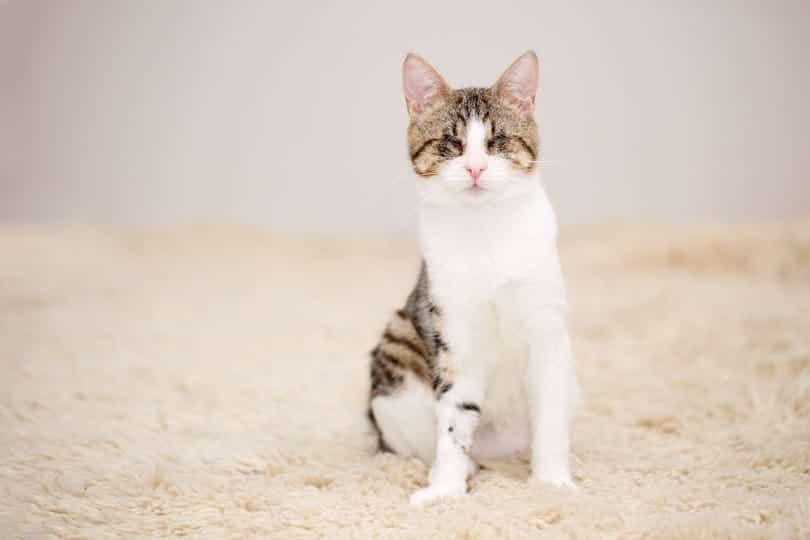
When your cat starts to lose their vision, you might start to worry about how much harder it will get to care for them. Fortunately, going blind is not nearly as big of a deal to your cat as it would be to you. Cats already rely so much on their whiskers, refined hearing, and smell that they can simply fall back on these other senses.
Granted, losing your vision is still tough, even for a cat. To help you and your cat get through the transition, we’ve gathered eight helpful tips that will allow you to easily care for your blind cat and make their life just as good as it was before they lost their vision.

Why Do Cats Go Blind?
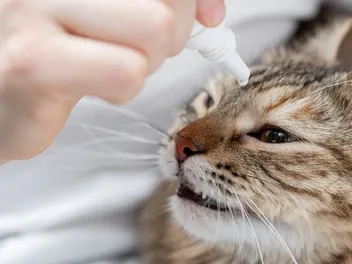
There are many reasons that your cat might lose their vision, including cataracts, retinal problems, glaucoma, and trauma. Cataracts cause the lens of the eye to become cloudy, eventually leading to blindness. They can be linked to old age but can occur following trauma or uveitis, which is inflammation of the internal vascular tissue of the eye.
Vision loss secondary to retinal problems is also common in cats. Retinal degeneration and retinal detachment are among the most typical causes of this type of feline blindness. Glaucoma causes increased pressure inside the eyeball, causing not only blindness but also pain.
Uveitis is a leading cause of long-term eye problems in cats. Always consult with your vet if you notice any changes to your kitty’s eyes so any eye issue is addressed promptly.
The 7 Tips to Care for a Blind Cat
So, your cat’s vision has either become significantly reduced, or your cat is now blind altogether. It’s not the end of a great life for your cat! By following these seven tips, you can help your cat to continue living a great life, even without the use of their eyes.
1. Make Dangerous Areas Safer
As your cat learns to adjust to the house now that they can’t see, certain things will become hazards to them. Some furniture has sharp edges that could be right at head height for your newly blind feline. Even the corners of walls could harm your cat when they run into them. Pad these edges with bubble wrap or foam. While you’re at it, be sure to barricade the entrance to any stairs so your cat doesn’t fall down them!

2. Guide Your Cat by Voice
Even if your cat wasn’t particularly clingy before losing their vision, they could become more so now. Your cat could become increasingly reliant on you now that they’re missing one of their primary senses. At this point, you could become a guide for your cat, and they may tend to stay close to you, leaving rooms at the same time as you and following you around the house. You can help by using your voice when your cat is having a hard time following you. This will let your cat know where you are while learning to improve their ability to get around with hearing and no vision.
3. Keep the Litter Box in the Same Place
Your cat doesn’t have echolocation like a bat. Instead, they will learn to memorize many of the main fixtures in your home, particularly the most important ones for their own use, such as the litter box. If you move it, your cat could have a very difficult time locating it again. So, once your cat loses their vision, try to keep the litter box in the same place from there on out.

4. Give the Cat a Safe Place in Each Room
Cats that can see always manage to get underfoot, so how much worse do you think it will be with a cat that can’t see? You can mitigate this issue by giving your cat a safe place to go in each room, such as a comfy bed that they can always go and curl up in while still remaining near you.
5. Don’t Rearrange the Furniture
Just like with the litter box, your cat will memorize the layout of your home and furniture. While you probably won’t be moving around many walls, you could feasibly move around your furniture. Some people like to do this all the time. But doing so could throw your cat for a major loop. They can’t see the furniture anymore, so after crashing into it many times, they will start to memorize the maze, so to speak. But moving everything around means your cat has to start over again fresh, which means a lot more crashing into furniture.

6. Avoid Startling Your Cat
Cats are pretty easy to scare and startle, even when they have full use of their eyesight. But once a cat is blind, startling them becomes even easier, to the point that you’ll probably accidentally do it all the time. If you end up petting your cat without speaking first, they could nip you as a reaction, so make sure to let your cat know before you touch them.
7. Give Other Animals a Bell

If you have multiple pets in the home, your other pets can serve as a sort of guide for your newly blind cat, so long as your blind cat can hear the other pet. You can make this possible by simply attaching a bell to your other pet, which will always make it easy for your blind cat to find or follow them.
Conclusion
Losing eyesight can be a normal part of the aging process for many cats, though some cats can experience blindness as the result of an eye disorder. Whatever the case, you can still help your beloved companion live a great life after losing the ability to see. Follow the steps that we have discussed in this article, and you will be well on your way to helping your cat continue their best life—no eyes needed.
Featured Image Credit: Mahlebashieva, Shutterstock

Expert cat care, straight to your inbox
Vet-reviewed advice, behavior tips, and the best of Catster. Free, and you can unsubscribe anytime.
By signing up, you agree to our Terms & Conditions and Privacy & Cookies Policy.
Christian started writing for a local newspaper as a teenager, and he's been involved in the publishing industry for most of his adult life. Combining his love of writing with a passion for animals, he is currently the Director of Editorial at Pangolia and the Editor-in-Chief at Catster.
Christian lives in the Philippines with his wife, son, and four rescue cats: Trixie, Chloe, Sparky, and Chopper.
Join the conversation
Ask a question, share your story, or send private feedback.