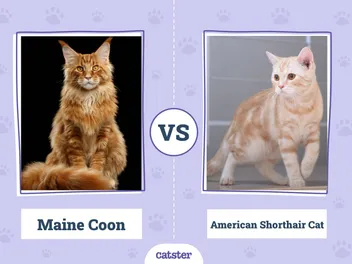
European Maine Coon vs. American Maine Coon: Vet-Reviewed Differences (With Pictures)


In this article
Maine Coon cats are known for their massive size, heavy bones, long coats, and laid-back temperament. There are two somewhat different breeding lines of the Maine Coon: European and American. The differences between them are slight and mostly physical, but they may help you determine which type is ideal for you. There is, however, only one Maine Coon breed officially recognized by cat registries.
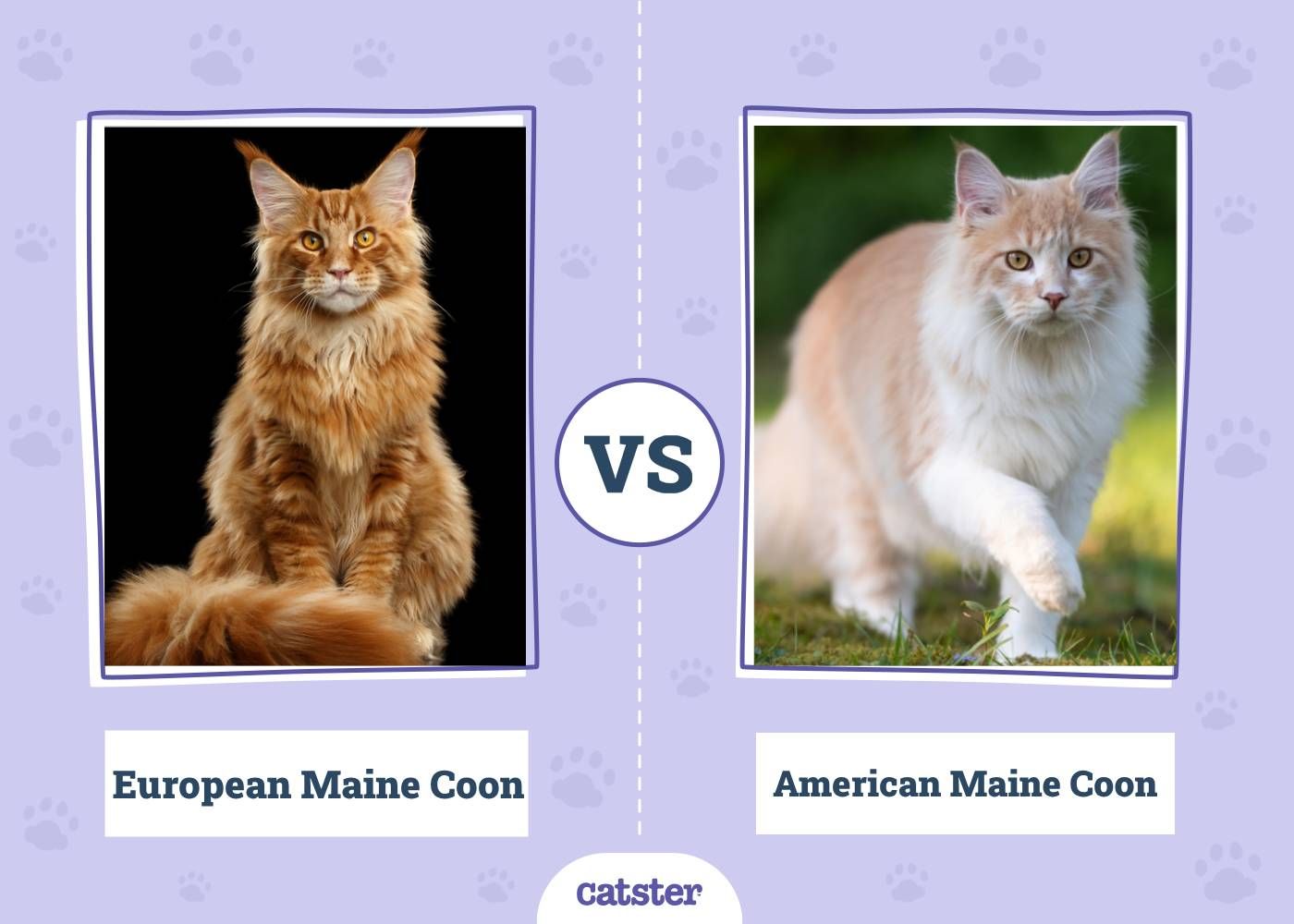
European Maine Coons are a little wilder looking and have distinctive physical characteristics, while the American Maine Coons are bred to look more refined. Keep reading for more about the fine differences between the European Maine Coon and the American Maine Coon so that you can pick the best one for your needs and lifestyle.

European Maine Coon vs American Maine Coon: Visual Differences

At a Glance

European Maine Coon Overview

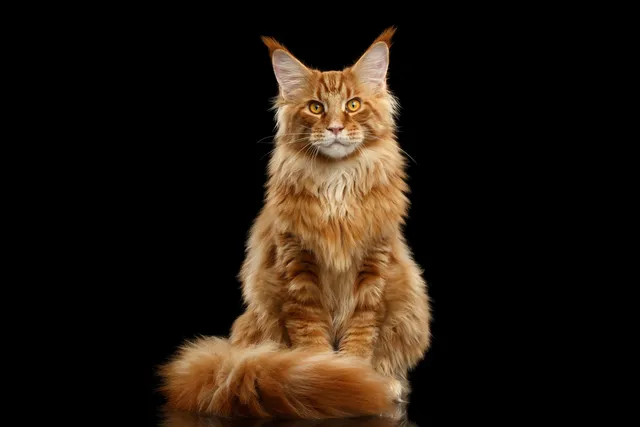
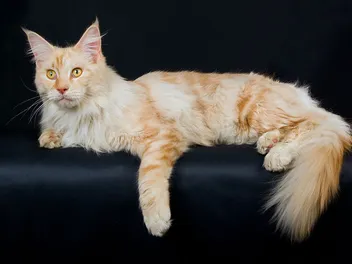
The European Maine Coon is distinguishable from the American version for some of their physical characteristics. They are bred to have wilder, more natural appearances and a lion-like look, giving them a stronger square muzzle and signature lynx-like ears with big tufts.
European Maine Coons also have higher cheekbones and a more rugged facial structure. Their eyes are typically almond-shaped and somewhat piercing, compared to the gentler look of the American Maine Coon’s eyes.
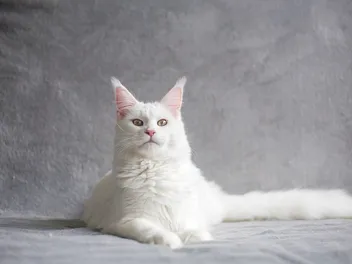
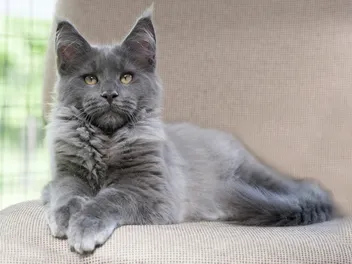
The European Maine Coon's size is generally the same as their american counterparts, but they are more formidable in appearance. This could be due to the perception of their feral looks rather than an actual size difference. European Maine Coons also come in a wide variety of colors and patterns, including solid black, white, gray, or red, calico, and tortoiseshell.
Like their American counterpart, the European Maine Coon is intelligent, curious, loyal, and loving. The International Cat Association (TICA) is the world’s largest genetic cat registry, and the Fédération Internationale Féline (FIFE) brings together 42 members from 40 countries. Differences between European and American Maine Coons are influenced by breeder preferences and interpretation of breed standards across registries such as TICA and FIFe.
Personality / Character
The European Maine Coon is a loyal, friendly cat. They get along with other cats and dogs when properly socialised and are generally comfortable around new people. Though they like to have their own space, they can live in multi-cat households without conflict. Maine Coons are playful and affectionate to their owners and get attached to one or more people from their household.
Training
The intelligence and laid-back nature of the Maine Coon make them easier to train than some other breeds. They aim to please, much like dogs, and many can be taught tricks. Owners can teach their Maine Coon basic commands, such as “sit,” “stay,” and “fetch.” They must be trained using only positive reinforcement—never punishment.

Health & Care
Maine Coons are hardy, though they’re prone to some genetic health conditions. Hypertrophic cardiomyopathy (HCM), the most common heart disease in cats, occurs more frequently in Maine Coons and is associated with a known genetic mutation that can be screened for prior to breeding. Reputable breeders should provide health testing records.
Hip dysplasia is also seen more often in Maine Coons than in many other breeds, and spinal muscular atrophy (SMA) is a recognized inherited condition. Both can affect mobility. Genetic testing and health screening help significantly reduce the risk of these conditions in responsible breeding programs.
Suitable for:
The European Maine Coon is a friendly cat that’s highly loyal and suitable for families with children and single owners. These adaptable cats can adjust to most living situations with proper care. The European Maine Coon has more of a feral-looking appearance that may appeal to some owners.
American Maine Coon Overview

American Maine Coons get their name from their purported origins in the state of Maine during the colonial period. However, their true origin is shrouded in mystery since it’s unclear how they arrived in Maine and where their ancestors came from. Because of that, the Maine Coon has a lot of legends and myths, including that they're a hybrid of a cat and a raccoon or a descendant of a bobcat. These myths are genetically impossible, but give the cat a fun background.
Another prominent folklore legend suggests that Maine Coons were brought from Viking ships to America by Captain Charles Coon. While this story is unverified by historical records, it reflects the plausible practice of sailors bringing cats aboard to control rodents during long voyages. Regardless of how the Maine Coon arrived in America, they’ve been around since the late 1800s to early 1900s and remain a popular breed today.
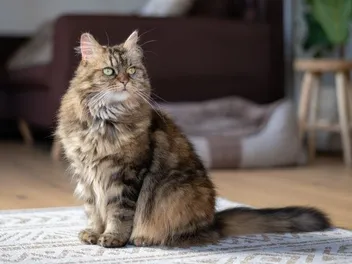
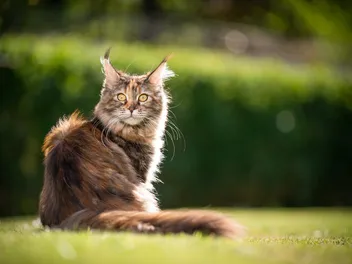
The American Maine Coon differs from the European Maine Coon in their appearance. Though large and heavy-bodied, the American Maine Coon has a more refined look than that of the European variety. The ear tufts are subtler, and the cat’s coat is smoother and less wild-looking. Their eyes are also more oblique and less striking than the European Maine Coon’s eyes.
These differences are guided by the breed standards of The Cat Fanciers’ Association (CFA), the world’s largest registry of pedigreed cats, established in 1906. While CFA standards are widely followed, interpretations may vary under other registries
Personality / Character
Like their European counterpart, the American Maine Coon is a friendly and loyal cat that enjoys the company of humans and other animals. If the Maine Coon is properly socialized and given their own space, with all of their needs met, they can coexist with other animals without incident. They are also good choices for families with children since they are large, hardy, and tolerant of rambunctious kids.
Training
Maine Coons are known for their “dog-like” personalities and high intelligence, which makes them easy to train. Along with basic behavior modification, Maine Coons can be taught tricks and commands, just like a dog, and some may have a strong desire to please their owners.
Like the European variety, American Maine Coons must be trained using positive methods and consistency. Avoid punishing your cat with techniques like spray bottles or swatting, which aren’t effective.

Health & Care
American Maine Coons are generally healthy, though they can be prone to hereditary conditions such as hypertrophic cardiomyopathy (HCM), hip dysplasia, and spinal muscular atrophy (SMA). Responsible breeders can test for these conditions, genetic testing for HCM and SMA, and hip evaluations and X-rays for dysplasia, to reduce the risk of kittens developing them.
Suitable for:
The American Maine Coon is similar to their European counterpart and gets along well with other pets, people, and children when properly socialized. They can enjoy just about any living situation, provided they have the care they need. People who prefer a more refined look in their cat may enjoy the American Maine Coon.
Which Breed Is Right for You?
The European Maine Coon and American Maine Coons have more similarities than differences. In the end, they are the same breed. They mainly differ in their appearances, which are governed by different breed associations and breeding standards. If you prefer a more refined cat, the American Maine Coon may be the better choice, but if you like more lion-like looks, the European Maine Coon is perfect for you. Otherwise, these cats share desirable personality traits like loyalty, intelligence, and friendliness.
Sources
Featured Image Credit: Left -Seregraff, Shutterstock | Right - Nils Jacobi, Shutterstock
Expert cat care, straight to your inbox
News, insights, and useful advice, delivered to you.

No spam — unsubscribe anytime.
By signing up, you agree to our Terms & Conditions and Privacy & Cookies Policy.
How useful was this post?
Click a star to rate. You can leave written feedback afterwards. (We read all feedback.)
Christian started writing for a local newspaper as a teenager, and he's been involved in the publishing industry for most of his adult life. Combining his love of writing with a passion for animals, he is currently the Director of Editorial at Pangolia and the Editor-in-Chief at Catster.
Christian lives in the Philippines with his wife, son, and four rescue cats: Trixie, Chloe, Sparky, and Chopper.