Can Cats Get Jealous? How to Handle Cat Rivalry (Vet-Approved)


In this article
People tend to think of their pets as members of the family, interpreting their behavior and personality the same way that one would with another person in the household. We give our pets human-like traits by pairing a certain emotion with a certain behavior. An owner may say that their cat is happy when she is purring while gently waving her tail or that she's upset if she moves away when approached.
But among the numerous emotions that we assign to cats, what about jealousy? Can cats get jealous? If so, how do cats express their jealousy?

Jealousy Among Felines
In contrast to humans, what we think of as jealousy is a little different for cats. We may say that a cat is showing jealousy when they're threatened by another cat or animal. As spoiled as they are under the care of a pet parent, it is innate within felines to survive in an environment with scarce resources, which may include their owners’ attention and affection. Seeing an unfamiliar cat or pet may be viewed as competition, and this is what we humans see as jealousy.
On top of a cat’s natural instincts, other factors can cause a cat to express their jealousy, such as poor socialization, which can cause jealous behaviors when placed in a situation with other cats or animals.
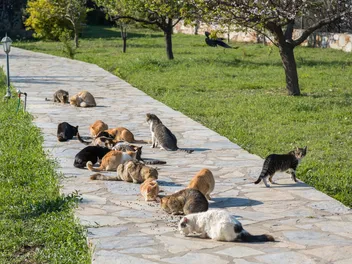
Cats are also territorial. In a multi-cat household, a lack of personal space or resources due to the presence of other cats may cause jealousy. The insecurity of a cat toward their fellow cats may also make them jealous.

Is My Cat Feeling Jealous?
Cats are creatures of habit. As a cat owner, no one else knows your cat’s personality, behavior, and routine as well as you. It is important to observe signs and sudden changes in your cat’s routine or behavior to determine if they are experiencing jealousy. That being said, several instances of feline behavior perceived as jealousy are found in literature 1. It seems that cats tend to display behaviors that we would associate with jealousy when trying to express dominance or when they act impulsively.
Aggression/Dominance
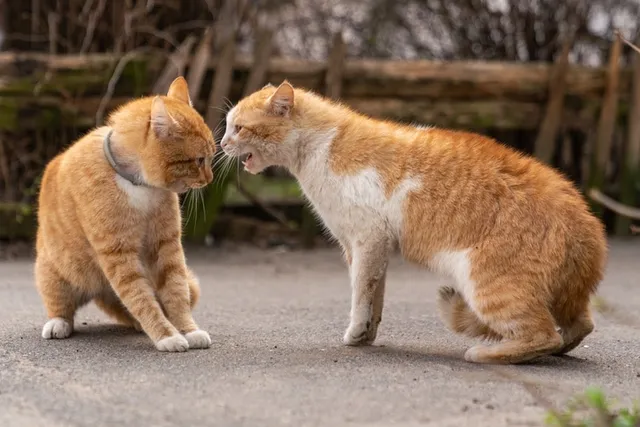
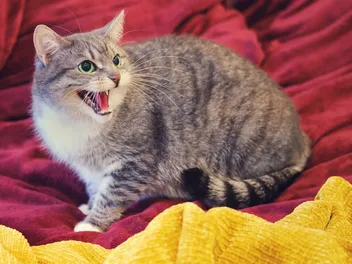
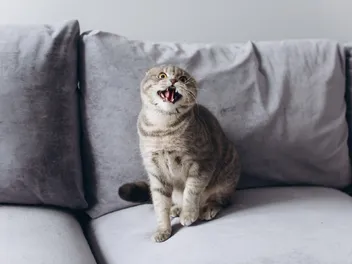
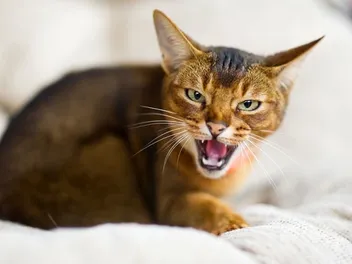
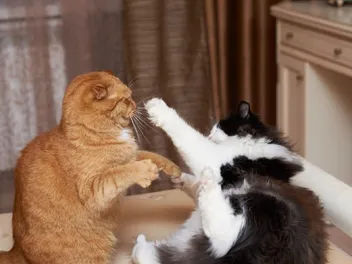
A common sign that your cat is jealous is when they exhibit aggressive or dominant behaviors toward the cat or pet that they are jealous of or toward you as their owner, which include growling and swatting with their paws. Your cat may do this to scare off strangers and other cats or pets or to inform you that they are jealous and upset.
Another thing to watch out for is sudden changes in routine. They may start peeing in places where they do not normally do so, such as the carpet or on the bed, or they may begin scratching or knocking down furniture as a way of expressing themselves.
Withdrawal
When one cat is being dominant and aggressive, the other cat may choose to respond by being more reserved and resort to withdrawal by walking away and hiding. Although cats can do this when bullied, this escape behavior can also be sometimes attributed to insecurity or impulsiveness (as in, they may withdraw on impulse).
Attention Seeking
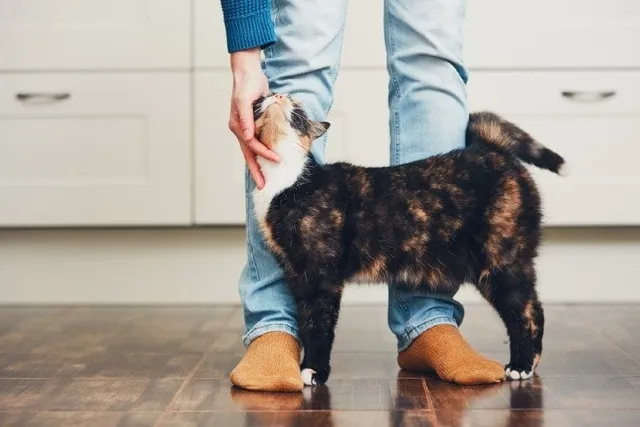
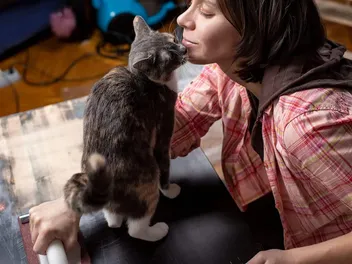
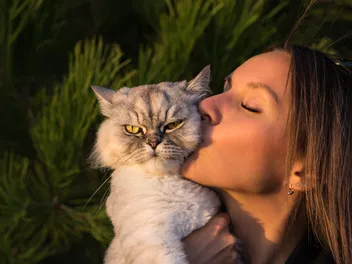
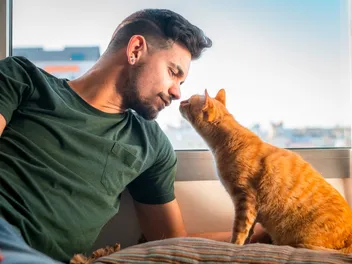
Some cats express their jealousy by seeking attention from their owners. They may crowd your space, cuddle next to you, rest on your lap, and ask for pets more often than normal. This may be your cat’s way of seeking assurance from their cat parent.

What Can Make My Cat Jealous?
Do cats get jealous of just about anything, or is their jealousy limited only to other cats? The truth is, cats can get jealous of both. Cats’ jealousy is mainly toward things that are viewed as threats or competition to resources available to them, which can be their personal space or the attention of their owner.
Here are common things that cats can get jealous of:
How Do I Deal With My Cat’s Jealousy?
Although cat jealousy is difficult to handle, there are things that you can do as a cat parent to make sure your cats do not feel jealous, especially in multi-cat households.
The first step in solving a problem is identifying it. It is important to determine what is causing your cat to be jealous. After identifying the cause, the necessary adjustments can be performed to ensure that the cause is addressed.
With that in mind, it’s important to keep in mind that some health issues can lead to behavior changes in cats which might be very subtle and difficult to pick up on. Therefore, a good starting point whenever you’re dealing with problem behaviors in your cat is to ensure there’s nothing medically wrong with them by having a veterinarian check your cat.
Giving your cat attention is a good step in addressing your cat’s jealousy in some instances. Bond with your cat, play with them, and soothe them to give assurance that they are not loved any less. Providing extra attention usually encourages the cat’s behavior, whether they feel more aggressive or withdrawn.
In a multi-cat household, it is important to ensure that your cats have their personal space. Make sure there is no competition with resources by giving each of them equal amounts of attention while being careful enough that you do not show more affection to one compared to the other.
As certain situations are generally unavoidable, whether it be a stranger in your home or a multi-pet household, it is good to teach your cat to adjust to the situation. Constantly providing your cat with attention when faced with a stranger by petting them or by simply keeping them close can help ease their anxiety. Slowly helping your cat adjust to the jealousy-inducing situation can help them in the long run.

Rivalry Among Cats
With the different causes and signs of jealousy identified, another problem that can be difficult to manage is rivalry among cats. Cat rivalry is a common problem in multi-cat households and is more apparent with cats of the same sex.
Rivalry can occur from the competitiveness between two or more cats when jealousy among the cats involved escalates. Signs that you have a cat rivalry in your household may include fighting over resources or dominance. The most common areas where you can observe this are in narrow halls, a cat that’s asserting dominance will often try to stop another cat from passing through. The cat that feels threatened will often avoid eye contact and try to get out of the confrontation as quickly as possible.
Another sign may be the hiding or withdrawal of a cat from the more dominant cat. This may occur when there is a challenge in resources, where the inferior cat yields to the dominant cat due to their insecurity. Bullying among cats is quite common, especially when cats try to assert their dominance toward a resource.
Handling cat rivalry is quite like handling cat jealousy but may need more work and attention due to the power play involved.
Conclusion
Cats are individuals, and all of them may experience jealousy in various ways. One factor may be a trigger for one cat but may not bother another. One may respond to jealousy more aggressively, and another may respond in a more withdrawn manner.
As a cat owner, you'll need to identify what causes your cat to feel jealous and ensure that your cat (or cats) feels that they are loved despite the jealousy they are experiencing. Just like a human experiencing jealousy, all your cat wants is assurance and security from the one they love!
You might also like:
Featured Image Credit: M-Production, Shutterstock
Expert cat care, straight to your inbox
News, insights, and useful advice, delivered to you.

No spam — unsubscribe anytime.
By signing up, you agree to our Terms & Conditions and Privacy & Cookies Policy.
How useful was this post?
Click a star to rate. You can leave written feedback afterwards. (We read all feedback.)
Christian started writing for a local newspaper as a teenager, and he's been involved in the publishing industry for most of his adult life. Combining his love of writing with a passion for animals, he is currently the Director of Editorial at Pangolia and the Editor-in-Chief at Catster.
Christian lives in the Philippines with his wife, son, and four rescue cats: Trixie, Chloe, Sparky, and Chopper.