Can Cats Eat Seaweed? Vet-Approved Nutrition Facts & FAQ


In this article
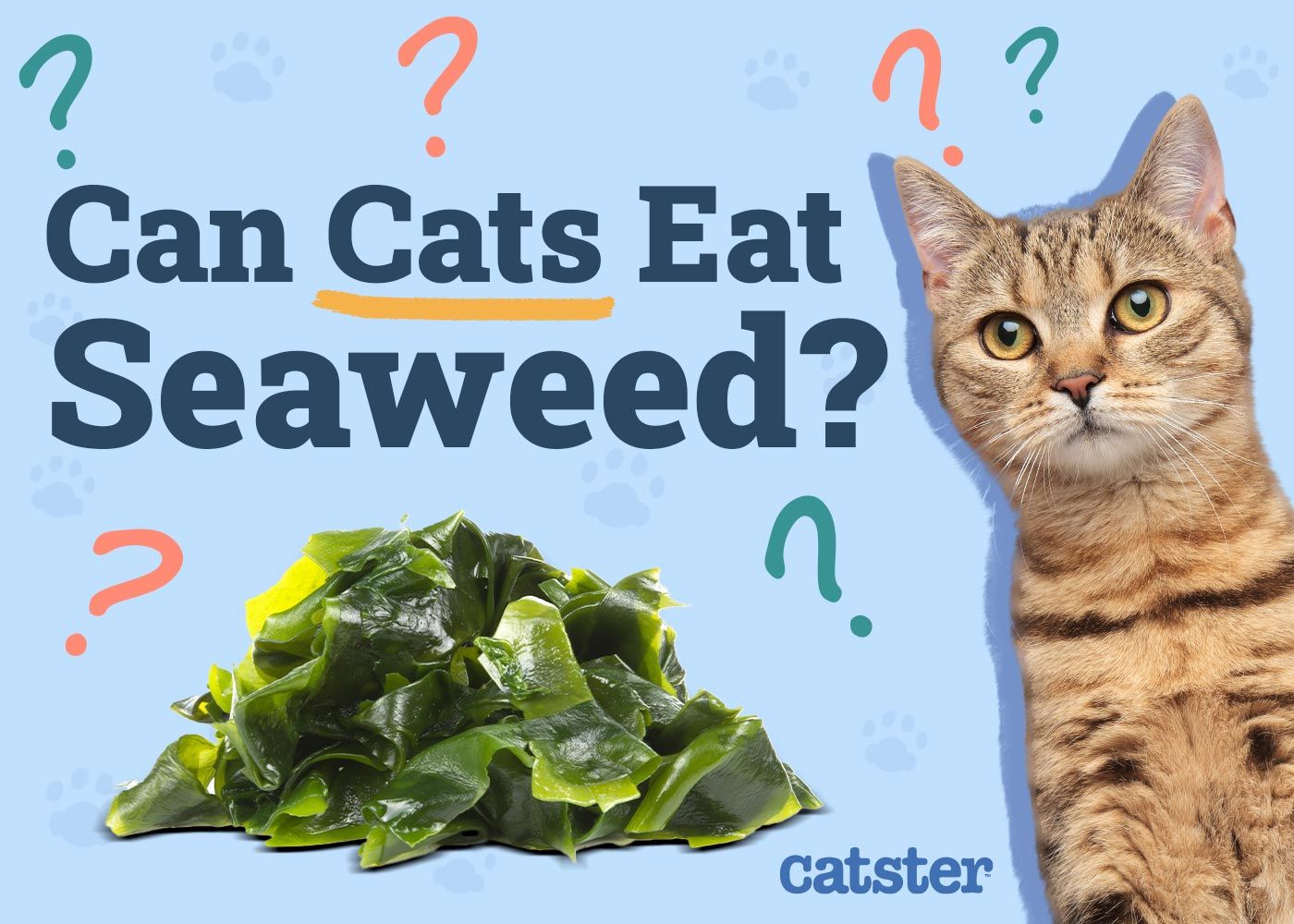
It is no secret that most cats are fans of fish, and if you have a particularly keen cat, they might try to scoop fish out of your fish tank! Tuna and cats, for example, have been linked for generations. But can cats eat seaweed? If a cat loves fish, will they also like a side of seaweed to go with it? Yes; it may come as a surprise, but many cats enjoy eating seaweed. Seaweed is safe for cats, in moderation. But is it good for them?
This brief guide will cover everything you need to know about cats and seaweed, including if they can eat seaweed sheets, whether nori is safe, and the health benefits of seaweed. It also covers how to feed seaweed to a cat and the seaweed to avoid.

Can Cats Have Seaweed?
Seaweed has several benefits for cats when it is prepared properly. The two biggest concerns with seaweed are the quantity of seaweed and the harmful ingredients that sometimes lurk in processed seaweed. However, cats can have seaweed as long as it is plain and unseasoned, and it can even be considered a healthy snack when consumed in this way.
There are no known species of seaweed that are deadly to cats, and of the 1,2000 estimated species of seaweed, there are only three that have ever been linked to illness (in humans) due to heavy metals within the seaweed, not the seaweed itself.
Although it is safe, not all cats will like seaweed. Some cats will refuse to eat it, and that is perfectly fine. Cats evolved to eat small animals and not seaweed. Plain seaweed can be used as a treat or supplement to add variety and nutritional benefits to your cat’s diet.

Can Cats Eat Seaweed Sheets?
Cats can eat seaweed sheets as long as they are made of simple, plain seaweed. Seaweed sheets are flattened and packaged for shipping, and several companies sell them so that they can be used easily to make wraps.
Can Cats Eat Nori?
Sometimes, cats can eat nori. Nori is a Japanese culinary seaweed made from species in the genus Pyropia, including specific species P. yezoensis and P. tenera. Pyropia is a type of red algae and is typically flattened into sheets and then used to wrap sushi or dried to create flat, crunchy snacks.
Plain nori is safe for cats, but some products are treated with preservatives or salt to make them last longer. Be sure to check and ensure that any nori you are using is plain seaweed with no extra ingredients.
Nori is commonly used to create sushi wraps. If your cat gets into sushi, they will likely end up eating nori. Nori in sushi is generally safe for cats as long as there are no other ingredients in it.

Is Seaweed Good for Cats?
Yes, in moderation. Seaweed has several health benefits for cats, but it must be used as a supplement and not replace a balanced cat food diet. It should only be fed in small quantities since some (dried) seaweeds can expand in the stomach, which could, in theory, cause a blockage. Seaweed is filled with helpful prebiotics that promote gut health for kitties, and it is also high in fiber, so it helps regulate intestinal motility and reduce constipation. Additionally, seaweed has a number of amino acids that help with coat and skin health. Cats that eat supplemental seaweed are said to have shinier and healthier coats over time due to the concentration of omega-3 fatty acids. Seaweed also contains several vitamins and minerals, as well as a slew of antioxidants. The antioxidants can reduce the number of free radicals in your cat, and they can also help reduce inflammation. It does not take much seaweed for your cat to obtain these benefits.
Benefits:
Seaweed to Avoid
While seaweed is safe and nontoxic for cats to eat, there are still some products that you need to avoid. There are many seaweed snacks and processed seaweed products that are not suitable for cats. You only want to feed your cat plain seaweed and avoid anything that has flavoring or spices.
Large quantities of salt, wasabi, and other spices are not healthy for your cat to eat. Some seaweed is processed into chips and crackers, and it has sodium and calories that your cat doesn’t need. For these reasons, the seaweed snacks should be avoided.
When in doubt, check the packaging and the ingredients. Buy and feed only plain seaweed instead of processed or flavored seaweed. Of course, if you would be in doubt, the easiest thing you can do is reaching out to a veterinarian and ask them for an advice.
How Best to Feed Your Cat Seaweed
While some seaweed is safe for cats, they are not designed to live on a hefty diet of plant matter. Cats are obligate carnivores that get most of their nutrients from animal meat. Although cats can eat seaweed, you should only consider it a snack, supplement, or treat. You do not want it to be a main meal for your cat or an everyday staple.
Seaweed can benefit your cat, but only in small quantities. You want to be sure to moderate your cat's portion sizes since seaweed naturally contains high levels of iodine that might not be suitable for your cat in large quantities.
To feed seaweed to your cat, be sure to get plain seaweed and serve it in small bites once a week, not daily. You can also rip the seaweed into small pieces and add it to your cat’s regular dry food. It will act more as a supplement, but your cat should eat it alongside their meal. Again, do not do this every day. Only do it once in a while.

So, Can Cats Eat Seaweed?
So now we know that cats can eat seaweed and it can even be a beneficial snack, but remember you should not serve large portions of seaweed to your cat. You can use seaweed as a special treat, snack, or supplement. If you feed plain seaweed to your cat occasionally, they'll benefit from a range of antioxidants and vitamins. Many cats love seaweed and will happily eat it if you give them the chance. Just be sure to use plain seaweed without any additional ingredients.
Related Reads: Can Cats Eat Imitation Crab? Vet-Approved Facts & FAQ
Expert cat care, straight to your inbox
News, insights, and useful advice, delivered to you.

No spam — unsubscribe anytime.
By signing up, you agree to our Terms & Conditions and Privacy & Cookies Policy.
How useful was this post?
Click a star to rate. You can leave written feedback afterwards. (We read all feedback.)
Grant is a freelance writer with years of experience writing about a diverse range of topics. He currently lives in his home state of Florida with his wife. His days are spent writing, raising a rambunctious son, and caring for eight animals (two horses, two donkeys, two goats, and two dogs). In his free time he enjoys slowly carving out a quaint hobby farm from the Southern scrub.