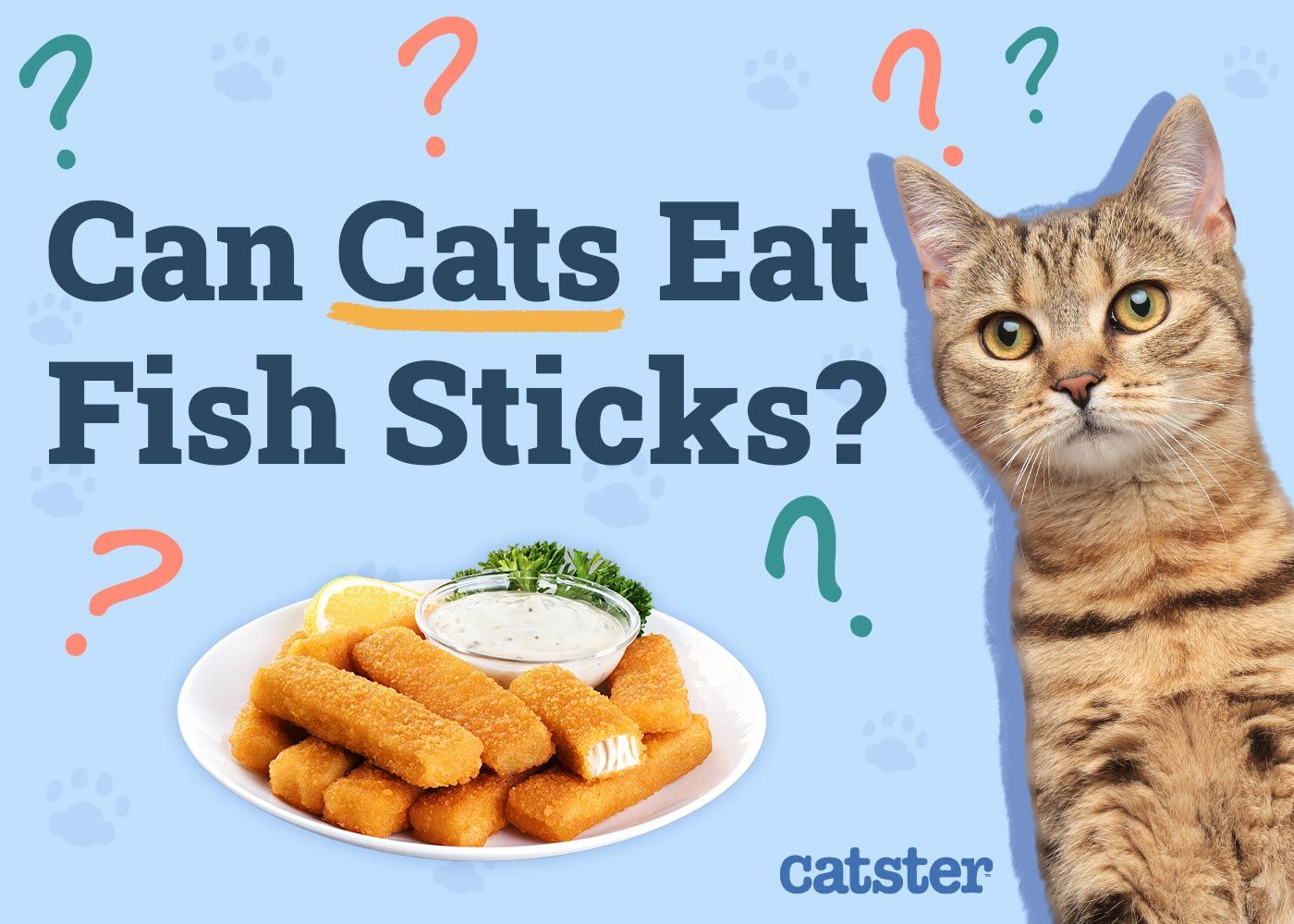
Can Cats Eat Fish Sticks? Vet-Approved Nutritional Science & Info


In this article
Curiosity is a concept almost universally associated with cats, and unfortunately, cats tend to lead the charge with their mouths! Most cats are not shy about trying new foods. Fortunately, if you find your cat's face first in your plate of fish sticks (also known as fish fingers), you don't have to worry too much.
Fish sticks rarely contain anything that would be considered toxic for cats. However, they are not the healthiest snack options for your furry feline friend.

What Do Cats Normally Eat?
Cats are what science calls "obligate carnivores" or "hypercarnivores." This classification comprises animals that eat a wild diet of at least 70% animal flesh and organs.
Felines require several nutrients in their diet that are exclusively found in animal meat. Chief among these is taurine, an amino acid considered essential for cats.
Because cats eat a diet primarily composed of animal proteins, they have biological differences in their digestive tract. For instance, cats are unable to utilize beta-carotene, which is found in plants, as a source of vitamin A. Instead, they can only utilize retinol, a form found in animal meat.
It's suggested that what few plant-based needs cats have would traditionally be met by hunting. The carbohydrate component of a wild cat’s diet is a small fraction of their total dietary intake.

Are Fish Sticks Healthy for Cats?
Not in the slightest. Deep-fried foods are rarely healthy before we even get into the dietary specifics of why these aren't good for cats.
For starters, the breading is what makes fish sticks…well…fish sticks. But unfortunately, breading is all carbohydrates, and there's very little nutritional value to breading in fried items.
Unfortunately, fish sticks don’t have a nutritional composition that’s in line with a cat’s requirements1. Chief among these is the fact that they contain more carbohydrates and fats than protein, which essentially renders them unhealthy.
Additionally, depending on the recipe and brand, fish sticks are loaded with spices that make them more palatable for humans. Unfortunately, these spices are, at best, neutral to cats that may not even like the taste and, at worst, toxic for them.
Overall, it's better safe than sorry. Please don't feed your cat fish sticks, no matter how hard they beg and look cute. If your cat is dead set on eating your fish sticks, you might want to consider making "fish sticks for cats" that will be devoid of the harmful ingredients that your cat can't have.

Fish Sticks for Cats
Fortunately, when making fish sticks, there is an alternative to deep-frying that makes the options a little safer for cats: baking. While the breading won't achieve the same crunch that you get from deep-frying, they aren't made for humans, to begin with!
Fish sticks for cats can be made out of just about any canned fish. You'll want to make sure the canned fish you buy is preserved in water and has no added sodium.
You'll also want to avoid adding any spices to the mix. While it might be offensive to human taste to eat food with no seasonings, cats don't have the same palate and don't need seasoning for food to taste good. It is always best to consult a veterinarian about any recipe you plan on making for your cats.
Here's a quick start guide to making fish sticks for cats.
- 1 can of canned fish (tuna or salmon)
- 1 cup of flour
- 1 egg
- 2 tablespoons of water
Preheat the oven at 180ºC (350ºF). Using baking paper on your baking sheet is recommended but not necessary.
Combine the fish, flour, water, and egg into a bowl. Knead the mixture until it becomes doughy in consistency.
Roll the dough out on the counter using a rolling pin or another rolling device. Sprinkle flour on the surface you're using to roll the dough to prevent it from sticking.
Cut the dough into strips. Roll them into cylinders if you want them to take more of a "fish finger" shape.
Bake for 15–20 minutes.
Cooking for your cat is a way to include your cat at mealtime. Making fish sticks for your curious cat is an easy and fun task you can do with your whole family. Keep in mind, though, that this should still be considered an occasional treat and not a dietary staple for your cat.
It's also a great way to keep your cats away from your food. If they have their own fish sticks, there's no need for them to go after yours, after all!
Final Thoughts
Whether you're looking to cook for your cat or just making sure they haven't ingested anything toxic, knowing what your cat can and can't eat is often a huge weight off your shoulders. Luckily, fish sticks rarely contain anything toxic for cats.
Still, you should keep an eye on your cat until you are sure they aren't having an adverse reaction to something in the fish sticks. Even if the stuff in the fish sticks is not immediately dangerous to them, your cat could have a negative reaction to something in the batter or seasonings.
If you think your cat has ingested something that may be toxic, or you believe they are having an adverse reaction to something they've eaten, your best bet is to contact a veterinarian. A veterinarian will be able to guide you through your cat's care and ensure that no harm comes to them from the food they've been snacking on!
Related Reads:
Expert cat care, straight to your inbox
News, insights, and useful advice, delivered to you.

No spam — unsubscribe anytime.
By signing up, you agree to our Terms & Conditions and Privacy & Cookies Policy.
How useful was this post?
Click a star to rate. You can leave written feedback afterwards. (We read all feedback.)
Luxifa is a freelance writer with a passion for animal science and technology. She loves to share the world of animal science with people to help them make informed decisions for themselves and their pets. Luxifa has worked in professional pet care for over six years and strives to help change the world of pet care by bringing the information people need to them in terms they can understand. Knowledge is power, and Luxifa loves to help everyone become the most informed they can be.