Blocked Tear Duct in Cats (Epiphora): Our Vet Explains Causes, Diagnosis & Treatment

In this article
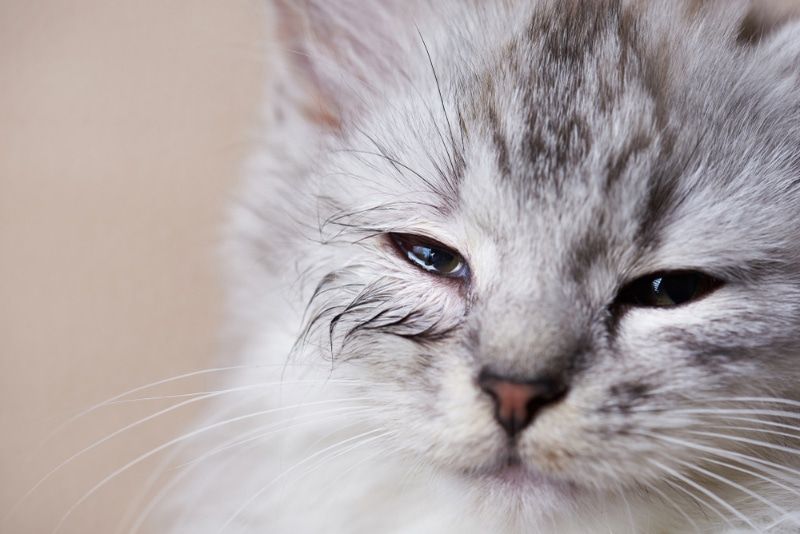
Does your cat have tears running down its face? No, your kitty isn't crying, but it could have a blocked tear duct that causes excessive tearing, also known as epiphora. Let's look at potential causes and what can be done.

What Is a Blocked Tear Duct in Cats?
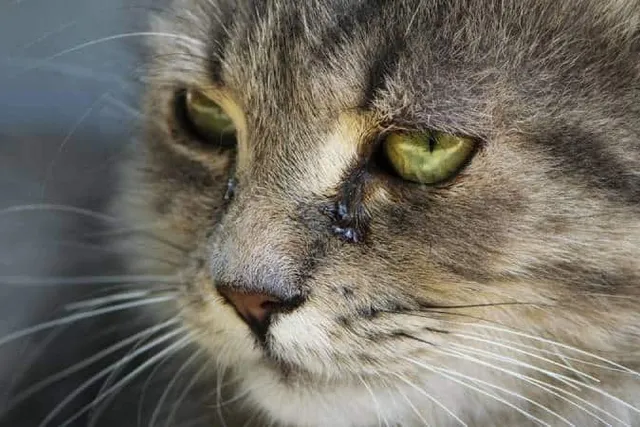
First, epiphora is a term you should know as we go through this process and treatment. It is an overflow of tears, spilling over the eyelids and often rubbing down your cat's face.
Many things can lead to epiphora, including a blocked tear duct. Also known as the nasolacrimal duct, this tubular structure allows tears to drain into the nasal passageways from the eye. It's located near the medial canthus or inner corner of the eye.
Tears drain through the duct passively, thanks to gravity. The eyelids opening and closing also move some tears through the duct, as does capillary action.
When the nasolacrimal duct is blocked, the tears can't travel through and out the nose. Instead, they spill over the eye, indicating epiphora.

What Are the Signs of a Blocked Tear Duct in Cats?
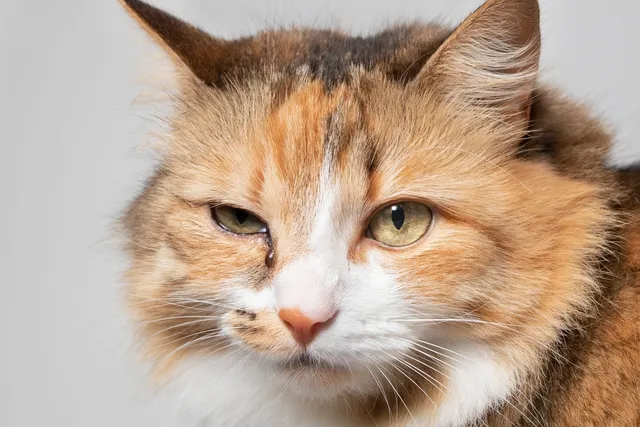
When your cat's nasolacrimal duct is blocked, they tend to have tears spilling over their eyelids because they don't evaporate fast enough. Your kitty will often develop tear staining, an outward sign of epiphora. This staining tends to be a brown or reddish color and follows the path of the tears dripping from the eyes.
Long-haired cats are more at risk for their hair knotting or matting where the tears land below their eyes. These matted hairs can be painful and rub on the cornea, leading to corneal scratches.
Another issue when the hair near the eyes gets matted is a skin infection. It's easy for a damp area of hair to lead to a bacterial skin infection. You might detect an odd smell near your cat's face or see hair loss below the eyes. If the skin looks red or matted, take your cat to the vet for an exam and treatment.
What Are the Causes of a Blocked Tear Duct in Cats?
The leading cause of a blocked nasolacrimal duct in cats is secondary to feline herpesvirus infection. This virus can lead to duct scarring, so tears can't easily flow down it.
Other medical conditions can cause inflammation or infection of the duct, leading to an obstruction. Severe conjunctivitis could block the duct opening. Structurally, tumors in the head or even an eyelid margin tumor can block the flow of tears through the nasolacrimal duct. Material, such as thickened ocular discharge, can also block the duct.
Some cats have conformational changes that can contribute to a blocked tear duct. Brachycephalic or short-nosed cat breeds, such as Persians, may have more issues with the normal flow of tears.
Some cats have a genetic effect in developing their nasolacrimal duct, where they have no opening for the duct, referred to as imperforate puncta.

How Do I Care for a Cat With Blocked Tear Ducts?
If your cat might have a blocked tear duct, they should be examined by a veterinarian. A vet might refer you to an ophthalmologist for further evaluation and treatment. While you wait for your appointment, try to keep the tear tract clean and brushed. Doing so will help minimize the chance of skin infections or irritation to the cornea from matted hairs.
In the veterinary hospital, the vet will perform a thorough physical exam and evaluate the eye and surrounding structures. In the ophthalmologist's office, they will use a slit lamp biomicroscope to evaluate the structures of the eye in more detail.
A fluorescent stain called fluorescein is one of the easiest ways to assess a patent or open nasolacrimal duct. A few drops are applied to the eye, and the vet will look to see if it appears to be coming out of the nose or mouth. If the dye doesn't show up under a black light, usually around the nose, within about 5 minutes, your cat's tear duct is blocked.
The doctor often attempts to pass a cannula into the duct opening and flush saline through. This process helps clear out clogged material, such as mucus, and may open the nasolacrimal duct back open. The veterinarian may examine some saline and material under a microscope by cytology. They may also culture it to see if bacteria are present that could be contributing to inflammation or infection within the duct.
After choosing the duct, the veterinarian may put your cat on anti-inflammatory medication and antimicrobial therapy, depending on the results of the cytology and culture.
The veterinary team can show you how to administer medications, but generally, you'll want to come from behind while gently tipping your cat's head up. It might be a two-person job. Wrap your kitty in a "purrito" with a towel or blanket if you need to protect yourself.
In some cases, the veterinarian will recommend surgery. The goal of surgery is to open or reconstruct the normal duct. Sometimes, a stent will be placed to facilitate drainage.
Frequently Asked Questions (FAQ)
Will a blocked tear duct fix itself?
A blocked tear duct might fix itself. If the blockage is caused by scarring or a conformational issue, it likely won't heal. On the other hand, if a bit of inflammation causes a blockage, it could resolve on its own.
Applying a warm compress to the area can help reduce inflammation. Gently rinsing the eye may also dislodge material from the duct.
Will it hurt your cat to not fix a blocked tear duct?
In many cases, a blocked tear duct won't cause any lasting issues for your feline, especially if you keep the area around their eyes clean to prevent bacterial infections. Chronic inflammation, tumors, and foreign bodies can cause pain and permanent changes. Speaking to a veterinarian about your cat's condition is always best.
Conclusion
If you notice excessive tearing from your cat's eyes, talk to a veterinarian about possible causes. A veterinarian or ophthalmologist can often gently flush the duct or put your cat on anti-inflammatories to help reestablish tear flow.
Featured Image Credit: PixieMe, Shutterstock

Expert cat care, straight to your inbox
Vet-reviewed advice, behavior tips, and the best of Catster. Free, and you can unsubscribe anytime.
By signing up, you agree to our Terms & Conditions and Privacy & Cookies Policy.
Dr. Samantha Devine DVM (Veterinarian)
Samantha Devine is a practicing veterinarian who loves to share her experience with animal species and their health. Whether it's a guinea pig question or a pressing matter about something your cat ingested, she strives to provide clear answers. She is passionate about preventative care and firmly believes in the old adage, "An ounce of prevention is worth a pound of cure."
Dr. Devine has been practicing veterinary medicine for over 12 years and has spent a great deal of that time writing online to educate pet owners. In addition to general practice small animal medicine, she has worked with horses. zoo animals and aquatic species. She enjoys all aspects of preventative medicine, from nutrition to vaccines.
Dr. Devine received her degree from the Virginia Maryland Regional College of Veterinary Medicine.
Join the conversation
Ask a question, share your story, or send private feedback.