Get

In Your Inbox

Catster is reader-supported. When you buy via links on our site, we may earn an affiliate commission at no cost to you. Learn more.

Are Coffee Plants Toxic to Cats? Vet-Reviewed Houseplants Examined

Share

Catster_Are Coffee Plants Toxic to Cats

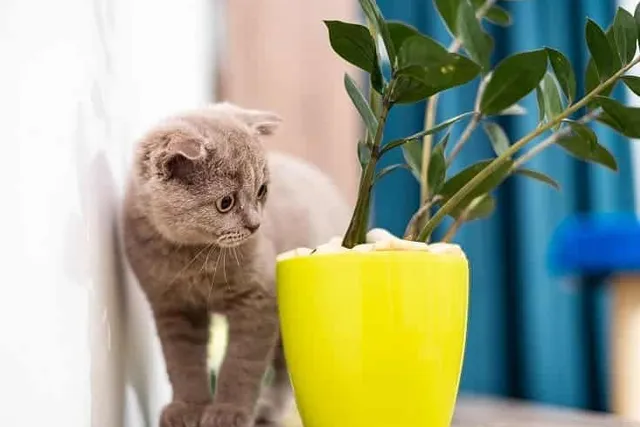
The coffee tree, Polyscia guilfoylei, is an attractive species that makes an excellent potted indoor plant. Note that it is not related to the coffee plants used for making coffee beans, such as Coffea arabica. It flowers in springtime, with small white flowers and small berries, though the flowering of indoor plants is not common. Unfortunately, every part of this interesting plant is toxic to your cat.

Whether your cat has ingested part of the plant or brushed up against it, they could experience troubling clinical signs. Read on to find out what these are and what to do if you suspect that your cat is suffering from coffee plant poisoning.

divider 1 paws

What Is Coffee Tree Poisoning?

The coffee tree contains toxins called saponins, which irritate a cat’s skin, oral cavity, and gastrointestinal tract if ingested. Your cat can be exposed to the toxins when they rub against the plant or orally when they nibble on or eat part of it.

You’ll be relieved to know it’s rare for coffee plant poisoning to be serious. However, if you suspect your cat has been poisoned, it’s still important to discuss it with your vet or poison center.

Image Credit: vjkombajn, Pixabay

Signs of Coffee Plant Poisoning

Your cat’s clinical signs depend on how much of the plant they have consumed. If the exposure was brief or they ingested a small amount, you may not see any signs. If the feline comes into contact with or eats a large amount, however, they can show signs like:

  • Contact dermatitis
  • Depression
  • Fatigue
  • Loss of appetite
  • Vomiting
  • Weakness
  • Seizures
  • Tremors

If you don’t see your cat near the plant, touching it or nibbling it, but you suspect they’ve been poisoned, take them to the vet.

Diagnosis & Treatment

To help with the diagnosis and your cat’s eventual recovery, you’ll need to provide valuable information to the veterinarian. Describe your cat’s signs to your vet and try to remember as accurately as possible when the incident may have occurred. Either bring the plant along or take pictures, so your vet can see what was eaten and how much.

Unfortunately, there isn’t a test for coffee tree poisoning, but your vet will use all the information you provide to devise a plan.

Thankfully, the majority of cats will make a full recovery from coffee tree poisoning. It’s very rare for cats to suffer complications after this incident. However, that doesn’t make what is happening to your cat any less scary.

divider 1 paws

Conclusion

When it comes to plants, you have to be careful what you have around your cat. It’s best to keep plants known to be toxic out of your home or at least somewhere your cat can’t access.

While cats don’t tend to eat things that are unfamiliar, curiosity and boredom can get the best of any feline. The ASPCA’s list of non-toxic and toxic plants can help you determine which species are unsafe for your pet. So, while you don’t have to sacrifice your love of house plants, you may need to restrict what varieties you bring into your home if you have a cat in your life.


Featured Image Credit: Tixu, Pixabay

Want content like this delivered to you?

Sign Up For Our Newsletter

News, insights, expert advice, and everything cat

* By submitting, you agree to our Terms & Conditions and Privacy & Cookies Policy.


How useful was this post?

Click on a star to rate (you can leave written feedback after clicking submit)

Help us improve Catster for pet parents!

Your feedback really matters.

What did you like about this post? Also how can we improve it?

Join the conversation

Leave a Reply

You’re very welcome to leave a comment or question. Please know that all comments must meet our community guidelines, and your email address will NOT be published. Let’s have a positive and constructive conversation.


Talk With A Vet Online

Peace of mind,
anywhere, anytime

Affordable vet advice

Why Your Cat’s Poop Smells Like a Biohazard

Nobody enjoys litter box duty, but sometimes it gets unbearable. The smell hits you from across the room. You’re scooping faster, lighting candles,...

RIP Your Furniture? Not With This Guide to Cat Scratch Damage Control

Your couch looks like it survived a minor apocalypse. The curtains have mysterious vertical shreds. That new rug you splurged on is already...

Celebrating 15 Years as the Most Popular Resident of No. 10 Downing Street

For almost 300 years, a rather unassuming Georgian building of black bricks with a shiny black door has been the official residence and...

Ask Dr. Paola – Help! My Kitten Pukes After She Eats! (March 2, 2026)

Welcome to our “Ask Dr. Paola” series, where every Monday we bring expert advice straight from Dr. Paola Cuevas (MVZ) to help our...

More related

Can Cats Eat Eggs? Vet-Verified Nutrition Facts

Cats can eat many human foods safely and gain some benefits, while other foods can be hazardous for cats to consume. Like most...

20 Cat High Five GIFs We Love: Cute & Funny Kitties

The internet is a treasure trove of cat videos and GIFs, and thankfully, there’s certainly no shortage of either. Whether you’re looking for...

Can Cats Have Alzheimer’s? Feline Health Facts (Vet Answer)

Cats experience deterioration of the brain tissue, just as humans do. Progressive cognitive decline eventually results in dementia. When this occurs in cats,...

Why Do Cats Like Hair Ties? 10 Vet-Approved Reasons

Have you ever wondered why cats seem to be so fascinated with your hair ties? It seems like they can’t resist the urge...

Keep reading

Why Does My Cat Throw Up After Drinking Water? 5 Vet-Approved Causes

Cats vomit for various reasons. Sometimes, you’ll notice that they throw up their food soon after eating or unrelated to the feeding time. Other times, the vomit is clear or may contain bile. You may notice that your cat is...

cat-vomiting

Why Is My Cat Acting Weird? 5 Vet-Reviewed Reasons

Some cats display what many owners would consider odd or weird behavior regularly. Others settle into a routine and can be quite predictable. This predictability makes changes in behavior even more obvious. If your cat is showing sudden changes in...

a woman holding a cat on her lap

How to Bandage a Cat Paw: 4 Vet-Approved Tips

Cats are curious and playful creatures, which can lead to them getting injured. When a cat injures their paw or a limb, it is important to seek urgent veterinary care. Your veterinarian will take proper care of the wound and...

Veterinary Woman Applying Medical Bandage On A Cats Leg

Why Does My Cat Like Icy Hot and Bengay? Possible Reasons & Vet-Reviewed Safety Facts

Cats are naturally curious about various smells, but the smell of the topical pain relief products for muscle pain known as Icy Hot and Bengay seems to be a favorite with some cats. If you have ever applied these ointments,...

cat smells, lick feet and toes in bed

8 Best Cat Foods for Healthy Skin & Coats in 2026: Reviews & Top Picks

We all want our felines to be happy and healthy. However, sometimes they have problems with their skin and coat. It may be due to skin sensitivities or food allergies. Often, it is difficult to treat, and flare-ups are common....

Devon Rex tabby cat eating wet tuna food

American Shorthair Cat Health Problems: 10 Common Issues

The American Shorthair is a beautiful, affectionate breed of cat that makes a great companion for any family. However, like all breeds of cats, they are susceptible to certain health problems. By knowing what to watch for, you can ensure...

Catster_Health Problems of American Shorthair

How to Switch Cat Foods: Vet Approved Tips for Transitioning Your Cat’s Diet

Whether it’s because you think that your cat’s current food is no longer appropriate for them, it’s become impossible to find, or your pet simply refuses to eat it anymore, sometimes you have to switch your cat to a new...

white himalayan persian licking lips

Can Cats Drink Pedialyte? Vet Approved Advice

Pedialyte is an oral solution consisting of mostly water with added electrolytes. It is commonly used as a treatment for dehydration in children, but what about Pedialyte for cats? Can cats drink Pedialyte? Yes, cats can drink unflavored Pedyalite! If...

Can Cats Drink Pedialyte

Love Cats? So Do We! Join the Catster Community

Stay informed with expert pet care insights delivered straight to your inbox! Discover professional guidance on animal behavior, feeding tips, trusted product picks, and much more.


Sign up for the Catster Email Newsletter

Stay informed with expert pet care insights delivered straight to your inbox! Discover professional guidance on animal behavior, feeding tips, trusted product picks, and much more.