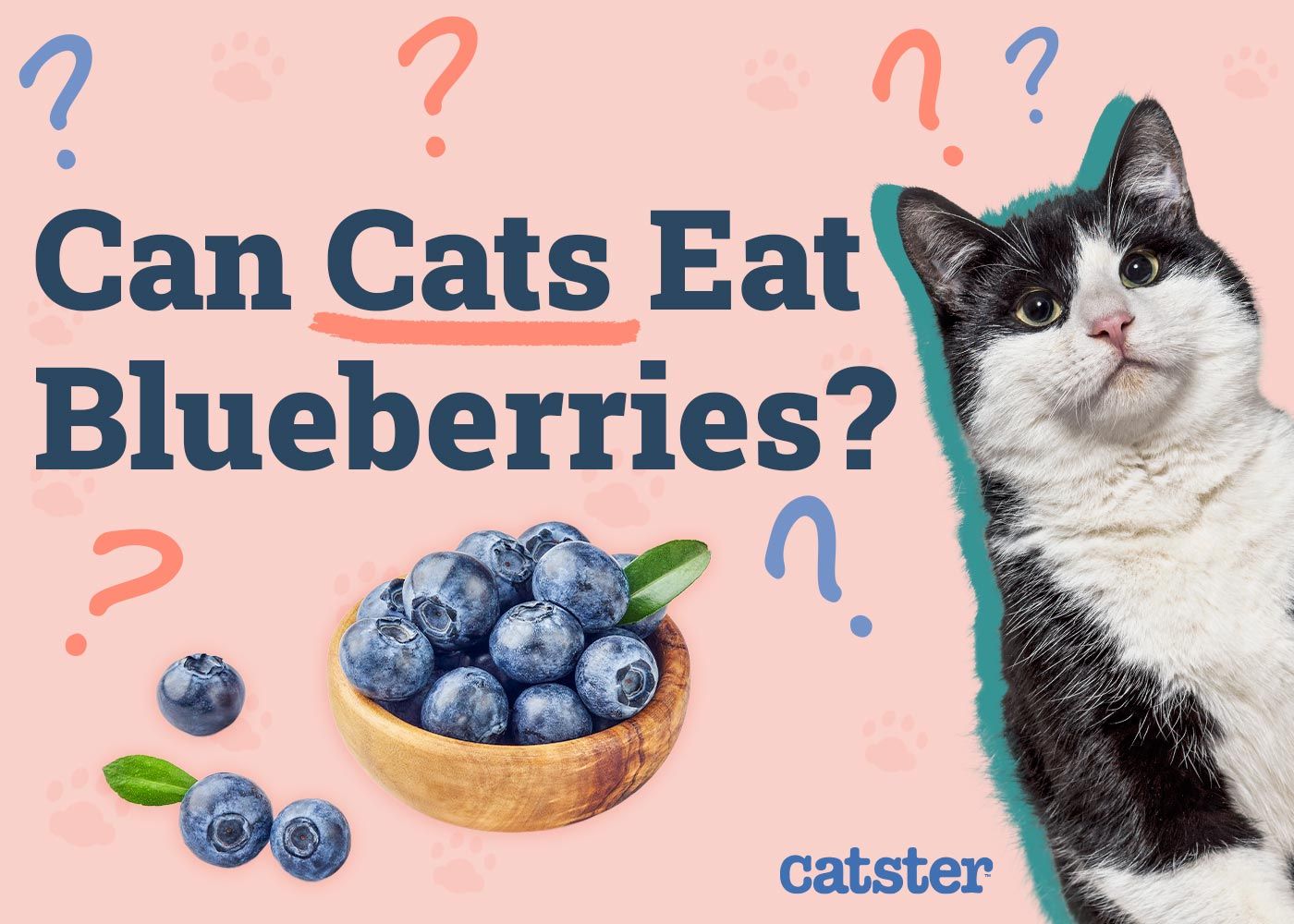
Can Cats Eat Blueberries? Our Vet Answers!

In this article
There are many debates when it comes to what foods cats can and cannot eat. Some people believe that cats can eat any type of food, while others think that they should only eat specific foods. In general, cats should not be fed fruits due to their high sugar content. However, some fruits have less sugar and provide additional health benefits. Blueberries, in particular, are low in sugar and a great source of antioxidants, vitamin C, and dietary fiber.
Blueberries may be safe for most cats to eat in small quantities, but just because they can tolerate this fruit does not mean they benefit from it. You should only give your cat a small number of blueberries at first to see if they have any digestive issues—too many may give your cat an upset stomach or diarrhea.
In this article, we explore whether cats should eat blueberries and if these fruits are truly healthy for them.

Is It Safe to Feed Cats Blueberries?
The short answer to this question is yes, it is safe to feed cats a limited number of blueberries. It can be a healthy and nutritious snack for cats, and this fruit can provide many benefits, such as helping to improve their digestion and keeping them hydrated. However, it is important to keep in mind that too many blueberries can also cause digestive problems for cats, so it is best to only feed them a few at a time.

Are Blueberries Healthy for Cats?
For humans, blueberries are a good source of dietary fiber, vitamin C, vitamin K, and manganese. They also provide antioxidants that help to protect the cells from free radical damage. Notably, they contain anthocyanins, which are responsible for the fruit's blue color. These antioxidants may help protect against diseases, such as cancer and heart disease.
It’s not as straightforward to answer this question when it comes to cats. There are no specific scientific studies to prove that blueberries provide health benefits to felines. However, we do know that the studies performed on the use of other antioxidants suggest that a “cat’s dietary supplementation with antioxidants has beneficial effects on their immune system and promotes immunocompetence in cats.” In simple terms, antioxidants help cats maintain a healthy immune system, and blueberries are known to have very high amounts.
How Many Blueberries Can My Cat Eat?
It is generally recommended that cats eat a diet that consists mostly of animal protein, with only a small number of fruits and vegetables. Cats are obligate carnivores, which means their bodies are designed to digest and use mostly animal-based proteins. Your cat is probably eating less than 1 cup of food per day as it is, and there probably isn’t a ton of room in their diet for foods other than high-quality animal proteins.
It is safe for cats to eat a few blueberries a day. They can account for a maximum of 10% of their diet, while the other 90% should be from cat-specific, animal protein-based food. Start with just a few, and remember to consult with a veterinarian if you have any concerns.
Can Blueberries Be Everyday Treats for Cats?
The nutritional value of blueberries is high, and they contain less sugar than most foods. For this reason, they are healthy treats that you can safely feed to your cat in small amounts daily. Remember that the vast majority of your cat’s diet needs to come from complete and balanced animal protein sources, though.
Which Fruits Can Cats Eat?
While fruits are a great source of nutrients for humans, they generally do not provide the same level of nutrients that cats need to sustain their health. As a result, it is generally recommended that cats do not eat fruit. However, there are a variety of fruits that cats can have a tiny taste of, including cantaloupe, kiwifruit, pineapple, strawberries, and watermelon. These fruits are all high in nutritional value, and small amounts are okay for cats.
Will My Cat Like Blueberries?
If your cat has not tried blueberries before, it may be worth giving them a try to see if they like them. There is no definitive answer to this question, as each cat has their own unique preferences. However, blueberries are healthy snack options for cats, and many do enjoy them.

How Can I Get My Cat to Try Blueberries?
There are a few things you can do in order to get your cat to try blueberries. One strategy is to mix a small amount of the fruit with their regular food. You can also put blueberry juice over your cat's food. Another way is to mix a small amount of blueberry purée with their favorite snack, or you could smear a tiny dollop of blueberry juice on their nose and let them lick it off. Some cats may also like to eat blueberries whole.
If your cat is resistant to trying blueberries, don’t force the issue. If they like the flavor, start by offering them a small piece, and gradually offer up to three blueberries a few times a week as they become more comfortable with the taste.
What Fruits Are Toxic to Cats?
There are a variety of fruits that are toxic to cats. The worst offenders include grapes, raisins, currants, and sultanas. The most common fruits that are toxic to cats are apples, apricots, cherries, peaches, and pears. The seeds of these fruits contain a toxin called cyanide or cyanogenic glycosides, which can cause vomiting, diarrhea, and even difficulty breathing in cats. Other fruits that can be harmful to cats include avocados, bananas, and citrus fruits.

Why Are Grapes & Dried Grapes Bad for Cats?
Yes, grapes and raisins are bad for cats because they can cause kidney failure. The reason for this is suspected to be linked to the tartaric acid content in grapes and raisins. The total concentration of tartaric acid varies between different kinds of grapes and raisins.
If your cat has eaten grapes or raisins, you should take them to the veterinarian as soon as possible.
Can Cats Eat Human Food?
The short answer to this question is yes, cats can eat human food. However, not all human food is appropriate for cats, and there are some foods that should be avoided altogether. The most common human foods that cats can eat include meat, fish, poultry, and eggs. Cats also enjoy fruits and vegetables, though they should not be given too many of these because they are high in sugar, and some are toxic to them. Certain human foods, such as chocolate or onions, can really be harmful.
In general, it is best to avoid giving your cat human food unless you are absolutely sure that it is safe. Check with the vet before feeding your kitty friend anything that isn’t their usual fare.

What Should I Feed My Cat?
There is no one-size-fits-all answer to this question, as the best food for a cat depends on that particular feline's age, health, and lifestyle. However, most veterinarians agree that cats should eat a diet that is high in protein and low in carbohydrates. Many commercial cat foods are formulated to meet these requirements, but it is also possible to feed a cat a homemade diet that consists of cooked meats, eggs, and a few vegetables. Wet food is generally thought to be more nutritionally beneficial for cats than dry food, as it contains more moisture and typically, more meat or poultry as its main ingredient.
Conclusion
Some cats may enjoy the taste of blueberries and eat them without any problems, while others may experience gastrointestinal issues, such as diarrhea or vomiting. Since blueberries are loaded with healthy antioxidants and are relatively low in sugar, you can safely share them with your cat in small amounts. As with any new food item, it is important to introduce blueberries cautiously and monitor your cat's reaction closely.
See Also:
Featured Image Credit: Free-Photos, Pixabay
Expert cat care, straight to your inbox
News, insights, and useful advice, delivered to you.

No spam — unsubscribe anytime.
By signing up, you agree to our Terms & Conditions and Privacy & Cookies Policy.
How useful was this post?
Click a star to rate. You can leave written feedback afterwards. (We read all feedback.)
Dr. Paola Cuevas MVZ (Veterinarian)
Dr. Paola Cuevas is the Senior In-House Veterinarian at Pangolia, the parent company of Catster. She has over 18 years of experience as a veterinarian and animal behaviorist. Paola's focus is on preventive medicine and animal welfare. Paola has a large range of skills in from diagnostic imaging to nutrition and clinical pathology. Paola enjoys sharing her extensive knowledge of animal training with our Catster readers and is always happy to answer reader questions as our in-house veterinarian.