My Cat Ate a Lily: Is It Dangerous? Vet Reviewed Signs & Treatments


In this article
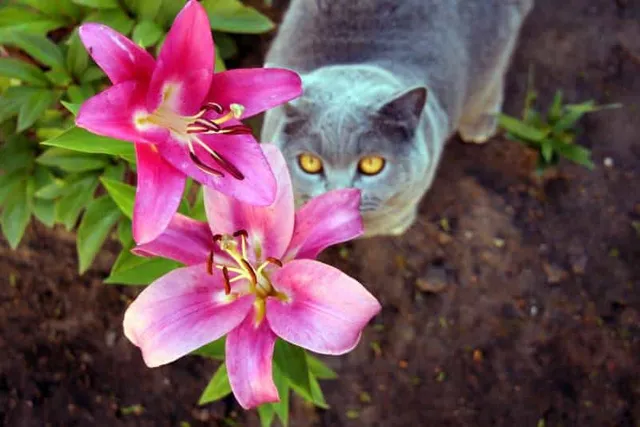
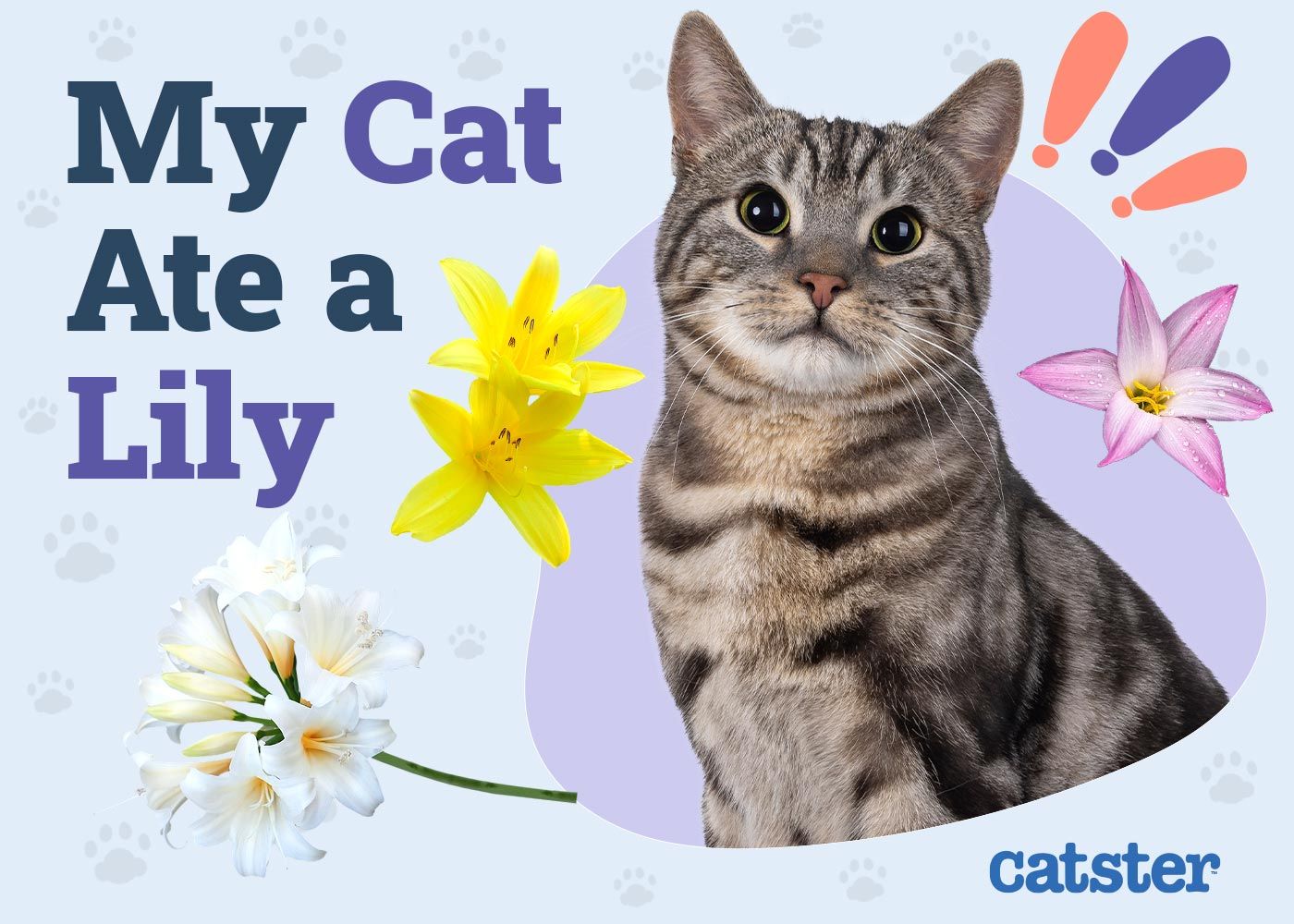
Lilies are beautiful and fragrant flowers, seen in plenty of vases, bouquets, gardens, and displays around the world. Behind their beauty and grandeur, however, is a deadly toxin. Lilies are toxic to cats and must be avoided. This currently still unidentified toxin affects all cats, causing kidney failure if untreated1. Cats and their curiosity are often drawn to these attractive flowers, but many pet parents may be unaware of just how toxic lilies are to cats. Dogs, humans, and other species don’t react in the same way to lilies or suffer the same devastating effects; the reasoning behind this is still unknown.

Which Parts of Lilies Are Toxic to Cats?
There are multiple varieties of lily. All species of the Lilium (true lily) and Hemerocallis (daylily) families are highly toxic and most dangerous to cats. All parts of these lilies are toxic, including the flower, petals, stem, leaves, pollen, and the water in the vase. Other lily varieties outside of these families are less toxic yet may still be harmful. These include plant species with lily in their name, e.g. Peace lily (Spathiphyllum species). You can find a list of the most threatening species (those that cause kidney damage) and the least threatening (those that do not cause kidney damage but can cause gastrointestinal problems) at the end of this article.
A common way cats ingest the lily toxin is by brushing past one of the flowers. Then, pollen rubs onto their fur, which the cat later licks off and ingests. It has also been reported that some lilies are being sold and marketed as “pollen-free” and safe for cats. This simply is not true, and the advice from veterinarians and professionals remains the same to owners of cats: Seek veterinary help if you suspect or know your cat has ingested any part of a lily, even if it’s a small amount. Refrain from keeping lilies in your home or garden if you have cats, and remove lilies from any bouquets or gifts you may receive.
What Should I Do if My Cat Eats a Lily?

Any part of the lily (belonging to the true lily and daylily families) is highly toxic, causing kidney damage to your kitty within 12–24 hours. If left untreated or if treatment is delayed, irreversible kidney failure can result. Unfortunately, this can lead to death in as little as 3 days.
If your cat has eaten a lily or part of one, this is an emergency situation. Even if only a small amount has been licked or consumed, action needs to be taken immediately or as quickly as possible, regardless of whether the incident occurs inside your vet's regular operating hours or not.
If your cat has ingested any part of a lily from the true lily or daylily families, signs can be seen immediately, and these progress quickly, usually within hours. Kidney damage begins within 12–24 hours, and irreversible kidney failure follows within 24–72 hours if left untreated.
Signs of Lily Poisoning in Cats (With True Lily and Daylily Species)

Early Signs of Lily Toxicity (0–12 Hours Following Ingestion)
After 12–24 hours
After 24–72 Hours
How Will My Vet Treat My Cat?

There is no antidote for the lily toxin, and time is of the essence in these cases. The treatment plan will vary on a case-by-case basis, depending on the time of ingestion, the type of lily eaten, the amount consumed, and your cat's age and general health. In general, however, you can expect some or all of the following:
- A bath or wash to remove any pollen from your cat
- Assessment of all bodily parameters
- Tests, such as blood work, to analyze their hydration and organ function, especially that of the kidneys
- Emptying of the stomach; for example, by inducing vomiting if the lily was eaten less than 3 hours ago (must not be attempted at home)
- Administration of activated charcoal to help absorb any further toxins and prevent continued damage
- Intravenous fluids (a drip) to flush out the body and support kidney function
- Administration of any required medication, such as anti-nausea drugs
- Continued treatment and monitoring of the bodily parameters of your cat
If treated quickly, promptly, and correctly, recovery and outlook for your cat can be good, although it has to be noted there are no guarantees this will occur, despite the treatment given. The sooner treatment is initiated, the better your cat’s chances will be.
If your cat does recover, it is possible kidney problems will develop later in life. Help is at hand, though, should this transpire in their older years. You may find your veterinarian continues to regularly check your cat throughout its life due to this reason.
You might not always notice right away if your cat has consumed something they shouldn't have. It is important to watch your cat’s behavior afterward to see if they are showing any symptoms of irritability or poisoning.
Which Lilies Are Most Toxic to Cats?
According to the Food and Drug Administration (FDA), these are the lily species that are more toxic to cats:
- Asiatic lily, including hybrids (Lilium asiaticum)
- Daylily (Hemerocallis species)
- All species of true lily, including:
- Easter lily (Lilium longiflorum)
- Japanese show lily (Lilium speciosum)
- Oriental lily (Lilium orientalis)
- Rubrum lily (Lilium speciosum rubrum)
- Stargazer lily (Lilium ‘Stargazer’ – a hybrid)
- Tiger lily ( Lilium tigrinum or lancifolium)
- Wood lily ( Lilium philadelphicum or umbellatum)
The below plants are not in the true lily or daylily families, and therefore, they do not cause kidney damage. However, they can still cause your cat to become very unwell if ingested. These plants include:
- Peruvian Lily (Alstroemeria spp.)
- Lily of the Valley (Convallaria spp.)
- Calla Lily (Zantedeschia spp.)
- Peace Lily (Spathiphyllum spp.)
- Flame Lily (Gloriosa spp.)
It is vital that you speak to your veterinarian immediately if you are concerned that your cat has eaten any of the above species.

Conclusion
Lilies are popular and stunning flowers to have in and around your home, but as we can now understand, their toxicity is high. The risk of death to your cat is equally high. Immediate veterinary help should be sought if you see your cat lick or eat any lily or as soon as you suspect or notice any of the above signs.
Featured Image Credit: Anne M Vallone, Shutterstock
Expert cat care, straight to your inbox
News, insights, and useful advice, delivered to you.

No spam — unsubscribe anytime.
By signing up, you agree to our Terms & Conditions and Privacy & Cookies Policy.
How useful was this post?
Click a star to rate. You can leave written feedback afterwards. (We read all feedback.)
Annaliese qualified as a veterinary nurse from Edinburgh and went on to attain a diploma in advanced veterinary nursing in surgery from London. Throughout this time, she worked in both small and mixed veterinary practices and gained head nurse status.
Having cared for thousands of patients and owners, and after more than two decades in the veterinary and pet care industries, both as a vet and a writer, she has now officially retired her scrub suit and now works as a full-time writer.