Bengal vs Tabby Cat: Vet-Verified Differences (With Pictures)


In this article
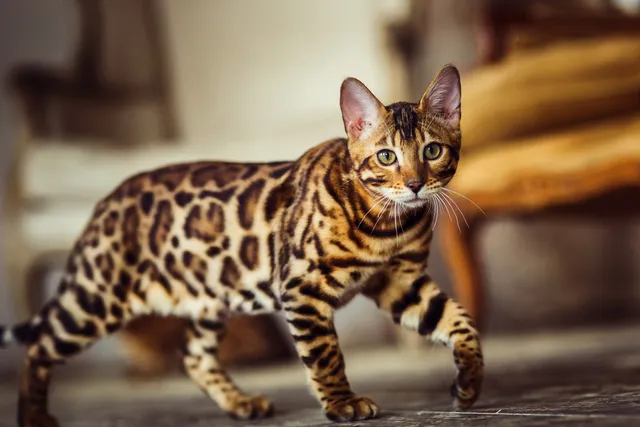
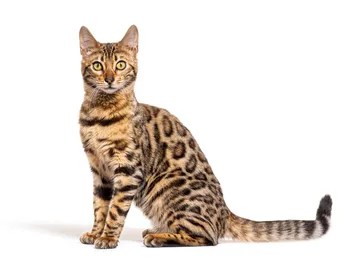
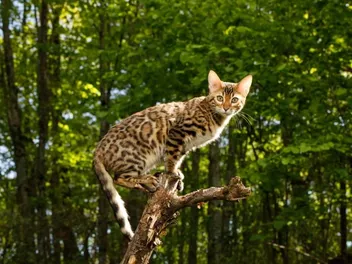
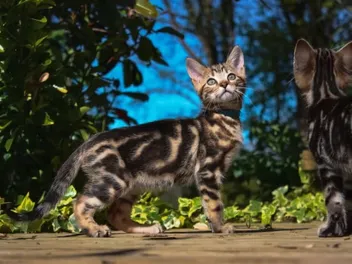
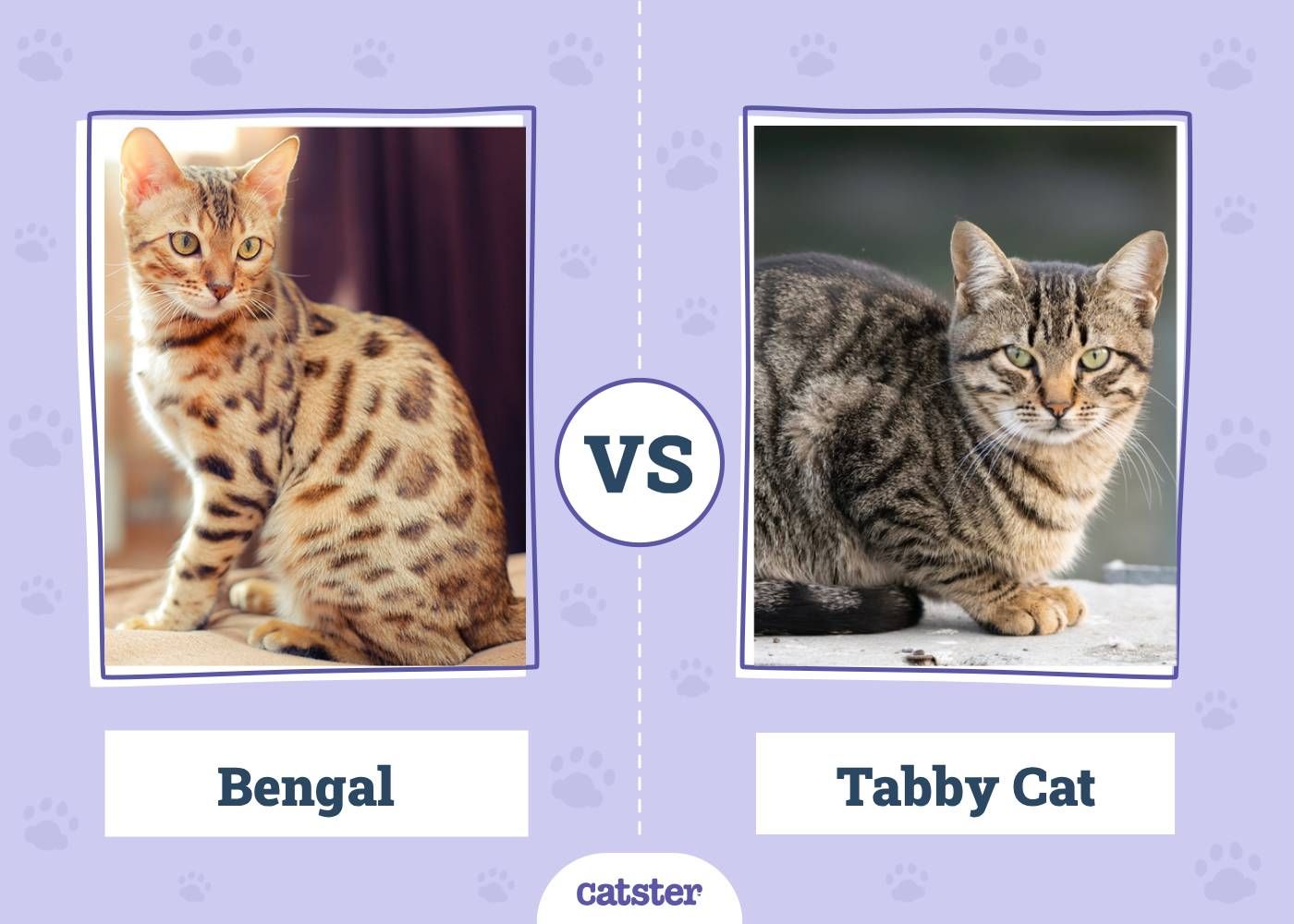
There are various similarities between the Bengal and the tabby. For example, they both have exotic-looking markings. The Bengal is known for their rosettes, which are the jaguar-like spots on their coat, and the tabby has tiger-like markings. However, there are variations between the two types of cats.
Perhaps the most significant difference is that while the Bengal is a breed of cat, tabby only refers to the markings of a cat’s coat and isn’t an actual breed. Therefore, you can expect to find tabby cats of wildly different heights, weights, life expectancies, and characteristics. So does this mean you can get a Bengal tabby cat? Or a Bengal tabby mix? In this article, we explain the differences, history, and much more about these beautifully coated cats!

Visual Differences

At a Glance

Bengal Overview
The Bengal is a large and athletic cat. They have a thick tail and a rugged appearance because of their Asian Leopard Cat heritage. This lineage makes the Bengal more of an active cat. They need more exercise than most cats and are skilled at climbing and running at high speeds. However, the Bengals make good family cats because they're loving and affectionate.

History
The first attempt to breed a Bengal Cat was by crossing the Asian Leopard Cat with other domestic cats, including the Egyptian Mau. Such a cross was first mentioned in 1889, but early breeding efforts stopped after one or two generations. However, Jean Mill of California intentionally crossed the Asian Leopard Cat with a domestic Californian tomcat, and in the mid-1970s, the Bengal started to emerge as a domestic cat breed. They were accepted by the International Cat Association in 1983, and by 1999, the breed had been accepted by most international cat associations worldwide.
Personality/Character
The Bengal cat is a smart, energetic, playful, and loving family companion. They are natural retrievers who not only put up with water but also often go out of their way to find a water source to play in. This is at odds with most breeds that actively avoid water.
The Bengal loves to be up high, which means that you will find them in trees and hedges, but also on top of wardrobes, kitchen units, and even in the rafters of sheds.
Training
The Bengal is known for being intelligent and is generally eager to please. They also enjoy having fun. This combination means the Bengal is considered one of the easier breeds to train. You should be able to teach them basic commands like sit and lie down, and many examples of this breed are naturally prone to retrieving items. The Bengal can also learn more complex “tricks,” such as lifting trash lids or opening seemingly impregnable cupboard doors, even if you haven’t intentionally taught them. They are known for keeping their owners on their toes.
Health & Care
The Bengal breed is hardy and generally healthy. However, there are certain conditions that they are prone to.
Hypertrophic cardiomyopathy (HCM) occurs when the heart muscle becomes too thick. This makes it harder for the cat’s heart to pump blood. HCM is believed to be present in more than 15% of all Bengal cats. While genetic screening is available, it cannot detect all forms of the disease, so cats should be individually screened during health checks for an early diagnosis and treatment management plan.
Bengal progressive retinal atrophy, or Bengal PRA, is a degeneration of the retina that can lead to sight loss, and it is inherited as a secondary trait. This condition can be prevented via genetic screenings of both parents.
Pyruvate kinase deficiency, or PK deficiency, is a common complaint in Bengal cats. It’s an enzyme deficiency that leads to anemia, and like Bengal PRA, it can and should be tested by breeders. If two PK deficiency carriers are bred, it is more likely to lead to kittens that inherit this same attribute.

Suitable For:
The Bengal is an active and lively cat that will benefit from having at least one playmate, whether human or feline. They will enjoy time spent with their owners, and the more interaction a Bengal cat gets, the better behaved and content they will become.
With that said, this breed also loves to spend time climbing, especially on trees and roofs, and they may become restless and even destructive if they are not given adequate space to roam and play.
Tabby Cat Overview
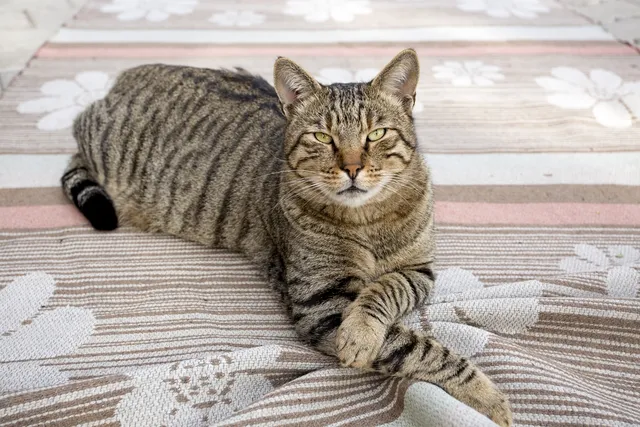
A tabby is not a cat breed. The term refers to the markings on a cat’s coat. The term originates from the Arabic word "attabiya," which refers to the Attabiyah district in Baghdad. This area was renowned for its production of striped silk.
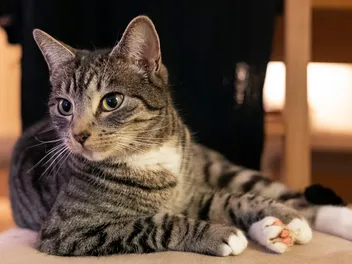
A tabby cat is characterized primarily by the “M” on their forehead. Since many purebred and mixed cats can have this type of coat, their personalities will vary enormously. Some will be intelligent and energetic, similar to the Bengal, while others might simply be exotic-looking potato coaches. Some might be cuddly with their owners, others will be more reserved about their personal space, and still others can even be quite mischievous.

History
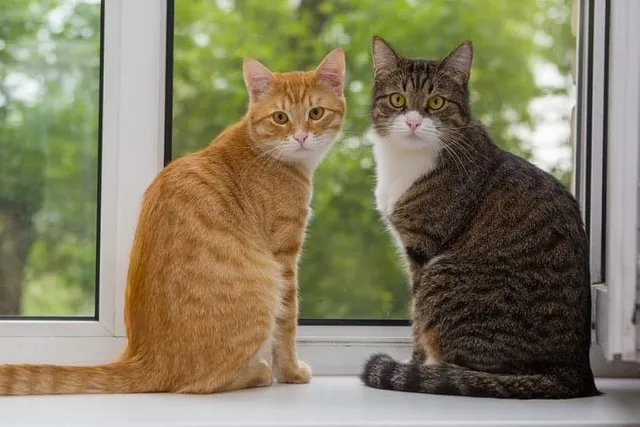
The tabby marking dates back to the wild ancestors of the domestic cats, and it appears in several breeds as well as in mixed-breed or domestic cats. It can be ticked, mackerel, blotched, and spotted—all are collectively referred to as tabby markings.
Several genetic variants also affect this coat pattern. For example, ginger or red cats always display tabby markings. While all gingers are tabby, not all tabbies are ginger. Cat genes are complex, and scientists are still studying how the tabby coat pattern genes function and result in different patterns.
During the prenatal development of the skin, spatial-oriented mechanisms take place, and when the hair follicles are developing, pigmentation-focused mechanisms occur. Recent studies suggest that the messenger protein DKK4 plays a major role during embryological development and is responsible for the different tabby patterns. Therefore, you may see black, gray, or other solid-color cats that have barely visible markings of a tabby pattern when they are in direct sunlight.
A tabby cat can be ginger, spotted, or mackerel tabby, but they always have the “M” marking on their forehead. Myths suggest that the “M” comes from the word "mau," which means "cat" in Ancient Egyptian. Also, according to Christian folklore, a tabby turned up to comfort baby Jesus, and Mary thanked the cat by putting an “M” on their forehead. Islamic legend states that the “M” represents the name Muezza, which was a tabby cat that saved Mohammed from a poisonous snake.
Personality/Character
Tabby is simply a coat pattern, so every tabby cat will have a different personality or character according to their breed. For example, an Abyssinian ticked tabby will be extremely active, but a Persian tabby is likely to be a couch or lap cat. A feline’s personality will be more influenced by their breed, age, and sex than by their tabby coat markings.
Training
A tabby is considered as intelligent as any other cat, and their trainability will be greatly influenced by their breed traits. The key is to identify the natural behaviors that you wish to encourage and then praise them when they approximate or complete those behaviors. You can use healthy treats to reward them when they do something you want them to repeat. At the same time, do a verbal or hand command to represent the trick or behavior. Depending on the cat, it may take a lot of repetition, but most cats are food-driven, so this activity will eventually stick.

Suitable For:
A tabby cat’s personality can vary depending on the breed or mix of breeds. Before adoption, you should research the breed’s typical traits so you can find a pet that is suitable for your needs. In general, though, cats are intelligent creatures that make great pets, and they are easy to keep as long as their basic needs are met. Any cat can also be taught basic tricks through positive reinforcement methods.
Do Bengals Have an “M” on Their Foreheads?
Strictly speaking, a Bengal has a tabby coat, but while all Bengals are tabbies, not all tabbies are Bengals. Like a tabby, the Bengal will usually have the distinctive “M” mark on their forehead. This may be difficult to spot in some Bengals, but it is there.
Is My Cat a Bengal or a Tabby?
Although the Bengal is a tabby, they do not have white in their coat, which some tabbies of other breeds have. Bengal cats also have a sparkle or glitter in their coats that can be seen when light shines on them. They are usually more active and vocal than their domestic tabby counterparts. They are strong and athletic and can be very muscular.
It could be tough to determine whether a cat is a Bengal or another breed with a tabby coat. In general, though, the Bengal is a much-desired hybrid cat breed that usually has a high price tag. If you find a Bengal, chances are that they have an owner who is looking for them, so make an effort to help them return home. Due to their active nature, they are likely to be found in treetops and on the top of buildings.
Regardless of breed, tabby cats are beautiful and come in all shapes, sizes, and lengths of fur. These exotic-looking felines also make wonderful companions.

Bengal vs Tabby: Which Breed Is Right for You?
The Bengal is one of several breeds with a tabby coat. They're muscular felines that enjoy spending time up high, on the ground, in water, and potentially, on your lap. Other domestic tabby cats are not usually as wild, but some are still mischievous and energetic, while others are chill and prefer your lap.
Both types of cats enjoy time outdoors and require attention from their owners. There is little difference between the two that would force you to choose one over the other. Bengal cats may be more challenging to come by, though, and usually have a high price tag. Many inexpensive tabby cats are available in shelters in need of their forever homes. So, if you want to save cash while making a difference in the world, adopt a cute cat of any breed with a tabby coat!
You might also like:
Featured Image Credit: Left - Shvaygert Ekaterina, Shutterstock | Right - Burhan Oral GUDU, Shutterstock
Expert cat care, straight to your inbox
News, insights, and useful advice, delivered to you.

No spam — unsubscribe anytime.
By signing up, you agree to our Terms & Conditions and Privacy & Cookies Policy.
How useful was this post?
Click a star to rate. You can leave written feedback afterwards. (We read all feedback.)
Christian started writing for a local newspaper as a teenager, and he's been involved in the publishing industry for most of his adult life. Combining his love of writing with a passion for animals, he is currently the Director of Editorial at Pangolia and the Editor-in-Chief at Catster.
Christian lives in the Philippines with his wife, son, and four rescue cats: Trixie, Chloe, Sparky, and Chopper.