Liver Disease in Cats: Causes, Signs & Treatment Options (Vet Answer)

In this article
Liver disease is a common problem seen in cats, and many different things can cause or contribute to the development of the disease. It is important that vets can diagnose the problem as quickly as possible in order to tailor treatment and management strategies.
The liver has a very diverse role in the body. If there is a problem with the liver, serious disease can develop very quickly. If the liver becomes inflamed, this can lead to the death of liver cells, which means the liver does not function properly. If the disease is left untreated and allowed to progress, this eventually results in liver failure.
The good news is cats have a good prognosis in most cases if the issue is identified early and treated promptly.

What Is Liver Disease in Cats?
The liver is a large organ situated in the abdomen underneath the diaphragm. It has many important roles within the body such as digestion, regulation of metabolism, elimination of waste products, making proteins and hormones, and regulation of some of the immune system functions.
Due to its size and connections to other large organs, the liver can be affected by many different disorders and diseases. In all animals, the liver and the intestines are closely connected by a large network of blood vessels. This means that the liver is vulnerable to harm from poisons that are ingested as they go straight to the liver. Cats are even more at risk as they don't possess some of the same metabolic pathways as other animals that break down these toxins. Some cats lack the specific enzyme pathways that are required for detoxifying some poisonous compounds.
There are certain conditions that cats suffer from such as hepatic lipidosis (also known as fatty liver disease). It can be triggered by rapid weight loss and is due to the cat's dependence on fat metabolism. The liver is unique in that it has a very large reserve capacity and can regenerate itself after disease or injury. Often cats can fully recover after even the most severe liver disease or injury.
Disorders of the bile ducts and liver such as cholangiohepatitis are more common in cats compared to other animals. The exact reason why this is the case is yet to be discovered.

What Are the Signs of Liver Disease in Cats?
Clinical signs of liver disease in cats can start as subtle changes. Often many of the signs are generalized and non-specific, therefore it can be difficult to spot initially.
Typical signs seen include:
Clinical signs such as petechiae hemorrhage, swollen tummy (which can be an indication of fluid buildup or the liver becoming enlarged) and jaundice are all signs that are seen in more advanced cases where the disease has been allowed to progress. Fever, vomiting, and diarrhea are usually associated with acute, sudden-onset disease.
Is your cat presenting any of these signs? We suggest you speak with a vet online.
Diagnosis of Liver Disease in Cats
Liver disease can be tricky to diagnose in the early stages as often clinical signs can be very subtle or not specific to liver disease. There are more common things that can cause the first signs. Often, they are ignored or dismissed.
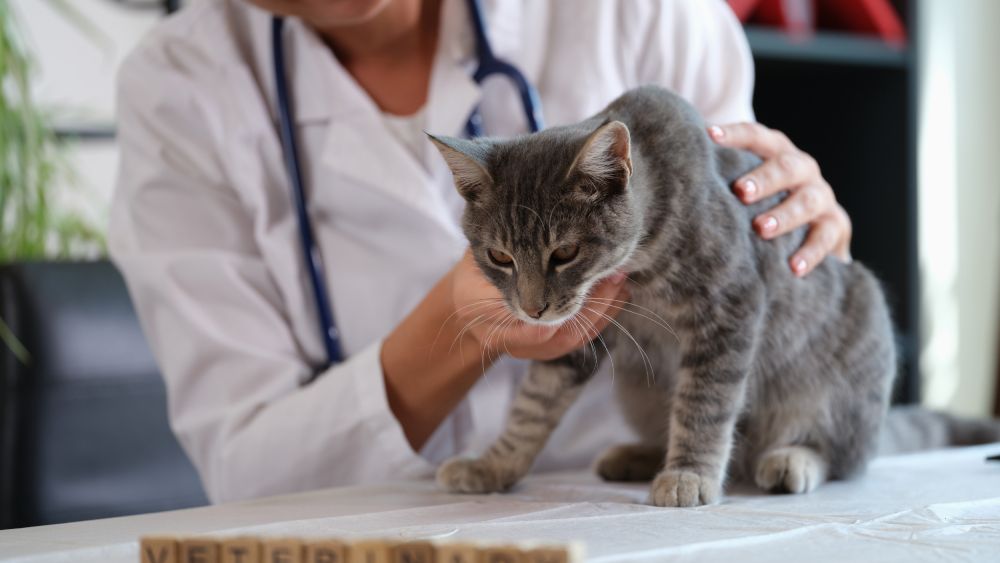
Your vet will take a full history and perform a physical exam on your cat. They will take a blood and urine sample.
They will be looking for specific changes in the blood tests involving the following:
- Liver enzymes such as ALT, ALP, AST, GGT
- Bile acids
- Bilirubin
- Red and white blood cells
- Proteins in the blood
Depending on what is found on the blood and urine tests, this will help your vet identify the presence of liver disease or rule it out. Once your vet is concerned about the liver not functioning properly, there will be other diagnostic tests that need to be carried out to help assess the extent and the severity of the disease.
Ultrasound scans and X-rays can be used to assess the size and structure of the liver. Your vet can see if there are any tumors present or obstructions of blood flow or bile. Often a liver biopsy is required so that the cells can be analyzed by a pathologist to determine exactly what is happening within the liver. Cultures can be taken too to check for bacterial infections.
Liver biopsies can be taken via a needle guided by the ultrasound scanner. Larger biopsies can be taken if the cat is put under general anesthetic. Your vet will ensure your cat is a suitable candidate for a general anesthetic before performing this procedure. Advanced imaging such as MRI and CT or nuclear scintigraphy can be used in some cases to identify problems such as liver shunts.


What Are the Causes of Liver Disease in Cats?
There are many causes of liver disease in cats. The more commonly seen ones include:
Infectious Causes
- Feline infectious peritonitis (FIP): This is a virus that affects the liver amongst other things. It causes inflammatory changes and damages the cells over time.
- Toxoplasmosis: This is a parasite infection. Often infected cats do not show any clinical signs, however, if the cat is immunosuppressed, or pregnant, it can cause serious disease.
- Feline herpesvirus 1 (FHV-1): This is a virus that usually causes upper respiratory tract signs; however, it can cause problems in the liver in some cases, especially if the cat is already immunosuppressed.
- Bacterial hepatitis/cholangiohepatitis: Hepatitis and cholangiohepatitis can be caused by both infectious and non-infectious causes. Many different types of bacteria can cause hepatitis inflammation of the liver.
Non-Infectious Causes:
- Hepatic lipidosis: This is also known as fatty liver syndrome. This is a condition unique to cats. It is often seen after a cat has stopped eating for a prolonged amount of time. It occurs due to the fact fat accumulates in the liver and can be lethal if left untreated.
- Cholangitis/cholangiohepatitis: This is an inflammatory disease affecting the liver and the bile ducts. It can be caused by autoimmune diseases, dietary indiscretion, or bacterial infections as mentioned above.
- Toxin exposure: Exposure to certain toxic or poisonous substances including drugs, plants, and household products can cause damage to the liver and affect its function.
- Cancer: The liver can be affected by primary tumors or secondary cancers that have spread from other parts of the body.
- Congenital abnormalities: Some cats are born with abnormalities that affect their liver. These are relatively rare. One of the more commonly seen conditions is a portosystemic shunt, an anomalous blood vessel that lets the blood from the stomach, intestines, spleen, and pancreas drain into the systemic circulation without being detoxified by the liver first.
Other things that can contribute to liver disease in cats include:
- Age: In general, liver function declines naturally with age. Cats are more likely to have health problems the older they get.
- Breed disposition: Certain breeds of cats such as Abyssinians and Persians are more likely to suffer from specific liver diseases.
- Body condition score: Cats that are carrying excess weight can inadvertently be putting a strain on the liver and increasing the risk of fatty liver disease.
How Do I Care for a Cat with Liver Disease?
Treatment of liver disease depends on the underlying cause present. This is why it is important to perform diagnostics to get to the bottom of the issue before any treatment has begun. When managing liver disease, there are lots of things that can be done to help support your cat.
Intravenous fluid therapy is often given to combat dehydration and correct electrolyte imbalances. Nutritional support can play an important role, and some drugs can help to support liver function too.
Dietary changes have the aim of “reducing the workload” of the liver. Sometimes cats can benefit from being fed a low protein diet. In some cases, dietary fats can also be restricted but this is thought to be less helpful in cats as they require a large amount of dietary fats.
Pain relief can be administered if necessary and drugs can be given to help manage vomiting and/or nausea.
Bacterial infections will require antibiotics, while some conditions require surgery, such as portosystemic shunts and removal of masses. Regular vet checks are required to monitor and track progress and administer appropriate treatment as required.
It is always important to remember that your cat's treatment will be guided by factors such as your cat's general health, any underlying medical conditions, and your cat's age.

Frequently Asked Questions
Can cats recover from liver disease?
Depending on the underlying cause of liver disease, cats can go on to make a full recovery. The liver can regenerate to a certain extent, so in some cases, the cat can have a good prognosis. Early diagnosis and prompt administration of the appropriate therapy increase your cat's chances of recovery.
How can I prevent liver disease in my cat?
There are so many different causes of liver disease, and unfortunately, some cannot be prevented. The good news is that there are some lifestyle changes you can make that will make your cat less likely to develop liver disease or mean that if they are affected, it is less likely to be serious.
These changes include:
Are there any home remedies for liver disease in cats?
There are no home remedies for liver disease in cats. There are certain things you can do to help your cat at home, as mentioned above, but owners should never try to use home remedies without first speaking to a veterinary professional. If you think that your cat may have any sort of liver disease the best thing to do is to take them to your vet as soon as possible.

Conclusion
Liver disease is very common in cats. The liver is a large organ and has many different roles in the body. This means that it is vulnerable to damage from lots of different sources. If liver disease is detected early and treated quickly, the prognosis can be favorable with cats going on to make a full recovery.
If you think you are seeing any of the clinical signs of liver disease, no matter how subtle or intermittent, it is important to take your cat to the vet to have them examined.
Featured Image Credit: megaflopp, Shutterstock
Expert cat care, straight to your inbox
News, insights, and useful advice, delivered to you.

No spam — unsubscribe anytime.
By signing up, you agree to our Terms & Conditions and Privacy & Cookies Policy.
How useful was this post?
Click a star to rate. You can leave written feedback afterwards. (We read all feedback.)
Dr. Emma Chandley, BVM MRCVS (Veterinarian)
Dr. Emma is an experienced vet who is happy to share her expertise and knowledge about cats with readers. Her passion is surgery but she will happily talk about anything animal-related. Dr. Chandley graduated from The Royal Vet College and since then she has worked in general practice in Great Britain. Dr Chandley has completed a postgraduate certificate in Small Animal Surgery and has also gained Advanced Practitioner status in the same discipline. She enjoys developing her skills in animal behavior, nutrition, and clinical pathology as well.