Anisocoria in Cats: Causes & Care Guide (Vet Answer)

In this article
Cats are known for their beautiful eyes. They even have special pupils that change shape! When fully open (dilated), their pupils are round, but when constricted, they have a vertical ellipse shape. Pupils change size to regulate how much light enters the eyes.
This process is not under conscious control; it occurs in response to signals from the sympathetic and parasympathetic nervous systems. Normally, both pupils dilate or constrict at the same time, but in some cases, one pupil remains fixed in an open or closed position. This results in anisocoria.

What Is Anisocoria?
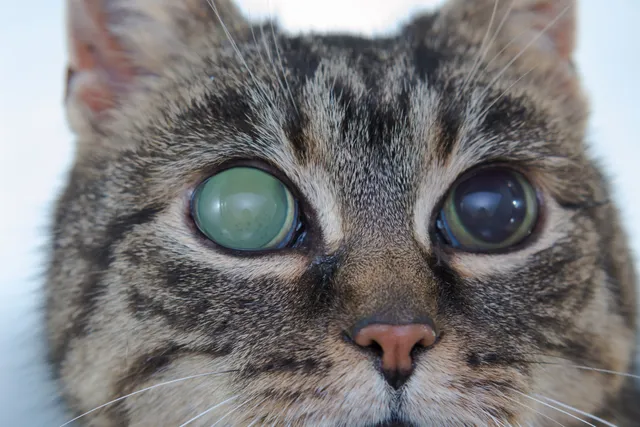
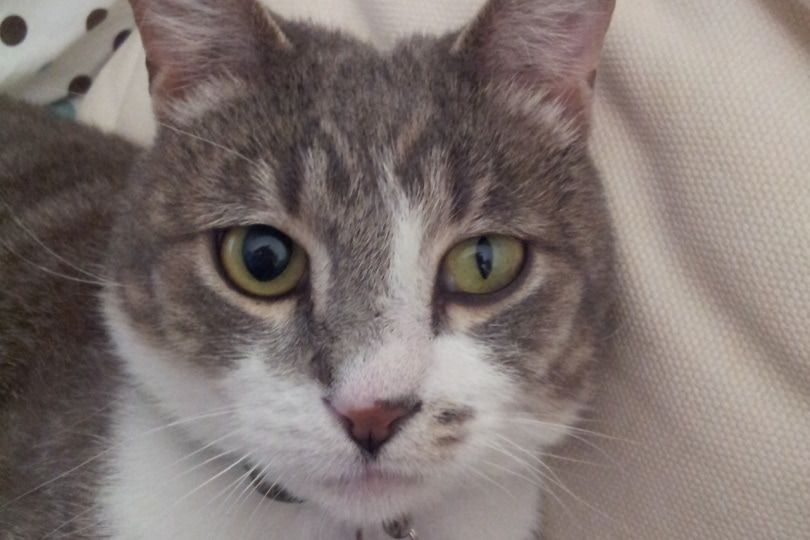
The term anisocoria refers to having two differently sized pupils. This is usually quite obvious in cats, due to the contrast provided by their brightly colored irises and the fact that their unequal pupils will have different shapes.
Anisocoria is always abnormal, but it may not be immediately apparent whether the larger or smaller pupil is the cause for concern.
Cats with anisocoria should be examined promptly by a veterinarian (especially if it occurs suddenly).

What Are the Causes of Anisocoria?
According to veterinary ophthalmologist, Dr. Shelby Reinstein, there are four common causes of anisocoria in cats. These can be divided into two categories, based on whether they cause abnormal pupil constriction (miosis), or dilation (mydriasis).
Causes of an Abnormally Small Pupil (Miosis)
Uveitis
Uveitis is inflammation of part of the eye called the uvea, which is made up of the iris, ciliary body, and choroid. In one of her webinars, Dr. Reinstein reports that up to 75% of cases of feline uveitis are either immune-mediated or do not have an identifiable cause (despite thorough investigation).
Other causes of uveitis in cats include:
Horner’s Syndrome
Horner’s Syndrome is a non-painful condition, in which the nerves responsible for opening the eyelids and pupil stop working properly.
Horner’s Syndrome can result from a problem in one of three locations:
Unlike in dogs, Horner’s Syndrome in cats should not be expected to resolve on its own. The veterinarian will consider your cat’s history, perform a thorough physical exam, and recommend diagnostic tests to help determine the underlying cause.

Causes of an Abnormally Large Pupil (Mydriasis)
Glaucoma
Glaucoma is defined as elevated pressure inside the eye (intraocular pressure), which results in damage to the retina and loss of vision. In cats and dogs, glaucoma is always due to decreased drainage of fluid from the eye (as opposed to the production of too much fluid).
The most common cause of glaucoma in cats is chronic (long-standing) uveitis. Inflammatory cells build up over time and block normal drainage of fluid from the eye, resulting in increased pressure.
Unfortunately, glaucoma in cats is rarely identified in its early stages, because the signs are very subtle. By the time glaucoma is diagnosed, vision loss has usually occurred, and is likely permanent.
Hypertension
Hypertension means persistently high blood pressure. This can lead to retinal detachment (partial or complete) which, in cats, usually presents as a dilated pupil and sudden loss of vision.
Hypertension is common in older cats, and secondary to other conditions:
What Are the Signs of Anisocoria?
By definition, cats with anisocoria have two differently sized pupils. In some cases, this may be the only sign that something is wrong, but other symptoms can also be present.
With respect to the four most common causes of anisocoria in cats, here are some other signs you may notice.
Uveitis
In addition to having a constricted pupil, the affected eye(s) may:
Horner’s Syndrome
Cats with Horner’s Syndrome have a constricted pupil and:
Unless there has been a traumatic injury, the eye itself should not appear red, irritated, or have any other change in appearance.
If the Horner’s Syndrome is due to a middle ear infection, cancer in the chest, or a problem in the brain, the cat may also show symptoms related to that condition.
Glaucoma
Since the most common cause of glaucoma in cats is chronic uveitis, some of the signs listed above may be present. The symptoms of glaucoma itself can be very subtle, especially in the early stages, so typically it is diagnosed after the pressure has been elevated for a while. Signs of chronic glaucoma include:
- A dilated pupil that is not responsive to light
- Vision loss
In some cases, the eye may become enlarged and even bulge out from the socket. This often leads to corneal disease because the cat is unable to blink normally.
Hypertension
High blood pressure is common in elderly cats, and typically occurs secondary to other medical conditions. It can lead to partial or complete retinal detachment. Owners of hypertensive cats most often notice:
- A dilated pupil
- Sudden loss of vision

What Are the Potential Dangers of Anisocoria?
The danger is not so much from anisocoria itself, but from the underlying condition causing the dilated or constricted pupil.
The biggest threat to the eye is loss of vision. In cases where a cat’s eye becomes blind, severely damaged, or painful to the point that it cannot be managed medically, surgical removal (enucleation) may be needed.
While the thought of enucleation can bring up a lot of emotions, it may help to focus on the fact that it will relieve your cat’s discomfort. Remember that we are usually removing an eye that is non-visual anyway, so your cat has likely already adjusted to the loss of sight.
How Is Anisocoria Treated?
The goal is not to correct the anisocoria, specifically, but to manage the condition that led to the abnormally large or small pupil. Treatment often involves eye drops and, in some cases, oral medication as well. Surgery is a last resort for eyes that do not respond to medical management.
Conclusion
The next time you find yourself gazing into your cat’s eyes, take a moment to see if you notice anything different about them. If you have any concerns at all—particularly, if anisocoria is present—please seek veterinary attention right away. Early intervention can be key to preserving your cat’s vision!
See also:
Sources
Featured Image Credit: Example of Horner's syndrome in a cat (Blumoon531, via Wikimedia Commons, CC BY-SA 4.0)

Expert cat care, straight to your inbox
Vet-reviewed advice, behavior tips, and the best of Catster. Free, and you can unsubscribe anytime.
By signing up, you agree to our Terms & Conditions and Privacy & Cookies Policy.
Dr. Sharon Butzke DVM (Veterinarian)
Sharon has been drawn to animals for as long as she can remember. She was raised in Ontario, Canada and fulfilled her childhood dream when she obtained her Doctor of Veterinary Medicine (DVM) degree from the Ontario Veterinary College in 2009. Since then, she has worked in a variety of small animal clinics, with a focus on cats and dogs. She loves sharing her knowledge and empowering people to take the best possible care of their pets! Sharon currently resides in British Columbia with her husband, daughter, and a loveable Great Dane named Parker.
Join the conversation
Ask a question, share your story, or send private feedback.