Ask Dr. Paola – Feral Cats, Bedtime Biting & Eye Damage (October 13, 2025)

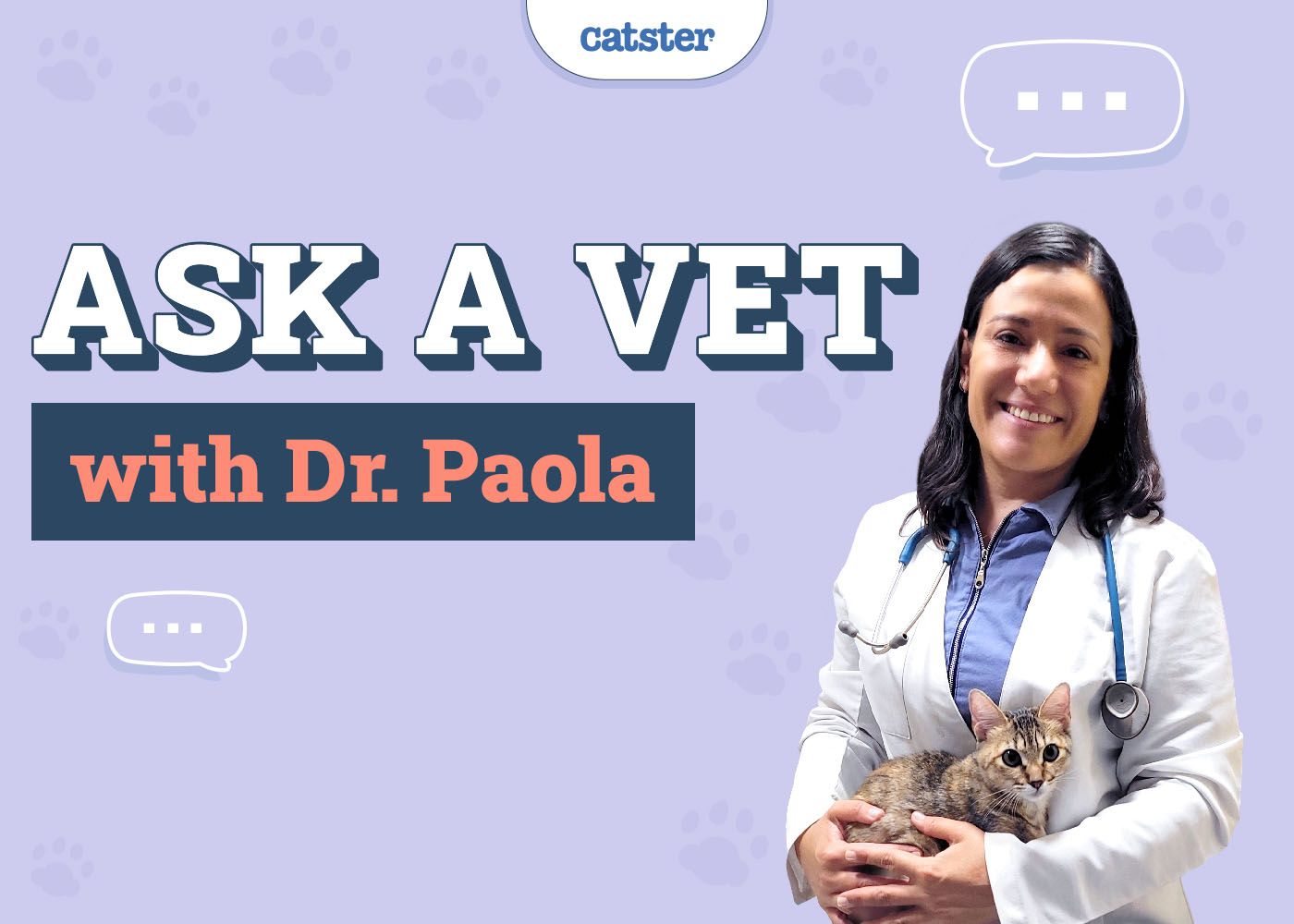
Welcome to our "Ask Dr. Paola" series, where every Monday we bring expert advice straight from Dr. Paola Cuevas (MVZ) to help our readers better understand their cat's health and well-being.
Whether you're a new pet parent or a seasoned cat lover, Dr. Paola is here to provide answers to your most pressing questions. From nutrition tips and preventive care to troubleshooting common behavioral issues, Dr. Paola is ready to offer insights that will keep your kitty happy, healthy, and feline fine. Stay tuned for expert guidance on a range of topics that matter most to you and your cat, so you can make informed decisions and provide the best possible care for your furry companion.
Have a question? Send it in here!

Help! How Much Do I Feed a Feral Cat?
"We have had what looks to be a feral cat living in our barn since yesterday. It is a tabby just like my tabby, but has smaller ears, so I have called it Little Ears. It's really thin, so I have been putting food out, but I don't know how much to give it. I don't want to make it sick, so what would you recommend?" - Barbara
Hi Barbara,
What a gentle heart you have to care for Little Ears. You are absolutely right to be thoughtful about how much to feed, since cats that have been undernourished need to be reintroduced to food gradually and safely. The tricky part is that each cat food formula has a different calorie density, so there is no universal amount that works for every food. This is why the most reliable place to start is with the feeding guidelines printed on the package. These are based on average calorie needs per body weight and give you a safe framework to adjust from.
Because Little Ears is thin and likely has been eating very little, I suggest you begin with about a quarter to half of the recommended daily portion divided into several small meals throughout the day. This prevents overwhelming his digestive system while still giving him the nutrition he needs. As his body adjusts, you can gradually increase the portions over the course of a week until he is eating closer to the guideline amount for his estimated healthy weight. Wet food is particularly helpful in these cases since it is easier to digest and also provides extra hydration. If dry food is all you have, moisten it with warm water to make it gentler on the stomach. Also, please make sure fresh water is always available.
With patience and consistent feeding, his body will adjust, and you can slowly transition him toward the amount a cat his age, size, and condition should eat. Once he is more stable, I also encourage you to consider having Little Ears neutered or spayed if it has not already been done. This not only prevents unwanted litters but also greatly improves long-term health and reduces risks of roaming and injury. Thank you for your compassion toward Little Ears. You are truly making a difference in his life.
Sincerely,
Dr. Paola

Help! My Rescue Cat Bites Me at Bedtime!
"Hello Dr. Paola,
I have a Torbie, rescued cat called Ginny. She is about 3 or 4 years old now and an indoor-only cat. She was already spayed when she was found cold, unkept, and hungry outside a kind soul's garage. I have had her for two years. She does not meow.
The issue I have is that she bites. It can happen when I pet her. I've learned the impending signs to avoid irritating her and pet her for shorter times. However, the time she is most likely to bite is when I go to bed. She is welcome on my bed, but if I expose a hand or arm out of the sheet, she will bite it. This is almost every night without fail.
Staying under the sheet protects me a bit, but she then bites the sheet (she won't bite my head). She usually will cease trying to bite if I push her off the bed, but sometimes she will jump back up and try harder. Ultimately, she stops and goes to her bed, which is on top of the other side of my bed.
Have you ever heard of this bedtime behavior? Any theories why she might do this? Any suggestions for corrective actions? I'm at my wits' end, but I love her.
Thanks for your time," - Tom
Hi Tom,
Thank you for sharing Ginny’s story. She is lucky to have found such a patient and loving home. The behavior you describe is not uncommon in cats, and it usually stems from a mix of predatory play and overstimulation. Cats are crepuscular, which means they are naturally most active at dawn and dusk. For many indoor cats, bedtime coincides with a peak in energy, and a moving hand under or outside the sheets can trigger the hunting instinct, much like prey scurrying through the grass. The biting of the sheet after you cover up is a continuation of this predatory sequence.
Since Ginny already shows signs of petting intolerance, her threshold for stimulation may be low, and when excitement builds up in the evening, it may overflow into biting behavior. A helpful strategy is to redirect this energy before you go to bed. Engaging her in a structured play session using interactive toys, such as wand toys or a feather teaser, followed by a small meal, mimics the natural hunt–eat–rest cycle and helps settle her. If she jumps on the bed and starts to nip, avoid physical punishment or pushing her away, since this can increase frustration. Instead, calmly remove your attention and give her a safe, engaging alternative like a soft toy she can wrestle with near her bed.
With consistency, Ginny will learn that bedtime is a time for calm and closeness rather than hunting. It can take patience to break the habit, but with redirection and positive reinforcement of calm behaviors, you are setting her up for success while keeping your bond strong.
I hope this helps!
- Dr. Paola

Help! I Think My Cat May Have Permanent Eye Damage!
"Is there a way for a vet to check a cat's range of vision? We adopted Gianni at 8 weeks from the shelter where he was being treated in isolation for a severe eye infection. As a nurse, I agreed to continue his treatment because he was the only long-haired haired available and he needed me.
He is 3 years old now and still has frequent eye infections in his left eye, even though he is an indoor cat. I wonder if he has permanent damage because he seems to have trouble finding treats or bits of fresh chicken I drop for him right in front of his face. Could he be far-sighted? He doesn't seem to be totally blind." - Loretta
Hi Loretta,
What a compassionate choice you made to give Gianni a chance when he needed it most. Cats who have had severe eye infections early in life, especially those affecting the cornea, conjunctiva, or deeper structures, can indeed develop some degree of lasting vision impairment. Scarring, chronic inflammation, or damage to the corneal surface can all interfere with how clearly light enters the eye, much like looking through a foggy window.
Veterinarians can evaluate a cat’s vision in several ways during a clinical exam. Simple tests include observing how the cat navigates a room, tracking a cotton ball tossed nearby (since it falls silently and tests visual tracking rather than sound), and checking the menace response, where a gentle hand movement toward the eye should trigger a blink. More specialized exams involve assessing the retina and optic nerve with an ophthalmoscope or referring to a veterinary ophthalmologist for advanced testing such as electroretinography. These tools help determine whether the limitation lies in the eye’s surface, the lens, or the deeper structures responsible for transmitting visual information to the brain.
From what you describe, Gianni may have reduced close-range vision, which makes it harder for him to spot small treats right in front of him. Using larger, more aromatic food rewards or placing them in a contrasting dish may make it easier for him. Because he continues to have recurrent infections, I recommend having him examined by your veterinarian, and if possible, a referral to a veterinary ophthalmologist. This will help assess both his current visual capacity and whether there is an underlying condition that can be managed to improve his comfort and protect the vision he has.
Sincerely, - Dr. Paola
This article is a part of our weekly Ask Dr. Paola series
Expert cat care, straight to your inbox
News, insights, and useful advice, delivered to you.

No spam — unsubscribe anytime.
By signing up, you agree to our Terms & Conditions and Privacy & Cookies Policy.
How useful was this post?
Click a star to rate. You can leave written feedback afterwards. (We read all feedback.)
Dr. Paola Cuevas MVZ (Veterinarian)
Dr. Paola Cuevas is the Senior In-House Veterinarian at Pangolia, the parent company of Catster. She has over 18 years of experience as a veterinarian and animal behaviorist. Paola's focus is on preventive medicine and animal welfare. Paola has a large range of skills in from diagnostic imaging to nutrition and clinical pathology. Paola enjoys sharing her extensive knowledge of animal training with our Catster readers and is always happy to answer reader questions as our in-house veterinarian.