Get

In Your Inbox

Catster is reader-supported. When you buy via links on our site, we may earn an affiliate commission at no cost to you. Learn more.

Cheshire Cat: Surprising Facts, Lore & History

Share

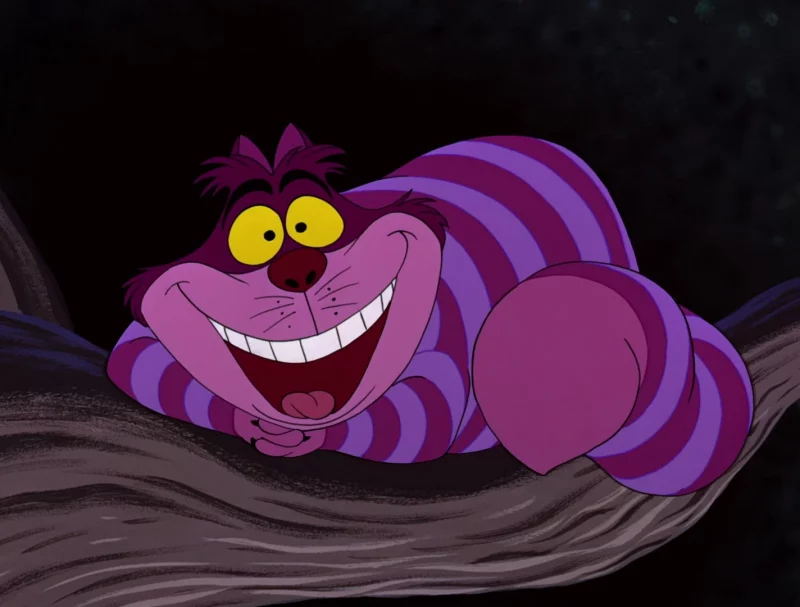
Cheshire-Cat_Alice-in-Woderland_Walt-Disney-Company

The Cheshire Cat is a character from Alice’s Adventures in Wonderland by Lewis Carroll. Its most distinctive features are its mischievous grin and ability to disappear.

Despite not appearing in the book for all that long, the cat had become a cultural figure beyond its original realms as a book character. Even someone who has never read Lewis Carroll likely knows what the Cheshire Cat is. Furthermore, the “Cheshire Cat” also had some appearances before the 1865 book, which likely inspired Carroll to create the well-known character.

We’ll explore deeper into this cat’s history in this article, including a deep dive into the character’s history.

divider 2 cats

The Origin of the Cheshire Cat

Long before the Cheshire Cat was a character in a book, the phrase existed in idioms. These idioms did vary somewhat, but they typically all involved smiling.

For instance, one recorded in 1855 in the novel The Newcomes stated: “That woman grins like a Cheshire Cat.” Other phrases involved different people smiling like Cheshire Cats, whether it was one particular person or even a whole group of people. For instance, several idioms exist making fun of government bodies (like the court system) by saying it grins like a Cheshire Cat.

However, where this concept came from isn’t well-documented. It’s thought to be connected to the land of Cheshire, as you might guess, but why the cat’s here “grin” specifically isn’t known. Of course, there are many theories.

bengal cat watching book
Image By: ketlit, Shutterstock

Origin Theories

One theory (and the most likely to be correct) is that the region was particularly known for its dairy production, and therefore, cats tended to hang around a lot, too. The phrase somehow evolved due to the plethora of cats that hung around the area.

Another suggestion is the cheese also made in Cheshire (due, of course, because of their high dairy production). Sometimes, these cheeses were made in the shape of a cat. Often, the tail-end was cut off first. Therefore, eventually, only a cat head was left. The Brewer’s Dictionary largely made this theory popular. However, many critics claim that there are just too many “maybes” for this theory to be true.

This same book added another possible explanation later on. The book claimed that there was a painter in the area who often adorned buildings with cats and lions. Some of these were still visible when the book was published, though they are long gone today.

All that said, it’s likely that the simple presence of the cats may be enough to create this idiom. The cats were likely known for stealing milk from dairy farmers, so their mischievous nature may have caused the “grinning” part of the idioms.

divider 2 cats

What About Lewis Carroll’s Character?

Cheshire Cat Lewis Carroll Original Illustation
Image Credit: picryl, Public Domain Illustration (CC0)

Of course, Carroll did change the character of the Cheshire Cat a lot before the final printing of the book. While the idiom may have played a role, it’s thought that he got his inspiration from other places, too.

The character in his book is known for annoying the other characters in the book with philosophical questions, including Alice. While the cat isn’t exactly straightforward with Alice, he does appear to be on her side at several points in the book. Later, the cat is sentenced to death and asks the King and Queen of Hearts some philosophical questions, as well. His appearing and disappearing acts do seem to confuse just about everyone in the books.

There have been some suggestions that the Cheshire Cat is based on Edward Pusey, one of Carroll’s friends and mentors. He was also an authority in the church, which may be why the Cheshire Cat is so philosophical.

It’s also likely that Carroll took some of the cat’s imagery from the cat carving in the St. Wilfrid’s Church. There, you can see a cat carving that is smiling similarly to the Cheshire Cat. Carroll’s memoir even mentioned that he saw the cat at the church once. Many people point towards this as the inspiration for the cat, even if Carroll wasn’t familiar with the older idioms.

Another possible interpretation is the British Shorthair, which was a popular cat at the time (and still is in the area). This breed naturally has upturned lips, which may have inspired Carroll to create his character.

There are tons of other potential explanations, as well. There are many old carvings around Cheshire, and many of these are pointed out as being the potential inspiration.

Continued Evolution

The Cheshire Cat has been further developed by other artists and writers. Its prevalence in the media is rare as far as book characters are concerned. The term is even used to describe several scientific phenomena, usually for things that seem to “disappear.”

For instance, “the Cheshire Cat” is a theory in quantum physics that describes when a particle acts as if it’s separate from its property. There are many other natural phenomena that are named after this popular character, as well.

The Cheshire Cat also appears in many song lyrics and even other books. However, the character didn’t become super common outside of the book until the 1970s. Since then, the Cheshire Cat has only become more popular.

cheshire-cat-figure_by-tookapic_Pixabay
Image Credit: Pixabay

divider 2 cats

Conclusion

The Cheshire Cat is exceptionally recognizable today. However, it wasn’t always that way. It took several decades for the cat to become a popular motif.  Before appearing in Lewis Carroll’s books, the Cheshire Cat largely appeared in idioms. Often, “Cheshire cats” were considered to be mischievous, and people were often described as “smiling” like a Cheshire Cat.

These idioms likely inspired the Cheshire Cat that we know today. However, it’s also possible that this feline was inspired by local church carvings or even real-life cats.


Featured Image Credit: Characters by  Walt Disney Animation Studios,  The Walt Disney Company. All rights reserved to the copyright owners.

Want content like this delivered to you?

Sign Up For Our Newsletter

News, insights, expert advice, and everything cat

* By submitting, you agree to our Terms & Conditions and Privacy & Cookies Policy.


How useful was this post?

Click on a star to rate (you can leave written feedback after clicking submit)

Help us improve Catster for pet parents!

Your feedback really matters.

What did you like about this post? Also how can we improve it?

Join the conversation

Leave a Reply

You’re very welcome to leave a comment or question. Please know that all comments must meet our community guidelines, and your email address will NOT be published. Let’s have a positive and constructive conversation.


Catster's Digital Magazine is Back!

Vet-approved health & behavior advice

Real cat stories & community features

Chatting About the Rainbow Bridge, Euthanasia, and Laughter During Grief | Chatty Cattys, Episode 24

If you’ve ever felt the loss of a beloved cat, or are dreading the day when your pet crosses the rainbow bridge, you’ll...

The Simple Reasons Cats Refuse to Let Anyone Use the Bathroom Alone

Cats have an extraordinary talent for making themselves present in the most inconvenient places, and the bathroom ranks near the top of the...

A Paw-sitive Milestone: Canada Officially Becomes a Declaw-Free Nation

Canada has officially become a declaw-free nation. On May 25, 2026, a new regulation was filed in Ontario under the Provincial Animal Welfare...

The Surprisingly Simple Ways to Help a Cat With Hairballs

Cats spend an astonishing amount of time grooming. It is part hygiene routine, part comfort ritual, and part instinct that traces back generations....

More related

Is Your Cat a Loud Groomer? Olga Certainly Is!

Hi, I’m Christopher! Read my introduction to learn more about me and my silly Russian Blue cat, Olga. First-time owners are often surprised...

Why Is My Cat Pooping on the Floor? 4 Vet Reviewed Reasons

Cats are fun, frisky, and usually clean. They wash themselves with their tongue, and they are careful not to frequent muddy or dirty...

50 Cute Cat Memes – Adorable Jokes for Feline Lovers

There’s only one thing the Internet can agree on: cats are hilarious! If the countless cat videos and pictures didn’t show how funny...

5 Best Cat-Proof Blinds Durable Enough to Last in 2026 – Reviews & Top Picks

Cats like to stretch out and clean their claws frequently, and most pet owners understand this means that they have to protect their...

Keep reading

Can Cats Eat Goat Cheese? Vet-Reviewed Nutritional Benefits & FAQ

As responsible cat parents, many people often wonder which treats are both safe and nutritious for their feline friends. While there’s an array of human foods that cats can eat without problems, some could cause issues with their health. Due...

Can Cats Eat Goat Cheese

Are Angel Plants Poisonous to Cats? Vet-Approved Facts and Toxicity Guide

Angel Plants, or Exotic Angel Plants, is a reputable brand of houseplants that sells over 400 different types of plants. Because the term “Angel Plants” isn’t referring to a specific plant species, it’s impossible to say if they’re poisonous to...

Catster_Are Angel Plants Poisonous to Cats

What Cleaning Products Are Safe for Cats? 10 Vet Approved Items to Keep at Home

Cleaning when you have cats can be a worrying business. Common cleaning agents like ammonia, chlorine (bleach), phenols, rubbing alcohol, formaldehyde, benzalkonium chloride, and essential oils can all be harmful to cats if they come into contact with them. If...

cleaning-a-dirty-mattress

Feliway Pheromone Spray Review of 2026: Recalls, Pros & Cons

Review Summary Feliway Pheromone Spray – A Quick Look Calms Cats During Travel The main thing that the classic Feliway Pheromone Spray does well is calm cats during travel. Most cats do not do well in the car, and this...

Feliway Pheremone Spray Review

Can Cats Eat a Puppuccino (Pup Cups) From Starbucks? Vet-Verified Nutritional Info

With many baristas snapping pics of canine customers in the drive-through, treating your dog to a pup cup has taken the influencer world by storm. This free item from Starbucks’ “secret menu” is beloved by dog companions everywhere. Still, we...

Catster_Can Cats Eat a Puppuccino_v1_Jul 16 2024

Why Do Cats Touch Noses? Vet-Verified Feline Behavior

Cats are fascinating to watch, and everything a cat does is deliberate. Felines do not take action for the sake of it. The purposeful nature of a cat’s ways is especially evident in their communication. Some experts argue that everything...

burmese cat kissing womans nose

Does Catnip Really Make Cats High? What You Need to Know!

It’s no secret that many cats love catnip. The plant, which is in the mint family, has a potent effect on felines, making them roll around, playfully bite things, and generally act like they’re high. But what’s really going on?...

Gray Cat Enjoying Fresh Catnip_Anna Hoychuk_shutterstock

Can Cats Eat Water Chestnuts? Vet-Approved Nutrition Facts & FAQ

If you enjoy water chestnuts, then you know that despite their name, they actually aren’t nuts at all. Water chestnuts are a delicious crunchy veggie that some cats enjoy munching on. They are safe to eat for cats, though only...

Can Cats Eat Water Chestnuts

Love Cats? So Do We! Join the Catster Community

Stay informed with expert pet care insights delivered straight to your inbox! Discover professional guidance on animal behavior, feeding tips, trusted product picks, and much more.


Sign up for the Catster Email Newsletter

Stay informed with expert pet care insights delivered straight to your inbox! Discover professional guidance on animal behavior, feeding tips, trusted product picks, and much more.
