How to Put a Cat on a Diet: How, Why & 4 Vet-Approved Steps to Follow



In this article
As you may or may not know, cat obesity is a problem in the United States, so much so that up to 63% of cats are deemed overweight 1. If you have an overweight cat, helping your cat shed that extra weight will reduce their risk of certain diseases and help them feel better. Heavier cats tend to be less energetic and may tire more easily.
In this guide, we’ll list four steps to follow to help your cat lose weight for a healthier, longer life. Without further ado, let’s get into it.

Why Should My Cat Lose Weight?
Cat obesity increases the risk of them developing diabetes, arthritis, joint issues, and even cancer—all the more reason to put your cat on a diet before disaster strikes. But how do you help your cat lose weight? Fortunately, it’s not too hard; all it takes is a commitment to feeding the right food and quantity, adding more exercise for your feline, and enlisting the help of a veterinarian.
Before we begin, we must emphasize never putting your cat on a diet without the veterinarian’s consent.

How Do I Know My Cat Is Overweight?
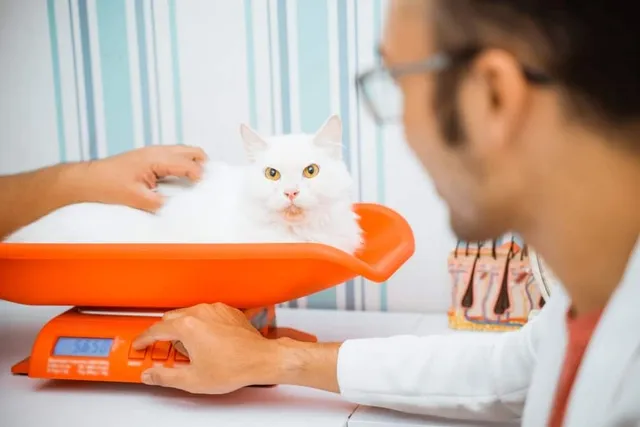
If you suspect your cat is overweight, a trip to the vet for an exam is warranted. A vet can determine if your cat is overweight in the first place and then go from there. Sometimes, it’s obvious a cat is overweight just by the mere size of the cat. If you can’t feel your cat’s ribs with your hand, your cat is overweight.
If you have a short-haired cat, try standing over your cat while they’re standing and look for an indention where the waistline should be. If you can’t see the waistline or if the sides are bulging, your cat is likely overweight.
If you look at a body condition score chart, you should be able to see where your cat fits.2 A body condition score of 5 is ideal, while cats scoring 7 and above are very overweight.

A Step-By-Step Guide for How to Put a Cat on a Diet
1. Choose Cat Food for Weight Loss
Choosing the right food for cat weight loss is instrumental to success, and this is where the veterinarian will come in significantly. In theory, the fewer calories taken in and the more calories burned equates to weight loss, but for cats, it’s not that easy.
If a cat does not eat for a few consecutive days, the cat is at risk of a life-threatening condition called hepatic lipidosis, also known as fatty liver syndrome. Rapidly changing the diet may lead to your cat not eating, so it’s important to do this gradually, which we will discuss later. In addition, calories should not be immediately drastically reduced.
Before changing your cat’s regular diet, a vet may recommend a few tests. The veterinarian may suggest a cat food high in fiber, low in fat, high in protein, or low in carbohydrates.
2. Aim for Slow Weight Loss
When it comes to weight loss for your cat, it should be done at a certain pace. Cats should not lose more than 1% to 2% of their total body week per week. That said, it should be done in a gradual process, which your vet can assist you with. Calorie intake and portion sizes are both pivotal points in a cat’s weight loss, and your vet can guide you in how to calculate how much weight your cat is losing per week. Adjustments may be in order if your cat is losing too much too fast. For example, if your cat is losing more than 2% per week, your vet may suggest increasing the caloric consumption by 10%. If the weight loss is less than 1% per week, calorie consumption may be reduced by 5% to 10%.
3. Feed the Correct Amount of Food
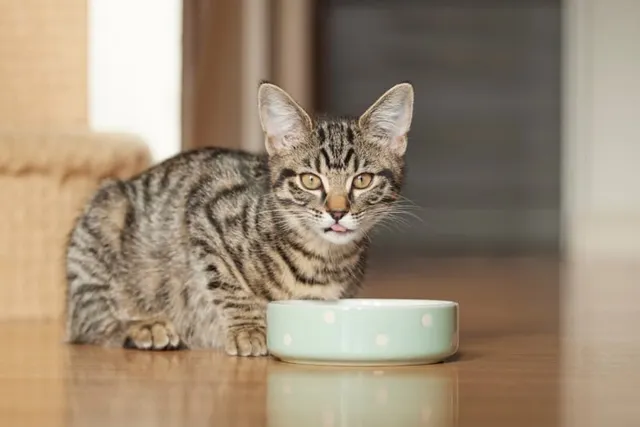
Portion size is critical in weight loss for your cat. If you are used to feeding your cat with the free-feeding method, meaning leaving food out all day and night for your cat to eat whenever they feel like it, that will need to change. Cat’s prone to overeating will not lose weight when free fed. Ideally, it’s a good idea to provide your cat with smaller, more frequent meals to help control hunger. Your vet can help you determine how much and how often to feed your cat for weight loss. Most cat food will come with a feeding guide of how much your cat should eat however, it is important to remember two things;
- This is only a guide and there is a lot of individual variation of calorie requirements.
- For weight loss your cat must be in a slight calorie deficit, while the feeding guides are designed to maintain body weight.

4. Cut Back on Treats
Your cat may not like you very much for this one, but cutting back on treats or even cutting treats out altogether may be needed, depending on your cat's weight and situation. Commercial cat treats are often high in calories and may contribute to the problem.
As a rule, treats should not exceed 10% of your cat’s calorie intake, and 5% is really what you should aim for when offering your cat treats, even if your cat is not overweight. Remember, fewer calories in and more being burned results in weight loss, while excessive or extra calories will result in weight gain.
Your vet may suggest avoiding commercial treats. Unlike cat food, cat treats are not complete and balanced, and feeding too many may cause a nutritional imbalance.
How Should I Introduce New Food?
When introducing new food to your cat, the transition should be done gradually over a period of 3 weeks. It's best to offer small amounts of the new food in a separate bowl; however, if your cat is a fussy and finicky eater, it may take 2 to 3 weeks for your cat even to try the new food, but be patient.
After your cat starts eating the new food, mix ¼ of the new diet with ¾ of the old food for 2 to 4 days. Next, provide half of the new food and half of the old food for another 2 to 4 days. Lastly, mix ¾ of the new food with ¼ of the old food for another 3 to 4 days. Once this is complete, the transition is done, and you can start feeding the new food exclusively.
If your cat never eats the new food from the separate bowl, contact your veterinarian for advice on how to proceed.
How Can I Incorporate Exercise in My Cat’s Daily Life?
Incorporating exercise into your cat’s daily routine (if they have one) can help with weight loss; plus, exercise is excellent for your cat’s mental state. All cats need both mental and physical stimulation, and you can have fun getting your cat interested in playing with you. Cats are natural predators and have developed into hunters, but many domesticated cats live a sedentary lifestyle in the comforts of the home. However, this doesn’t mean your cat can’t exercise.
Providing your cat with a cat tree is an excellent way to encourage climbing, scratching, and batting, all of which provide exercise. Wand teasers, interactive games, puzzles, and plush toy mice are also excellent ways for you to engage in play with your cat and establish a bond. Cat tunnels are also objects cats are curious about and want to explore, again providing exercise. You can even leash-train your cat so you can take them on walks in a controlled and safe environment.
Catios have become popular in recent years, allowing your cat to explore the great outdoors safely. You can buy one or even make your own for little cost.
Conclusion
When it comes to putting your cat on a diet, it’s not one-size-fits-all, and that’s why it is crucial to work directly with your veterinarian before doing so. There are factors that may come into play and can influence the correct diet for your particular feline, such as your cat’s age and overall health. Putting your cat on an extreme diet without your veterinarian's supervision is not advisable. The key takeaways are to recognize your cat is overweight, consult your vet for diet recommendations, and incorporate exercise into your cat’s daily life. An obese cat will have a higher risk of certain diseases, but you can help improve your cat’s overall health and potentially extend their life by helping them maintain an ideal weight.
Sources
https://vcahospitals.com/know-your-pet/liver-disease-fatty-liver-syndrome-in-cats
https://www.petmd.com/cat/nutrition/evr_ct_obesity_in_cats_and_what_to_do_about_an_overweight_cat
https://vcahospitals.com/know-your-pet/exercising-your-cat-for-weight-loss
https://vcahospitals.com/know-your-pet/creating-a-weight-reduction-plan-for-cats
Featured Image Credit: Valeri Vatel, Shutterstock
Expert cat care, straight to your inbox
News, insights, and useful advice, delivered to you.

No spam — unsubscribe anytime.
By signing up, you agree to our Terms & Conditions and Privacy & Cookies Policy.
How useful was this post?
Click a star to rate. You can leave written feedback afterwards. (We read all feedback.)
Rachel Giordano is a Pensacola, Florida-based musician and writer. She lives with her partner and their two dogs, Sophie, a Boston Terrier, and Aero, a Border Collie/Sheltie mix. Rachel holds a Bachelor of Arts degree in communication and loves writing about all types of cat breeds. When she’s not writing about cats, she loves to write suspense/thriller novels. A musician by night and writer by day, she enjoys sharing her knowledge of the needs and requirements of our furry friends.