Why Is My Cat Hiding? 3 Vet-Reviewed Reasons for This Behavior


In this article
Have you ever been looking around for your cat, but they seem to be missing? It doesn’t mean that they’ve run away. Instead, your cat is just hiding. This is perfectly normal for cats. They’re self-reliant creatures, and in many situations, hiding seems like the perfect solution to a cat that doesn’t want to deal with a particular stressor.
While hiding isn’t a bad behavior, the underlying reasons that might cause your cat to hide should be discovered in case they’re reducing your kitty’s well-being. Here, we listed three main reasons that your cat could be hiding, and each is a sign for you to take note of. Remember, cats can’t communicate with us verbally, so often, these behaviors are the warning signs we need to look for to understand what our cats are going through.

Why Do Cats Hide?
In the wild, when faced with a dangerous or stressful situation, animals have only a few options. They can stay and fight or run and hide. For the most part, animals will only stay and fight if they believe they’re going to have an advantage. Otherwise, most will turn tail and run so they may live on to fight another day.
Even though your cat is living safely in your home and doesn’t face existential threats, their brain is still wired the same way it was when your cat’s ancestors were facing such threats on a daily basis. Because of this, your cat’s reactions will often be the same that a wildcat would display.
When your cat is faced with a scary or stressful situation or one that they perceive to be dangerous, they will often hide as a defense mechanism. This could be a reaction to many different things though. What, in particular, is causing the reaction is something that you’ll need to figure out.
Where Your Cat Is Hiding
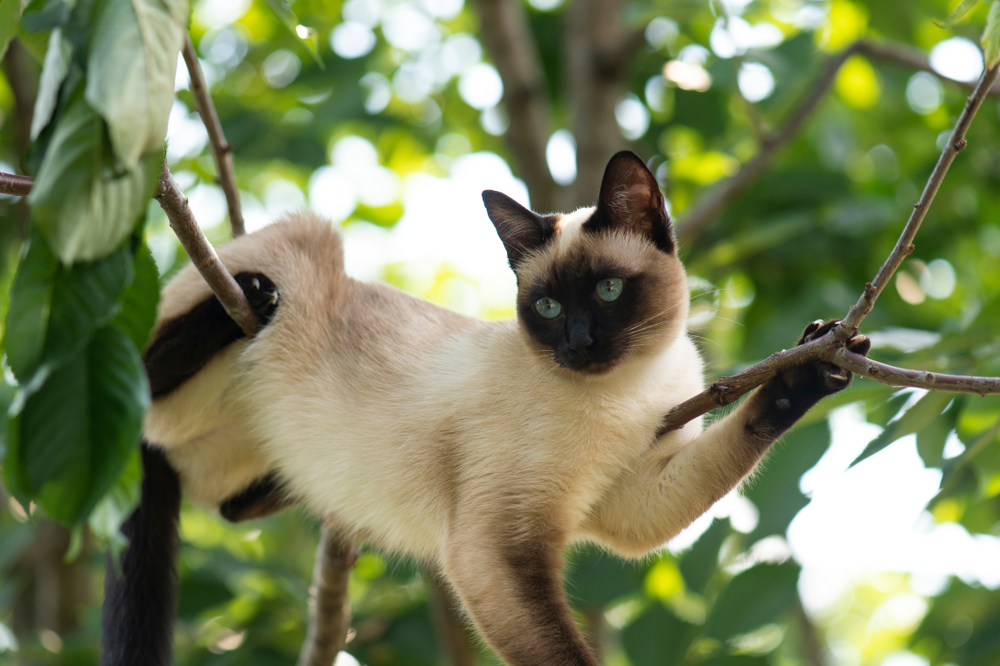
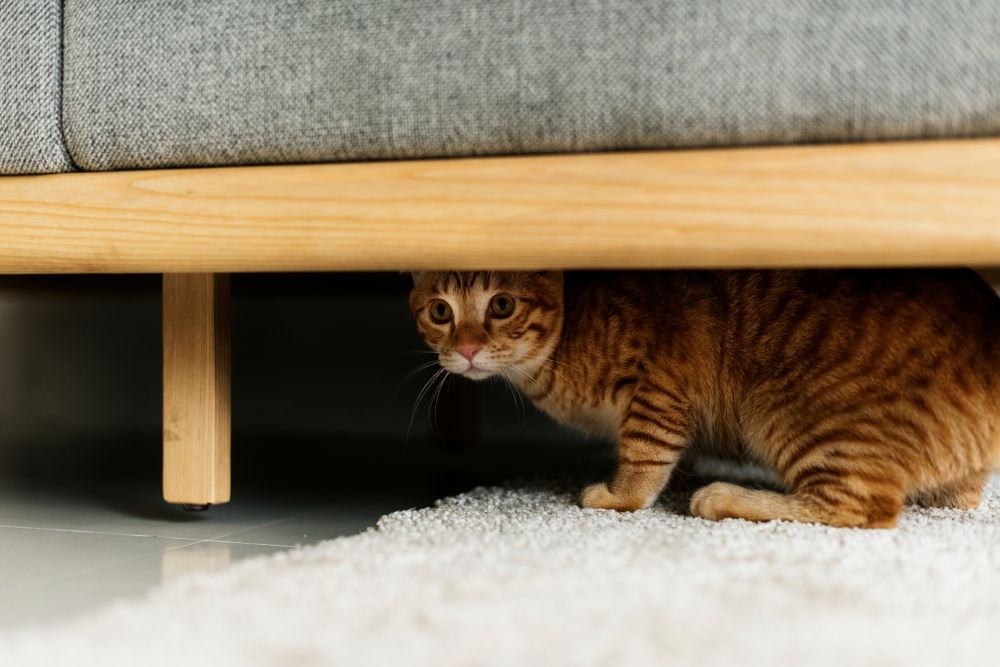
Since cats hide as a defense mechanism, they’re going to seek shelter somewhere safe. For some cats, this could be a high-up perch where they believe they’re out of danger’s reach, such as the top of a bookshelf or a high-up piece of furniture. This allows them to not only escape the potential threat but also keep a close watch on their surroundings.
Not all cats love to climb, though, and not every cat feels safe on high ground. Some cats will simply look for a way to get out of sight. This could mean burrowing into a pile of clothing or hiding in their usual sleeping place. As a general rule, it’s not a good idea to disturb your cat when they’re in one of these “safe” places. If you do, you could make your cat feel even less safe, which is the opposite of what you want.
The 3 Reasons Your Cat Is Hiding
As we’ve mentioned, there are a few main reasons that your cat might be hiding. External factors are often the cause, though sometimes, the problem is actually going on within your cat.
1. Something or Someone Is Making Your Cat Scared
You might not realize it, but something or someone in your home could be frightening your cat and making them feel threatened. It might be that your children are playing very rough, or perhaps a new guest is making your cat feel uneasy. If your cat always seems to hide when a particular person is around, this could be a clue. Or you might find that a certain behavior from you or another family member triggers the hiding. Also, pay attention to the time of day your cat is hiding. If it’s always hiding around the same time, it could be evidence that something is occurring around that time that’s making your cat uncomfortable.

2. They’re Stressed or Anxious About Something in Your Home
The things that bother your cat and cause it stress are not the same things that cause us stress, which can make it difficult to understand things from your cat’s perspective. It’s entirely possible that something in your home is stressing your cat out and causing them to hide. It might be a particular odor that’s irritating them, or they might not be coping well with another pet in the same household, a new baby, or a new home. Unfortunately, there are so many options here that determining the specific cause of your cat’s stress won’t be easy, so asking for professional help is always advisable.
3. Your Cat Is Injured or Ill
Self-preservation is a common reason for cats to hide. If your cat is sick or injured, they might be withdrawing to a place where they feel safe and protected. Your cat could know that there’s something wrong and simply be seeking out a safe place where they can heal away from potential predators.

Solutions to Help Your Cat Stop Hiding
It’s not the end of the world if you find that your cat is hiding. That said, if they are doing it regularly, it could be something that’s reducing your cat’s quality of life. If that’s the case, you’ll want to figure out what the problem is so you can help your furry friend out. Here are three ways that you can try to remedy the situation and improve your cat’s well-being.
1. Make a Cat Hideaway
If your cat is seeking shelter often, you might try giving them a safe space where they can retreat. You can make your own DIY cat tent with just a few basic materials. It’s an inexpensive project that can help your cat feel safer and more at ease. Here’s a video showing you the steps to follow if you want to build your own cat tent.
2. Remove Stressors
If there’s something or someone that’s causing your cat to stress out and hide, then eliminating the stressful thing could be the solution your cat needs. However, this requires first pinpointing exactly what the stressor is, which can prove difficult. Pay attention to the times your cat is hiding and what’s happening around those times for clues. Then, remove the stressor. Hopefully, your cat will respond by ceasing their hiding behavior.
3. Consult the Vet
A vet can help you identify if your cat is hiding because of an illness or injury and can provide you with a solution. It could be an underlying issue that requires diagnosing and treatment. In this case, a vet should be able to offer assistance that will get your cat back to full health and help prevent any future hiding. Furthermore, they can help you interpret your cat’s behavior and determine if they are suffering from stress or anxiety and then create a treatment plan. You may also find speaking to a cat behaviorist to be helpful.
Conclusion
Hiding is a natural behavior for cats to engage in, though sometimes, the underlying reason is something that needs to be addressed as soon as possible. It could be that something in your cat’s environment is making them feel stressed or threatened. At worst, it might be an undiagnosed medical concern, such as illness or injury. Hopefully, after reading this article, you’re armed with the knowledge you need to determine what’s going on with your cat and help alleviate the issue for them.
See Also:
How Do Cats Say Sorry? Cat Communication & Bonding Explained
How Do I Apologize to My Cat in A Way They Understand? 7 Effective Ways
Featured Image Credit: Rawpixel.com, Shutterstock
Expert cat care, straight to your inbox
News, insights, and useful advice, delivered to you.

No spam — unsubscribe anytime.
By signing up, you agree to our Terms & Conditions and Privacy & Cookies Policy.
How useful was this post?
Click a star to rate. You can leave written feedback afterwards. (We read all feedback.)
Christian started writing for a local newspaper as a teenager, and he's been involved in the publishing industry for most of his adult life. Combining his love of writing with a passion for animals, he is currently the Director of Editorial at Pangolia and the Editor-in-Chief at Catster.
Christian lives in the Philippines with his wife, son, and four rescue cats: Trixie, Chloe, Sparky, and Chopper.