


In this article
Ticks can pose all sorts of problems for our pets, whether it just be from the skin irritation caused by the tick itself, the spreading of harmful conditions like Lyme disease, or the deadly paralysis tick. Even if your cat doesn’t venture outside, these problematic parasites can hitchhike their way indoors on our clothing or on our dogs. If you live in an area where ticks and tick-borne illness are prevalent, you will want to provide your cat with a reliable form of tick prevention, and if you have a dog, you might think that it makes sense for them to share their product with your cat. However, tick prevention products for dogs that contain permethrin, such as K9 Advantix, are extremely dangerous for cats.
Read on to learn why this is the case, what to look for if you think your cat may have been exposed to K9 Advantix, and why feline-specific tick prevention is important for our cats.

Why Is K9 Advantix Dangerous for Cats?
K9 Advantix is an effective spot-on tick prevention for dogs that not only rapidly kills ticks and fleas but also repels them and prevents them from attaching to your dog. This is a particularly appealing feature if you live in an area with a high prevalence of tick-borne illness, as it can eliminate the risk of these diseases infecting your dog. The problem with K9 Advantix, and a similar product called Vectra 3D, is the ingredient permethrin.
Permethrin is a synthetic version of the naturally occurring insecticides known as pyrethrins. Pyrethrins can also produce toxic effects in cats (and dogs), but it is permethrin that is most dangerous to cats.
Permethrin works by disrupting the nervous system of fleas and ticks that ingest or come into contact with it. Although dogs can occasionally show mild signs of permethrin toxicity with a normal treatment dose, such as agitation, skin irritation, and muscle fasciculations, the signs are usually short-lived.
Cats lack a specific liver enzyme (glucuronide transferase), which means they are unable to metabolize certain chemical compounds, making drugs like acetaminophen and concentrated pyrethrins deadly.

What Are the Signs of Permethrin Toxicity in Cats?
Clinical signs of toxicity can occur even with very small doses of permethrin. Cats exposed to permethrin will experience a range of clinical signs, most with a neurological basis.
- Tremors or shaking
- Seizures
- Ataxia (unsteady gait)
- Collapse
- Drooling
- Hyperesthesia (increased sensitivity to touch)
- Temporary blindness
- Confusion
- Vomiting
- Diarrhea
Any exposure to substances containing permethrin, such as K9 Advantix, should be treated as an emergency. Do not wait for clinical signs to appear.
The treatment for permethrin toxicity in cats will depend on the severity of the signs but will usually involve thoroughly washing your cat to remove any traces of the product and limit its absorption. Many cats will need to be treated with drugs to stop tremors and seizures, with some requiring anesthesia to control these effects. Lipid infusion is a relatively recently developed treatment that helps absorb the toxin from the bloodstream, significantly improving the speed and success of recovery.
If left untreated, permethrin toxicity is usually fatal, and in severe cases, some cats will die despite treatment.
How Are Cats Exposed to Permethrin?
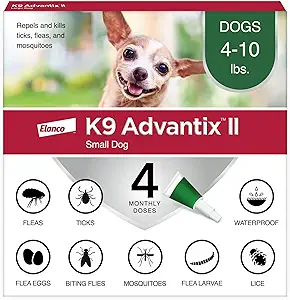
The most common source of permethrin toxicity in cats is from the accidental or misguided application of a product, such as K9 Advantix, and a common reason for this is that the outer packaging of K9 Advantix is very similar to the feline product, Advantage, made by the same company. The tubes inside the boxes are even more similar, making it far too easy to mix them up if you had them both at home.
| K9 Advantix | Advantage |
 |

|

|

|
However, cats can also be affected if they ingest the product through grooming, either by directly grooming or by rubbing up against a dog that has been treated with the topical solution and then grooming.
Toxicity has also been known to occur from contact with the packet that contained the permethrin product, and there is also permethrin-infused clothing used to repel insects, which can also expose cats to the toxic effects. For this reason, we strongly advise that if you share your home with cats and dogs, you choose a tick prevention for your dog that does not contain permethrin.
Which Tick Products Are Safe for Cats?
Fortunately, there are many feline-friendly tick treatments on the market for both cats and dogs. They use a number of ingredients to tackle ticks, including:
- Selamectin (e.g., Revolution Plus)
- Fipronil (e.g., Frontline Plus)
- Fluralaner (e.g., Bravecto)
- Lotilaner (e.g., Credelio)
- Flumethrin (e.g., Seresto)
With the exception of Seresto collars, virtually all tick treatments for cats require the tick to attach and start feeding in order to be effective, which is the one disadvantage they have when compared with permethrin. However, most tick-borne diseases take more than 24 hours to be transmitted, and in most cases, these products will kill the tick before that happens.
The main disadvantage of a collar is that it needs to be kept close to the skin to be effective, which some cats may find uncomfortable, and other cats will manage to Houdini their way out of them.
Products that are safe for cats and dogs can still have harmful side effects if used at incorrect doses or ages, and some individuals can be particularly sensitive to certain chemicals. If you notice any unusual or worrying signs after using a flea and tick treatment on your cat, even at the appropriate dosage, contact your vet immediately for advice.
Humans can also have adverse reactions to some of these chemicals, so it is always recommended that you wear gloves when handling them, just in case.

Why Is Tick Prevention Important for Cats?
Even if your cat never goes outside, ticks can find their way inside. There are a number of diseases and conditions that ticks can cause and spread, some of which can be deadly.
- Lyme disease (rare in cats)
- Tularemia
- Cytauxzoonosis
- Tick paralysis
As with most things, prevention is better than cure when it comes to ticks and tick-borne illness in cats, particularly if you live in areas with a high prevalence of disease transmitted by ticks. Even if you use a tick treatment, it is still a good idea to periodically check your pet for ticks.
Talk to your vet about how common ticks are in your area and what sort of products they recommend to keep your feline safe. Although some feline flea treatments will also cover ticks, there are many that don’t.
If you need to speak with a vet but can't get to one, head over to PangoVet. It's an online service where you can talk to a vet online and get the advice you need for your pet — all at an affordable price!

Final Thoughts
K9 Advantix is for canines only, and if your cat is kind enough to share their home with a dog, the safest option is to choose a flea and tick prevention that does not contain permethrin. The ingredients used to kill and repel fleas and ticks can sometimes have harmful effects on our pets, particularly if they are used at the wrong doses or ingested, so always be careful when using these products.
Always check the label when choosing flea and tick prevention, and don’t hesitate to speak to your vet about what sort of products they recommend.
Featured Image Credit: Susan Santa Maria, Shutterstock





