Is Feline Heart Disease (Saddle Thrombus) Hereditary? Our Vet Explains

In this article
Heart disease in cats is worryingly common in cats, with more than 15% affected worldwide. That’s an alarming 8.8 million cats in the US alone. The vast majority of feline cardiac disease is due to a condition called hypertrophic cardiomyopathy, more commonly known as heart disease caused by the thickening of the heart muscle. The most challenging part of diagnosing and treating this condition is that there are usually no outward signs of disease until a blood clot enters the bloodstream with devastating results.
The other challenge facing vets and cat owners is the large gaps in scientific data on hypertrophic cardiomyopathy (HCM) in cats. In humans, where the prevalence of HCM is approximately 0.2%, over a thousand genomic biomarkers have been identified for the disease, compared to only three genetic markers in cats, whose disease prevalence is 75 times that of humans.
We do know that certain breeds are more predisposed to HCM, most notably the Maine Coon, Birman, British Shorthair, and Sphynx, which strongly suggests that this disease is at least partly hereditary, but more research is needed in this area.

What Is Hypertrophic Cardiomyopathy?
Hypertrophic cardiomyopathy (HCM) is the most common form of heart disease in cats. Less commonly diagnosed conditions include restrictive cardiomyopathy (RCM), arrhythmogenic right ventricular cardiomyopathy (ARVC), left ventricular noncompaction (LVNC), and dilated cardiomyopathy (DCM). DCM is normally associated with taurine deficiency, which, thanks to improved knowledge of feline dietary requirements, is rarely seen anymore.
HCM is the thickening of the muscular wall of the left ventricle of the heart, which is the chamber responsible for pumping around the body. This thickening reduces how much blood can be held in the ventricle per beat, which leads to an increase in heart rate (tachycardia), damage to the heart muscle which may cause arrhythmias, and a build-up of pressure behind the heart which can lead to breathing difficulty from congestive heart failure and the formation of blood clots (thrombus).

What Causes HCM?
Frustratingly, the primary cause of HCM in cats is still unknown, although research has indicated a genetic component to the disease. Other feline conditions, such as hyperthyroidism, chronic kidney disease, and acromegaly, are known to cause secondary thickening of the heart muscle, mirroring HCM, but they are not implicated in cases of primary HCM.
What Are the Clinical Signs of HCM?
The good news is that in the majority of cases, HCM remains subclinical and does not affect the lifespan or quality of life of the cat. The flip side of this is that many cases of HCM go undiagnosed, making it difficult to expand our understanding of the disease.
The other problem with the insidious nature of HCM is that many cases are not diagnosed until they present with life-threatening signs. Aortic thromboembolism (ATE) occurs when a blood clot breaks away from inside the ventricle and lodges in an artery, by which point the prognosis is usually poor.
The presenting signs of ATE will depend on what part of the body is being affected by the clot. A clot may obstruct blood flow to one of the forelimbs, resulting in pain, weakness, or paralysis of the limb. More commonly, cats will present with signs of a saddle thrombus.
If your pet is showing these signs, we suggest you speak to a vet.
What Is a Saddle Thrombus?
The most common clinical presentation of HCM in cats is due to aortic thromboembolism (ATE). Unlike in humans, cats rarely suffer from ischemic strokes, which are the result of blockages in the blood vessels to the brain. By far, the most common place for thromboembolism to occur is where the descending aorta branches into the right and left femoral arteries; this is often referred to as a saddle thrombus, after the shape of the aortic bifurcation. This restricts or stops blood flow to the hind limbs, resulting in painful weakness or paralysis of one or both hind legs, and the affected limb/s may feel cold.
Emergency treatment of ATE has often included the use of oxygen therapy, pain relief, and anticoagulant drugs, such as heparin or aspirin. In some cases, surgical removal of the clot has been attempted but is not recommended. Sadly, treatment of ATE has a high failure rate, and even if successful, tissue damage and reperfusion injury are often severe, and further thromboembolisms usually occur within a short time period.
In humans, ischemic stroke is usually treated with a thrombolytic known as a tissue plasminogen activator (TPA). Unfortunately, studies1,2 have shown that the use of this drug does not appear to be effective against feline ATE. The majority of cats with ATE are euthanized, either at the time of first admission for the condition or due to subsequent complications or repeat episodes.

How Is HCM Diagnosed?
As we mentioned earlier, most cats with HCM do not show any clinical signs of disease; they live perfectly normal lives. Diagnosis of HCM and ATE are usually based on the presenting signs (pain, poor perfusion, paralysis, tachycardia, arrhythmias).
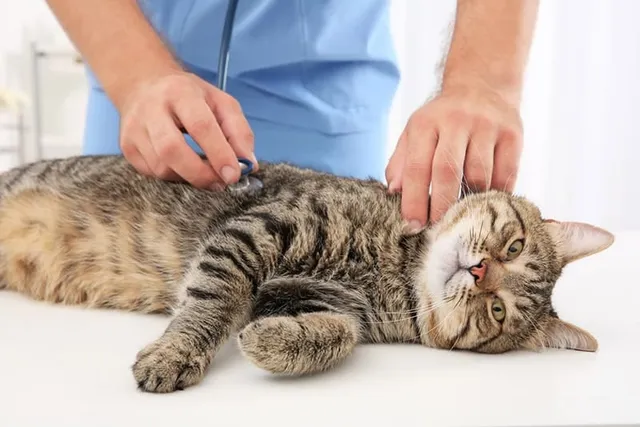
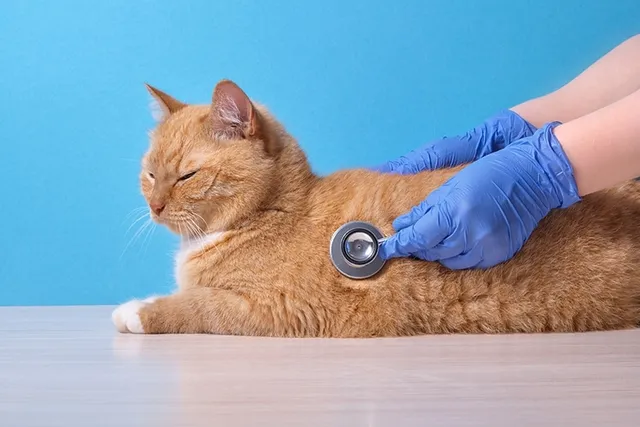
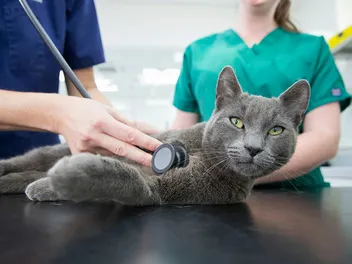
Some cats with subclinical HCM have a heart murmur or arrhythmia, sometimes both. Not all feline heart murmurs are a sign of cardiomyopathy. Around 16% are due to a benign condition known as dynamic right ventricular outflow tract obstruction (DRVOTO). The only way to accurately diagnose a heart condition is through echocardiography. Other diagnostic tests include electrocardiography (ECG), which measures the electrical activity in your cat’s heart, and a blood test for a hormone that indicates heart muscle stress (NT-proBNP).
How Is HCM Treated?
Unfortunately, there is no specific treatment for HCM itself, but there are medications that can manage blood pressure and reduce the risks of blood clot formation, as well as treat related diseases, such as hyperthyroidism and chronic kidney disease.
Cats diagnosed with HCM are often started on an antiplatelet medication called Clopidogrel to reduce the risk of thrombus formation. They may also be treated with drugs to reduce blood pressure and improve cardiac function.

Is HCM Hereditary?
Because there is very little scientific data about the genetics of HCM, it is impossible to say how heritable this condition is, but we do know that certain breeds appear to be more susceptible to the condition. It has been estimated that approximately 30% of Maine Coons carry at least one of the genes responsible for HCM, which strongly indicates that there is a genetic link.
The same gene has also been found in the Ragdoll. Other breeds that have been identified as being more predisposed include the Birman, British Shorthair, Sphynx, and Persian. However, cases of HCM and ATE are also seen in the humble Domestic Shorthair, so this is not just a purebred problem.
Based on what we do know about HCM and feline ATE, we recommend a cardiac work-up of any cats related to individuals diagnosed with HCM. Genetic testing can help to identify cats that carry genes for HCM, but as we know, only three of these have currently been isolated.
Can HCM Be Prevented?
There are limited steps you can take as an owner to prevent HCM, but there are a few things you can do to reduce the risks for your current and future cats.
- Regular Vet Checkups: Annual or biannual health checks with your vet is the number one thing you can do as an owner to help identify and diagnose health conditions before they become a problem. HCM can affect any cat of any breed over the age of 3 months, and a heart murmur is something only your vet can diagnose. If you have a cat that is at a higher risk for HCM, having a check-up twice yearly is a small price to pay for peace of mind.
- Genetic Screening: The genetic tests for HCM vary, so make sure your vet uses a laboratory that is able to check all three markers. If you are looking to adopt a kitten from a breeder of any of the breeds mentioned above, make sure that they test all their cats.
- Annual Blood Tests for Senior Cats: Including blood pressure monitoring, yearly blood tests for cats over 10 years old are recommended to monitor thyroid and kidney function, hypertension (high blood pressure), and any other conditions that may affect the health of your older pet.
Final Thoughts
Aortic thromboembolism is a devastating consequence of hypertrophic cardiomyopathy, a common feline heart condition. Unfortunately, there is a great need for further research into this condition for us to fully understand the causes and predisposing factors of HCM more fully. We do know that there is a genetic component to how HCM develops and that cats of certain breeds are more likely to be affected.
Genetic screening of breeds that have been identified as being predisposed to HCM is advised, and cats related to individuals diagnosed with HCM should undergo investigation for cardiac disease.
Early diagnosis of HCM is vital for the prevention of the condition known as saddle thrombus, so regular health tests are highly recommended. It might feel extreme to take your healthy cat to a cardiologist, but it could save their life.
Sources
Featured Image Credit: Andrey Kuzman, Shutterstock
Expert cat care, straight to your inbox
News, insights, and useful advice, delivered to you.

No spam — unsubscribe anytime.
By signing up, you agree to our Terms & Conditions and Privacy & Cookies Policy.
How useful was this post?
Click a star to rate. You can leave written feedback afterwards. (We read all feedback.)
Dr. Karyn Kanowski BVSc MRCVS (Veterinarian)
Dr. Karyn comes from Queensland, Australia, and has lived in the UK for the past 10 years. In 2010, she graduated from The University of Queensland School of Veterinary Science and also has a Bachelor’s degree in Zoology. She is passionate about using evidence, experience, and owner collaboration to provide the best solutions for pets, and believes in making reliable information about animal health accessible to all. Dr. Karyn shares her home with five cats, four dogs, and one husband. When she is not in the scrubs, she spends her time writing, gardening, and cleaning up pet hair!