How to Get an Older Cat to Accept a Kitten: 7 Vet-Approved Steps


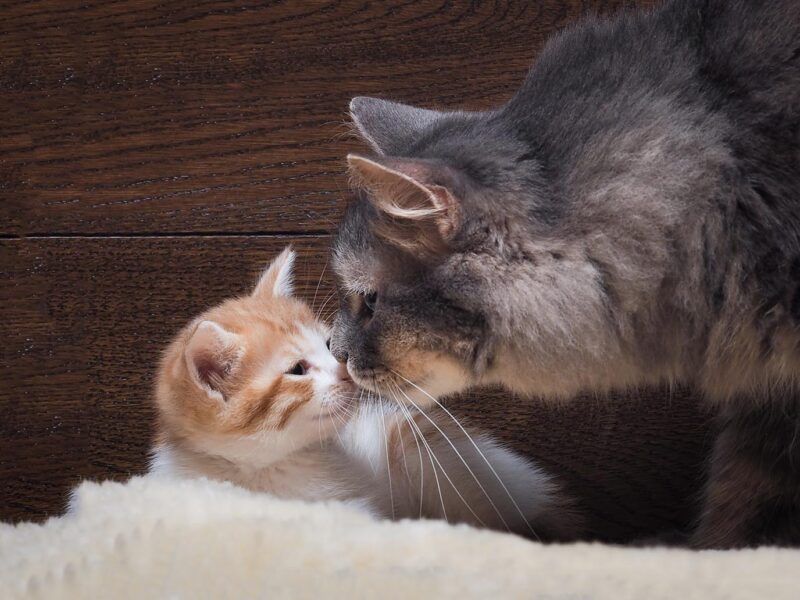
Adding a new kitten to your family can be a fun time, but what if you already have an adult cat at home? When introducing a new kitten to your established feline friend, you want to make their health and safety the priority. Cats are social creatures and often enjoy having a friend or two to share their life within your home.
Introductions of new kittens to your older cat can be tricky. It can be tempting to introduce the cats to one another quickly, but waiting for the right time will save you lots of grief. Older cats do not like change, and having a new kitten in the home is definitely a significant change. Your older cat may hiss, become reclusive, and act unfriendly towards the new kitten.
The change in the household is causing stress for the older cat. If you take proper steps to prepare, you can help ease this stressful time for your older cat and make it a more pleasant experience. Patience is critical when introducing a new kitten to your older cat.
So, what should you do to help introduce your new kitten to your adult cat?

How to Get an Older Cat to Accept a Kitten in 6 Steps
1. Quarantine Your Kitten

If you have rescued a kitten from outdoors or from someone unaffiliated with a shelter or recognized animal rescue, you should quarantine the kitten for a minimum of 2 weeks. Kittens can carry infectious diseases that can be contagious. Taking 2 weeks to quarantine will allow you to monitor for potential signs and keep your older cat safe while doing so. A move to a new house is also stressful for kittens, and they may end up sick shortly after a move. If they are in close contact with your other cat, your adult cat may also become sick.
Just because your kitten appears healthy, it does not mean they are not carrying a disease that could infect your older cat. You should monitor them closely, observe if they are going to the bathroom normally, and that their stools are solid and not watery. Look to see if their skin is healthy and ensure they do not have ringworm or flea infestation. A good idea is to take the kitten to a vet for a complete health check-up before you begin their quarantine and after the quarantine period ends.
If you have adopted or bought your kitten from a shelter or breeder it is still a good idea to quarantine to allow them time to get used to their new space. Throwing the two together immediately will be stressful for both and will usually not provide a good outcome. This will also allow the cats to smell each other’s scents through the doors of the different rooms they are kept in. They can slowly acclimate to the other’s scents this way.
Speaking of scents…
2. Mingle Your Cats’ Scents & Provide Pheromones

Before introducing the cats face to face, you should allow them to become familiar with each other’s scent. You can do this by swapping out blankets or toys from cat to cat. You can also do it by switching the locations of the cats. For example, if your older cat has had free range of the house, and your new kitten has been confined to your bedroom, allow the kitten free range of the house and place your older cat in your bedroom temporarily.
This will allow them to get used to each other’s scent in a stress-free environment. To help make the environment even more stress-free, consider using pheromones. You can buy wipes, sprays, and diffusers that provide pheromones to help both cats feel less stressed. These products mimic a cat’s natural pheromones and help create a calming environment.
3. Make Your Home Cat-Friendly

Make your home cat-friendly with toys, cat trees, shelves, and other cat-related items. If your cat can access your home vertically with cat trees or shelves, they can remove themselves from the situation if they find it stressful. This can help your older cat adjust to the new kitten by being in their own separate space.
Another great way to help your new cat and your older cat get along is by having separate litter boxes for each cat and separate eating areas. This will help stop territorial behavior and improve the two cats' relationship.
4. Feed Your Cats Separately
Cats don’t have much of a social component when it comes to eating, and some cats become very possessive of their meals. Expecting your cats to share a food bowl will most likely result in your older cat taking an angry hiss or swipe at your kitten.
Furthermore, the nutritional requirements of kittens aren’t the same as those of an adult cat. Though “all life stage” foods can be used for both individuals, their portions would still be different. Therefore, it’s best to feed your cats separately. This also allows you to keep a close eye on their eating habits; remember that a sudden aversion to food is a sign that your cat might be stressed.
5. Give Visual Access

Your cats should now be ready to lay eyes on each other! For this critical step in the introduction process, use a baby gate, pet gate, carrier, or screen door to allow your cats to see one another.
The choice on figuring out which cat is “in” the restricted area and which cat has free access to inspect the other at their own pace depends on their personalities. If your adult cat is very skittish, it might be best to place a curious kitten in a confined area so that your adult cat may inspect them at their own discretion.
However, if you have an adult cat that seems to not appreciate your kitten’s presence, you might want to place them in the confined space to ensure that they don’t lash out at your kitten.
6. Allow Physical Introductions

If your cats seem relatively satisfied with each other through a barrier, you can attempt a physical introduction. It is very important to supervise this step and keep a very close eye on your pets. It is normal for your adult to perhaps seem confused and even try to run away from the kitten at first, but most cats quickly get over this fear. Alternatively, they may take an interest in the kitten and smell them up close.
Keep an eye out for signs that your adult cat is not appreciative of the interaction
Signs That Your Cat Is Uncomfortable During an Interaction With Another Cat
Kittens are often somewhat oblivious to these cues and may attempt to chase and play with the adult. If your older cat seems to not appreciate the moment, it’s best to intervene quickly.
Initial interactions should be somewhat limited, depending on your cats’ personalities. Over time, if they seem to enjoy each other’s presence, they can be allowed to mingle for longer periods of time until separation is no longer necessary.
Important
7. Provide Adequate Attention to Both Cats

If things go as planned, before long, your two cats will be able to coexist peacefully. Though cats can definitely benefit from the presence of another cat whose company they enjoy, it’s important to keep in mind that there’s no substitute for you. You still need to ensure that you offer your cats plenty of attention, interaction, play, and cuddles. Ensure you stay on top of keeping up your cats’ veterinary needs, nutritional needs, and any other necessities.
Final Thoughts
A rushed introduction of a kitten to your home can be a very daunting experience for your adult cat. With patience and careful planning though, your cats can usually acclimate to one another and tolerate each other. Don’t be discouraged if your cats don’t become instant friends. Over time, the cats can become closer and will improve their relationship.
However, if you feel like they don’t seem to appreciate each other’s company, it’s best to seek out help from a veterinarian or a cat behavior specialist.
See Also:
Featured Image Credit: Irina Kozorog, Shutterstock
Expert cat care, straight to your inbox
News, insights, and useful advice, delivered to you.

No spam — unsubscribe anytime.
By signing up, you agree to our Terms & Conditions and Privacy & Cookies Policy.
How useful was this post?
Click a star to rate. You can leave written feedback afterwards. (We read all feedback.)
Christian started writing for a local newspaper as a teenager, and he's been involved in the publishing industry for most of his adult life. Combining his love of writing with a passion for animals, he is currently the Director of Editorial at Pangolia and the Editor-in-Chief at Catster.
Christian lives in the Philippines with his wife, son, and four rescue cats: Trixie, Chloe, Sparky, and Chopper.