Do Cats Cough up Hairballs? Vet Reviewed Myth vs. Fact


In this article
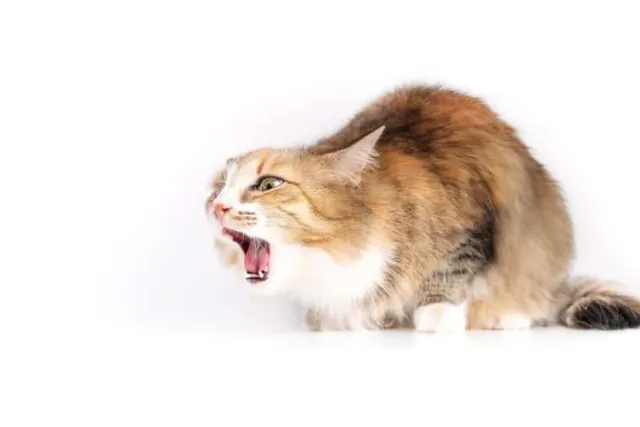
Cat owners are fully aware of how much time cats spend grooming themselves and even other cats in the home. And there’s nothing more unpleasant than stepping barefoot on a hairball that’s splattered on the floor in the middle of the night. So, why do cats cough up hairballs in the first place? To correctly answer this question, cats do not “cough up” hairballs but rather vomit them up, and there's a difference (which we’ll explain later).
When cats groom, they swallow hair, and if your cat swallows enough of it, the hair can form into hairballs in the gastrointestinal tract, which will come up by way of vomiting if not passed through the digestive tract normally.
While it’s perfectly natural for your cat to vomit a hairball here and there, this should not be a frequent event. Let’s explore the topic of cat hairballs and learn the myths and facts surrounding them.

The Anatomy of a Cat’s Tongue
Before we get started, let’s learn about the anatomy of a cat’s tongue. The cat’s tongue is unique because it is covered with hundreds of backward slanted projections, known as filiform papillae, which are tiny white keratin protein spines. By the way, keratin is the same matter that makes up a cat’s claws and even human fingernails.
These hook-like, backward-facing papillae make the tongue feel like sandpaper and serve many functions for cats, such as scraping every bit of meat from its prey’s bones, grooming, and are even important in drinking.

Hairball Facts
1. All Cats (Even Hairless Cats) Can Get Hairballs
Yes, all cats can get hairballs, even hairless cats, such as the Sphynx. But how in the world can a hairless cat get hairballs? A hairless cat can get them from grooming other cats in the home. Even if your hairless cat is the sole cat in the home, they can still get hairballs from eating off the ground and swallowing human hair. However, it is less likely for a hairless cat to get hairballs, especially if they are the only cat. But bear in mind that if you have other cats, your hairless kitty can develop them too.
2. Fur Is Not Digestible
The main structural component of hair is keratin; a tough, insoluble protein that is not fully digestible by the gastro-intestinal tract. Keratin cannot be easily broken down by enzymes and acids in the GI tract, so most hair will pass straight through the stomach and come out into the litter box unchanged. However, sometimes, hair starts to form clumps within the stomach. These clumps, famously known as hairballs, have a scientific and medical term: trichobezoars. The word “trich” means hair, and the word “bezoars” refers to a tightly packed collection of partially digested or undigested material that most commonly occurs in the stomach.
Hairballs Are Normal—To a Point
All cats will develop hairballs here and there, and you may see them more during the shedding seasons in the fall and spring. Still, hairballs should not be considered a “normal” routine. There’s typically no need for concern if your cat vomits a hairball once every few weeks or so. But some cat owners may ignore their cat vomiting frequently because they think it is “just a hairball” when, in fact, there might be something else going on.
If your cat is vomiting frequently, especially if no hairball is expelled, it’s imperative to take your cat in for an exam, as a different medical condition may need addressing. Other medical conditions that may be to blame for frequent vomiting include pancreatitis, kidney disease, hyperthyroidism, food allergens, or even a blockage that can be life-threatening.

Hairball Myths
1. Cats “Cough Up” Hairballs
As mentioned, a popular myth is that hairballs cause a cat to “cough.” In actuality, hairballs do not cause coughing in a cat, and if your cat is coughing, it could be a sign of a medical condition that needs addressing. While vomiting, retching, and coughing have similar sounds, they are different actions.
It’s easy to see why people think their cat is coughing up hairballs, but in fact it is a vomit they are witnessing. The key difference is that coughing in cats is an effort to expel foreign objects or inflammatory excretions from the respiratory system, whereas vomiting is expelling contents from the stomach. Common causes of coughing in cats are:
- Asthma
- Allergies
- Respiratory infections
- Pneumonia
- Inhaled foreign object

2. Hairballs Are Shaped into “Balls”
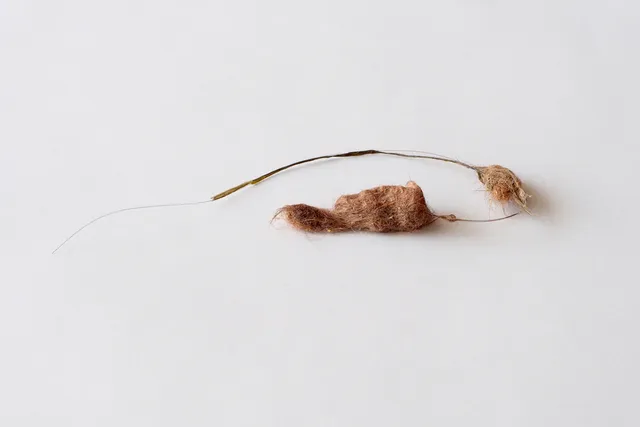
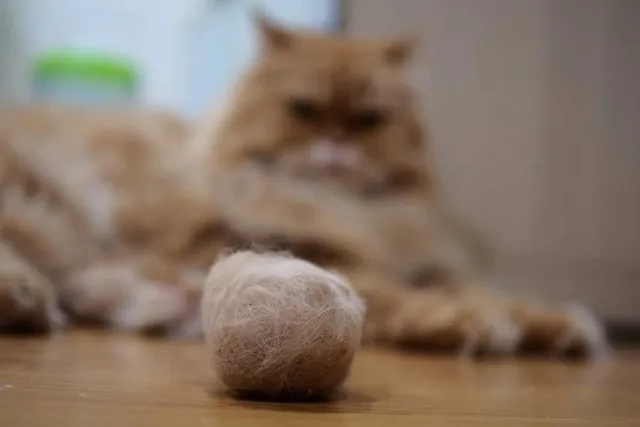
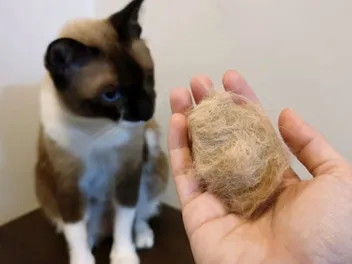
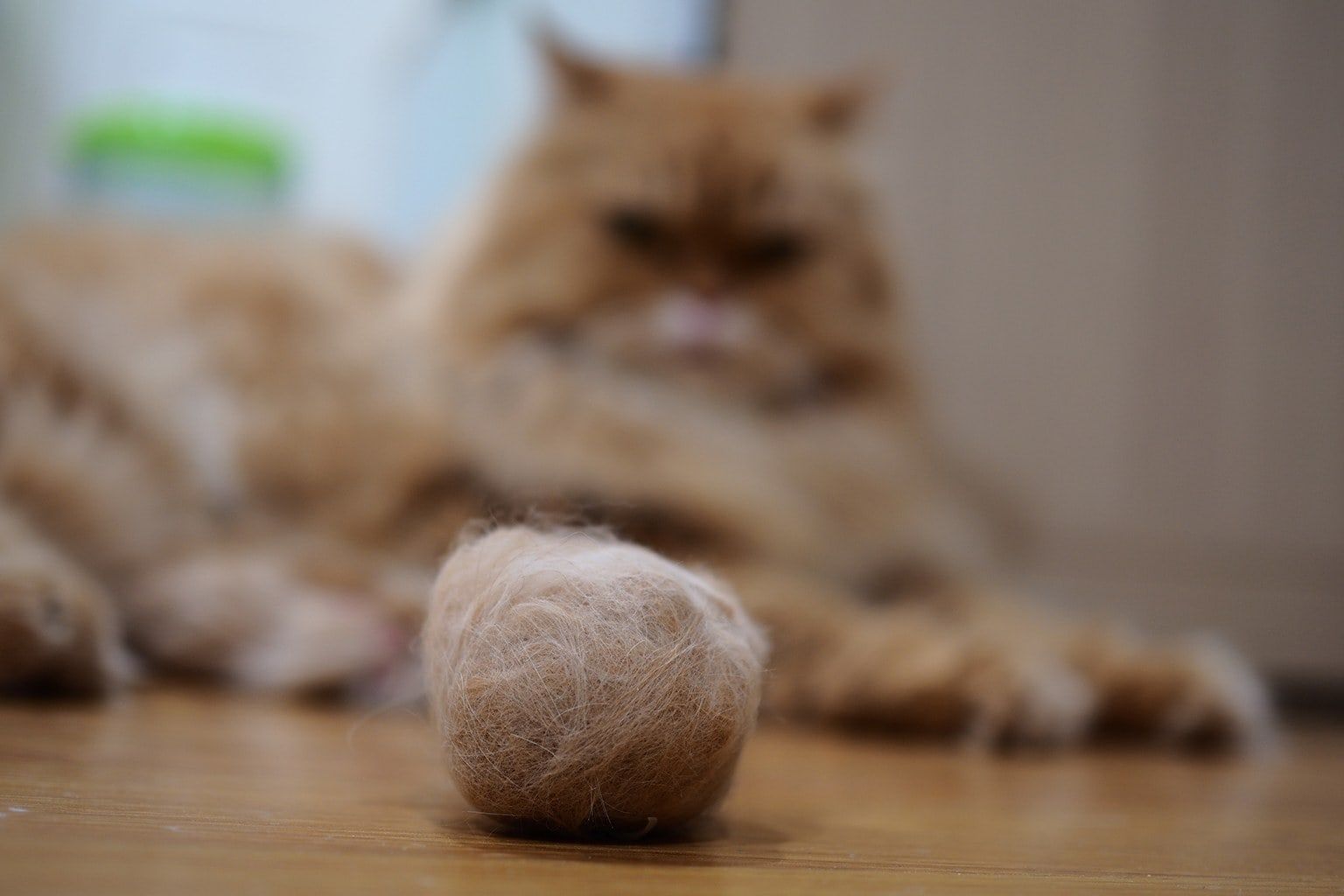
A hairball is a “ball,” right? Wrong. In actuality, hairballs are not shaped into the form of a ball. Instead, they are generally tubular in shape and are dense and long because they are expelled from the esophagus, which is essentially a long tube. However, if a hairball stays in the stomach, it will form a round shape. When a hairball is expelled, it will be roughly 1 inch long but can be as long as 5 inches in length.
3. Short-Haired Cats Cannot Get Hairballs
Contrary to popular belief, hairballs form from the amount of hair in the GI tract, not the length. If your short-haired cat grooms excessively, they could absolutely (and will) get hairballs here and there. However, long haired cats do have more hair than short haired cats so are more prone to hairballs.

4. Hairballs Are Nothing to Worry About
The occasional hairball is no need for concern. However, if your cat cannot expel a hairball, it can get lodged in the digestive tract, creating a blockage. This is where the concern comes in. Normally, a hairball that moves through the digestive tract will pass and exit through your cat’s stool, but when the hair sits in the digestive tract, it can get tangled up into large clumps that the cat cannot pass successfully.
Long-haired cats or cats who shed or overgroom tend to swallow more hair, resulting in the hair getting tangled. A healthy cat's digestive system will likely pass the hairball normally, but if a cat has a disease or some other issue affecting the digestive tract, like pancreatitis, inflammatory bowel disease, parasites, food allergies, or even GI cancer, hairballs will become problematic.
How Can I Prevent Hairballs?
One way to prevent them is to regularly groom (brush) your cat to remove as much dead and loose hair as possible, especially if you have a long-haired cat. If you have trouble brushing your cat, you may need to hire a professional groomer regularly for the job.
You can also put your cat on a diet designed for hairball control; however, we suggest consulting a veterinarian before changing your cat’s regular diet. Plus, if your cat is expelling hairballs often or is retching, vomiting, and coughing more often than not, a trip to the vet is warranted for an examination.
Another way to prevent hairballs is to add more fiber to your cat’s diet to keep the GI tract running smoothly. However, it’s imperative to consult a vet before adding fiber to your cat’s diet to avoid unwanted side effects like diarrhea.
Lastly, ensure your cat is properly hydrated. Cats can be finicky when it comes to drinking water, and providing your cat with a water fountain that attracts their attention may be in order, or you may consider feeding wet food, as it contains more moisture content.
Final Thoughts
Cats who expel a hairball once every 2 weeks or so typically do not need veterinary intervention, and you can implement the above ways to prevent them. Keep in mind, though, that long-haired cats may produce hairballs more frequently because they swallow more hair. However, if your cat is coughing, vomiting bile or brownish liquids, and retching often, a vet will need to examine your cat to determine the cause.
Your cat could also be overgrooming, which can cause more frequent hairballs to form. In that case, a vet can examine your cat to determine the cause of overgrooming.
Sources
https://www.petmd.com/cat/general-health/five-facts-about-cat-tongues
https://www.vetstreet.com/our-pet-experts/my-cat-keeps-coughing-up-hairballs-should-i-be-worried
https://www.eastsacvet.com/blog/coughing-cat-hairball-or-more/
https://www.webmd.com/pets/cats/what-to-do-about-hairballs-in-cats
https://www.petmd.com/cat/general-health/cat-hairballs-101-how-help
https://www.hillspet.com/cat-care/healthcare/why-hairballs-in-cats?lightboxfired=true#
Featured Image Credit: Montakan, Wannasri, Shutterstock
Expert cat care, straight to your inbox
News, insights, and useful advice, delivered to you.

No spam — unsubscribe anytime.
By signing up, you agree to our Terms & Conditions and Privacy & Cookies Policy.
How useful was this post?
Click a star to rate. You can leave written feedback afterwards. (We read all feedback.)
Rachel Giordano is a Pensacola, Florida-based musician and writer. She lives with her partner and their two dogs, Sophie, a Boston Terrier, and Aero, a Border Collie/Sheltie mix. Rachel holds a Bachelor of Arts degree in communication and loves writing about all types of cat breeds. When she’s not writing about cats, she loves to write suspense/thriller novels. A musician by night and writer by day, she enjoys sharing her knowledge of the needs and requirements of our furry friends.