8 Common Household Items That Scare Cats

In this article
It can take some time for cats to adjust to living in a new home. Along with getting used to a new environment, cats have to ensure that their living spaces are clear of any potential threats. In general, cats don’t like particularly large things or items that create loud noises. Therefore, they can get scared by many common household items, like vacuum cleaners and hair dryers.
Being aware of certain items that can scare your cat can help you to make your cat feel more comfortable and safer in your home. Here are some common household items that may be scary for your cat.

The 8 Common Household Items That Scare Cats
1. Vacuum Cleaner

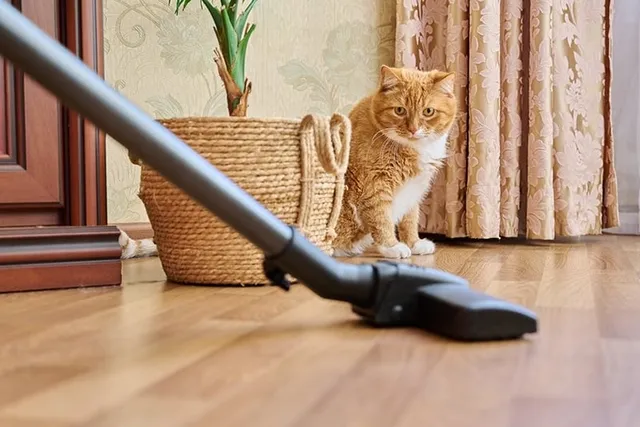
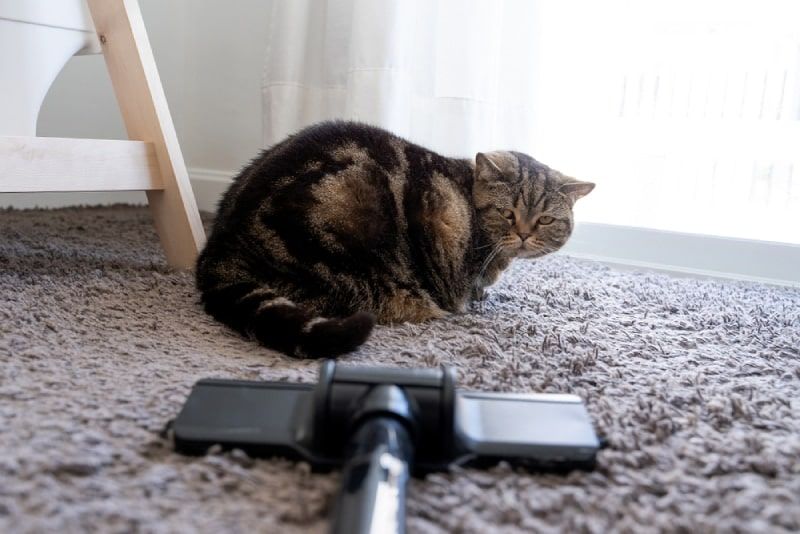
Cats have extremely sensitive ears, so it’s no surprise that they won’t like something as loud as a vacuum cleaner. Not only are vacuum cleaners loud, but they can also be quite large, and some also have lights that may turn on, which can be very startling for some cats.
Cats may also not like automatic vacuum cleaners because it can feel like they’re being chased by a strange object. They won’t be able to tell when the vacuum cleaner will turn on, and the uncertainty can make them feel even more scared around it.
2. Speakers
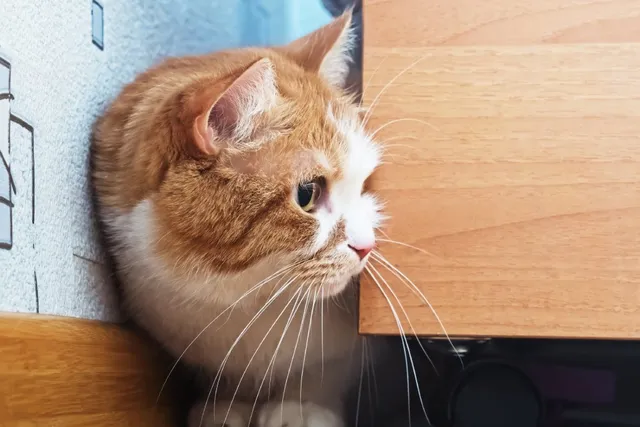
Speakers may also cause cats to get scared because they can emit loud noises. Similar to vacuum cleaners, your cat won’t be able to predict when a speaker turns on. So, it can be especially scary for them, especially if your cat has a particular aversion to loud noises.
In addition to the loud noise level, speakers can emit vibrations that can feel unsettling for cats. With that being said, it’s not surprising for cats to hide or run to a different room once you play music through your speakers.
3. Blender
Even humans don’t enjoy the sound of a kitchen blender. A cat’s ears are much more sensitive than a human’s ears, so turning on the blender can be a much more unpleasant experience for them. Blenders are both loud and don’t emit a pleasant sound, and many cats will avoid being in the kitchen whenever the blender is turned on.
4. Balloons

Cats may enjoy playing with a balloon. However, they’ll get spooked once they sink their claws into a balloon and pop it. The loud noise will be unexpected and startling, and cats will also be confused about where the balloon went. It’s common for cats to avoid all balloons that they encounter in the future if they’ve experienced a balloon popping near them.
5. Hair Dryer
The hair dryer is another common household appliance that scares many cats. It’s loud and also emits hot wind that can feel very unpleasant for cats. Many people also usually blow dry their hair when they’re about to leave the house. Therefore, along with being loud and bothersome, hair dryers can also signal to cats that you’re about to leave. Cats with separation anxiety may feel additional fear towards hair dryers because they signify that their owners are about to go out and leave them home alone.
6. Tea Kettle
Stovetop tea kettles can scare some cats because of the high-pitched whistles they emit when the water’s boiling. Your cat can also develop an aversion to tea kettles if they’ve actually touched one while it was filled with hot water. The heat can become a painful surprise to them, and they may learn just to avoid tea kettles altogether.
7. Television

Televisions can be quite puzzling to cats. They emit all kinds of noises, flashing lights, and images. Cats may feel that they turn on randomly or without warning, and this unpredictability can cause some cats to feel scared. Televisions are also much larger than cats, so just the size alone can be intimidating to some cats.
8. New Items
Cats are very aware of their surroundings and are experts at noticing subtle changes throughout the home. Some cats can be more cautious by nature, so they can become scared of anything new that you bring into the home. Whether it’s new furniture, kitchen appliances, or even cat beds, cats can just feel wary of anything new and unfamiliar. Fortunately, most cats get over their fear after a few days when they realize that the new item doesn’t pose any threat to them.
How to Get Cats Comfortable With Household Items

In many cases, cats will get used to certain household items, or they just leave the room whenever you turn on a household appliance. So, you may not have to intervene or do anything extra to help your cat feel less afraid of certain common household items. However, if you want your cat to feel a little more comfortable around these items, you can try a few things.
First, you can try rubbing a soft, clean cloth on your cat’s cheeks and then wiping it across the item. This will spread your cat’s scent on the item and may encourage cats to get closer to it. It’s also helpful to allow your cat to explore vacuum cleaners, hair dryers, and other electrical appliances before turning them on. You can help them feel more comfortable by praising your cat and giving them treats whenever they get closer to the appliance. Taking the extra time to let your cat check out appliances on their own terms will make it more likely for your cat to build a positive association with the appliance and feel less scared.
Conclusion
Cats generally don’t like objects that emit loud or high-pitched sounds. Some may learn to get used to them on their own, but many will still feel afraid of them. Therefore, it’s important to help your cat slowly adjust to new household items through gentle and incremental exposure. It’s also helpful to provide hiding spaces for your cat to let them feel safe. Making these adjustments can help immensely with reducing fear and anxiety for cats while you use common household items.
Featured Image Credit: one photo, Shutterstock
Expert cat care, straight to your inbox
News, insights, and useful advice, delivered to you.

No spam — unsubscribe anytime.
By signing up, you agree to our Terms & Conditions and Privacy & Cookies Policy.
How useful was this post?
Click a star to rate. You can leave written feedback afterwards. (We read all feedback.)
Jessica is a freelance writer who spends most of her day researching and writing while her fluffy Cavapoo, Nora, naps beside her. She loves and appreciates pets and animals because there’s so much to learn from them, and they do so much for people. As a dog owner, she understands the special connection that pet owners form with their pets. She loves sharing helpful information that people can use to better understand their pets. When she’s not writing, you can find her walking dogs, tending to her plant babies, or drinking her nth cup of coffee.