Cat Coat Genetics: Vet-Approved Facts & FAQ

In this article
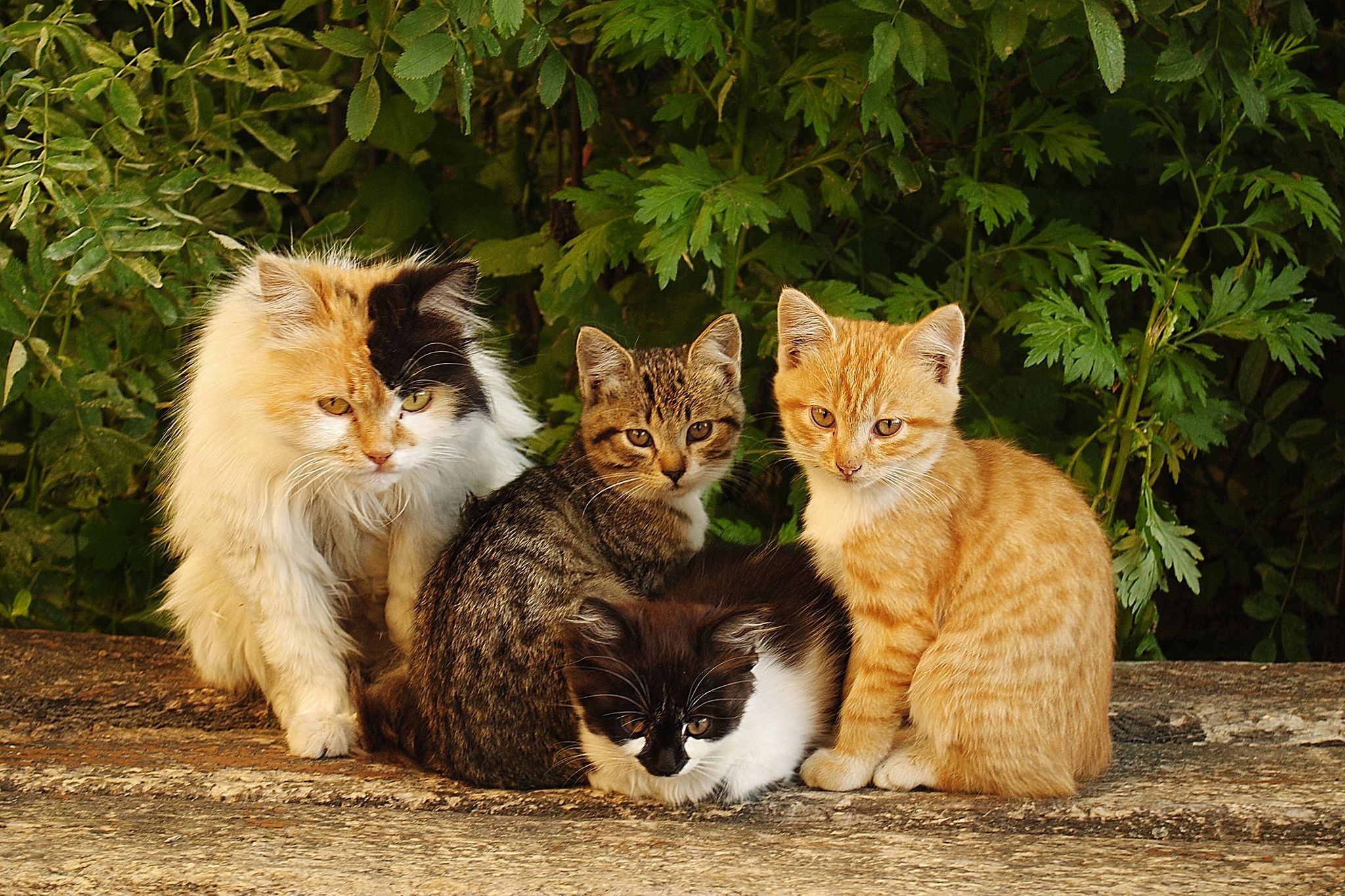
Have you ever wondered how your cat ended up with the coat color that they did? Maybe you know that your cat had a black parent and a white parent but ended up with a brown tabby. How does this happen? What genetic factors determine the color and type of coat your cat has? What determines the types of markings (or lack thereof) your cat has?
The short answer is that your cat’s coat color, pattern, and length are all determined by the genes they inherit from their parents. In reality, it’s quite complicated. But we’ll try to break it down for you. Let’s take a closer look at feline fur and the many genetic components that make every cat unique.

What Determines a Cat’s Coat Color?

We tend to describe cat coat colors with terms such as black, white, ginger, cream, blue, gray, brown, orange, lilac, etc, but there are actually only a few base colors that make up the myriad patterns and hues we see displayed on their fur. It all starts with the KIT gene.
The KIT gene determines the distribution and expression of melanocytes; the cells responsible for producing pigment in the fur, skin, and eyes. Variations at different parts (called a locus) on the KIT gene are what give rise to the different colors and patterns in the feline coat.

A crash course in genetics
This is very much an oversimplification of chromosomal structure and inheritance, but it gives us an idea of how different traits are inherited. DNA (deoxyribonucleic acid) is like the blueprint for every feature, function, and cell in the body. The billions of strands of DNA are coiled into organized units called chromosomes, which code for different traits. Chromosomes are inherited in pairs—one from the mother and one from the father. Cats have 38 chromosomes in total, including 18 pairs and the 2 sex chromosomes (XX for female, XY for male). Each of these chromosomes contains hundreds to thousands of genes that code for particular traits.
In cats, chromosome B1 contains the majority of genes that code for physical appearance like colors and fur type, including the KIT gene. Different traits are determined by the alleles at a specific locus within this gene.
The exception is Locus O (orange), which is found only on the X chromosome. Since male cats only have one X chromosome, it means that orange male kittens get their coat color genes from their mother.

The Genetics of Cat Colors
Cats have two primary pigments: eumelanin (responsible for black or brown colors), and pheomelanin (which produces red and yellow hues). When we look at the genetics behind coat color variations, each trait is defined by two letters that represent the form of the gene (alleles) from each parent. These determine what pattern and pigment their offspring will be. The dominant allele has a capital letter, while the recessive allele is shown in lowercase.
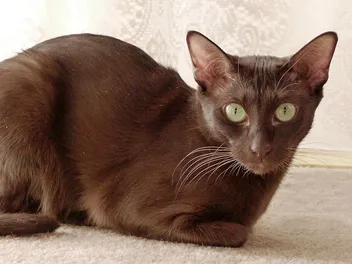
Brown (B/b/b’): Determines eumelanin production. Cats with the dominant B allele will have black fur, while cats that inherit a double copy of the recessive b or b’ alleles will usually have chocolate (b/b or b/b’) or cinnamon (b’/b’) fur.
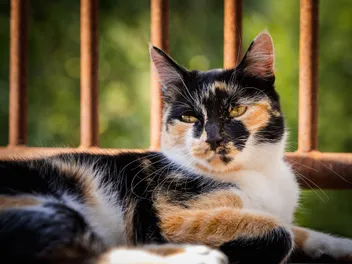
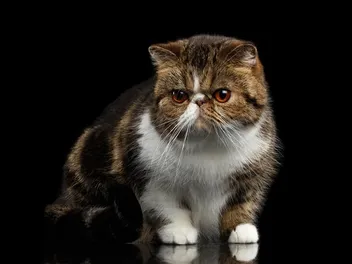
Orange (O): Located on the X (female) chromosome, which means that male (XY) cats can either be orange or not, while females (XX) can be orange, non-orange, or a mix (tortoiseshell). This is a trait unique to cats and means that with the exception of rare chromosomal abnormalities, all tortoiseshell cats are inherently female.
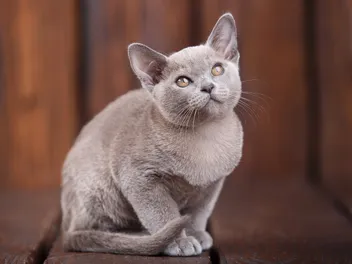
Dilution (D) gene: this affects the intensity or shade of a color. Cats with the D (dominant) allele have the protein melanophilin, which is what deposits pigment into the fur, resulting in full-intensity color. The recessive allele (d) results in the lightening of the color, turning black into gray (aka blue), chocolate into lilac, cinnamon into fawn, and orange into cream.
White (WD) and White spotting (Ws): White is not actually a color, but the lack of color, and WD will mask all other colors, resulting in a completely white cat, but is different from albinism. The WD gene can also be linked to deafness.
Cats with the Ws gene can range from almost completely white to having just a few white spots.

The Genetics of Cat Coat Patterns
As you can imagine from the vast array of cat coat patterns, the way in which a cat’s genes determine how pigment is distributed over the body can be pretty complex. However, there are some basic color distributions that are more easily understood, including tabby, color point, and mitted cats.
Tabby
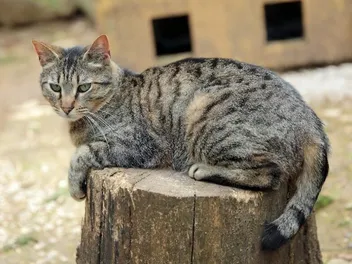
The tabby coat has various incarnations and therefore is determined by multiple genes.

Agouti (A/a): If the dominant (A) gene is active, the cat will have a tabby coat of some sort. If it is not active (a), the color expressed will be solid.
Tabby (T): This gene has several different versions that dictate the different tabby types.
Mc: mackerel tabby
mc: classic tabby
Sp: spotted tabby - less common, and interacts with other genes will impact how it is expressed
Ticked (Ta): If present, this gene overrides other tabby patterns, giving a ticked appearance rather than stripes or spots.
Pointed Cats
A mutation on Locus C results in a form of partial albinism that is temperature sensitive, resulting in darker pigmentation in the cooler parts of the body (ears, paws, tail), seen in the Siamese, Birman, Himalayan, and Ragdoll.
Inhibitor Gene
Inhibitor (I): Inhibits the pigment in the hair shaft, resulting in lighter (even white) fur at the base, sometimes giving a silvery, shimmering appearance. It is also responsible for producing:
Silver tabbies - the inhibitor gene lightens the base coat, making the tabby markings stand out more
Smoke coat - appears solid, but a white undercoat is revealed when parting the coat
Shaded cats - a more gradual transition from light to dark, like a reverse roan
Gloving
Also known as ‘mitted’, the white gloves seen in the Birman, Ragdoll, and Snowshoe cats. It is controlled by a recessive gene, so two copies of the allele are needed for the white gloves to be expressed.
Some Real Examples
To put things into perspective, let’s take a look at some of the genetic markers for the beautiful Lilac Point Siamese and female Calico Domestic Shorthair:

And All The Rest
There are more variations and mutations at various KIT gene loci that we won’t go into here, but hopefully the above information gives you insight into how the color and patterns seen in cats are determined by genetics. It’s also worth noting that pedigree cats often have stringent color requirements for show/competition purposes, and some colors and patterns that are seen in individual cats are not necessarily recognized in the breed standard.
When A Clone Is Not A Clone
What About Coat Length?

Four mutations have been identified that dictate feline coat length, all of which are recessive. This means that if both parents are longhair cats, the kittens cannot be shorthaired, but two shorthair cats may produce a longhair kitten.
N = Normal (dominant)
M1 = Long Hair Mutation 1 (Ragdolls)
M2 = Long Hair Mutation 2 (Norwegian Forest Cats)
M3 = Long Hair Mutation 3 (Maine Coons and Ragdolls)
M4 = Long Hair Mutation 4 (all breeds of long hair cats)
| Genotype | Phenotype | Offspring |
|---|---|---|
| N/N | short hair | 100% short hair kittens |
| N/M | short hair | Short- and long-haired kittens depending on the genotype of the mate |
| M/M | long hair | If bred to a long-haired mate, they will produce only long-haired kittens |
Curly, Sphynx, and Rex
The unique coats of the Rex and Sphynx cat breeds are the result of mutations on a separate gene to the KIT gene, called Keratin 71 (KRT71). Interestingly, the tightly curled, woolly hair of the Selkirk Rex is due to a dominant mutation, whilst the hairless Sphynx variant (hr) and curly Devon Rex variant (re) are both recessive traits.

In Conclusion
The genetics behind cat coats can be extremely complex, and we could go into even further detail. However, this overview gives you a good idea of how genetics can impact what kind of coat your cat has. It can be difficult to accurately predict what sort of coats may be produced in a litter, and even more challenging to work out what a kitten’s parents may have looked like, especially if you consider that, thanks to feline superfecundity, a litter of kittens can have more than one father!
It’s certainly interesting to see how certain colors and patterns come about, and why no two cats are ever completely the same.
Sources
Featured Image Credit: igorcomtutgmail.com, Shutterstock
Expert cat care, straight to your inbox
News, insights, and useful advice, delivered to you.

No spam — unsubscribe anytime.
By signing up, you agree to our Terms & Conditions and Privacy & Cookies Policy.
How useful was this post?
Click a star to rate. You can leave written feedback afterwards. (We read all feedback.)
Dr. Karyn Kanowski BVSc MRCVS (Veterinarian)
Dr. Karyn comes from Queensland, Australia, and has lived in the UK for the past 10 years. In 2010, she graduated from The University of Queensland School of Veterinary Science and also has a Bachelor’s degree in Zoology. She is passionate about using evidence, experience, and owner collaboration to provide the best solutions for pets, and believes in making reliable information about animal health accessible to all. Dr. Karyn shares her home with five cats, four dogs, and one husband. When she is not in the scrubs, she spends her time writing, gardening, and cleaning up pet hair!