Why Do Cats Have Different Colored Kittens? Vet-Approved Facts & FAQ



In this article
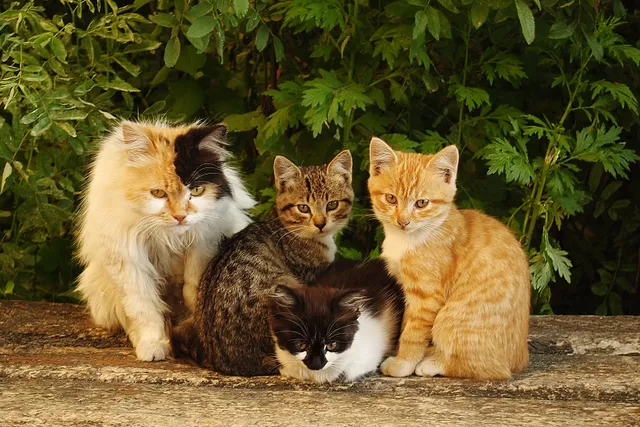
As one of the two most popular pets in the United States, cats are a ubiquitous part of American life and are adored worldwide. One question many people have about felines (and one you likely have had yourself) is why cats have different colored kittens.
The domestic cat has a wide variety of coat colors, which result from gene mutations that happen naturally in the cat’s cells. The genetics behind cat coat colors and patterns are extremely complex, but selective breeding for appearance has led to the wide variety of cat colors we see today.
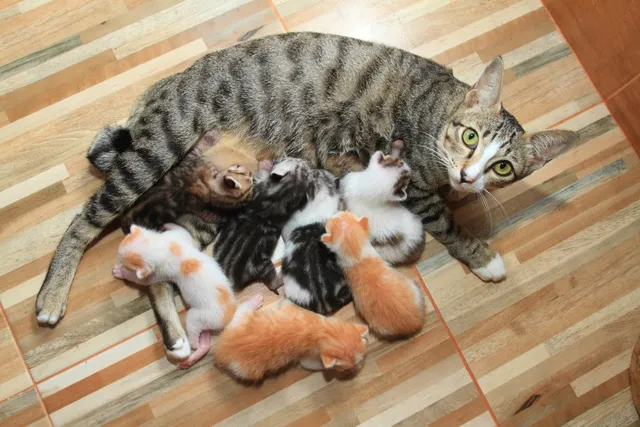
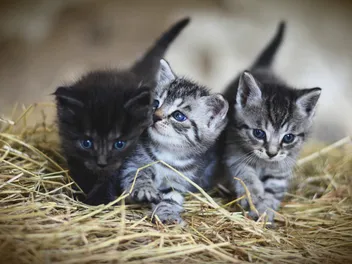
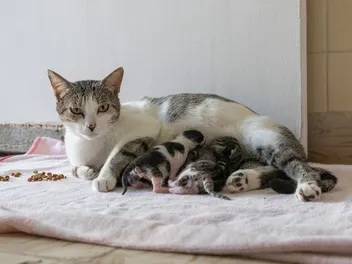
One litter can contain cats of many different colors depending on the genes they have inherited from their mother and father, with some genes affecting coat colors dominant and some recessive. Coupled with that, there’s heteropaternal superfecundation 1. Heteropaternal superfecundation occurs because more than one male cat can fertilize a female’s eggs during a single heat cycle. Because of that, the resulting kittens from the same litter will have colorations from the queen and (possibly) several tomcats, contributing to the varied colors often seen in a single litter.

How Does Heteropaternal Superfecundation Happen?
Female cats can become impregnated by several male cats (aka tomcats) during the same ovulation. That means you’ll have eggs from the same queen but sperm from several tomcats.
These kittens have genes from the same mom but different dads, share the same uterus, and develop at the same time. But, since one has genes from one tomcat and another from a different tomcat, their color and other traits can vary wildly.

What Determines the Color of a Particular Kitten?
Whether kittens are black, calico, orange, tortoiseshell, or any other color, surprisingly, cat fur color is actually derived from two basic colors- black and red. The many coat colors and patterns seen in domestic cats come from genes and polygenes that change these basic two colors. The color genes for black and red (orange/ginger) are carried on the sex-linked X chromosome.
Animals, including cats, normally have two sex chromosomes, one from their mother and one from their father, that determine their sex. Females are XX, and males are XY.
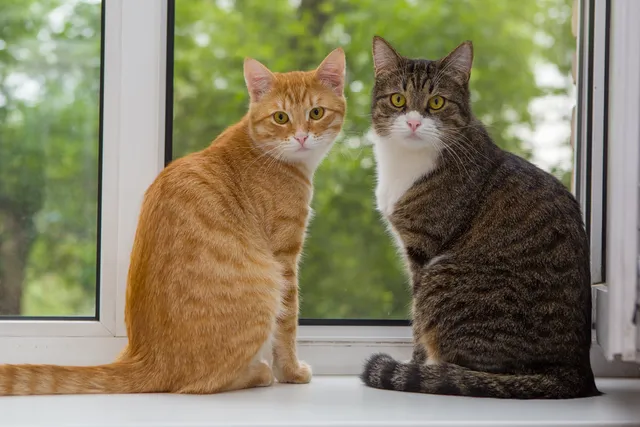
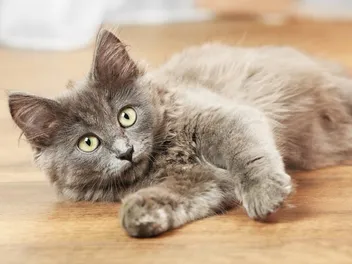
As coat color is a sex-linked trait, the sex of the kitten will play a role in their coat color. Male kittens get their color genes from their mother as they only have one X chromosome. Males will either have the same coat color as their mother, have it present as one of the colors, or in a dilute form. For example, the dilute form of red is a cream color and the dilution of black results in a gray (‘blue’) coat color.
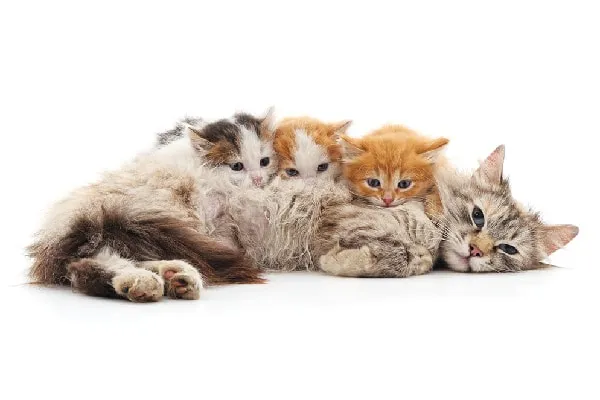
Female kittens can have coat color determined by either parent as they get a gene for coat color from each having two X chromosomes.
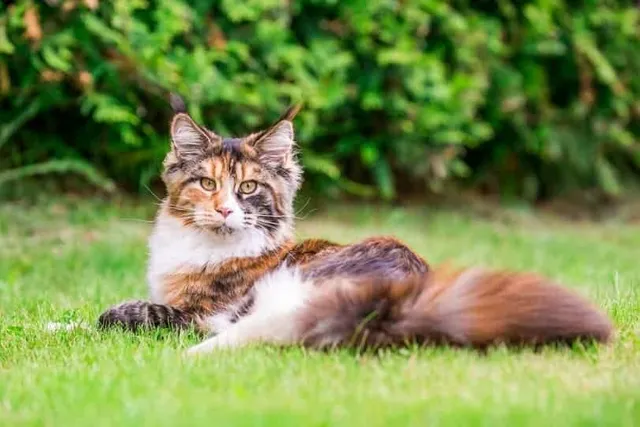
Calico and tortoiseshell cats, which have both black and red in their coats, are female. They would have the ginger gene on one X chromosome, and the other X chromosome will dictate the rest of their color. Because males only have one X chromosome, they can only be black or red ( or variations due to modifying genes) but cannot have a mixture of both.
Can Black Queen Cats Have Kittens of Different Colors?
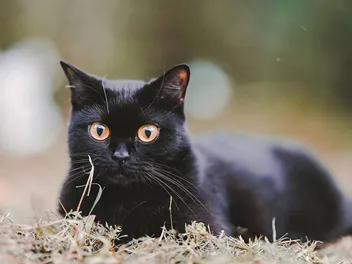
Did you know that black is the most common coat color for cats? It’s true! Even though there’s a stigma (which, by the way, is unfounded) surrounding black cats, they are more abundant than any other color.
In order for a cat to be solid black, both of its parents need to have the black color gene, and the cat must carry the recessive nonagouti gene, which suppresses the dominant tabby pattern.
Some black cats are true black cats and others are tabbies in disguise, you might see a faint tabby pattern in the sunlight. In fact, all cats are tabbies, whether a cat shows a tabby pattern or not will depend on whether they have inherited the recessive solid color gene or not.
So the genetics are complicated! 2 The short answer is yes; a mother cat with black fur can have kittens of many different colors depending on her genes and those of the dad/dads.

Why Can’t Male Cats Have Three Colors?
As we mentioned earlier, the color genes for black and red are on the X chromosome. As males normally only have one X chromosome, they can only be black or red.
However, male calico cats do exist due to genetic abnormalities, which involve having an extra X chromosome, so they are XXY. They are often sterile and may have additional health issues. The odds of a male calico cat are exceptionally low. How low? It is estimated that about one in 3,000 to one in 10,000 calico cats is born male.
Even if they are sterile it’s worth noting that getting him neutered is still an excellent idea if you have a male calico. Neutering offers several health benefits to your cat, including;
What Is the Most Common Cat Color?
Black is the most common color for cats. However, finding a genuinely all-black cat is difficult. Even the blackest cats often have paw pads, patches of fur, and whiskers that are a different color. What’s fascinating is that a black cat can also change colors in the sun and display orange and red highlights!

What Is the Rarest Cat Color?
The rarest cat color isn’t a color but a complete lack of colors, which you’ll find in an albino cat. Albino cats look white because their skin and fur have no pigmentation.
To get an albino cat, both parents must pass on a recessive gene that instructs the cat’s body not to produce melanin, which is the pigment that gives skin and fur its color. As you might have guessed, this is extremely rare, and that’s why it is unlikely you’ll see an albino cat. In fact, among 9,229 cats tested, only four were positive for this mutation.
Final Thoughts
The genetics involved in the coat colors of a litter of kittens is extremely complex but will be partly determined by their sex and whether the mother cat had been mated by more than one tom cat. Although it may be hard to believe, the basic cat colors are only black and red, and the huge variety of different colors and patterns we see are due to modifying genes.
Featured Image Credit: Anna Pasichnyk, Shutterstock
Expert cat care, straight to your inbox
News, insights, and useful advice, delivered to you.

No spam — unsubscribe anytime.
By signing up, you agree to our Terms & Conditions and Privacy & Cookies Policy.
How useful was this post?
Click a star to rate. You can leave written feedback afterwards. (We read all feedback.)
Gregory Iacono former chiropractor and self-taught writer. Greg has experience in a wide variety of subjects including video script. As a man of clinical experience, Greg has the ability to digest a complex subject and make it accessible to the reader. Greg enjoys traveling and spending time with his two daughters and son.