


Cleaning up after your cat includes keeping on top of their litter box hygiene. Not only does this help control unwanted odors in your house, but it’s also necessary for your cat’s health. Most healthy cats need their litter box thoroughly cleaned at least once a week.
Litter box cleanup isn’t necessarily complex, however, there are a few key steps you should be mindful of. In this article, we’ll go over how to clean a cat’s litter box with all of the necessary steps and equipment required.

Cleaning up after our pets is not the most enjoyable part of owning them. Despite keeping a clean litterbox, cat odors and stains may still exist around the house. Sometimes, even the best litter box setup needs extra help. If you're tired of dealing with bad smells from litter boxes, Hepper Advanced Bio-Enzyme Pet Stain & Odor Eliminator Spray can help with the worst pet stains and smells. Additionally, the Advanced Bio-Enzyme Cat Litter Deodorizer neutralizes odors upon contact. At Catster, we’ve admired Hepper for many years and decided to take a controlling ownership interest so that we could benefit from the outstanding designs of this cool cat company!Top Tip for Cleaning & Combating Tough Litter Box Smells
Image
Product
Details
Best Enzyme Cleaner

Hepper Advanced Bio-Enzyme Pet Stain & Odor Eliminator Spray
CHECK PRICE
Best Litter Additive
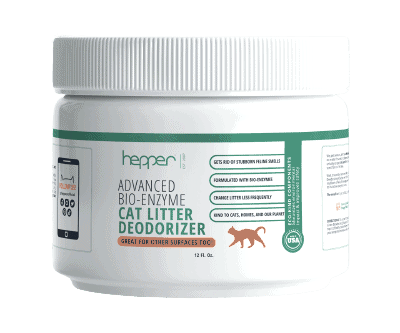
Advanced Bio-Enzyme Cat Litter Deodorizer
CHECK PRICE
Supplies Checklist
As with all cleanup tasks involving your cat, having the correct supplies beforehand makes things a whole lot easier.
- Litter scooper
- Trash bags
- Pet-safe cleaner
- Gloves
- Bleach
- Cleaning towels
- Scrub brush
- Hand soap
- Replacement litter
- Litter deodorizer

Supplies Explained
Litter Scooper
Most litter boxes come with a scooper. However, if you’ve misplaced it, you should consider getting a replacement. At first, it might seem odd to scoop clumped litter when you’re about to replace the entire litter anyway. However, for health and hygiene reasons, a scooper is necessary because it’s best to dispose of clumped litter separately from the rest of the litter.

Trash Bags
Trash bags are necessary to dispose of litter and other disposables required to clean the litter box. It’s best to opt for sealable bags. Multiple bags are recommended, as it’s best to double bag used litter.
Pet-Safe Cleaner
As part of the cleaning process, the litter box will have to be cleaned with a product that’s both effective and safe for your pet cat. There are several different options on the market that can be used for this purpose.
Gloves (Reusable or Disposable)
Gloves are recommended whenever you’re dealing with a litter box. Disposable gloves are often considered more convenient. However, reusable gloves can also be used – provided they are only designated for litter box cleanup and not used for any other purpose.
Bleach
You’ll need bleach to thoroughly disinfect the litter box once it is cleaned.
Litter Deodorizer (Optional)
Litter deodorizer can be considered if you wish to control future litter odors after you’ve cleaned a litter box.
Disposable or Reusable Cleaning Towels
To expedite drying of the litter box, disposable (recommended) or reusable cleaning towels are needed. Please note that if you opt for reusable towels, then they should only be used for litter box cleanup and stored separately from other towels and cleaning fabrics.
Cleaning/Scrubbing Brush
You’ll need a cleaning or scrubbing brush to thoroughly clean the litter box. This brush should only be used for your cat’s litter box and not for other cleaning purposes.
Hand Soap
You’ll need this for yourself; an antibacterial hand soap is best for litter box cleanings.

Replacement Litter
Once the cleanup is complete, you’ll need to replace the litter in the litter box with fresh, clean litter.

The 10 Steps to Clean a Litter Box
With your supplies ready, you can clean your cat’s litter box. Here is a step-by-step guide on how to clean a litter box.
If you are pregnant or trying to get pregnant, it’s strongly recommended that you ask someone else to clean the litter box for you. If nobody else is available, you will have to take extra precautions while
1. Ensure Your Cat Doesn’t Need To Use the Litter Box
Litter box cleanup can take some time, and it’s best to clean the litter box when you know your cat doesn’t need to use it. Though it can be difficult to predict your cat’s litter box timings, a very safe bet is to begin cleanup right after your cat uses the litter box.
It’s also recommended that you always have a spare litter box for your cat; the total number of litter boxes you should have should be equal to the number of cats you have plus one. Having a spare litter box will minimize the risk of your cat having an accident due to not having access to their litter box while it’s being cleaned.
2. Glove Up
Thoroughly wash and dry your hands before putting on gloves to clean your cat’s litter box.

3. Scoop Used Litter
Use a scoop to sift through the litter and remove any solid waste. This waste should be placed in a plastic bag and securely tied. The bag should then ideally be placed in another bag which should also be securely tied. Dispose of this bag in an appropriate fashion.
Do not flush litter down the toilet!
4. Dispose The Remaining Litter
Next, unclip the litter box cover (if possible) and dispose of the remaining litter, in the same way as described above. Because cats have a remarkable sense of smell, it’s best to dispose of all litter in a secure bin outside your home; a cat may easily sniff out litter in a container within the home and make another mess for you to clean up while you’re not paying attention.

5. Clean The Litter Box
Once the litter is disposed of, you can proceed to clean the litter box with a pet-safe cleaner. Thoroughly scrub the litter box following instructions on the product you use, paying close attention to the corners of the litter box. If you don’t have a pet-safe cleaner, a mild soap can be used alongside water for this purpose.
6. Disinfect the Litter Box
Cleaning the litter box (as described above) should be followed with disinfection to remove all harmful pathogens that might be found in a litter box.
Diluted bleach should be used for disinfection by mixing 2 oz (1/4 cup) bleach and 1 gallon of water (3.7 liters). Disinfection can be done by:
- Soaking the litter box in the bleach solution for at least 10 minutes (this requires another container large enough to hold the litter box).
- Wiping the litter box with the bleach solution and leaving the solution on for at least 10 minutes.
Pay extra attention to ensure that the diluted bleach doesn’t come in contact with your skin. Bleach is also a respiratory and eye irritant; it’s best to use it in a well-ventilated area. Bleach is also dangerous for animals, and your cat shouldn’t be in the area whenever bleach is used to disinfect their litter box.

7. Rinse With Water
Rinse the litter box with water after ten minutes to thoroughly remove the bleach solution.
8. Dry Litter Box
Allow the litter box to dry completely by one of two methods:
- Allow the litter box to air dry
- Wipe the litter box dry with a clean towel

9. Wash Up
It is necessary to disinfect any reusable cleaning item you’ve used once the litter box is cleaned, with the same instructions as those for the litter box. Once everything is cleaned, you should wash your hands thoroughly and then dry them.
If you’re using reusable gloves, you need to wash your hands twice: with the gloves still on and then after you’ve removed the gloves. If you’re using disposable gloves, dispose of them and then wash your hands thoroughly.
10. Refill Litter Box
Reassemble the litter box (if necessary). Follow this by refilling the litter box with fresh litter, about 2-3 inches in depth. If you’re using a litter deodorizer, it is best to place it on the bottom of the litter.
Preventing Litter Box Problems
No one likes a dirty litter box, least of all your cat. A clean litter box is essential to your cat’s health and happiness, and it’s important to keep it clean for their sake and your own. There are a few key things that you can do to prevent litter box problems:
- Consider the location of the litter box. It should be in a quiet spot that your cat can easily access. If the litter box is too close to a busy area in your home, your cat may not want to use it.
- Make sure you’re using the right type of litter. Some cats prefer clumping litter, while others prefer non-clumping. If you’re already used to cleaning cat litter, then you already know how to clean non-clumping cat litter as the same steps are necessary except that you skip the scooping and dump all the litter at once. Experiment with different types until you find one that your cat likes.
- Scoop the litter box daily. Clean it out completely once a week. This will help prevent odors and keep the litter box fresh for your cat.
Following these simple tips will help you keep your cat’s litter box clean and prevent problems before they start.

At Catster, we’ve admired Hepper for many years and decided to take a controlling ownership interest so that we could benefit from the outstanding products of this cool cat company!
Summary
Regularly cleaning your cat’s litter box is necessary for both hygiene and health reasons. In this article, we’ve elaborated on the process to ensure that you can thoroughly, efficiently, and effectively clean your cat’s litter box properly.
Featured Image Credit: New Africa, Shutterstock







